Oracle

Search documents
Why Oracle and these 3 unloved software stocks could be the next leg of the AI trade
MarketWatch· 2025-12-16 16:26
"We see 2026 as the year that investors begin to shift their focus from hardware to software positions,†an HSBC analyst wrote. ...



Oracle Options Trading: A Deep Dive into Market Sentiment - Oracle (NYSE:ORCL)
Benzinga· 2025-12-16 15:01
Core Insights - Financial giants are showing a bearish sentiment towards Oracle, with 45% of traders exhibiting bearish tendencies compared to 37% bullish [1] - The average price target set by analysts for Oracle is $325.8, with varying ratings from different firms [9][10] Options Trading Analysis - A total of 24 unusual trades were identified in Oracle's options history, with 12 puts valued at $1,828,364 and 12 calls valued at $670,786 [1] - The predicted price range for Oracle's stock is between $130.0 and $300.0 based on recent volume and open interest analysis [2] - The volume and open interest metrics indicate significant liquidity and investor interest in Oracle's options, particularly within the strike price range of $130.0 to $300.0 over the last 30 days [3] Recent Options Activity - Notable options trades include multiple bullish puts with strike prices around $160.00 and $175.00, indicating a mix of bullish and bearish sentiments among traders [7] - The current trading volume for Oracle is 3,442,334, with a slight price increase of 0.02%, bringing the stock price to $184.96 [12] Company Overview - Oracle, founded in 1977, specializes in enterprise applications and infrastructure, offering solutions through on-premises, cloud-based, and hybrid models [8] - The company is recognized for its SQL-based relational database management system, widely used for high-volume online transaction processing [8]

Jim Cramer Compares AI Data Center To IPO Frenzy, Warns Boom May Be Unsustainable: 'It All Has To Slow Down…' - Amazon.com (NASDAQ:AMZN), Alphabet (NASDAQ:GOOG)
Benzinga· 2025-12-16 13:38
Core Insights - The rapid pace of data center and utility station construction is raising concerns among industry experts, with a call for a slowdown in development to match demand [2][3] - Major tech companies, including Open AI, Meta Platforms, Google, Microsoft, and Amazon, are competing for market share in data center construction, indicating a booming demand driven by the tech industry's growth [2][3] - The construction of data centers is critical for the future growth of AI, with analysts emphasizing that expansion and access to power are more important than financing schemes [6] Industry Perspectives - Investor Kevin O'Leary highlighted that the U.S. is lagging behind China in data center construction due to slow permit approvals, suggesting a need for more aggressive development [4] - Nvidia CEO Jensen Huang pointed out that it takes approximately three years to build a data center in the U.S. for AI supercomputing, while China can complete major facilities in a much shorter timeframe, showcasing China's efficiency [5] - The increasing demand for data centers is further exemplified by Google's recent $6.4 billion investment in Germany aimed at AI and data center expansion [3]





ETF日报:中央经济工作会议定调26年继续推进反内卷,光伏板块依旧值得期待,关注电网ETF
Xin Lang Cai Jing· 2025-12-16 13:29
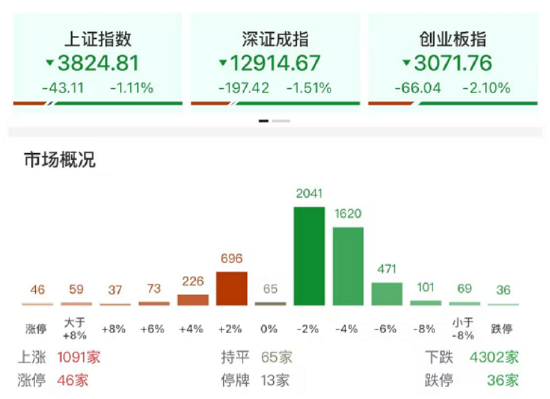
Market Overview - The market experienced a day of volatility with all three major indices opening lower and closing down. The Shanghai Composite Index fell by 1.11%, the Shenzhen Component by 1.51%, and the ChiNext Index by 2.1% [1][13] - The total trading volume in the Shanghai and Shenzhen markets was 1.72 trillion yuan, a decrease of 49.3 billion yuan from the previous trading day, with over 4,300 stocks declining [1][13] Macro Economic Factors - The Bank of Japan is set to discuss a potential interest rate hike from 0.5% to 0.75% during its monetary policy meeting on December 18-19, which would be the highest rate in 30 years [1][13] - Concerns about tightening liquidity and the ongoing worries regarding an AI bubble in overseas markets have contributed to market sentiment [1][13] AI and Semiconductor Sector - The semiconductor and AI-related sectors saw significant declines, particularly in communication and entrepreneurial AI stocks, likely due to weak overseas AI trading [3][15] - Despite recent downturns, there is a strong expectation for continued growth in capital expenditure in the AI sector next year, with a focus on upstream supply chain stocks in A-shares [3][15] - Communication ETF (515880) and semiconductor equipment ETF (159516) are recommended for investors looking to capitalize on domestic alternatives and AI-related opportunities [3][15][20] Automotive Sector - The smart automotive sector performed relatively well, with the smart automotive ETF (159889) rising by 0.19% [8][21] - The Ministry of Industry and Information Technology has granted approval for the first batch of L3 conditional autonomous driving vehicles, marking a significant step towards commercialization [8][21] - Tesla's advancements in L4 autonomous driving technology may serve as a benchmark for domestic players aiming to initiate similar operations [9][21] New Energy Sector - The new energy sector experienced notable declines, with the electric grid ETF (561380) down 3.13% and the photovoltaic ETF (159864) down 3.05% [11][23] - Factors contributing to this decline include external macroeconomic influences and the approaching sales off-season, leading to concerns about the sustainability of energy storage demand [11][23] - Despite the current downturn, the outlook for energy storage remains positive, with expectations of sustained demand into the first half of next year [11][24]
Firestone: Twenty-three hour trading sounds exhausting, not transformative
CNBC Television· 2025-12-16 12:38
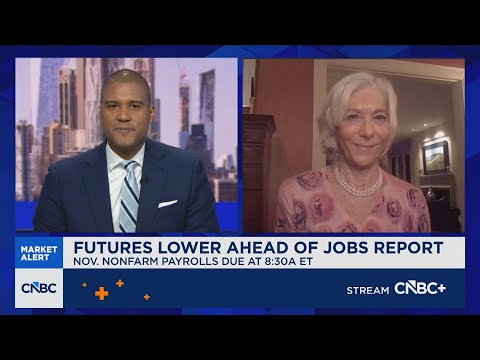
All right, Carrie, I actually want to hit on one of those stories we just talked about, the idea of 23-hour a day trading during the work week. You're somebody who's traded equities. What do you think about that proposal. What do you think it could mean for the market.>> I call it a little exhausting. I think um in fact, people do a lot of trading after hours. Uh, I think it would be more um I I would say um structured because there perhaps would not be the type of drops that we see um after hours when ther ...

Michael Burry Says The One Thing He Wished He Had Done Before 2008 Crisis Was To Have Been The Canary In The Mine: 'People Wonder Why I Do This' - Meta Platforms (NASDAQ:META), Microsoft (NASDAQ:MSFT)
Benzinga· 2025-12-16 07:06
Core Viewpoint - Investor Michael Burry emphasizes concerns about GPU depreciation at major hyperscalers and AI companies, referencing Microsoft CEO Satya Nadella's insights on the economic complexities of data center investments [1][3][6]. Group 1: Microsoft and GPU Depreciation - Nadella highlighted the rapid advancements in chip design, which lead to older infrastructure becoming less efficient due to differences in power usage and cooling demands [3][4]. - Microsoft is cautious about scaling data center capacity tied to a single generation of NVIDIA GPUs, indicating a strategic approach to avoid overbuilding [4][5]. - Nadella expressed concerns about the economic value lost as new NVIDIA chips are released annually, which aligns with Burry's claims regarding overstated earnings and depreciation practices among hyperscalers [6][7]. Group 2: Burry's Claims and Industry Reactions - Burry has reiterated his stance on the overstated earnings and depreciation practices by companies like Meta and Oracle, labeling it as a prevalent form of modern fraud [7]. - Investor Steve Eisman disagrees with Burry's depreciation calculations, suggesting that the focus should be on the returns and cost savings from these significant investments [8].

Down 42% From Its High, Is Oracle the Best AI Growth Stock to Buy in 2026?
The Motley Fool· 2025-12-16 01:00
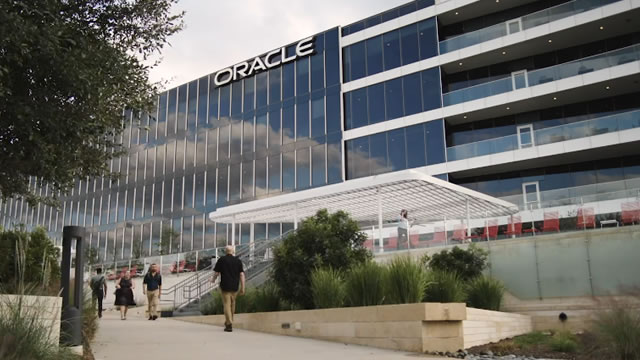
Core Viewpoint - Oracle's stock has experienced a significant decline, dropping approximately 42% from its 52-week high, but the company's growth potential in artificial intelligence (AI) remains compelling [1]. Financial Performance - Oracle's stock fell as much as 16.5% following its second-quarter fiscal 2026 results, indicating market concerns about its performance [1]. - The company has over $80 billion in non-current notes payable and other borrowings net of cash, reflecting a substantial amount of long-term debt [3]. Competitive Position - Compared to other cloud giants like Amazon, Microsoft, and Alphabet, Oracle has a higher debt load, while these competitors maintain either minimal debt or more cash and marketable securities than debt [4]. - Oracle's strategy involves significant investment in AI infrastructure, which is seen as a high-risk, high-reward approach compared to its competitors who leverage existing cash flows [5]. Growth Strategy - Oracle is in the process of building 72 multicloud data centers that integrate its database services with major cloud platforms, which is expected to enhance performance and reduce costs [8]. - As these data centers are completed, Oracle anticipates an increase in free cash flow (FCF) and a reduction in capital expenditures, allowing for accelerated debt repayment [9]. Valuation and Investment Potential - Oracle's current trading valuation is under 30 times forward earnings, which is considered attractive for a growth stock with potential for accelerated earnings growth [10]. - The company's focus on high-performance computing infrastructure aligns with anticipated future demand, making it a potentially lucrative investment for those with a long-term perspective [10].
Why Broadcom Stock Sank 5.6% Today
The Motley Fool· 2025-12-15 23:47
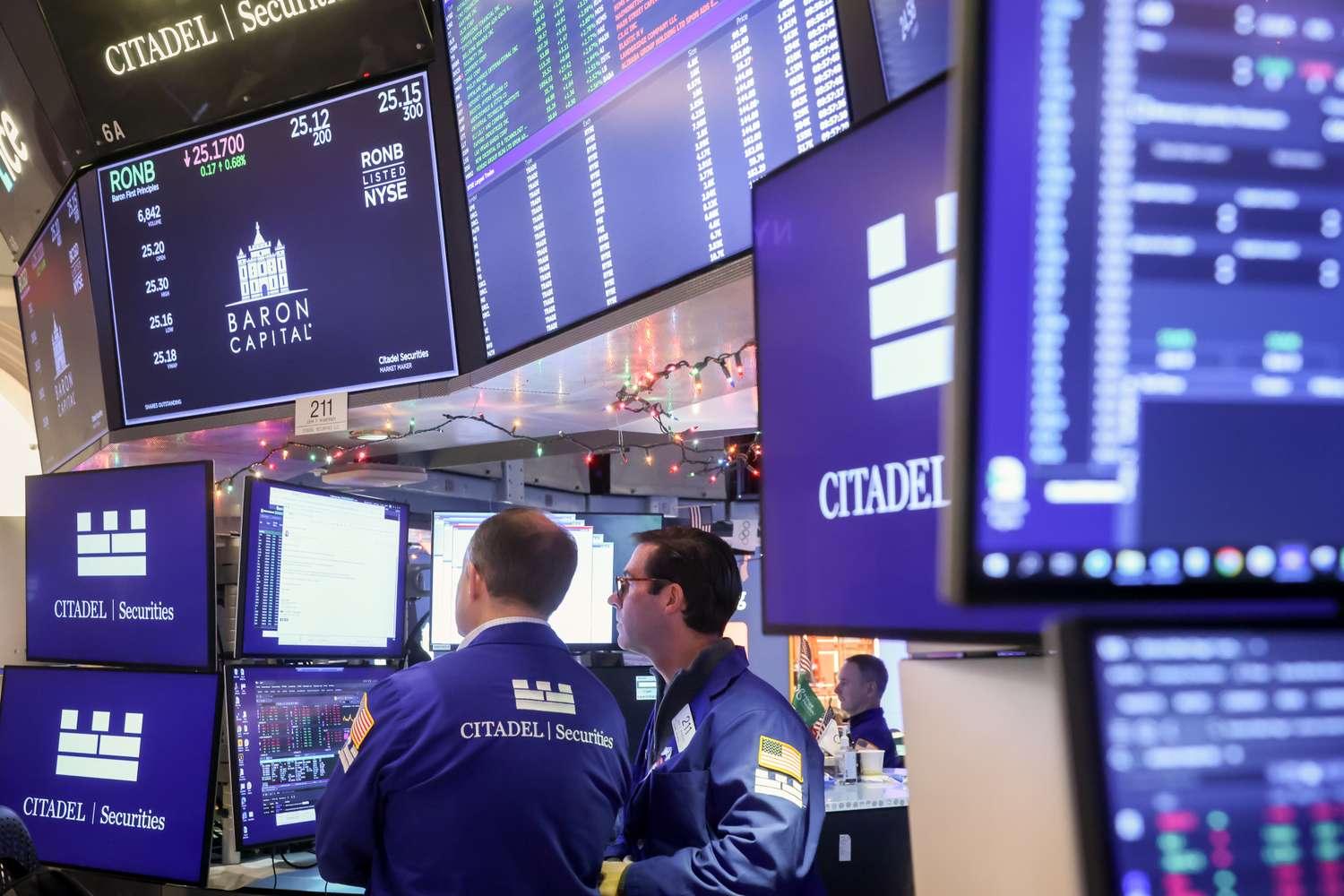
Core Viewpoint - Broadcom's stock has declined despite reporting record earnings, primarily due to concerns over the impact of its AI business on overall margins [1][5]. Group 1: Financial Performance - Broadcom reported record sales and net income, driven by a surge in AI sales [2]. - The company's gross margin stands at 64.71%, with a dividend yield of 0.66% [2]. - The stock price fell by 5.6% on a day when the S&P 500 and Nasdaq Composite also experienced losses [1]. Group 2: Market Sentiment - Investors are rotating out of the AI sector following earnings reports from Broadcom and Oracle, indicating growing anxiety over a potential AI bubble [1][5]. - Concerns have arisen regarding the lower gross margins associated with Broadcom's AI business, which could negatively impact overall margins as AI sales increase [3][5]. - The market is particularly sensitive to any signs of weakness in the AI sector, especially after Oracle reported significant increases in AI-related capital expenditures [5].


'Fast Money' traders talk Oracle hitting a six-month low
Youtube· 2025-12-15 22:59
Company Overview - Oracle shares have declined to their lowest level since June, despite a positive outlook from analysts at City, who believe growth remains on track and concerns over data center delays are exaggerated [1] - The company has a market capitalization of $36 billion and $18.5 billion in debt, with a couple of billion in cash, but is currently not profitable, indicating potential pressure on future profits [4] Market Sentiment - There is a noticeable lack of confidence in Oracle's growth story, as evidenced by the widening of credit default swaps (CDS) and the continued decline in stock price despite the denial of negative reports [2] - The sentiment shift in the market has been rapid, initially influenced by developments in AI companies like OpenAI and Nvidia, and now affecting major players such as Microsoft, Meta, and Amazon, all of which have underperformed compared to the S&P and NASDAQ [5] Data Center Buildout Concerns - Analysts anticipate a slowdown in the buildout of data centers, which is critical for Oracle's business model, leading to a challenging environment for the company [2][4] - The current market conditions suggest that Oracle's performance is now a "prove me" story, contrasting with its historically predictable business model [7] Stock Performance - Oracle's stock has seen pronounced declines, with a drop of at least 10% from its highs, raising questions about the underlying reasons, including potential year-end effects and broader market trends [6] - The stock is currently trading near its previous all-time high of approximately $185-190 from December of the previous year, which may act as a support level if it can stabilize around these prices [9]

Dow Jones Today: Stocks Slip to Begin Week; AI-Tied Shares Continue to Weigh on Nasdaq
Investopedia· 2025-12-15 21:06
Why Middle-Class Retirees Still Worry Despite COLA Increases 31 minutes ago Retirees now know the Social Security COLA for next year is 2.8%. Payments reflecting the increase begin in January 2026, but the modest bump of $56 per month, on average, won't likely quell deeper concerns about the program among. Many retired workers fear that their actual costs are rising faster than the adjustment, while those still in the workforce grapple with larger fears that Social Security won't be there when they need it. ...