Polestar

Search documents
Tesla rival Polestar shuts UK R&D sites and lays off 130 staff
Business Insider· 2025-10-30 18:58
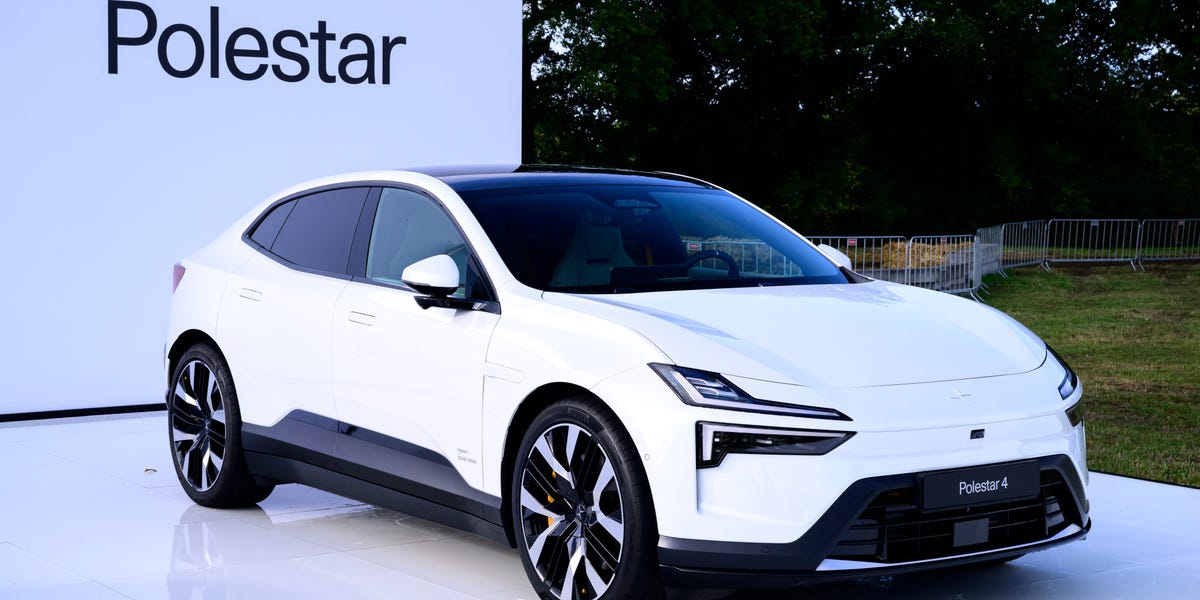
Core Insights - Polestar has shut down its two R&D sites in the UK and laid off 130 staff, shifting R&D efforts to its headquarters in Sweden [1][2] - The decision follows the completion of engineering work for the Polestar 5 model, indicating a strategic focus on centralizing operations [2] - Polestar is majority-owned by Chinese conglomerate Geely and has been focusing more on the European market due to challenges posed by US tariffs [3] Company Performance - Polestar sold a record 2,758 vehicles in the UK last month, but reported a significant net loss of $1.03 billion in Q2 2025 [3] - The company’s sales performance lags behind Tesla, which had nearly 8,000 new registrations in the UK during the same period [4] - In January 2024, Polestar announced plans to cut 450 jobs globally, representing about 15% of its workforce [4]


Tesla rival Polestar closes R&D sites in the UK and lays off 130 staff
Business Insider· 2025-10-30 18:29
Core Insights - Polestar has shut down its two R&D sites in the UK and laid off 130 staff as part of a strategic shift to centralize R&D efforts in Sweden [1][2] - The decision follows the completion of engineering work for the Polestar 5 model, indicating a focus on streamlining operations [2] - The company is facing financial challenges, reporting a net loss of $1.03 billion in Q2 2025, while also experiencing a significant cash burn [3] Company Strategy - Polestar is centralizing its R&D work at its headquarters in Sweden to create a leaner organizational structure [2] - The company aims to focus on developing high-performance electric vehicles (EVs) [2] Market Position - Polestar's sales in the UK reached a record of 2,758 vehicles last month, but still lag behind Tesla, which had nearly 8,000 new registrations in the same period [3][4] - The company has increasingly shifted its focus to Europe due to challenges posed by US tariffs on the global auto industry [3] Workforce Changes - In January 2024, Polestar announced plans to cut 450 jobs globally, representing about 15% of its workforce [4]

CA Auto Finance named exclusive partner for Geely Auto UK
Yahoo Finance· 2025-10-27 15:57
Core Insights - CA Auto Finance has been confirmed as the exclusive financial partner for Geely Auto UK, supporting the launch of the Geely EX5 in the UK market [1] - The partnership aims to leverage CA Auto Finance's regional experience to facilitate Geely's entry into the UK, focusing on long-term growth and sustainable mobility [1][4] Financial Options - Geely customers in the UK will have access to various finance options through CA Auto Finance, including Personal Contract Purchase (PCP), Hire Purchase (HP), and Advance Payment Plan (APP) [2] - Leasing options available include Personal Contract Hire (PCH) and Business Contract Hire (BCH), along with wholesale finance solutions for the dealer network [2] Market Strategy - Geely's UK debut aims to address consumer concerns regarding range, charging, and usability of electric vehicles, with CA Auto Finance chosen for its market knowledge and established network [3] - The collaboration is expected to enhance the variety and accessibility of sustainable mobility solutions for UK drivers [4] Company Background - Geely, the majority owner of brands such as Volvo Cars, Polestar, Lotus, and LEVC, has made significant investments in electrification and intelligent mobility systems [5] - The company's strategy focuses on sustainability and developing technologies to meet evolving consumer needs [5]

Tesla’s Next Huge Challenge
Yahoo Finance· 2025-10-27 14:05
Core Insights - Tesla Inc. generates a significant portion of its revenue from its automotive business, with over $21 billion out of $28 billion in the most recent quarter [1] - Tesla faces increasing competition in the electric vehicle market, particularly from local companies like BYD in China and legacy automakers in Europe [2][3] - The UK market presents a unique opportunity for Chinese EV companies, as it lacks high tariffs on Chinese imports, allowing for more competitive dynamics [4] Group 1: Market Challenges - Tesla's market share in the U.S. electric vehicle sector has declined to less than 45%, down from nearly 80% [2] - Sales in the European Union have seen significant year-over-year declines, attributed to competition from established brands such as Volkswagen, Mercedes, and BMW [3] - Geely Auto, a Chinese competitor, has ambitious plans to penetrate the UK market, aiming to sell 100,000 units, which could surpass Tesla and BYD [8] Group 2: Competitive Landscape - Geely Auto's unit sales in China reached 1,409,180 vehicles in the first half of the year, marking a 48% increase compared to the previous year [7] - The UK market is currently more favorable for Chinese brands, providing a competitive edge against Tesla [4] - Tesla's first-mover advantage is diminishing as new entrants like Geely expand into markets critical for Tesla's growth [9]
开创全球磁流变悬架元年,京西智行的全球引领与科技惠民之路
Zhong Guo Qi Che Bao Wang· 2025-10-21 06:09
Core Insights - The automotive industry's chassis suspension system performance has long been a benchmark for measuring a company's core technological strength. The emergence of China's Jingxi Zhixing is breaking the long-standing dominance of magnetic suspension technology, previously exclusive to ultra-luxury brands like Ferrari and Lamborghini, marking a new era in the global automotive market [1][2][3]. Group 1: Technological Breakthrough - Jingxi Zhixing's partnership with Deep Blue Automotive to equip the Deep Blue L06 model with a magnetic suspension system signifies a transformation from a "technology follower" to a "global leader" in this field [1][2]. - The magnetic suspension technology, discovered in 1948, allows for rapid and precise damping control, making it suitable for extreme applications in aerospace and military sectors before its adaptation in the automotive industry [2][3]. - The technology was first applied in the automotive sector in 2002, with Cadillac's Seville STS, and has since shown significant advantages over traditional suspension systems, including a response speed over five times faster than conventional systems [3][4]. Group 2: Market Position and Production Capacity - Jingxi Zhixing has established itself as the only company globally capable of large-scale production and delivery of magnetic suspension systems, with over 3 million vehicles equipped with this technology by the end of 2024 [4][5]. - The company has a robust portfolio of over 140 core patents and has developed a comprehensive technological barrier covering materials, structures, control algorithms, and manufacturing processes [5][6]. - The production capacity is set to reach 2 million units annually, with dual production bases in Shenzhen and Zhangjiakou, enhancing its international manufacturing capabilities [17][18]. Group 3: Quality Control and Manufacturing Standards - Jingxi Zhixing employs advanced manufacturing techniques, including AI industrial cameras and high-precision robots, to ensure consistent quality in its magnetic suspension systems [24][25]. - The company has implemented a rigorous six-tier quality control system, ensuring that every component meets high standards of reliability and durability, which has helped change perceptions of domestic automotive parts quality [25][26]. - The production process emphasizes smart manufacturing and lean management, achieving over 95% localization of core components, which reduces costs and enhances supply chain control [18][21]. Group 4: Strategic Collaborations and Market Expansion - The collaboration with Deep Blue Automotive represents a new model of cooperation in the automotive supply chain, focusing on shared risks and benefits, which reduces R&D costs and shortens production cycles by 30% [26][27]. - Jingxi Zhixing's technology is now being adopted by other brands, including Polestar, further solidifying its position in the global market and demonstrating the shift of Chinese automotive technology from niche luxury to mainstream applications [26][28]. - The company's approach to open collaboration reflects a strategic shift in the Chinese automotive industry towards collective growth and innovation, moving away from isolated competition [26][28].

极星汽车关闭最后一家中国门店,知名新势力这是怎么了?
3 6 Ke· 2025-10-20 10:52
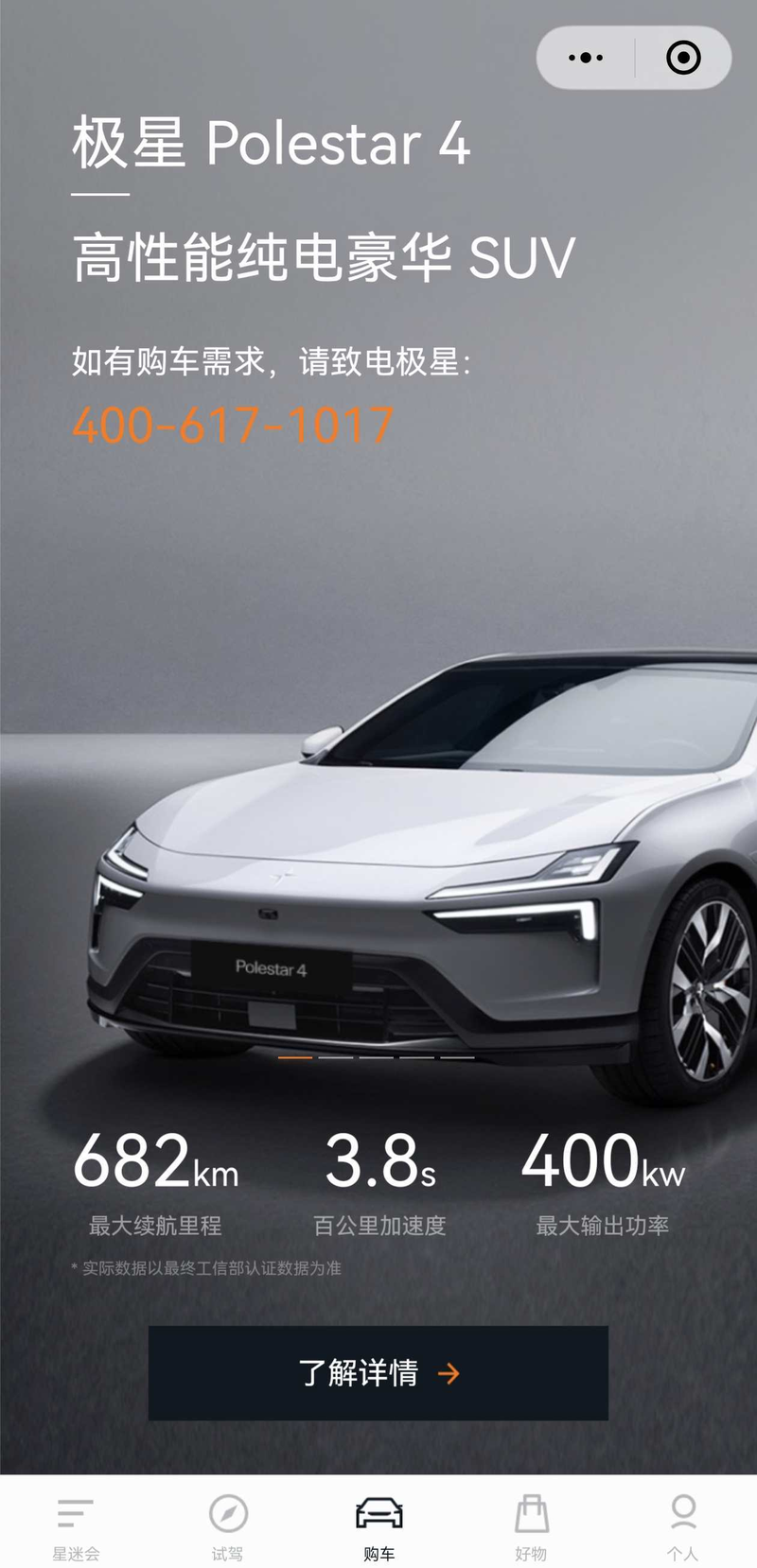
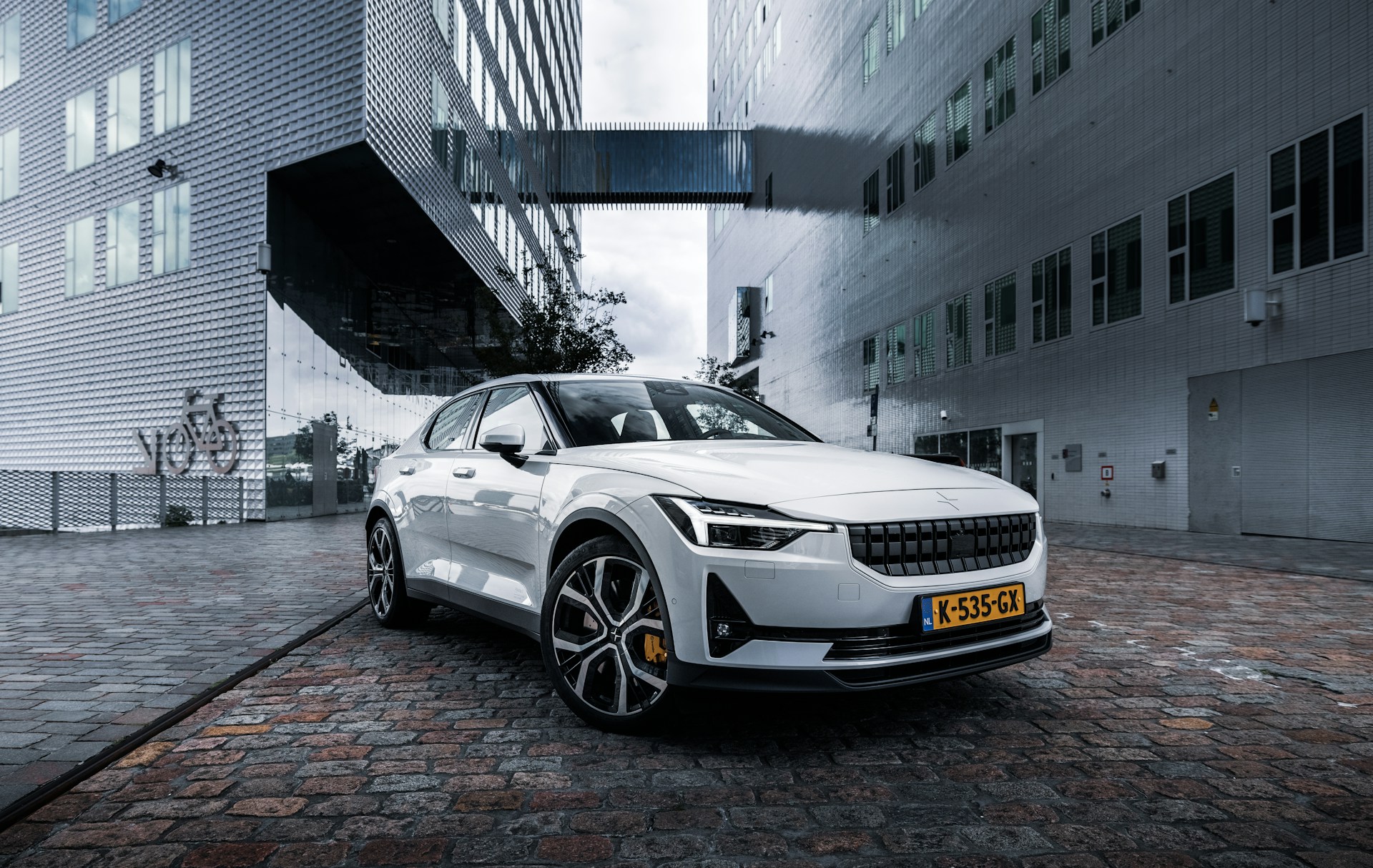
Group 1 - Polestar has closed its last remaining direct store in China, located in Shanghai, as part of a strategic adjustment to better align with the rapidly changing consumer demands in the Chinese market [3][6] - The company is shifting to an online sales model, allowing consumers to access product information and complete purchases through digital channels [3][6] - Polestar, a Swedish high-end electric vehicle brand, was acquired by Geely under Volvo in 2015 and entered the Chinese market in 2017, launching several models including Polestar 1, Polestar 2, Polestar 3, and Polestar 4 [3][4] Group 2 - Polestar has faced significant challenges in establishing a clear and recognizable brand identity in China since its entry, with a wide pricing range from 1.45 million RMB for Polestar 1 to around 250,000 RMB for Polestar 2 [8] - The brand's unclear positioning has led to consumer confusion regarding whether it competes as a luxury performance brand or a cost-effective electric vehicle brand [8][9] - The company has struggled to differentiate itself in the competitive Chinese market, failing to establish a strong technological narrative or emotional connection with consumers [9][10] Group 3 - The Chinese electric vehicle market has become increasingly competitive, with companies engaging in price wars and upgrading configurations to attract consumers [10] - Polestar has experienced instability in its leadership, changing its China region head six times in six years, which has contributed to a lack of coherent strategy and operational efficiency [10] - The company needs to optimize resource allocation globally and strengthen its competitive advantages to succeed in the international electric vehicle market [12]
极星汽车在华“大撤退”:关闭最后一家门店,现车五折“甩卖”,中国成其生产基地
Mei Ri Jing Ji Xin Wen· 2025-10-15 12:27
Core Insights - Polestar has closed its last direct retail store in Shanghai, marking a strategic shift in its business model in China to better align with the rapidly changing consumer demands [1][4] - The company is transitioning to an online sales model, with a focus on digital channels for product information and purchasing, although the online purchasing system has been temporarily closed [2][4] - Despite poor sales performance in China, Polestar has established the country as its most important production base, with models being produced for global markets [4] Sales Performance - In the first half of 2023, Polestar sold only 69 vehicles in China, while globally, it sold 30,300 vehicles, a 51% increase year-on-year [5] - For the third quarter of 2025, Polestar's global retail sales reached 14,192 units, a 13% increase, with total sales for the first nine months of approximately 44,482 units, a 36% increase [4] Financial Status - As of the end of 2024, Polestar's total assets were $40.54 billion, liabilities were $73.83 billion, and net assets were negative $33.29 billion, indicating a state of insolvency [5] - Cumulatively, Polestar has incurred losses exceeding $5.1 billion from 2020 to 2024, with a projected net loss of $2 billion for 2024 alone [5] Management and Strategy Changes - Polestar has been undergoing significant organizational changes, including a 10% workforce reduction and a focus on cost management since May 2023 [6][8] - The company has experienced frequent changes in its management team, with seven leaders in the China region over eight years, and a recent overhaul of its global management team [8] Market Challenges - Since its IPO in 2022, Polestar's stock price has plummeted by 90%, and it received a compliance notice from NASDAQ due to its stock price falling below $1 [9] - The competitive landscape in the global electric vehicle market poses significant challenges for Polestar to achieve its goal of profitability by 2025 [9]
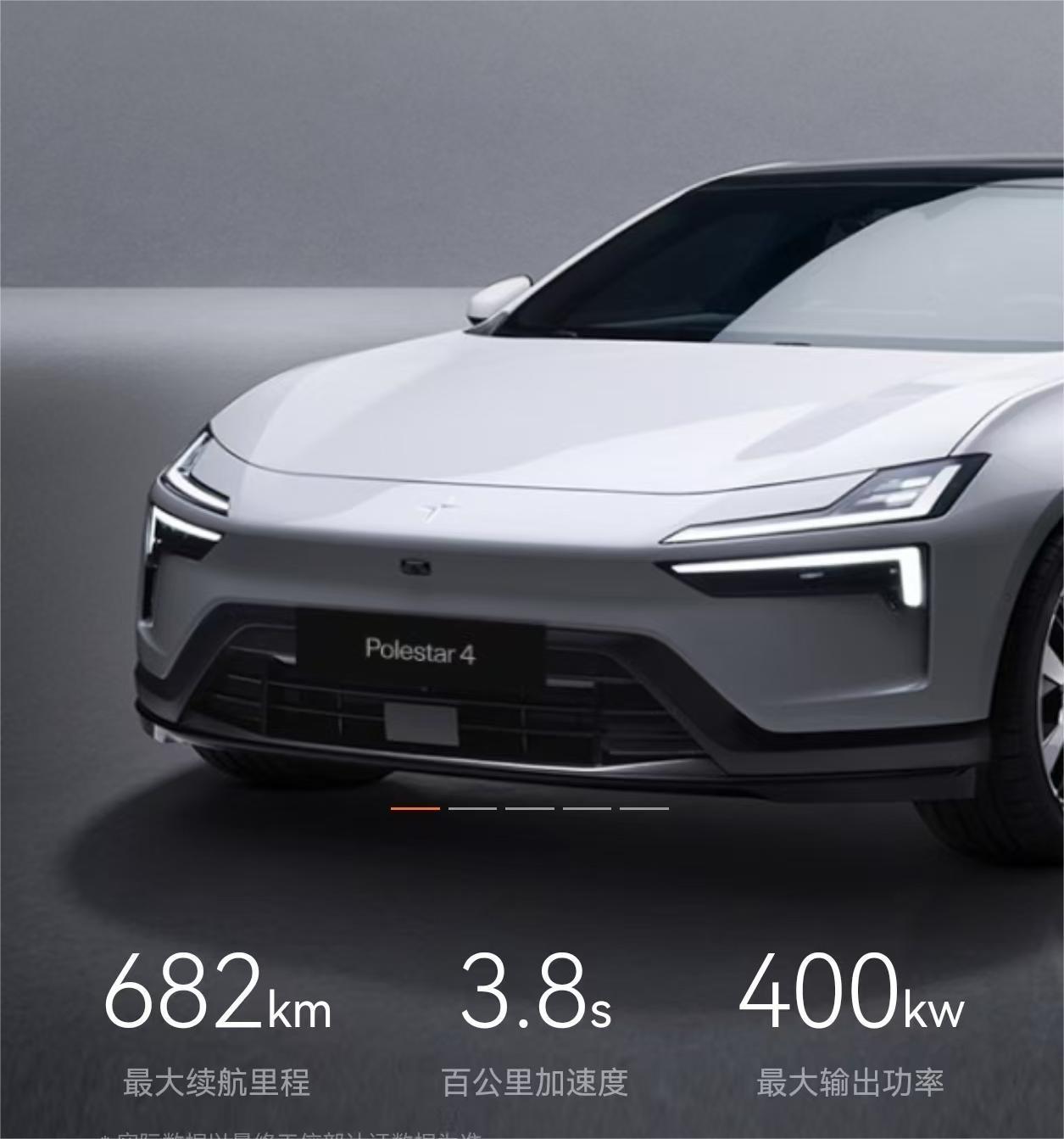
关闭最后一家门店 曾对标特斯拉的极星汽车调整在华业务模式
Zhong Guo Jing Ying Bao· 2025-10-15 07:11
Core Insights - Polestar, a luxury electric vehicle manufacturer once compared to Tesla, is facing scrutiny following the closure of its last physical store in China, located in Shanghai [1] - The company has shifted to an online sales model, indicating a strategic adjustment to better align with the rapidly changing consumer demands in the Chinese market [1] - Sales figures for Polestar in China have been disappointing, with only 69 units sold in the first half of 2025, and total sales from 2021 to 2023 showing a downward trend [1] Sales Performance - In contrast to its struggles in China, Polestar's global sales have been robust, with 44,482 units sold in the first three quarters of the year, representing a year-on-year increase of 36.5% [2] - The CEO of Polestar, Michael Lohscheller, noted that the company has maintained growth in the third quarter, achieving sales levels comparable to the entire year of 2024 [2] - Despite facing external challenges, Polestar's product lineup and strong order volume are expected to support growth in the fourth quarter [2]
实探|从对标特斯拉到门店“清零” 入华8年极星汽车折戟
Xin Jing Bao· 2025-10-14 17:30
Core Viewpoint - Polestar, once a competitor to Tesla, is undergoing a significant adjustment in its operations in China, closing all physical stores and shifting to online sales to adapt to the rapidly changing consumer demands in the market [2][6][10]. Group 1: Business Operations - Polestar has closed its last physical store in China, transitioning to an online sales model, with no direct sales or 4S stores remaining [2][6]. - The closure of the Shanghai store was anticipated due to low customer traffic, with reports indicating that the store had been largely empty for some time [3][4]. - The company claims that while it has closed its Shanghai store, other business operations in China remain unaffected, and customer rights will not be compromised [6][9]. Group 2: Sales Performance - In the first three quarters of 2023, Polestar's sales reached 44,482 units, marking a 36.5% year-on-year increase [2]. - Despite a recovery in overseas sales, Polestar sold only 69 vehicles in the Chinese market in the first half of 2025, indicating significant challenges in local market performance [2][9]. Group 3: Market Position and Strategy - Polestar entered the Chinese market in 2017 with high expectations, initially planning to have over 100 stores by the end of 2024, but has faced a series of setbacks [8][9]. - The brand has struggled with inconsistent product positioning and pricing strategies, which have led to consumer confusion and diminished brand perception [10][12]. - The company has changed its product offerings multiple times, including the introduction of high-end models and subsequent price reductions, which have negatively impacted its market image [11][12]. Group 4: Future Outlook - Experts suggest that for Polestar to regain a foothold in the Chinese market, it must establish a clear product positioning and stable pricing strategy, alongside advancements in smart technology and localized services [12][13]. - The current competitive landscape in the Chinese electric vehicle market is intensifying, with established local brands rapidly innovating, which poses a significant challenge for Polestar [12][13].
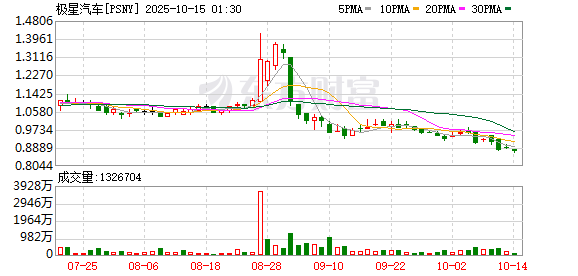
从对标特斯拉到门店“清零”,入华8年极星汽车折戟
Xin Jing Bao· 2025-10-14 14:20
Core Viewpoint - Polestar, once a competitor to Tesla, is undergoing a significant adjustment in its operations in China, closing all physical stores and shifting to online sales to adapt to the rapidly changing consumer demands in the market [1][2][6]. Group 1: Business Operations - On October 13, Polestar closed its last physical store in China, transitioning to an online sales model without any direct sales outlets or 4S stores [1][2]. - The last store, located in Shanghai, had seen a significant decline in customer traffic, leading to its closure after a series of operational adjustments [2][5]. - Polestar's sales in China for the first three quarters of 2023 reached 44,482 units, marking a year-on-year increase of 36.5%, although sales in the Chinese market have been notably low, with only 69 units sold in the first half of 2025 [1][6]. Group 2: Market Position and Strategy - Polestar entered the Chinese market in 2017 as a joint venture between Volvo and Geely, initially aiming for a high-end electric vehicle segment but has faced challenges in maintaining its brand positioning [6][8]. - The company has experienced fluctuating product positioning and pricing strategies, which have led to consumer confusion and impacted brand perception [8][9]. - Despite a strong performance in overseas markets, Polestar's ability to adapt its global strategies to the Chinese market remains critical for its future success [7][10]. Group 3: Future Outlook - Experts suggest that Polestar must establish a clear product positioning and stable pricing strategy to regain traction in the competitive Chinese electric vehicle market [10][11]. - The current market dynamics indicate that Polestar has limited time to adjust its strategies, as the electric vehicle sector in China is rapidly consolidating, and any missteps could lead to its exit from the market [11].