美的集团

Search documents
累计107亿,2026春晚成AI修罗场,大厂聚首贴身对垒
3 6 Ke· 2026-01-29 12:48
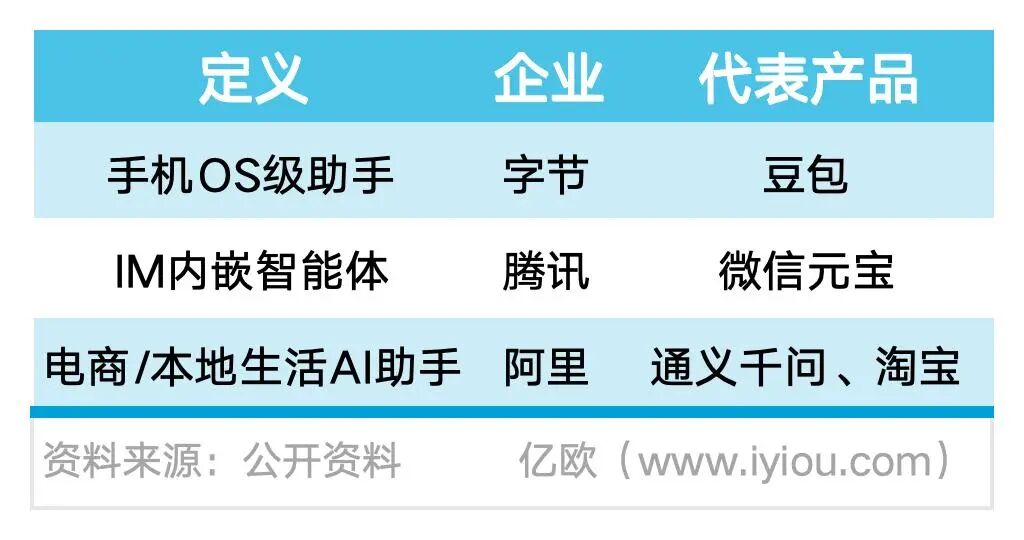
Core Insights - The 2026 Spring Festival Gala has become a significant platform for major tech companies to showcase their capabilities in AI and marketing strategies [1][10]. Group 1: Major Company Initiatives - Baidu announced a 5 billion yuan cash red envelope initiative for the Spring Festival, while Tencent launched a 10 billion yuan cash red envelope campaign, aiming to replicate the success of previous years [2][11]. - ByteDance secured exclusive AI cloud partnership with CCTV for the Spring Festival Gala, marking its third collaboration with the event [3][10]. - Alibaba introduced its flagship AI model Qwen3-Max-Thinking, which is reported to be a significant advancement in China's AI capabilities [2][10]. Group 2: Historical Context and Trends - Since 2015, major internet companies have distributed approximately 10.7 billion yuan in cash red envelopes during the Spring Festival, highlighting the event's importance for brand visibility [5][7]. - The Spring Festival Gala has evolved from a traditional entertainment event to a strategic battleground for tech companies to engage with consumers and enhance brand influence [6][7]. Group 3: AI Competition and Market Dynamics - The competition for "AI super entry" among major players like Baidu, Tencent, Alibaba, and ByteDance is intensifying, with each company striving to establish a dominant position in the AI landscape [10][13]. - Goldman Sachs predicts that 2026 will be a pivotal year for internet giants, as they increase investments in consumer-facing AI technologies [13][15]. - The introduction of AI functionalities by various companies during the Spring Festival will serve as a test of their technical capabilities and user engagement strategies [11][12].




深耕印尼电商十年获阿里入股 沃客非凡叩关港股
Xin Lang Cai Jing· 2026-01-29 12:12
Core Viewpoint - Wokefei has established a strong foothold in the Indonesian market as the largest cross-border digital retail platform for computer and mobile accessories, but it still faces challenges in diversifying into other Southeast Asian markets [1][9] Company Overview - Wokefei has submitted an application for listing on the Hong Kong Stock Exchange, with a valuation of approximately $215 million, and is expected to raise over $50 million in its IPO [1][9] - The company was founded by Xu Longhua, a former executive at TCL, and has been operating in Indonesia since 2015, gradually expanding into Vietnam, Thailand, and the Philippines [1][9] - Wokefei ranks first among Chinese cross-border e-commerce companies in the "3C" accessories segment and sixth in the small appliances sector, which is currently its fastest-growing area [1][9] Market Potential - The Southeast Asian retail market is projected to grow at an average annual rate of 6.1% from 2020 to 2024, expanding from $693.4 billion to $879.9 billion, with Indonesia being the largest market [3][11] - Indonesia's retail market size is expected to increase from $243.4 billion in 2020 to $313.3 billion by 2024 [3][11] Business Model - Wokefei's business model combines the Chinese supply chain with local logistics, operating 17 warehouses in Indonesia [4][11] - The company sells products through its own Wook app, as well as major e-commerce platforms like Shopee and Tokopedia, and utilizes TikTok for live commerce [4][11] - Wokefei has a distribution network that includes approximately 40,000 offline distributors covering around 85,000 warungs (small retail shops) [4][11] Financial Performance - The company has experienced stable revenue growth of 15% to 18% over the past two years, with revenue reaching approximately $127 million in the first nine months of 2025 [6][13] - Net profit growth accelerated from 11% in 2024 to 26% in the first nine months of 2025, with net profit reaching approximately $6.1 million [6][13] - The core product line, 3C accessories, accounts for about two-thirds of Wokefei's revenue, while small appliances and home goods each contribute about 10% to 15% [6][13] Competitive Landscape - The competitive environment in the Southeast Asian market has intensified, with more Chinese retailers entering the region [7][14] - Major brands like Midea and Supor have established a strong presence in the Indonesian home appliance market, while Xiaomi has built an ecosystem for mobile accessories across the region [7][14] Strategic Plans - Wokefei plans to use funds from its IPO to address its geographic concentration issue [7][14] - The company is tightening its R&D spending, with the ratio of R&D expenses to revenue decreasing from 2.3% in 2023 to 1.3% in the first nine months of 2025 [7][14] Overall Assessment - Wokefei's early entry into the Indonesian market and its cross-border e-commerce model leveraging low manufacturing costs in China position it well, but its late expansion into other markets may limit future growth [8][15] - Potential regulatory changes requiring higher local procurement could pressure Wokefei's cost advantages derived from its reliance on the Chinese supply chain [8][15]

中国股票策略机遇论坛要点-China Equity Strategy_ Shenzhen Opportunity Forum takeaways
2026-01-29 10:59
Summary of Key Points from the Conference Call Industry Overview - **China Equity Strategy**: The 2026 JPM China Opportunity Forum highlighted a constructive outlook on China equities, emphasizing thematic trades such as leading exporters, beneficiaries of AI infrastructure capital expenditure, anti-involution strategies, K-shaped consumption recovery, and property market upside optionality [2][7]. Core Insights - **AI Ecosystem**: The memory and ESS (Energy Storage Systems) sectors are benefiting from global AI capital expenditure demand. Notable trends include a memory up-cycle and rising localization. However, consumer electronics and automotive sectors are facing component cost increases and lower trade-in subsidies year-on-year [6][14]. - **Anti-involution Strategies**: Companies like H World and Atour are shifting to rational pricing strategies to enhance market share. Home appliance brands are focusing on innovation rather than price cuts. The solar industry is also expected to see continued anti-involution efforts [6][31]. - **Consumption Trends**: Leading brands are innovating and optimizing to counteract soft domestic demand, with a focus on overseas growth. The "Liberation Day" in April 2025 is noted as a potential trigger for a future recovery in consumer confidence [6][29]. - **Healthcare Sector**: Drug innovation is a key growth driver for pharmaceutical companies, with a focus on launching new drugs and expanding into overseas markets. Healthcare service providers are gradually recovering, aided by technology upgrades [35][38]. - **Humanoid Robots**: China leads in global humanoid robot shipments, driven by government orders. The sector faces challenges in commercialization and scalability, but industrial applications are expected to show strong potential [40][41]. Important Data Points - **Smartphone Market**: Global smartphone shipments are expected to decline by 0.9% in 2026, with iPhones projected to outperform Android devices. JPM forecasts iPhone EMS builds at 251 million units for 2025, a 6% year-on-year increase [14][15]. - **Automotive Sales**: A slow start for passenger vehicle sales in 2026 is anticipated, with a forecasted decline of 24-29% quarter-on-quarter in Q1 2026 [15]. - **Energy Storage Systems**: Global ESS battery shipments are projected to grow over 40% to approximately 900 GWh in 2026, driven by policy momentum in China and strong orders from Europe [19]. - **Semiconductor Market**: The semiconductor industry is expected to see divergent dynamics, with consumer electronics facing softness while memory and foundry segments show strength. Average DRAM pricing is forecasted to increase by approximately 60% year-on-year in 2026 [20][21]. Company-Specific Insights - **Top Picks**: J.P. Morgan's preferred companies include Zhongji Innolight, NAURA, and CATL, among others, with various ratings and market caps provided [8][10][11][13]. - **Healthcare Innovations**: Companies like Hansoh are targeting over 80% of revenue from innovative medicines by FY25, with a robust pipeline in oncology and diabetes [35][37]. Additional Considerations - **Cost Management**: Companies are overcoming upward cost pressures through process optimization and effective cost pass-through strategies in export markets [34]. - **Global Expansion**: Chinese brands are increasingly building capacity and expanding distribution in emerging markets, with notable investments in ASEAN production bases [33]. This summary encapsulates the key insights and data points from the conference call, providing a comprehensive overview of the current landscape and future outlook for various sectors within the Chinese market.
从手工两小时到“秒级生成”!看AI智能体如何赋能研发设计
Nan Fang Du Shi Bao· 2026-01-29 10:15
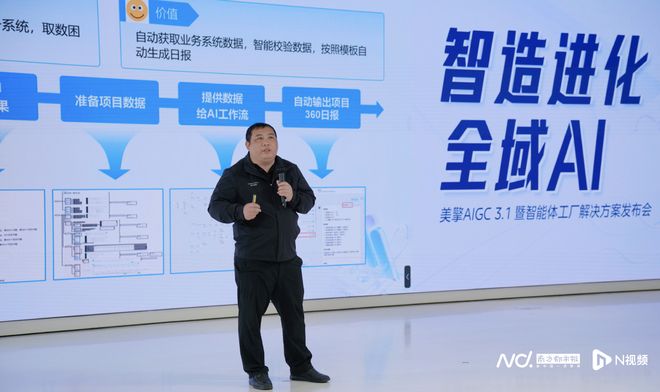
2026年广东省政府工作报告提出,加快推进人工智能全域全时全行业高水平应用。深化拓展"人工智能 +",支持人工智能深度赋能千行百业、造福千家万户。 2026年开年,美的集团旗下数字化产品与能力输出单位美云智数举办"智造进化 全域AI——美擎AIGC 3.1暨智能体工厂解决方案线上发布会"。记者从会上获悉,2025年,美的集团在人工智能领域实现重大 突破,构建了完整的智能体应用生态体系。 本次发布会上,美云智数携最新技术成果与实践,发布美擎AIGC 3.1及"智能体工厂解决方案",聚焦企 业级AI应用创新与落地,推动AI技术与企业生产运营深度结合,赋能制造业转型升级。 效率平均提升1小时将技术"沉淀"为人人可用的"助手" 在传统制造业的"研产供销"四大领域中,研发是知识最密集的环节之一。传统工艺设计,尤其是钣金、 配管等零部件的工艺规划,长期依赖工程师个人经验与手工操作,效率与质量均面临瓶颈。 李嘉蓬回忆,团队最初选择的是AI视觉识别方向,但经过两三个月后遇到了瓶颈,"如果识别精度不能 提升到96%或98%以上,那就意味着方案无法真正投入使用。" 团队没有固守原路,而是转向了"机器识别+算法"的新路径,最终实现 ...
深耕印尼电商十年获阿里入股 沃客非凡叩关港股
BambooWorks· 2026-01-29 09:46
Core Viewpoint - Wokefei has submitted an application for listing on the Hong Kong Stock Exchange, positioning itself as the largest cross-border digital retail platform for computer and mobile accessories in Indonesia [1][2] Group 1: Company Overview - Wokefei, founded by Xu Longhua, has been expanding in Southeast Asia since entering the Indonesian market in 2015, with recent expansions into Vietnam, Thailand, and the Philippines [2] - The company is backed by Alibaba's affiliate Hangzhou Haoxing, with a valuation of approximately $215 million, and aims to raise over $50 million in its IPO [1][4] - Wokefei ranks first among Chinese cross-border e-commerce companies in the "3C" accessories segment and sixth in small appliances, with the latter being the fastest-growing segment [2] Group 2: Market Potential - The Southeast Asian retail market is projected to grow at an annual rate of 6.1% from 2020 to 2024, expanding from $693.4 billion to $879.9 billion, with Indonesia being the largest market [5] - Indonesia's retail market is expected to grow from $243.4 billion in 2020 to $313.3 billion by 2024, highlighting its significance in the region [5] Group 3: Business Model and Sales - Wokefei's business model integrates the Chinese supply chain with local logistics, operating 17 warehouses in Indonesia and selling through its Wook app and major platforms like Shopee and Tokopedia [6] - The company has a distribution network of approximately 40,000 offline distributors, covering around 85,000 warungs (small retail shops) [6] - Online sales accounted for only 28.5% of total revenue in the first nine months of 2025, although this is a significant increase from 17.2% in 2023, driven by the rise of digital payments and smartphone penetration [6] Group 4: Financial Performance - Wokefei's revenue has shown stable growth, increasing by 15% to 18% annually, reaching approximately $127 million in the first nine months of 2025 [7] - Net profit growth accelerated from 11% in 2024 to 26% in the first nine months of 2025, with net profit reaching approximately $6.1 million [7] - The core product line of 3C accessories constitutes about two-thirds of revenue, while small appliances have seen rapid growth, with revenue increasing from approximately $0.4 million in 2023 to $16 million in the first nine months of 2025 [7] Group 5: Market Challenges - Despite its strong position, Wokefei faces increasing competition from other Chinese retailers entering the Southeast Asian market [2][8] - The company's operations are heavily concentrated in Indonesia, which poses risks as competition intensifies in other Southeast Asian markets [8] - Wokefei's asset-liability management shows concerns, with current liabilities growing faster than current assets, and a reduction in R&D spending from 2.3% of revenue in 2023 to 1.3% in the first nine months of 2025 [9]

美的集团1月29日斥资53.78万元回购7100股A股
Zhi Tong Cai Jing· 2026-01-29 09:35
Core Viewpoint - Midea Group announced a share repurchase plan and the issuance of shares under stock option incentive plans, indicating a strategic move to enhance shareholder value and employee motivation [1] Group 1 - The company plans to repurchase 7,100 A-shares at a cost of RMB 537,800 on January 29, 2026 [1] - Under the eighth stock option incentive plan, the company will issue 13,400 shares [1] - Under the ninth stock option incentive plan, the company will issue 67,800 shares [1]
美的集团(00300)1月29日斥资53.78万元回购7100股A股
智通财经网· 2026-01-29 09:34
Core Viewpoint - Midea Group announced a share buyback plan and the issuance of shares under stock option incentive plans, indicating a strategic move to enhance shareholder value and employee motivation [1] Group 1: Share Buyback - The company will repurchase 7,100 A-shares at a cost of RMB 537,800, scheduled for January 29, 2026 [1] Group 2: Stock Option Plans - Under the eighth stock option incentive plan, the company will issue 13,400 shares [1] - Under the ninth stock option incentive plan, the company will issue 67,800 shares [1]
美的集团(00300.HK)1月29日回购7100股A股
Ge Long Hui· 2026-01-29 09:33
Group 1 - The core point of the article is that Midea Group announced a share buyback plan, intending to repurchase 7,100 A-shares at a total cost of RMB 537,800 [1] - The buyback price per share ranges from RMB 75.57 to RMB 75.99 [1]
美的集团(00300) - 翌日披露报表
2026-01-29 09:27
FF305 呈交日期: 2026年1月29日 如上市發行人的已發行股份或庫存股份出現變動而須根據《香港聯合交易所有限公司(「香港聯交所」)證券上市規則》(「《主板上市規則》」)第13.25A條 / 《香港聯合交易所有限公司GEM證券 上市規則》(「《GEM上市規則》」)第17.27A條作出披露,必須填妥第一章節 。 | 第一章節 | | | | | | | | | --- | --- | --- | --- | --- | --- | --- | --- | | 1. 股份分類 | 普通股 | 股份類別 | A | | 於香港聯交所上市 | 否 | | | 證券代號 (如上市) | 000333 | 說明 | A股 (於深圳證券交易所上市) | | | | | | A. 已發行股份或庫存股份變動 | | | | | | | | | 事件 | | | 已發行股份(不包括庫存股份)變動 | | 庫存股份變動 | 每股發行/出售價 (註4) | 已發行股份總數 | | | | 已發行股份(不包括庫存股份)數 目 | | 佔有關事件前的現有已發 行股份(不包括庫存股 份)數目百分比 (註3) | 庫存股份數目 | | ...
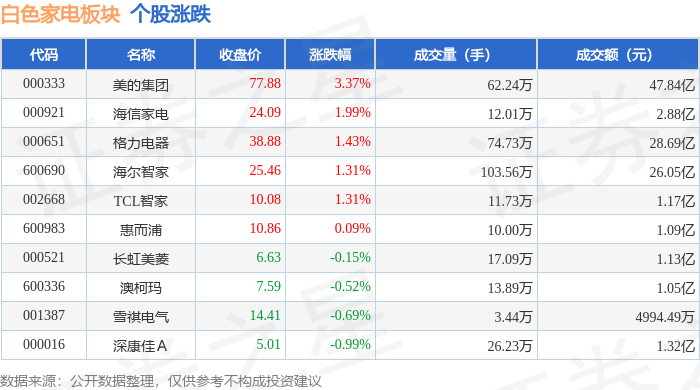
白色家电板块1月29日涨2.42%,美的集团领涨,主力资金净流出1.69亿元
Zheng Xing Xing Ye Ri Bao· 2026-01-29 09:03
Group 1 - The white goods sector increased by 2.42% on January 29, with Midea Group leading the gains [1] - The Shanghai Composite Index closed at 4157.98, up 0.16%, while the Shenzhen Component Index closed at 14300.08, down 0.3% [1] - Midea Group's stock price rose by 3.37% to 77.88, with a trading volume of 622,400 shares and a transaction value of 4.784 billion yuan [1] Group 2 - The white goods sector experienced a net outflow of 169 million yuan from institutional investors and 195 million yuan from speculative funds, while retail investors saw a net inflow of 364 million yuan [3] - Midea Group had a net inflow of 24.2 million yuan from institutional investors, while it faced a net outflow of 28.4 million yuan from speculative funds [3] - Gree Electric experienced a net outflow of 119 million yuan from institutional investors and a net inflow of 138 million yuan from retail investors [3]