
软银集团

Search documents
OpenAI, SoftBank invest $1 billion in SB Energy
Reuters· 2026-01-09 19:26
Core Insights - OpenAI and SoftBank Group are collaborating to invest $1 billion in SB Energy, which is a provider of data-center and power infrastructure owned by SoftBank, as part of their Stargate project [1] Company Summary - The investment of $1 billion will enhance SB Energy's capabilities in data-center and power infrastructure [1] - This partnership signifies a strategic move by both OpenAI and SoftBank to leverage advancements in technology and infrastructure [1]



OpenAI和软银对合作伙伴SB Energy投资10亿美元
Hua Er Jie Jian Wen· 2026-01-09 19:01
Core Insights - The article discusses the recent financial performance of a leading company in the technology sector, highlighting a significant increase in revenue and net income compared to the previous year [1] Financial Performance - The company reported a revenue of $10 billion for the last quarter, representing a 20% increase year-over-year [1] - Net income reached $2 billion, which is a 25% increase compared to the same quarter last year [1] Market Trends - The technology sector is experiencing robust growth, driven by increased demand for cloud services and artificial intelligence solutions [1] - Analysts predict that this trend will continue, with an expected market growth rate of 15% annually over the next five years [1] Strategic Initiatives - The company has announced plans to invest $1 billion in research and development to enhance its product offerings and maintain competitive advantage [1] - A new partnership with a leading AI firm is expected to accelerate innovation and expand market reach [1]

OpenAI, SoftBank Invest $1 Billion in Stargate Partner SB Energy
Yahoo Finance· 2026-01-09 19:00
Investment Overview - OpenAI and SoftBank Group Corp. have jointly invested $1 billion in SB Energy, focusing on the development of data centers to support artificial intelligence initiatives [1][2] - Each company is contributing $500 million to support SB Energy's growth as a data center developer and operator [2] Data Center Development - OpenAI has selected SB Energy to build and operate a 1.2 gigawatt data center in Milam County, Texas, which can power approximately 750,000 US homes [2] - SB Energy has transitioned from a renewable and storage developer to a data center developer, having previously secured $800 million from Ares Infrastructure Opportunities funds [4] Energy Demand and Industry Trends - The demand for energy is increasing as large tech firms seek to support their AI ambitions, leading to a competitive landscape for energy resources [3] - Meta Platforms Inc. has announced agreements for over 6 gigawatts of nuclear power to meet its energy needs [3] Strategic Partnerships - The collaboration between OpenAI and SoftBank is part of a broader network of deals among tech companies aimed at bolstering the AI sector [5] - The partnership aligns with OpenAI's Stargate initiative, which aims to invest $500 billion in US data centers and infrastructure for AI over four years [6]
国家队入股后股价已飙升70%!特朗普会晤英特尔(INTC.US)CEO陈立武 直言是一场“伟大交易”
智通财经网· 2026-01-09 11:29
Core Viewpoint - The meeting between President Trump and Intel CEO Pat Gelsinger highlights the U.S. government's support for Intel, which has resulted in a significant increase in the company's stock price since the government began purchasing shares [1][2]. Group 1: Government Involvement - The U.S. government has purchased up to 10% of Intel's shares, with current holdings at approximately 5.5%, contributing to a stock price increase of over 70% since the announcement [1]. - Trump's post on Truth Social emphasized the government's commitment to bringing advanced chip manufacturing back to the U.S. and described the meeting as a "great deal" for both parties [1]. Group 2: Company Performance and Future Plans - Since taking over as CEO in March 2022, Pat Gelsinger has taken steps to stabilize Intel's business, including securing investments from Nvidia and SoftBank worth billions [1]. - Intel plans to begin shipping its first products below 2 nanometers (18A) by the end of 2025, although the company still relies on TSMC for some chip manufacturing [1]. Group 3: Financial Aspects - The government's initial investment in August was valued at $5.7 billion, with potential future value reaching $27.7 billion depending on market developments [2]. - The current public market value of the government's holdings is slightly above $11 billion [2].

OpenAI狂揽软银2800亿融资,谷歌/微美全息领衔AI军备竞赛重塑大模型格局
Sou Hu Cai Jing· 2026-01-09 06:39
Group 1 - SoftBank has completed an additional investment of $22.5 billion in OpenAI and plans to invest $40 billion (approximately 279.9 billion RMB) over the next 12 to 24 months at a valuation of $260 billion [1] - The $40 billion investment includes $30 billion (approximately 209.9 billion RMB) from SoftBank alone and $10 billion (approximately 69.9 billion RMB) from co-investors [2] - OpenAI is enhancing its audio AI capabilities to develop a voice-centric personal AI device, expected to be launched in Q1 2026, which will focus on auditory interaction rather than screen reliance [4] Group 2 - The competitive landscape in the AI industry is shifting as major tech companies like Google, Amazon, Meta, and Apple are entering the market, with Google recently launching the highly praised Gemini 3.0 model [7] - Micro美全息 is actively competing in the AI race, focusing on AI chip development and multi-modal content production platforms, while also enhancing its GPU market presence [9] - The AI competition is intensifying, with significant advancements in large model technology and ongoing discussions about the essence of AI technology and AGI, with high valuations for companies like OpenAI and Anthropic [10]
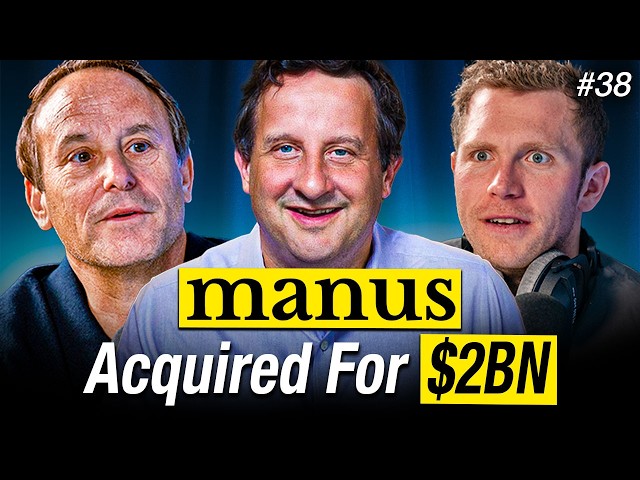
20VC x SaaStr Is Back!!: Nvidia’s $20B Groq Grab, Meta’s $2.5B Manus Play, and Why “Invisible Unemployment” Will Define 2026
SaaStr· 2026-01-08 17:21
Group 1 - Nvidia's $20 billion acquisition of Groq is viewed as a defensive move to eliminate margin pressure rather than a growth strategy, as it represents less than 1% of Nvidia's market cap and less than 20% of its annual free cash flow [3][22] - Meta's acquisition of Manus for $2.5 billion at a valuation of 25 times ARR is characterized as a "local maximum" deal, with founders cashing out significantly while the company was experiencing rapid growth [5][6] - The trend of "spite startups" is emerging, where founders are motivated by competitive tensions and past grievances, driving innovation in the AI sector [7][20] Group 2 - OpenAI's compensation structure, with an average of $1.5 million per employee, is deemed necessary to attract and retain top talent in a highly competitive market, despite being significantly higher than pre-IPO tech companies [8][10] - SoftBank's $40 billion investment in OpenAI is highlighted as a potentially transformative deal, with the investment already showing substantial paper gains shortly after closing [10] - The IPO market is currently challenging, as evidenced by Navan's public offering at a low multiple despite positive growth, indicating that many companies may prefer to remain private [14][15] Group 3 - The concept of "invisible unemployment" is introduced, suggesting a significant shift in the labor market that will not be reflected in official statistics, particularly affecting entry-level knowledge workers [16][21] - Companies are increasingly able to achieve high revenue per employee without expanding headcount, leading to a tighter job market for less skilled workers [16][19] - The best companies are choosing to stay private, as they can generate substantial profits without the need for public market funding, raising questions about the attractiveness of public offerings [17][18]


【环球财经】东京股市继续回落 日经225指数下跌1.63%
Xin Hua Cai Jing· 2026-01-08 07:41
Market Overview - The Tokyo stock market indices continued to decline on January 8, with the Nikkei 225 index falling by 1.63% and the Tokyo Stock Exchange Price Index decreasing by 0.77% [1][2] - The Nikkei index closed down by 844.72 points at 51,117.26 points, while the Tokyo Stock Exchange index fell by 27.00 points to 3,484.34 points [2] Sector Performance - Most of the 33 industry sectors on the Tokyo Stock Exchange experienced declines, particularly in non-ferrous metals, electrical products, and information and communication sectors [2] - Conversely, sectors such as pharmaceuticals, electric and gas utilities, and air transportation saw gains [2] Influencing Factors - The decline in the Tokyo stock market was influenced by the overnight drop in the Dow Jones Industrial Average and the Philadelphia Semiconductor Index, which negatively impacted semiconductor-related stocks like SoftBank Group and Tokyo Electron [1] - The announcement by China to strengthen export controls on dual-use items to Japan was a significant factor contributing to market pressure [1] - Additionally, China's decision to initiate anti-dumping investigations on imported dichlorodihydrosilane from Japan led to a nearly 4% drop in the stock price of chemical giant Shin-Etsu Chemical [1]
软银投资:9成未上市,AI股影响成败
3 6 Ke· 2026-01-08 04:17
Group 1 - SoftBank Group plans to invest in OpenAI through its second fund starting September 2024, with an additional investment of $22.5 billion expected in 2025 [2][3] - The second fund's investment targets have increased from 157 companies to 279 over four years, with AI-related investments in the corporate services sector rising from 35 to 84 companies [3] - The total size of the second fund has been expanded from $67.8 billion to $101.8 billion, reflecting a strategic shift towards AI investments [3] Group 2 - OpenAI's valuation is projected to grow significantly, from $150 billion in September 2024 to $500 billion by October 2025, with a potential IPO in 2026 that could reach a valuation of $1 trillion [3] - The second fund primarily invests in unlisted AI companies, with Databricks expected to become a "Hectocorn" valued over $100 billion [5] - Among the IPOs in 2025, three fintech companies have performed poorly, with significant losses reported, highlighting the challenges faced by the fund [6] Group 3 - PayPay, a major smartphone payment company, is expected to go public in 2026, which could be crucial for SoftBank's second fund amid ongoing funding needs for AI investments [6]
软银投资(下)9成未上市,AI股影响成败
日经中文网· 2026-01-08 02:59
Group 1 - SoftBank Group plans to invest in OpenAI through its second fund starting September 2024, with an additional investment of $22.5 billion expected in 2025, indicating strong confidence in OpenAI's future IPO and valuation growth [2][5]. - The second fund's investment targets have increased significantly, with the number of companies rising from 157 to 279 over four years, particularly in the AI sector, which grew from 35 to 84 companies [3]. - The total investment scale of the second fund has been expanded from $67.8 billion to $101.8 billion, reflecting a strategic shift towards AI investments [5]. Group 2 - OpenAI's valuation has seen dramatic growth, increasing from $150 billion in September 2024 to $500 billion by October 2025, marking over a threefold increase within a year [5]. - The second fund primarily invests in unlisted AI companies, with notable mentions including Databricks, which is expected to achieve a valuation exceeding $100 billion, and Wiz, acquired by Google for $32 billion [8]. - The performance of IPOs in 2025 has been disappointing, with companies like eToro, Chime, and Klarna reporting significant losses, highlighting the challenges faced by SoftBank's investments in the fintech sector [9]. Group 3 - PayPay, a major smartphone payment company in which the second fund holds a 34% stake, is expected to file for an IPO in the U.S. by 2026, which could be crucial for SoftBank's financial recovery and its AI investment strategy [9].

Intel Is Doubling Back Down on Gaming. Does That Make INTC Stock a Buy Here?
Yahoo Finance· 2026-01-07 20:43
Core Insights - Intel's stock surged over 6% on January 7 after the announcement of a new gaming chip and platform by Daniel Rogers, the vice president of PC products [1] - The launch of the Core Ultra Series 3 processors, built on the 18A process, shows a remarkable 77% performance improvement in gaming compared to previous models [1] - Following this rally, Intel's stock has increased approximately 140% from its 52-week low [2] Product Development - The CES 2026 launch of the Core Ultra Series 3 "Panther Lake" processors is seen as a positive indicator for Intel's stock, confirming the effectiveness of the 18A node at scale [3] - The new processors demonstrate significant performance gains, including a 60% improvement in multithreaded workloads, enhancing Intel's competitiveness against rivals like AMD and Nvidia [3] Market Position and Strategy - Enhanced product differentiation strengthens confidence in Intel's turnaround strategy and showcases successful execution of advanced manufacturing processes, which reassures investors about long-term growth [4] - Intel is positioned as a fallback option for global customers due to the inability of Taiwan Semiconductor Manufacturing Company (TSMC) to meet the increasing chip demand, suggesting potential for a multi-year stock rally [5] Investment and Financial Health - Intel has attracted billions in investments from major players like Nvidia, SoftBank, and the Trump administration, highlighting its strategic importance in the global semiconductor supply chain [6] - Despite a significant rally since last April, Intel's long-term relative strength index (100-day) is around 58, indicating that the bullish trend may continue [6]