
有友食品

Search documents
2025快消最大赌局:创始人集体退场,把百亿家业交给“二代”,到底靠不靠谱?
3 6 Ke· 2025-12-31 04:27
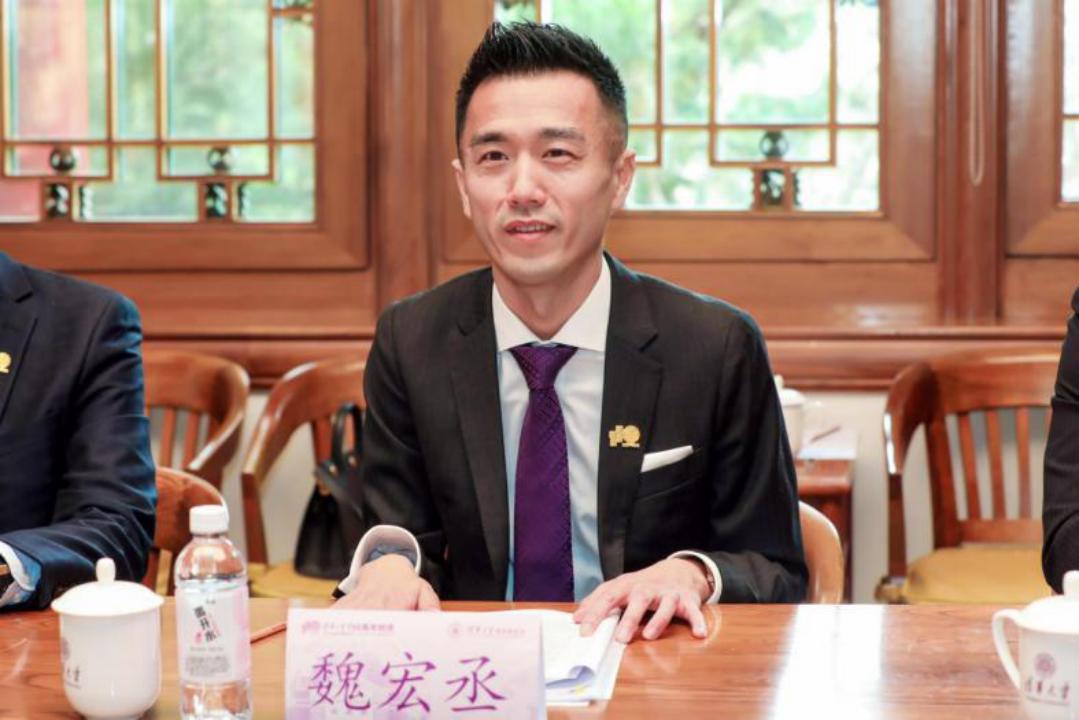
Group 1: Core Insights - The transition to the second generation of leadership is crucial for the stability and long-term development of companies in the food and beverage industry, particularly for those founded in the 1990s and early 2000s [1] - By 2025, several food and beverage companies, including Master Kong, Dali Foods, and Youyou Foods, are expected to successfully complete their generational transitions, facing systemic challenges due to changing consumer environments [1] Group 2: Master Kong - Master Kong will officially enter a new phase of leadership with Wei Hongcheng, the third son of founder Wei Yingzhou, taking over as CEO on January 1, 2026, after the retirement of current CEO Chen Yingrang [4] - Under the management of professional managers over the past decade, Master Kong's revenue grew from 51.1 billion to 80.6 billion, and net profit increased from 1.28 billion to 3.73 billion, establishing a modern management system [4] - The company faces challenges as its previous growth model reaches a ceiling, with declining performance in the first half of 2025 indicating the need for transformation [4] Group 3: Dali Foods - Dali Foods, with an annual revenue of 20 billion, will see a management transition from founder Xu Shihui to his daughter Xu Yangyang on November 12, 2025 [7] - The company has experienced a decline in revenue from a peak of 22.29 billion in 2021 to 18.07 billion in 2024, raising questions about Xu Yangyang's ability to revitalize the company's performance [8] - Xu Yangyang has a strong background in the company, having worked in various roles for 17 years, which may aid her in addressing the challenges ahead [8] Group 4: Youyou Foods - Youyou Foods will undergo a unique succession with founder Lu Youzhong stepping down as general manager, passing the role to his nephew Lu You, while his daughter Lu Xin exits the board [11] - This "uncle-nephew co-management" model is a result of a competitive selection process, with Lu You having extensive experience in the company [11] - The company faces significant challenges, including management complexities and reliance on a single strong distribution channel [12] Group 5: Wancheng Group - Wancheng Group will transition to a "aunt-nephew co-management" model, with Wang Lijing taking over as chairperson and Wang Zeneng as general manager following the resignation of founder Wang Jiankun [15] - The transition was accelerated by a crisis involving the founder, leading to a rapid change in leadership dynamics [15] - Wang Zeneng's leadership has already seen aggressive moves, including a significant acquisition and plans for a dual listing [16] Group 6: Huanlejia - Huanlejia's new CEO, Li Zihao, faces immediate challenges with a declining distribution network, having lost 511 distributors in the first half of the year [20] - The company's revenue from distributors has shrunk by 30%, directly impacting its financial performance [20] - Li Zihao is working on rebuilding trust with distributors and implementing strategies for brand and product upgrades [20] Group 7: Other Companies - Companies like Haoxiangni and Liziyuan are also undergoing generational transitions, with new leaders facing similar challenges of product aging and performance decline [21] - The common challenge for these second-generation leaders is to find new growth drivers amid changing consumer demands, akin to a second entrepreneurial venture [21]



2025年1-11月全国农副食品加工业出口货值为1897.8亿元,累计下滑5.9%
Chan Ye Xin Xi Wang· 2025-12-28 01:52
Core Viewpoint - The report highlights a decline in the export value of China's agricultural and sideline food processing industry, indicating potential challenges for companies in this sector [1]. Industry Summary - In November 2025, the export value of the agricultural and sideline food processing industry in China was 18.46 billion, showing a year-on-year decrease of 9.3% [1]. - From January to November 2025, the cumulative export value reached 189.78 billion, reflecting a year-on-year decline of 5.9% [1]. - The report provides insights into the market management and development prospects of the nutrition food processing industry in China from 2026 to 2032 [1]. Company Summary - Listed companies mentioned include Hezhimian (000716), Shuanghui Development (000895), Qianwei Yangchun (001215), and others, indicating a broad spectrum of players in the agricultural and food processing sector [1]. - The report by Zhiyan Consulting emphasizes the need for companies to adapt to the changing market conditions and export challenges [1].

有友食品股份有限公司实际控制人及其一致行动人权益变动触及1%刻度暨减持股份结果公告
Shang Hai Zheng Quan Bao· 2025-12-26 21:35
Core Viewpoint - The announcement details the shareholding changes of Youyou Food Co., Ltd. due to a reduction in shares held by a major shareholder, which has triggered a 1% threshold change in equity ownership [4][9]. Shareholder Holding Basic Situation - Before the reduction plan, shareholder Lu Youming held 4,994,930 shares, accounting for 1.17% of the total share capital. These shares were acquired before the company's IPO and through capital reserve conversion after listing [2]. Reduction Plan Implementation Results - On December 3, 2025, the company disclosed a reduction plan where Lu Youming intended to reduce his holdings by up to 1,100,000 shares, representing a maximum of 0.26% of the total share capital. By December 26, 2025, he successfully reduced his holdings by 1,100,000 shares, bringing his total to 3,894,930 shares, or 0.91% of the total share capital [3][4]. Equity Change Situation - Following the reduction, Lu Youming's shareholding decreased from 4,994,930 shares to 3,894,930 shares, and his ownership percentage fell from 1.17% to 0.91%. The total shares held by the actual controller and their concerted actors decreased from 287,668,209 shares to 286,568,209 shares, with the combined holding percentage dropping from 67.26% to 67.00%, thus triggering the 1% threshold change [4][9]. Compliance with Regulations - The reduction was conducted in accordance with relevant laws and regulations, and it did not lead to any changes in the controlling shareholder or actual controller, nor did it significantly impact the company's governance structure or ongoing operations [9].
有友食品(603697.SH):股东鹿有明累计减持110万股公司股份
Ge Long Hui A P P· 2025-12-26 10:26
Summary - The core point of the article is that Mr. Lu Youming has completed a share reduction plan, decreasing his stake in Youyou Food Co., Ltd. by 1.1 million shares, which represents 0.26% of the company's total share capital [1] Group 1 - Mr. Lu Youming has reduced his holdings in Youyou Food Co., Ltd. by 1.1 million shares [1] - The share reduction plan has been fully implemented as of December 26, 2025 [1] - After the reduction, Mr. Lu Youming holds 3.8949 million shares, accounting for 0.91% of the total share capital [1]
有友食品(603697) - 实际控制人及其一致行动人权益变动触及1%刻度暨减持股份结果公告
2025-12-26 09:48
证券代码:603697 证券简称:有友食品 公告编号:2025-096 有友食品股份有限公司 实际控制人及其一致行动人权益变动触及 1%刻度暨 减持股份结果公告 本公司董事会、全体董事及相关股东保证本公告内容不存在任何虚假记载、 误导性陈述或者重大遗漏,并对其内容的真实性、准确性和完整性承担法律责任。 重要内容提示: 股东持股的基本情况 本次减持计划实施前,有友食品股份有限公司(以下简称"公司")股东鹿 有明先生持有公司股份 4,994,930 股,占公司总股本的 1.17%。上述股份均为公 司 IPO 前取得的股份(3,567,807 股)及公司上市后以资本公积转增股本方式 取得的股份(1,427,123 股),上述股份均为无限售条件流通股。 截至 2025 年 12 月 26 日,鹿有明先生通过集中竞价方式累计减持公司股份 1,100,000 股,占公司总股本的 0.26%。本次减持计划已实施完毕。截至本公告 披露日,鹿有明先生持有公司股份 3,894,930 股,占公司总股本的 0.91%。 本次权益变动情况 | 权益变动方向 | 比例增加□ | | 比例减少 | | --- | --- | --- ...
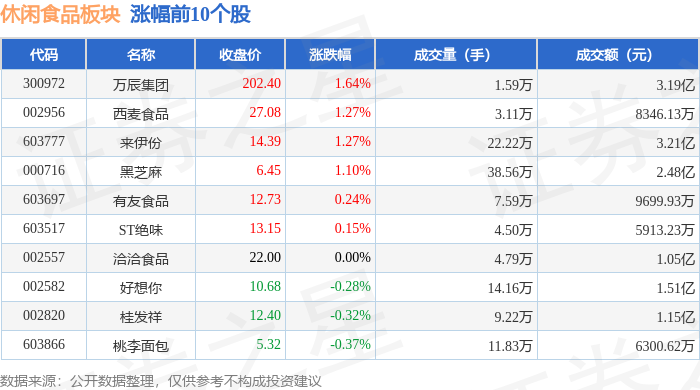
休闲食品板块12月26日涨0.02%,万辰集团领涨,主力资金净流出5517.24万元
Zheng Xing Xing Ye Ri Bao· 2025-12-26 09:07
Core Viewpoint - The leisure food sector experienced a slight increase of 0.02% on December 26, with Wancheng Group leading the gains, while the overall market indices also showed positive movement [1]. Group 1: Market Performance - The Shanghai Composite Index closed at 3963.68, up by 0.1% [1]. - The Shenzhen Component Index closed at 13603.89, up by 0.54% [1]. - Key stocks in the leisure food sector showed varied performance, with Wancheng Group closing at 202.40, up by 1.64% [1]. Group 2: Stock Performance Summary - Wancheng Group (300972) led the sector with a closing price of 202.40 and a gain of 1.64% [1]. - Other notable performers included Ximai Food (002956) at 27.08, up by 1.27%, and Laiyifen (603777) at 14.39, also up by 1.27% [1]. - Stocks such as Good Idea (002582) and Guilin Faxiang (002820) saw slight declines of 0.28% and 0.32%, respectively [1]. Group 3: Capital Flow Analysis - The leisure food sector saw a net outflow of 55.17 million yuan from institutional investors, while retail investors contributed a net inflow of 48.18 million yuan [2]. - The overall capital flow indicates a mixed sentiment, with institutional investors withdrawing funds while retail investors showed interest [2]. Group 4: Individual Stock Capital Flow - Laiyifen (603777) experienced a significant net outflow of 42.53 million yuan from institutional investors, indicating a bearish sentiment [3]. - Wancheng Group (300972) had a net inflow of 2.78 million yuan from retail investors, suggesting some level of support from individual investors [3]. - Ximai Food (002956) saw a net inflow of 3.03 million yuan from institutional investors, reflecting positive interest [3].


华源晨会精粹20251225-20251225
Hua Yuan Zheng Quan· 2025-12-25 14:38
Group 1: Food and Beverage Industry - The report indicates a gradual recovery in the food and beverage sector, with soft drinks and snacks leading the recovery, followed by the catering supply chain, condiments, dairy products, beer, and finally, liquor [2][9][10] - The analysis draws parallels with Japan's 1990s consumption differentiation, highlighting that successful industries often address demand pain points and have low penetration rates [10][11] - Investment strategies focus on sectors with stabilizing ROA and potential valuation recovery, emphasizing price as the primary selection logic, while volume is secondary [11][12] Group 2: Construction and Building Materials - The construction sector is expected to experience a "spring rally" in 2026, supported by historical investment patterns and major national projects [13][14] - The report highlights three core investment themes: major national projects, high-dividend low-valuation state-owned enterprises, and private construction firms leveraging cash flow for new growth areas [14][15] - Infrastructure investment data shows a decline in both narrow and broad infrastructure investment, indicating a need for policy support to stabilize the sector [15][16] Group 3: Real Estate Industry - The real estate sector continues to face pressure, with significant declines in new housing sales and investment, despite government efforts to promote high-quality development [18][20] - The report notes that the Ministry of Housing and Urban-Rural Development emphasizes maintaining a balance in supply and demand, which is crucial for economic stability [20][22] - Specific data indicates a 31.4% year-on-year decline in real estate development investment and a 26.1% drop in sales revenue, highlighting ongoing challenges in the market [20][21] Group 4: Electronics and Robotics - The report on Changying Precision emphasizes the introduction of employee stock ownership and stock option plans to enhance long-term development confidence and attract core talent [23][24] - The company is positioned as a leader in solder paste printing equipment, with a focus on high-end product demand driven by AI trends [33][34] - New product lines, including dispensing and packaging equipment, are expected to contribute to growth, with significant revenue increases anticipated [34][36] Group 5: Media Industry - The report on Giant Legend highlights the rapid growth of its IPs, particularly the "Zhou Classmate" and "Liu Genghong," which have gained substantial popularity on social media platforms [28][29] - The company is expanding its strategic investments to enhance collaboration with international stars and develop consumer products linked to its IPs [29][30] - Future growth is expected through a diversified approach that integrates emotional value into various products and experiences, positioning the company as a "disseminator of happiness" [30][31] Group 6: Mechanical and Building Materials - The report on Kaige Precision Machine outlines the company's leadership in solder paste printing equipment and its expansion into new product categories driven by AI [33][34] - The company is expected to see significant growth in its new product lines, including flexible automation equipment, which are crucial for enhancing manufacturing efficiency [34][36] - Profit forecasts indicate strong growth potential, with expected net profits increasing significantly over the next few years [36]


有友食品(603697) - 关于使用自有资金进行委托理财的公告
2025-12-25 10:00
证券代码:603697 证券简称:有友食品 公告编号:2025-095 有友食品股份有限公司 关于使用自有资金进行委托理财的公告 本公司董事会及全体董事保证本公告内容不存在任何虚假记载、误导性陈述 或者重大遗漏,并对其内容的真实性、准确性和完整性承担法律责任。 重要内容提示: 基本情况 | 投资金额 | 13,000 万元 | | --- | --- | | 投资种类 | 券商收益凭证、资产管理计划 | | 资金来源 | 自有资金 | 特别风险提示:公司本次委托理财产品分别为有保本约定的浮动收益 型理财产品及非保本的资产管理计划,但金融市场受宏观经济的影响较大, 不排除该项投资受到市场波动、宏观经济形势及货币政策、财政政策等宏观 政策发生变化带来的系统性风险影响,投资的实际收益不可预期。 一、投资情况概述 (一)投资目的 公司及子公司在保证日常经营资金需求、有效控制投资风险的前提下,通过 对自有资金进行适度、适时的委托理财,有利于提高公司资金的使用效率,增加 资金收益,为公司及股东获取更多的投资回报。 已履行的审议程序:有友食品股份有限公司(以下简称"公司")于 2025 年 3 月 19 日召开第四届董事会 ...
有友食品:使用1.3亿元自有资金进行委托理财
Xin Lang Cai Jing· 2025-12-25 09:47
Core Viewpoint - The company plans to use up to 1.2 billion yuan of its own funds for cash management, with a duration of 12 months, as approved in the upcoming annual shareholders' meeting [1] Group 1: Financial Management - The company will delegate 130 million yuan for financial management, investing in broker收益凭证 and asset management plans with a term of 361 to 365 days [1] - As of the announcement date, the company's total balance of entrusted financial management is 1.01 billion yuan [1] - Recently, the company redeemed 150 million yuan of financial products, earning a profit of 2.8188 million yuan [1] Group 2: Risk Control - The company has implemented multiple measures to control financial management risks, ensuring that investments do not have a significant impact on its operations [1]
华源证券:食品饮料板块复苏分化 关注ROA企稳与结构性景气赛道
智通财经网· 2025-12-25 03:57
Core Viewpoint - The report from Huayuan Securities indicates a recovery sequence in the food and beverage industry, with soft drinks and snacks leading the recovery, followed by the catering supply chain, condiments, dairy products, beer, and finally, liquor [1][2]. Group 1: Recovery Sequence Analysis - The recovery rhythm of different consumption sectors shows both differences and commonalities, driven by industry supply-demand dynamics and supply chain structures [2]. - The commonality lies in the prevailing competition in the existing market, where companies focus on increasing sales to digest capacity and enhance operational efficiency [2]. - ROA (Return on Assets) is identified as a leading indicator for the operational recovery of consumer enterprises, with a detailed analysis of the stages of enterprise and channel adjustments [2]. Group 2: Historical Context and Insights - An analysis of Japan's consumption differentiation in the 1990s reveals that industries that can capture structural opportunities typically meet two conditions: addressing demand pain points and having low penetration rates [3]. - The rapid development of cost-effective options and health-oriented niche categories in Japan during that period illustrates the potential for growth in low-penetration sectors [3]. Group 3: Investment Strategy - From a pricing perspective, rising CPI may lead to valuation recovery in traditional industries with higher penetration rates, such as liquor, beer, and dairy products, which are expected to attract incremental capital [4]. - Recommendations include focusing on leading companies in these sectors, such as Kweichow Moutai, Luzhou Laojiao, and Yili Group [4]. - From a volume perspective, companies with high supply chain efficiency in cost-effective consumption are likely to see volume growth, with specific recommendations for companies in the catering supply chain and soft drinks [4].