DeepSeek

Search documents
中国 AI 专家会议要点- 核心参与者战略重心分化_ China AI expert call takeaways_ diverging strategic focus among key players
2026-03-10 10:17
Summary of the Conference Call on China Internet Sector and AI Development Industry Overview - **Industry**: China Internet Sector, specifically focusing on AI development - **Key Players**: Major internet companies including ByteDance, Alibaba, Baidu, Tencent, and emerging AI labs like MiniMax, Zhipu AI, and others Core Insights and Arguments Diverging Strategies - Internet leaders are focusing on the domestic market in China, integrating AI chatbots into consumer-facing super apps to create new traffic gateways [2][3] - Emerging AI labs are prioritizing enterprise services and international markets, with a focus on AI agent products like OpenClaw, leveraging model performance and cost advantages [2][4] Model Capabilities - **ByteDance**: Strong multimodal capabilities and rapid model iteration, utilizing data from Douyin/TikTok [3] - **Alibaba**: Integrates AI models within its ecosystem for both enterprise and consumer users, exemplified by DingTalk and Qwen [3] - **Baidu**: Notable for its reasoning capabilities and cost efficiency, particularly in finance and healthcare sectors [3] - **Tencent**: Gradual AI rollout with diverse applications across social and gaming ecosystems [3] Monetization Challenges - Internet leaders are expected to focus on consumer-facing traffic gateways rather than immediate monetization through advertising or subscriptions, as market consolidation may take time [3] Emerging AI Labs - **MiniMax**: Strong consumer user base and efficiency in enterprise business [4] - **Zhipu AI**: Generates significant revenue from local model deployment for business and government clients [4] - **GLM 5.0**: Achieved improvements in coding capabilities [4] - **Moonshot's Kimi**: Transitioning from consumer chatbots to enterprise services [4] - **DeepSeek**: Innovation-driven, focusing on advancing model capabilities towards AGI [4] Investment Opportunities - **MiniMax**: Initiated coverage, positioned to benefit from AI trends in China and globally [5] - **Alibaba and Baidu**: Favorable due to their full-stack AI capabilities [5] - **Tencent and Kuaishou**: Potential in AI applications noted [5] Risks Identified - Key risks to the sector include: 1. Evolving competitive landscape and intensifying competition [7] 2. Rapid technological changes and shifting user preferences [7] 3. Uncertain monetization strategies [7] 4. Rising costs associated with traffic acquisition and content promotion [7] 5. Maintenance of IT systems [7] 6. Challenges in international market expansion [7] 7. Regulatory changes impacting market sentiment [7] Additional Important Points - The report emphasizes the importance of understanding the evolving dynamics within the AI sector and the competitive strategies of both established internet companies and emerging AI labs [2][4] - The potential for AI to enhance production efficiency in various sectors, including video generation and gaming, is highlighted as a long-term market opportunity [2]
X @Cointelegraph
Cointelegraph· 2026-03-10 03:00
🔥 UPDATE: ChatGPT is the most used AI in most countries, except in China, where DeepSeek dominates, per Andreessen Horowitz. https://t.co/YscyeXuz20 ...
“龙虾”爆火,中国AI热潮席卷全球
21世纪经济报道· 2026-03-09 10:26
Core Insights - China has achieved two significant global advancements in AI, with a notable increase in AI model usage and the emergence of advanced video models [1][3] Group 1: AI Model Usage - OpenClaw has sparked a nationwide trend in "lobster farming," leading to a surge in AI model calls in China, with Chinese AI model usage topping global charts for the first time in February [1] - Four out of the top five models on OpenRouter are from Chinese companies, showcasing the dominance of local innovations [1] - The launch of the domestic model Step 3.5 Flash quickly reached the top of the OpenClaw usage rankings, highlighting its effectiveness and affordability [1] Group 2: Technological Innovation - DeepSeek has released several impactful papers addressing major challenges in large model training stability, indicating ongoing technological advancements [3] - The upcoming DeepSeek V4 version is anticipated to challenge the dominance of Claude in programming capabilities [3] Group 3: Industrial Applications - China boasts the world's most comprehensive manufacturing system, providing numerous real-world applications for AI, with over 35,000 smart factories established [4] - AI has significantly reduced production times in various sectors, with some products now being completed in seconds [4] - Since the start of the "14th Five-Year Plan," China has installed more industrial robots than any other country, further enhancing its manufacturing capabilities [4] Group 4: Public Adoption - The widespread adoption of AI technologies has been evident, with over 600 million users engaging with generative AI products like Doubao, Qianwen, and DeepSeek [4] - Recent public events, such as AI red envelope giveaways during the Spring Festival, have further integrated AI into everyday life [4] Group 5: Market Response - The Hong Kong stock market has seen significant movements with the IPOs of Zhizhu and Minimax, both of which have experienced stock price increases exceeding 300% post-listing [6] - This reflects a broader revaluation of Chinese tech assets, indicating strong investor confidence in the AI sector [6] Group 6: Supporting Factors - China leads the world in patent applications and has surpassed 5 million valid invention patents, showcasing its innovation capacity [7] - The country has a robust workforce of 20 million scientists and engineers, providing a strong foundation for AI development [7] - China's advanced infrastructure, particularly in electricity, offers a competitive edge in AI deployment, with energy costs approximately 40% lower than in the U.S. [7] - Recent government initiatives aim to promote the commercialization and large-scale application of AI, signaling a shift towards a more integrated smart economy [7]


很严重了,大家别轻易离职。。
猿大侠· 2026-03-09 04:12
Core Viewpoint - The job market appears to be declining due to layoffs, but the demand for high-value roles, particularly in large model application development, is increasing, indicating a shift towards practical AI application rather than just technical knowledge [1] Group 1: Industry Trends - By 2026, the most scarce and high-paying job will be the large model application development engineer [1] - Major companies like Baidu and Huawei are restructuring their AI projects to focus on application layers, while Tencent is aggressively hiring AI talent [1] - The competition in large models has transitioned from technical preparation to application implementation [1] Group 2: Skills and Training - Key skills for large model application development include mastering core logic, fine-tuning, agent development, and building proprietary knowledge bases [2][8] - Learning these technologies can significantly differentiate developers from 90% of their peers, leading to higher salary opportunities [3] - Currently, 78% of large model application development positions offer salaries between 600,000 to 1,000,000 yuan, with interns earning over 4,000 yuan per day [3] Group 3: Educational Initiatives - A practical training camp for large model application development is being offered, which includes theoretical knowledge, development skills, and real-world project demonstrations [6][10] - The course covers essential technologies such as RAG, agent development, and fine-tuning, aimed at preparing participants for enterprise-level projects [6][8] - Participants will receive a job-seeking package that includes interview question banks and insights into high-paying positions [6][12] Group 4: Career Development - The training program aims to help participants connect with product teams, build technical barriers, and avoid job insecurity as they age [12] - The course has already served over 20,000 students, with many securing high-paying job offers [10] - Continuous support for job referrals and direct hiring opportunities is provided, enhancing participants' chances of landing high-paying roles [18][22]

华为重投的具身智能机器人创企,又融10亿元!
Robot猎场备忘录· 2026-03-08 06:17
Core Viewpoint - The domestic humanoid robot market is experiencing a significant influx of financing, with leading companies reaching a financing threshold of 1 billion yuan for Series B rounds in 2026 [2]. Financing Events - In the first quarter of 2026, 12 leading companies in the humanoid robot sector secured substantial financing, with notable events including: - Galaxy General raised 2.5 billion yuan in a strategic round, marking the largest single financing in early 2026 [3]. - Qianxun Intelligent completed nearly 2 billion yuan in two rounds, achieving a valuation exceeding 10 billion yuan [3]. - Strong Brain Technology raised approximately 2 billion yuan in a Pre-B round, marking a significant global financing event in January [3]. - GigaAl secured nearly 1 billion yuan in a Pre-B round, with investments from top-tier capital in the semiconductor and automotive industries [4]. Company Overview: GigaAl - GigaAl, established in January 2023, focuses on "world models x embodied brain" in the field of embodied intelligence, positioning itself as a leading technology company in this niche [7]. - The core team combines extensive research capabilities with substantial industry experience, featuring experts with backgrounds in computer vision and large models [9]. Core Technologies - GigaAl has developed a comprehensive suite of products, including: - GigaWorld, a world model platform for driving and embodied applications, which has achieved significant academic milestones [11]. - GigaBrain, an end-to-end embodied foundation model that addresses data bottlenecks in embodied intelligence [14]. - The company has also launched the Maker H01, a wheeled bionic robot capable of complex operations in various environments [17][20]. Commercialization Progress - GigaAl has initiated large-scale production of the Maker H01, targeting delivery of thousands of units across multiple sectors, including automotive manufacturing and logistics [20]. - The company has established benchmark applications in various fields, demonstrating its capability to deliver innovative solutions [20]. Industry Trends - The humanoid robot sector is characterized by a lack of convergence in both software and hardware, with various model architectures being explored [22]. - Major tech companies are increasingly investing in world models, indicating a competitive landscape where GigaAl is positioned as a pioneer in this domain [24][25].

DeepSeek V4多模态大模型将发布,深度适配华为寒武纪国产芯片;马斯克确认SpaceX的IPO目标估值超1.75万亿美元丨AI周报
创业邦· 2026-03-08 04:20
Core Viewpoint - The article provides a comprehensive overview of significant developments in the AI industry, highlighting key investments, product launches, and technological advancements that shape the current market landscape [5]. Group 1: Major Company Developments - Elon Musk confirmed SpaceX's IPO target valuation exceeding $1.75 trillion, indicating a significant milestone for the commercial space industry [7]. - DeepSeek plans to launch its new multimodal model V4, optimized for Huawei and Cambrian chips, reinforcing its position in AI efficient computing [10]. - OpenAI released GPT-5.4 and GPT-5.4 Pro, enhancing its capabilities in various professional tasks and tools [11][12]. - OpenAI announced a new investment round at a valuation of $730 billion, raising $110 billion from major investors including SoftBank and NVIDIA [14]. - Ant Group and Tsinghua University released the AReaL v1.0 framework for reinforcement learning, allowing seamless integration for various agent frameworks [10]. Group 2: Investment and Financing Trends - The global AI financing events totaled 55, with a total financing scale of 784.09 billion RMB, marking a significant increase from the previous period [34]. - The highest domestic financing amount was 9.068 billion RMB, led by Galaxy General, which completed a 2.5 billion RMB B+ round [43]. - The overseas AI financing total reached 774.572 billion RMB, with OpenAI's 110 billion USD funding being the largest disclosed [44]. Group 3: Market Insights and Predictions - IDC predicts that the global intelligent robot hardware market will approach 30 billion USD by 2026, with China expected to lead the growth [33]. - OpenAI's annual revenue surpassed 25 billion USD, reflecting a 17% increase from the previous year [29]. - Cursor, an AI programming assistant, achieved an annual revenue of over 2 billion USD, with enterprise clients contributing 60% of its revenue [29].
计算机行业双周报:国产模型调用量首超美国,关注AI算力产业链投资机遇-20260306
Dongguan Securities· 2026-03-06 12:09
Investment Rating - The report maintains an "Overweight" rating for the computer industry, expecting the industry index to outperform the market index by over 10% in the next six months [34]. Core Insights - The report highlights that China's AI model usage has surpassed that of the United States for the first time, indicating a significant shift in the global AI landscape. This trend is expected to drive high demand for AI computing power, presenting investment opportunities in the AI computing supply chain, including AI chips, servers, and liquid cooling technologies [2][28]. Summary by Sections 1. Industry Performance Review - The SW computer sector has seen a cumulative decline of 6.29% over the past two weeks, underperforming the CSI 300 index by 6.02 percentage points, ranking 29th among 31 sectors. For March, the sector has declined by 6.87%, again underperforming the CSI 300 by 5.53 percentage points. However, the sector has increased by 1.15% year-to-date, outperforming the CSI 300 by 0.77 percentage points [10][20]. 2. Valuation Situation - As of March 5, 2026, the SW computer sector's PE TTM (excluding negative values) stands at 55.60 times, which is at the 89.37th percentile for the past five years and the 80.25th percentile for the past ten years [20]. 3. Industry News - Key developments include: 1. China's AI model API usage reached 4.12 trillion tokens, surpassing the US for the first time, and further increased to 5.16 trillion tokens, marking a 127% growth over three weeks [22][28]. 2. OpenAI launched GPT-5.4, enhancing its capabilities in various applications [22]. 3. The US is considering extending AI chip export controls globally, affecting companies like NVIDIA and AMD [22]. 4. The Chinese government is promoting the commercialization of AI technologies and infrastructure development [22]. 4. Company Announcements - Notable announcements include: 1. Yonyou Network plans to use idle funds for wealth management, with a maximum balance of RMB 2.1 billion [25]. 2. Han Yi Co. reported a slight revenue increase and a significant profit growth of 68.27% [25]. 3. Kingsoft Office reported a revenue increase of 15.78% and a net profit increase of 12.03%, driven by AI-related products [25][27]. 5. Weekly Perspective - The rapid rise of domestic AI models is expected to maintain high demand for AI computing power, suggesting a favorable investment environment in the AI computing supply chain [28].
上海AI大厂,人均年薪135万
投资界· 2026-03-06 07:16
Core Viewpoint - The article discusses the financial performance and market perception of MiniMax, a young AI company, highlighting its significant losses and high employee compensation despite impressive revenue growth [5][6][10]. Financial Performance - In the fiscal year 2025, MiniMax reported a revenue of $79.04 million (approximately 540 million RMB) but incurred a net loss of $1.872 billion (approximately 12.9 billion RMB) [6][10]. - The majority of the reported loss, $1.59 billion, was attributed to the fair value loss of financial liabilities, primarily due to the increase in the company's market value [8]. - MiniMax's adjusted net loss, excluding non-cash losses, was $251 million (approximately 1.73 billion RMB), reflecting a 2.86% increase in losses compared to the previous year [10]. Employee Compensation - MiniMax's employee compensation for 2025 was $84.3 million (approximately 580 million RMB), exceeding the company's total revenue for the year [11]. - The average salary per employee reached 135,000 RMB, with a total workforce of 428 employees [11]. - The company has consistently increased its salary expenditures, with 2023 and 2024 figures at $19.76 million and $44.03 million, respectively [12]. Market Position and Growth - MiniMax has experienced significant financing success, raising approximately $1.5 billion from nearly 30 institutions through seven rounds of funding, with its valuation rising from $200 million to about $4.2 billion by 2025 [9]. - The company has seen its stock price soar since its IPO, reaching a peak market capitalization of over 300 billion HKD [9]. - MiniMax's gross margin improved to 25.4% in 2025, with a year-on-year revenue increase of 159% [10]. Industry Trends - Chinese AI models have recently surpassed U.S. models in API call volume, indicating a significant shift in the global AI landscape [13]. - MiniMax's founder stated the company aims to transition from a large model company to a platform company, with an annual recurring revenue (ARR) exceeding $150 million as of February 2026 [14]. - The article notes that the valuation of Chinese AI assets is undergoing a re-evaluation, with potential economic benefits being underestimated [14].

全村人都在等着DeepSeek上桌吃饭了
创业邦· 2026-03-05 10:48
Core Viewpoint - The anticipation surrounding the release of DeepSeek V4 is high, with expectations that it will optimize for domestic chip capabilities and potentially outperform competitors in the AI model space [6][10]. Group 1: Release Expectations - DeepSeek V4 was expected to be released on March 2, but no announcement was made, leading to disappointment among followers [6]. - The delay in the release has prompted competitors to accelerate their own updates, indicating a competitive landscape where DeepSeek's launch is seen as a significant event [6][7]. Group 2: Development Focus - The DeepSeek team is reportedly focusing on two main areas for V4: programming capabilities and multi-modal functionalities, which are crucial for both consumer and business applications [9][10]. - The lack of multi-modal features has been identified as a significant weakness for DeepSeek, limiting its potential in the market [9]. Group 3: Market Position and Competition - Despite a year without major updates, DeepSeek's monthly active users (MAU) exceed 100 million, placing it among the top AI applications in China [14]. - The competitive environment is intensifying, with the potential for DeepSeek to rise to the top three AI models in the country if V4 is released soon [14]. Group 4: Engineering Challenges - The development of large models like DeepSeek V4 involves both foundational research and engineering execution, with many engineering challenges remaining unaddressed publicly [12][13]. - The transition to a fully domestic computing framework for V4 may present additional engineering hurdles that could delay its release [13].

英伟达,零!
是说芯语· 2026-03-04 23:33
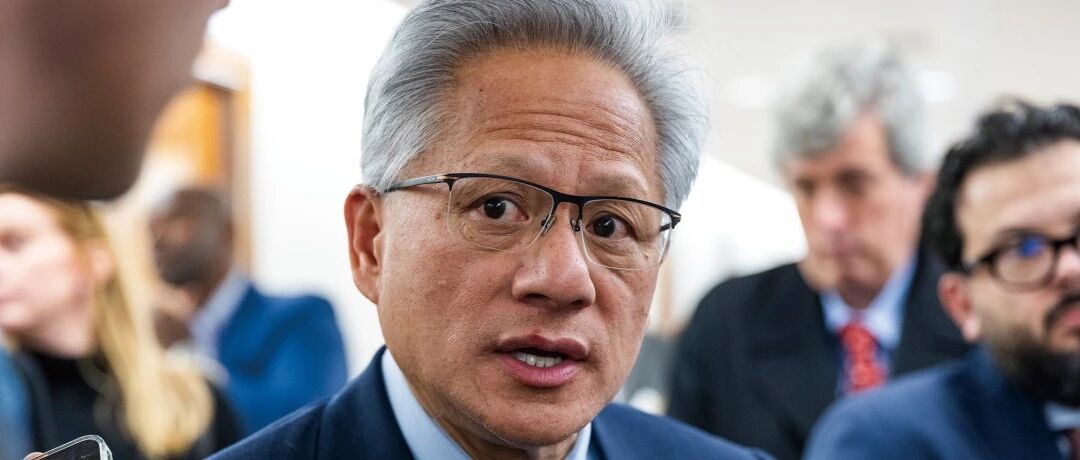
Core Viewpoint - Huang Renxun, the CEO of NVIDIA, is experiencing a significant challenge in the Chinese market despite the company's overall success in the AI chip sector, with sales of the H200 chip to China being zero, highlighting the impact of U.S. government restrictions on exports to China [5][7][24]. Group 1: NVIDIA's Market Performance - NVIDIA's revenue for the fiscal year 2026 surpassed $200 billion, marking a historical high [7]. - The company once held over 80% market share in China's AI accelerator card market from 2019 to 2022, but this has drastically declined due to U.S. export restrictions [21][23]. - Projections indicate that NVIDIA's market share in China could drop to single digits by 2026 [23]. Group 2: Huang Renxun's Commitment to China - Huang Renxun has a deep emotional connection to China, having actively engaged with the market for over 30 years, and has made significant efforts to establish NVIDIA's presence there [14][15][19]. - He has frequently visited China, showcasing a personal commitment to the market, including participating in cultural events and engaging with local developers [17][18]. Group 3: Impact of U.S. Government Policies - U.S. government restrictions on chip exports have led to a significant decline in NVIDIA's sales in China, with the H200 chip experiencing zero sales in its first two months [23][24]. - The U.S. strategy of restricting technology exports has inadvertently fostered a competitive environment in China, pushing local companies to focus on self-reliance and independent development [26][36]. - The recent shift of Chinese AI companies towards domestic hardware solutions signifies a strategic pivot away from reliance on foreign technology [34][35].