
Heineken

Search documents
They said what? – the most-read interviews on Just Drinks in 2025
Yahoo Finance· 2025-12-29 08:48
Group 1: Industry Trends - The drinks industry has faced challenges over the past year, prompting discussions with senior executives from both established and emerging companies to understand their strategies [1] - There is a noted shift in consumer behavior towards convenience, with a growing interest in functional beverages, indicating potential growth opportunities in this segment [3] Group 2: Company Insights - Diageo's luxury spirits division remains optimistic about demand despite a recent weakening, highlighting the resilience of the premium segment [2] - Suntory Global Spirits is focusing on identifying growth opportunities within a declining spirits market, aiming to leverage specific market segments [4] - Tenzing's co-founder emphasizes the role of Heineken's investment in enhancing the UK energy-drinks business, suggesting a strategic partnership for growth [6]
Axel Springer Implements Navan as New Global Travel Platform
Businesswire· 2025-12-12 08:00
Core Insights - Navan has been selected by Axel Springer as its new global travel management solution, providing access to its travel management platform and expense systems for employees [1][2] Company Overview - Navan is an all-in-one, AI-powered platform for business travel, payments, and expense management, designed to enhance the travel experience for frequent travelers [3] - The platform automates expense reconciliation and offers 24/7 support, making it user-friendly for travelers and reliable for finance teams [3] Key Benefits - The partnership with Axel Springer aims to deliver a seamless travel experience that meets the expectations of modern employees, akin to personal travel apps [2] - Navan's solution is expected to provide transparency on travel spending, benefiting the finance department of Axel Springer [2] Adoption and Technology - Navan targets a high adoption rate with at least 90% online bookings through its mobile and desktop app [4] - The platform utilizes embedded AI to achieve meaningful savings on annual travel spending, ensuring dynamic policy compliance and access to a comprehensive travel inventory [4]


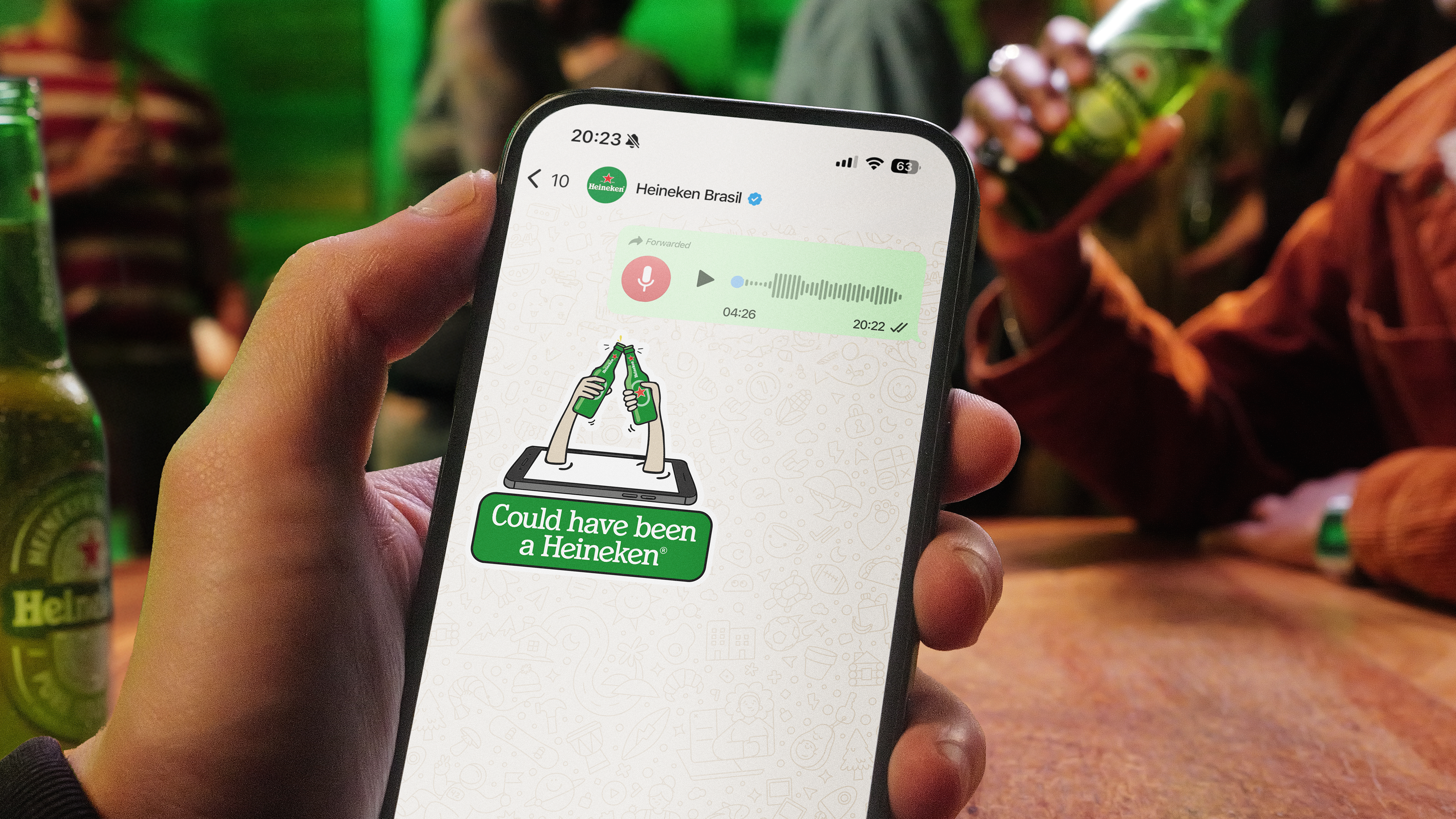
Heineken® Launches New WhatsApp Technology That Swaps Voice Notes for Real Life Conversations Over a Beer
Globenewswire· 2025-12-10 14:32
Core Insights - Heineken has launched a new WhatsApp technology aimed at encouraging face-to-face interactions by incentivizing users to exchange long voice notes for free beers, promoting real-life socialization [3][9][10] Group 1: Voice Note Trends - Brazilians send four times as many voice notes compared to other countries, with an average person spending nearly 150 hours annually on sending and receiving them [4] - Statista reports that 9.4 billion WhatsApp voice notes are sent daily, a 7% increase in frequency and an 8% increase in length compared to 2024 [6] - Over half (52%) of respondents feel that voice notes are replacing in-person interactions, with this sentiment rising to 60% among Gen Z [5] Group 2: Impact on Communication - Many users find voice notes to be less engaging, with 55% forgetting to listen to them and 88% unable to recall the content after listening [8] - A significant portion (76%) of people believe that voice notes tend to be self-involved, indicating a shift away from meaningful conversations [7] Group 3: Heineken's Initiative - The "Could have been a Heineken" WhatsApp bot allows users to redeem a free beer by forwarding voice notes longer than three minutes, promoting in-person meetups [9][10] - The pilot program is currently being tested in Brazil, with plans for expansion to other global markets [9]

百威VS喜力,外资啤酒攻防战升级!
Sou Hu Cai Jing· 2025-12-05 21:43
Core Insights - The Chinese beer market is undergoing significant changes, with local brands showing resilience and international brands facing challenges in maintaining their market share [3][6][15] - The competition has intensified, leading to a shift in consumer preferences and a need for international brands to adapt their strategies to align with local market dynamics [7][29] Industry Overview - The beer industry in China has entered a phase of stock competition, with overall production capacity at about 70% of its peak [6] - The latest data from the National Bureau of Statistics indicates a 1% year-on-year decline in beer production in October, with cumulative production growth slowing to 0% for the first ten months of the year [5] Brand Performance - Domestic brands like Tsingtao, Yanjing, and Zhujiang have shown growth in revenue, profit, and sales, while international brands like Budweiser and Carlsberg are experiencing declines [6][15] - Budweiser's performance in China has been under pressure, with a two-digit decline in revenue, profit, and sales for the first three quarters of the year [15][17] Market Dynamics - The shift in consumer behavior has led to a decline in the on-premise consumption channel, with a move towards new categories and channels [9][34] - The average market price for beer has decreased, prompting Budweiser to focus on its Harbin brand to capture growth opportunities in the 8-10 yuan price range [34][37] Strategic Adjustments - Budweiser is adjusting its strategy by increasing its focus on non-drinking channels and expanding its product offerings to include larger cans and innovative flavors [38][40] - Heineken has successfully leveraged its partnership with China Resources to expand its market presence and product distribution across various channels, including retail and e-commerce [25][32] Consumer Preferences - Chinese consumers are increasingly open to innovative flavors and higher alcohol content, with tea-infused beers gaining popularity [41] - The acceptance of new beer categories is significantly higher in China compared to other markets, indicating a potential for growth in product innovation [3][41]


百威喜力鏖战中国:啤酒生意 要重做一遍|跨国酒企变局2025
2 1 Shi Ji Jing Ji Bao Dao· 2025-12-05 17:35
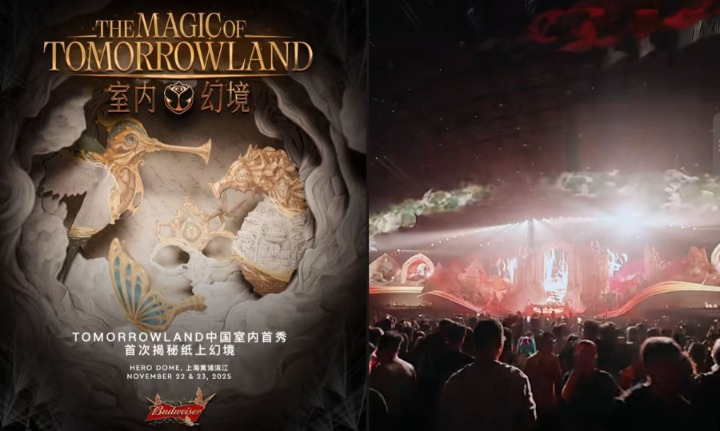
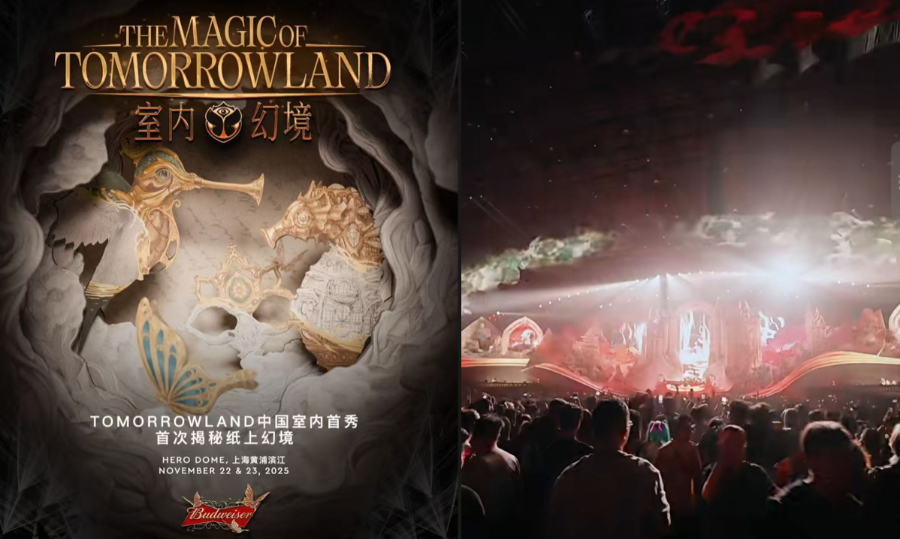
Core Insights - The Chinese beer industry is experiencing a shift towards domestic brands, with a notable recovery in their performance while international brands face challenges [1][2][3] - The overall beer consumption in China is still on a steady rise, despite a slight decline in production in October [1] - The market dynamics have changed, with domestic brands like Qingdao Beer and Yanjing Beer showing growth, while international brands like Budweiser are struggling [1][10] Industry Overview - The Chinese beer market has entered a phase of stock competition, with the industry's scale at about 70% of its peak [1] - The latest statistics show a 1% year-on-year decline in beer production for October, with cumulative production growth for the first ten months at 0% [1] - The industry is now in its twelfth year of stock competition, indicating a mature market environment [1] Brand Performance - Domestic brands such as Qingdao Beer, Yanjing Beer, and Zhujiang Beer have maintained growth in revenue, profit, and sales in the first three quarters of 2025 [1] - Budweiser has reported a double-digit decline in revenue, profit, and sales in the Chinese market for the first three quarters [1][10] - Heineken has shown significant growth, with sales increases of 30% to 70% for its products in recent years, positioning China as its second-largest market globally [11][14] Market Dynamics - The shift in consumer preferences has led to a decline in the dominance of international brands, particularly in the nightlife channel, which has been underperforming [2][24] - Heineken's strategy has focused on expanding into non-nightlife channels, leveraging partnerships with local distributors to enhance market penetration [20][25] - Budweiser's market share in regions like Fujian has decreased significantly, while the combined share of China Resources and Heineken has increased [12] Marketing Strategies - Both Budweiser and Heineken have engaged in high-profile sponsorships and events to enhance brand visibility, with Budweiser sponsoring the Tomorrowland music festival in Shanghai [4][7] - Heineken has also positioned itself as a key player in major events like the F1 China Grand Prix, resulting in a 14% increase in sales during the event [8] - The marketing strategies of both brands have evolved, with a focus on aligning with local consumer trends and preferences [29][30] Consumer Trends - The Chinese beer market is witnessing a shift towards innovative flavors and products, with a growing acceptance of new beer styles such as tea-infused beers [42] - There is a notable preference for higher alcohol content and unique flavors among Chinese consumers, contrasting with trends in Western markets [41][42] - The industry is encouraged to expand its product offerings to include low-alcohol and non-alcoholic options, although these segments remain niche in China [40][41]


百威喜力鏖战中国:啤酒生意,要重做一遍
2 1 Shi Ji Jing Ji Bao Dao· 2025-12-05 12:22
Core Insights - The Chinese beer market is undergoing significant changes, with local brands showing resilience and growth while international brands face challenges [2][3][5] - The industry is shifting from a focus on high-end products to a more diverse range of offerings, including lower-priced options and innovative flavors [31][37][38] Industry Overview - The beer industry in China has entered a phase of stock competition, with production levels at about 70% of their peak [3] - The latest statistics show a 1% year-on-year decline in beer production in October, with cumulative production growth for the first ten months at 0% [3] Brand Performance - Domestic brands like Tsingtao, Yanjing, and Zhujiang have reported growth in revenue, profit, and sales, while international brands like Budweiser and Carlsberg are experiencing declines [3][11] - Budweiser's performance in China has been disappointing, with a projected decline in revenue, profit, and sales for three consecutive years [11][12] Market Dynamics - The shift in consumer preferences has led to a decline in the night-time economy, affecting high-end brands that previously thrived in this channel [5][24] - Heineken has successfully leveraged local partnerships to expand its market presence, achieving significant sales growth in recent years [13][25] Strategic Initiatives - Budweiser is attempting to adapt by focusing on lower-priced products and expanding its presence in non-drinking channels [31][33] - Heineken's strategy includes entering various retail channels and enhancing its marketing efforts to resonate with local consumers [28][29] Consumer Trends - Chinese consumers are increasingly open to innovative beer flavors, with tea-infused beers gaining popularity [37][38] - The market is seeing a shift towards non-alcoholic and low-alcohol products, although these remain niche compared to traditional beer consumption [37][38]

百威喜力鏖战中国:啤酒生意,要重做一遍|跨国酒企变局2025
2 1 Shi Ji Jing Ji Bao Dao· 2025-12-05 12:13
Core Insights - The beer industry in China is undergoing significant changes, with multinational companies needing to adapt to a rapidly evolving market where traditional strategies are no longer effective [1][4][24] - Domestic brands are showing strong recovery, while international brands are experiencing mixed results, highlighting a shift in consumer preferences and market dynamics [3][10][17] Industry Overview - The Chinese beer market has entered a phase of stock competition, with overall production capacity at about 70% of its peak [3] - In October, the production of beer by large-scale enterprises in China saw a year-on-year decline of 1%, with cumulative production growth for the first ten months remaining at 0% [2] Brand Performance - Domestic brands like Tsingtao, Yanjing, and Zhujiang have reported growth in revenue, profit, and sales, while international brands like Budweiser and Carlsberg are facing challenges [3][10] - Budweiser's performance in China has been declining for three consecutive years, with double-digit decreases in revenue, profit, and sales in the first three quarters of 2023 [9][10] Market Dynamics - The high-end beer market, traditionally dominated by Budweiser and Heineken, is facing pressure as the on-premise consumption channels weaken and new product categories emerge [4][25] - Heineken has successfully leveraged its partnership with China Resources to expand its market presence, achieving significant sales growth in recent years [10][20] Consumer Preferences - Chinese consumers are increasingly open to new beer categories and flavors, with a notable rise in interest for innovative products like tea-infused beers [32] - The shift in consumer behavior has led to a greater focus on non-on-premise channels, with 60% of beer sales now coming from retail channels [29] Strategic Adjustments - Budweiser is adjusting its strategy by focusing on its Harbin brand to capture growth opportunities in the 8-10 yuan price range, reflecting a broader trend of price adjustments in the industry [26][25] - Both Budweiser and Heineken are recognizing the need to enhance their presence in non-on-premise channels and adapt to changing consumer preferences [28][29]
Biggest Office Party Night of the Year Set for Unprecedented Surge in 0.0 Drinking
Globenewswire· 2025-12-04 07:05
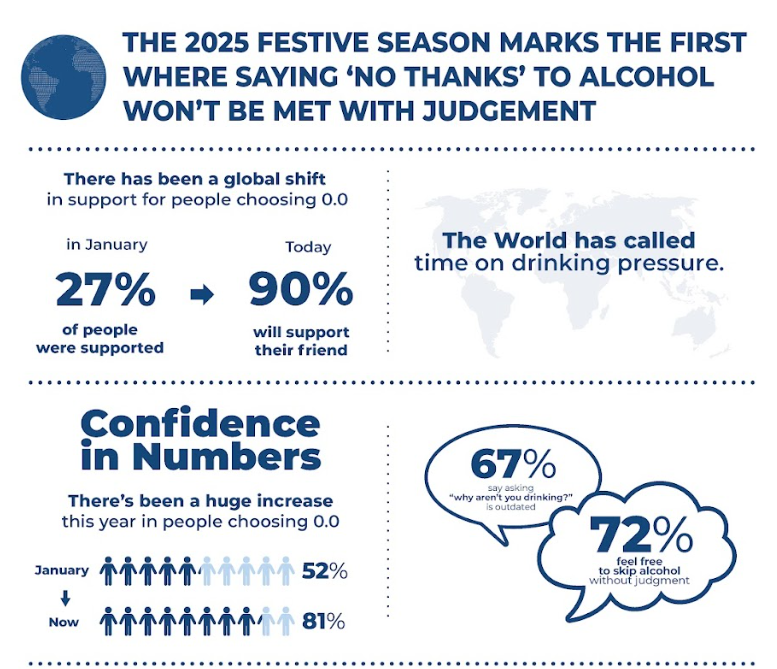
Core Insights - The 2025 festive season marks a significant cultural shift where individuals can confidently decline alcohol without facing judgment, with 72% of people feeling comfortable doing so [4][5][8] - Attitudes towards alcohol consumption are evolving, with 67% of respondents considering it outdated to question someone's choice not to drink, and 81% agreeing that no explanation is needed for declining alcohol at festive events [5][6] Global Attitude Shift - A global study indicates that social acceptance of low or no-alcohol options is rising, with 86% of participants comfortable choosing these alternatives at festive gatherings [8][9] - In various countries, including Brazil and Japan, a significant portion of the population now feels at ease opting for non-alcoholic beverages in social settings, with 67% in Brazil and 44% in Japan expressing comfort [9] Generational Trends - Gen Z is leading the movement towards moderation, with 30% planning to alternate between alcoholic and non-alcoholic drinks during celebrations [6][10] - The shift in mindset is reflected in humorous responses to inquiries about not drinking, indicating a move from needing justification to embracing playful excuses [11] Company Positioning - Heineken, as a leader in the non-alcoholic beer market, is actively promoting moderation through campaigns and research, reinforcing the idea that choosing Heineken 0.0 represents an option rather than an omission [12][13] - The company aims to understand the social dynamics that foster shared experiences, emphasizing that great social moments do not require alcohol [12]
No Excuses Needed: the 2025 Festive Season Marks the First Where Saying ‘No Thanks' to Alcohol Won't be Met With Judgement
Globenewswire· 2025-12-03 12:21
Core Insights - The global attitude towards alcohol consumption is shifting, with a significant increase in the acceptance of non-alcoholic options during social events, particularly festive seasons [5][6][9] Group 1: Changing Attitudes - A new study indicates that 72% of people feel confident skipping alcohol without fear of judgment [5] - Over two-thirds (67%) believe it is outdated to ask why someone isn't drinking [6] - 81% agree that it is acceptable to decline alcohol at festive events without needing an explanation [6] Group 2: Social Dynamics - The fear of missing out is declining, with 86% comfortable choosing low or no-alcohol options at events [9] - 76% of respondents feel they do not need alcohol to feel included in social gatherings [9] - 90% would support a friend opting for low or no-alcohol drinks during festive seasons [9] Group 3: Generational Trends - Gen Z is leading the movement towards moderation, with 30% planning to alternate between alcoholic and non-alcoholic drinks [8] - The study shows a global trend, with 67% in Brazil and 44% in Japan feeling comfortable choosing non-alcoholic options [10] Group 4: Cultural Shifts - The question "why aren't you drinking?" is becoming irrelevant, with people now using humor to deflect such inquiries [11][12] - Nearly half (46%) associate the holiday season with drinking, but this perception is changing as more people embrace moderation [11] Group 5: Company Initiatives - Heineken® is actively promoting its non-alcoholic beer, Heineken® 0.0, as part of its commitment to social life and moderation [13] - The company emphasizes that choosing non-alcoholic options represents a choice rather than a loss [13]

X @TylerD 🧙♂️
TylerD 🧙♂️· 2025-12-02 18:04
Major news out of Rekt Drinks, signing Superior Beverage Group as their newest distribution partnerThis puts Rekt Drinks up there alongside Coorse, Pabst, Heineken and others was access to 13,000+ retailersRekt Drinks (@rektdrinks):We are delighted to announce that Rekt has signed Superior Beverage Group (SBG) as our newest distribution partner, a major leap forward for global scale and mainstream reach.SBG is a powerhouse in the beverage world, distributing beer, wine, spirits and non-alcoholic drinks http ...