ITC

Search documents
Markets rebound after 3-day fall on firm Asian peers, FII inflows
BusinessLine· 2025-11-10 04:39
Core Insights - Equity benchmark indices Sensex and Nifty rebounded in early trade on Monday after three sessions of decline, driven by positive trends in Asian markets and buying in blue-chip stocks [1] - Fresh foreign fund inflows contributed to the positive investor sentiment [1] Market Performance - The 30-share BSE Sensex rose by 267.74 points or 0.32% to 83,484.02, while the 50-share NSE Nifty increased by 84.90 points or 0.33% to 25,577.20 in early trade [1] - Among the 30 Sensex firms, notable gainers included Asian Paints, Bharat Electronic Ltd, Larsen & Toubro, Titan, and Reliance Industries, while laggards included Trent Ltd, Power Grid, and Mahindra & Mahindra [2] Asian Market Trends - In Asian markets, South Korea's Kospi surged by 3%, Japan's Nikkei 225 index gained nearly 1%, and Hong Kong's Hang Seng rose by 0.47%, while Shanghai's Composite Index was slightly lower [3] - The US markets ended largely higher on the previous Friday [3] Foreign Investment Activity - Foreign Institutional Investors (FIIs) purchased equities worth ₹4,581.34 crore, while Domestic Institutional Investors acquired stocks worth ₹6,674.77 crore, indicating strong domestic buying [3] Commodity Prices - Brent crude, the global oil benchmark, increased by 0.64% to $64.04 per barrel [4]


Market wrap: Red reigns on D-Street as 347 of BSE 500 stocks see up to 12% WoW fall. IT, power scrips among worst hit
The Economic Times· 2025-11-08 07:21
Core Insights - The Indian stock markets ended the week on a lackluster note, with the BSE 500 index falling by 0.8% and approximately 71% of stocks closing in the red [6][7] - Foreign Institutional Investors (FIIs) were net sellers, while Domestic Institutional Investors (DIIs) were net buyers, indicating contrasting market sentiments [5][6] Market Performance - The Sensex underperformed the broader index, slipping by 0.9%, primarily due to weak performances from key stocks such as Power Grid Corporation, Maruti Suzuki, ITC, and Larsen & Toubro, which saw losses ranging from 5.6% to 3.7% [4][7] - In the 30-stock Sensex index, 23 stocks closed in the red, while only 7 managed to end positively, with Mahindra & Mahindra leading the gainers at 6% [4][7] Sector Analysis - Most sectors closed the week in the red, with BSE Utilities experiencing the largest decline at 4.2%, followed by BSE Power and BSE India Infrastructure Index, which fell by 3.4% and 2.8%, respectively [7] - The financial services sector was the top weekly gainer, albeit with a modest uptick of around 0.4%, while BSE Bankex and BSE Oil & Gas closed flat [4][7] Stock Performance - Among the 347 stocks that closed in the red, only three suffered double-digit declines: Greaves Cotton (-11%), Godrej Agrovet (-11%), and Zensar Technologies (-12%) [6][7] - Out of 142 stocks that gained during the week, only nine achieved double-digit returns, with 3M India leading at 21% [6][7] Institutional Activity - FIIs were net sellers at Rs 401 crore for the week, but made significant purchases of Rs 4,581.34 crore on Friday after three consecutive days of selling [5][6] - DIIs were net buyers, accumulating Rs 16,678 crore worth of shares during the same period [5][6]

Sensex, Nifty fall for third day, dragged by foreign fund outflows, weak global peers
The Hindu· 2025-11-07 11:20
Market Performance - Benchmark indices Sensex and Nifty ended lower on November 7, 2025, with Sensex declining 94.73 points (0.11%) to 83,216.28 and Nifty dipping 17.40 points (0.07%) to 25,492.30 [1] - During the day, Sensex experienced a significant drop of 640.06 points (0.76%) to 82,670.95 [1] - On November 6, 2025, Sensex had already declined 148.14 points (0.18%) to 83,311.01, while Nifty dipped 87.95 points (0.34%) to 25,509.70 [4] Company-Specific Movements - Bharti Airtel's stock tumbled 4.46% after Singtel sold approximately 0.8% stake for ₹10,353 crore (SGD 1.5 billion) [2] - Other laggards included Tech Mahindra, Trent, Reliance Industries, HCL Tech, Hindustan Unilever, and ITC [2] - Gainers in the market included Bajaj Finance, Tata Steel, Mahindra & Mahindra, and Bajaj Finserv [2] Foreign and Domestic Investment Trends - Foreign Institutional Investors (FIIs) offloaded equities worth ₹3,263.21 crore on November 6, 2025, while Domestic Institutional Investors (DIIs) purchased stocks worth ₹5,283.91 crore [3]

Dragged by foreign fund outflows and weak global peers, Sensex ends in red
Rediff· 2025-11-07 10:44
Market Overview - Benchmark indices Sensex and Nifty ended lower due to foreign fund outflows and weak global market trends [1] - The 30-share BSE Sensex declined by 94.73 points, or 0.11%, closing at 83,216.28, with an intraday low of 82,670.95, down 640.06 points or 0.76% [3] - The 50-share NSE Nifty dipped by 17.40 points, or 0.07%, settling at 25,492.30 [4] Company Performance - Bharti Airtel saw a significant decline of 4.46% after Singtel sold approximately 0.8% stake for Rs 10,353 crore (SGD 1.5 billion) [4] - Other companies that lagged included Tech Mahindra, Trent, Reliance Industries, HCL Tech, Hindustan Unilever, and ITC [4] - Gainers included Bajaj Finance, Tata Steel, Mahindra & Mahindra, and Bajaj Finserv [4] Institutional Activity - Foreign Institutional Investors (FIIs) sold equities worth Rs 3,263.21 crore on Thursday, while Domestic Institutional Investors (DIIs) purchased stocks worth Rs 5,283.91 crore [5] Global Market Trends - Asian markets, including South Korea's Kospi, Japan's Nikkei 225, Shanghai's SSE Composite Index, and Hong Kong's Hang Seng index, all settled lower [5] - Brent crude oil prices increased by 1.31% to $64.21 per barrel [5]
Fortis(FTS) - 2025 Q3 - Earnings Call Presentation
2025-11-04 13:30
Financial Performance & Capital Plan - Q3 2025 actual EPS was $0.81, and adjusted EPS was $0.87, compared to $0.85 in Q3 2024[9] - The company announced a new $28.8 billion 2026-2030 capital plan, the largest in its history[9] - A Q4 dividend increase of approximately 4% was declared, marking 52 consecutive years of dividend increases[9] - The 2026-2030 capital plan is $2.8 billion over the prior plan[12] - The capital plan is expected to support an average annual rate base growth of 7%[18] Capital Allocation & Growth Drivers - Transmission investments account for 46% of the $28.8 billion 2026-2030 capital plan[19] - ITC's five-year capital plan is $9.8 billion, supporting an ~8% rate base CAGR[23] - UNS Energy's five-year capital plan is $5.6 billion, supporting a ~7% rate base CAGR[26] - FortisBC's five-year capital plan is $4.9 billion, supporting a ~6% rate base CAGR[30] Funding & Liquidity - The company issued $750 million in hybrids at Fortis Inc at 5.1% in Q3 2025[55] - The five-year capital plan is funded by 59% cash from operations, 11% equity, and 30% net debt[61]

Sensex inches up 40 points in muted trading
Rediff· 2025-11-03 11:08
Market Performance - Benchmark indices Sensex and Nifty experienced slight gains, with Sensex up by 39.78 points (0.05%) to 83,978.49 and Nifty up by 41.25 points (0.16%) to 25,763.35, ending a two-day decline [1][3][4] - Sensex reached a high of 84,127 and a low of 83,609.54 during the trading session [4] Sector Performance - Mahindra & Mahindra was the top gainer among Sensex firms, increasing by 1.7% following positive October sales data, while Tata Motors Passenger Vehicles rose by 1.69% [4] - Other notable gainers included State Bank of India, Bharti Airtel, and Kotak Mahindra Bank [5] - Conversely, Maruti Suzuki saw the largest decline, dropping by 3.37%, with ITC, Tata Consultancy Services, Larsen & Toubro, Bharat Electronics, and Titan also among the major laggards [5] Institutional Activity - Foreign Institutional Investors (FIIs) sold equities worth ₹6,769.34 crore, while Domestic Institutional Investors (DIIs) purchased stocks worth ₹7,068.44 crore [5] Global Market Context - In Asian markets, indices such as South Korea's Kospi, Shanghai's SSE Composite, and Hong Kong's Hang Seng closed positively [6] - Global oil prices saw a minor decrease, with Brent crude falling by 0.14% to $64.71 per barrel [6]
Markets trade flat at midday as Shriram Finance leads gainers, Maruti drops
BusinessLine· 2025-11-03 07:43
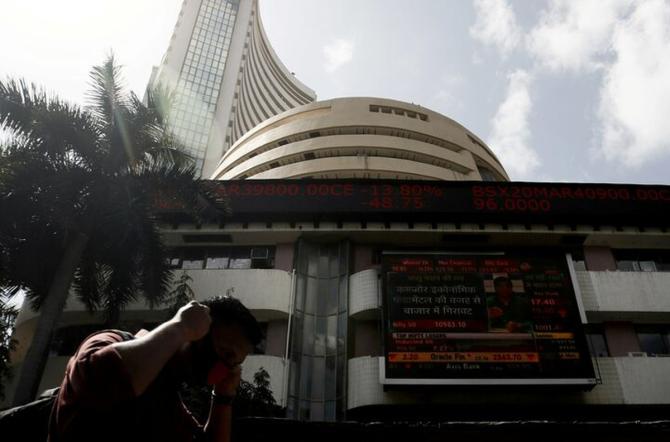
Market Overview - Benchmark indices traded largely flat with the Sensex down 17.61 points or 0.02% at 83,921.10 and the Nifty up 17.30 points or 0.07% at 25,739.40 [1] Top Gainers - Shriram Finance was the top gainer on the Nifty, surging 5.30% to ₹788.60 [2] - Apollo Hospitals gained 1.92% to ₹7,828.50, Mahindra & Mahindra rose 1.58% to ₹3,542.30, State Bank of India added 1.17% to ₹948, and SBI Life Insurance climbed 1.09% to ₹1,977 [2] Top Losers - Maruti Suzuki was the worst performer, declining 3.35% to ₹15,644 [3] - ITC dropped 1.44% to ₹414.30, Tata Consultancy Services fell 1.23% to ₹3,020.50, Bharat Electronics shed 1.11% to ₹421.35, and Larsen & Toubro slipped 0.95% to ₹3,992.50 [3] Broader Market Performance - Broader markets outperformed benchmarks with Nifty Midcap 100 rising 0.55% to 60,150 and Nifty Next 50 gaining 0.80% to 70,384.30 [4] - Sectoral indices showed strength in banking and financial services, with Nifty Bank up 0.54% at 58,086.70 and Nifty Financial Services advancing 0.55% to 27,287.95 [4] Market Breadth - Market breadth remained positive on the BSE with 2,124 stocks advancing against 1,939 declining stocks out of 4,303 traded [5] - A total of 150 stocks hit their 52-week highs, while 70 touched 52-week lows [5] - Additionally, 212 stocks hit the upper circuit compared to 189 in the lower circuit [5]

Sensex drops 466 points on selling in pvt banking shares
Rediff· 2025-10-31 11:19
Market Performance - The BSE Sensex declined by 465.75 points or 0.55% to settle at 83,938.71, marking its second consecutive day of losses [3] - The NSE Nifty fell by 155.75 points or 0.60% to 25,722.10 [3] - During the trading day, the Sensex dropped as much as 498.8 points or 0.59% [3] Investor Sentiment - Foreign fund outflows, mixed corporate earnings, and uncertainty regarding the US Federal Reserve's future rate actions negatively impacted investor sentiment [4] - Foreign Institutional Investors (FIIs) sold equities worth Rs 3,077.59 crore, while Domestic Institutional Investors (DIIs) purchased equities worth Rs 2,469.34 crore [7] Sector Performance - Major laggards among Sensex firms included Eternal, NTPC, Kotak Mahindra Bank, ICICI Bank, Bajaj Finserv, Power Grid, Trent, and HDFC Bank [4] - Gainers included Bharat Electronics, Larsen & Toubro, Tata Consultancy Services, ITC, and State Bank of India [4] Global Market Trends - Asian markets showed mixed results, with South Korea's Kospi and Japan's Nikkei 225 in positive territory, while Shanghai's SSE Composite index and Hong Kong's Hang Seng index ended lower [5] - European markets were trading in the red, and US markets closed negatively on Thursday [7] Commodity Prices - Global oil benchmark Brent crude decreased by 0.31% to $64.80 a barrel [7]
PL Capital sees Indian markets holding steady despite tariffs, FII outflows, and trade uncertainty
BusinessLine· 2025-10-14 13:24
Core Viewpoint - The domestic markets have remained stable despite challenges such as US tariffs and significant foreign institutional investor selling, supported by favorable monsoon conditions and expected recovery in domestic demand [1][2]. Market Analysis - The Nifty is valued at a 15-year average P/E multiple of 19.2x, with a 12-month target of 28,781, reflecting an increase from the previous target of 27,609. In a bull case scenario, the target rises to 30,220, while in a bear case, it drops to 25,903 [3]. Sector Performance - Domestic-oriented sectors are expected to outperform, with banks, NBFCs, auto, retail, consumer staples, defense, metals, and select durables identified as key outperformers [4]. Earnings Forecast - Strong growth is anticipated for Q2FY26, with a projected 9.7% rise in sales, 11.2% growth in EBIDTA, and a 9.9% increase in Profit Before Tax (PBT) [5]. Growth Drivers - The growth trajectory is expected to be driven by commodities such as metals, cement, and oil and gas, along with sectors like telecom, AMC, and EMS. Conversely, banks, Housing Finance Companies, media, and travel sectors are projected to see a decline in PBT [6]. Stock Recommendations - Preferred large-cap stocks include Adani Ports, Apollo Hospitals, Britannia, HAL, ICICI Bank, and ITC. Mid/small-cap picks include Amber Enterprises, DOMS Industries, Eris Lifesciences, and Voltamp Transformers. Recent additions to conviction picks are Mahindra & Mahindra, Tata Steel, State Bank of India, Amber Enterprises India, and Latent View Analytics, while Bharti Airtel, Aster DM Healthcare, Crompton Greaves Consumer Electricals, and Ingersoll Rand (India) have been removed [7].

【环时深度】新税法为何在多国引发政商激辩
Huan Qiu Shi Bao· 2025-10-13 22:49
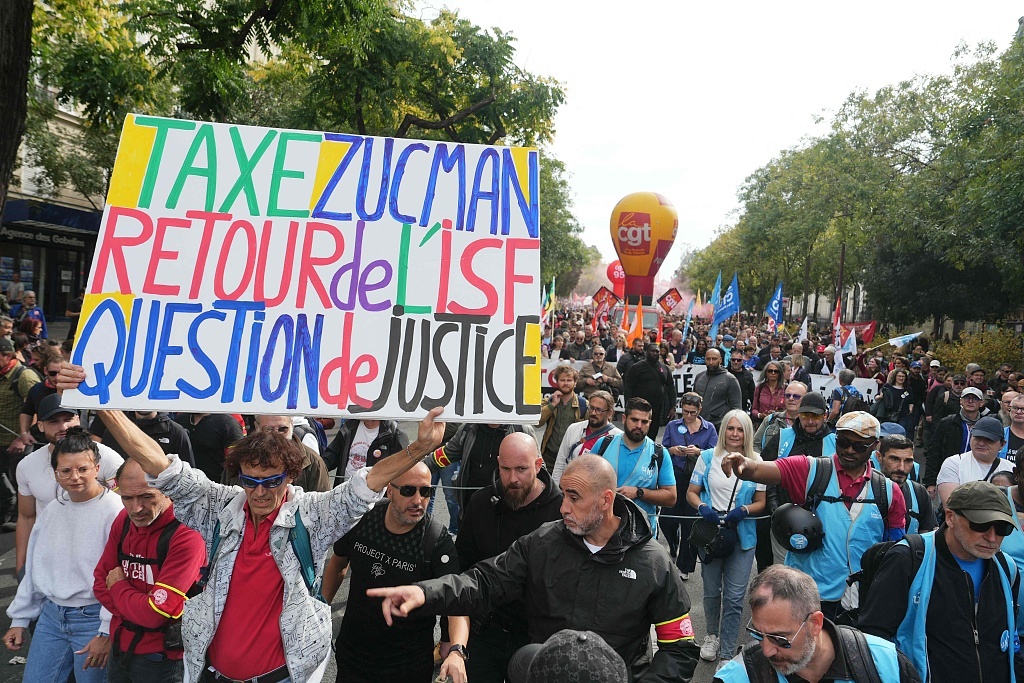
Group 1: France's Wealth Tax Debate - The "Zucman Tax," proposed by economist Gabriel Zucman, aims to impose a 2% global wealth tax on individuals with net wealth exceeding €100 million, potentially generating €15 billion to €20 billion annually for the French government [3][4] - The proposal has sparked intense debate in France, with concerns about balancing high public debt and social equity, as well as historical fears of wealthy individuals relocating due to taxation [3][5] - Prominent figures, including French billionaire Bernard Arnault, have criticized the tax, labeling it as a threat to economic freedom and warning of potential negative impacts on local businesses [4][5] Group 2: U.S. Tax Reform Controversy - The "Big and Beautiful" tax and spending bill signed by President Trump is seen as a fulfillment of campaign promises but has raised concerns about increasing national debt and cuts to essential welfare programs [6][7] - Public opinion is largely skeptical, with approximately two-thirds of Americans believing the tax reform primarily benefits the wealthy, while low-income groups may face adverse effects [6][7] - Republican officials are promoting the bill as a victory for the working class, despite contrasting views from Democrats who argue it disproportionately favors the rich [6][7] Group 3: India's GST Reform - India's government has introduced a new Goods and Services Tax (GST 2.0), which simplifies the tax structure and is expected to reduce household expenses by 13%, particularly benefiting essential goods [8][10] - The reform has faced mixed reactions, with some consumers not experiencing significant price changes, while businesses in wholesale markets have adjusted prices effectively [9][10] - The tax reform aims to lower costs for agricultural inputs, which could significantly impact rural economies, although there are concerns about potential long-term consequences such as increased urban traffic and pollution [10][11]