
领益智造

Search documents
A股,突然异动!发生了什么?
中国基金报· 2025-11-27 02:42
Market Overview - A-shares showed a mixed opening on November 27, with the Shanghai Composite Index up by 0.08%, while the Shenzhen Component and ChiNext Index opened slightly lower by 0.03% and 0.11% respectively [2] - By the time of reporting, all three major indices turned positive, with the ChiNext Index rising over 1% and the Sci-Tech Innovation 50 Index increasing by more than 2% [3] Sector Performance - The communication equipment and semiconductor sectors led the market gains, with active performances from consumer electronics manufacturing, lithium battery electrolyte, optical module CPO, and copper-clad laminate stocks [5] - Conversely, sectors such as Hainan Free Trade Port, cross-strait integration, cultivated diamonds, aquaculture, and air transportation experienced pullbacks [5] Semiconductor Sector - The semiconductor sector showed strong performance on the morning of November 27, with notable individual stock movements [7] - Key stocks included: - Saiwei Electronics surged by 20% to 50.51 CNY per share, marking a historical high, with a total market capitalization of 37 billion CNY and a year-to-date increase of 194% [9] - Guosheng Technology hit the daily limit, while Lixin Microelectronics rose over 12% [8] Consumer Electronics Manufacturing - The consumer electronics manufacturing index rose by 5%, with Industrial Fulian increasing by over 7% to 63.36 CNY per share, bringing its market capitalization to 125.82 billion CNY [11] - Other notable stocks included: - Luxshare Precision rose by over 2% - GoerTek, Liying Intelligent Manufacturing, and Huanxu Electronics also saw increases [12] Noteworthy Stock Movements - ST Zhongdi, a well-established real estate company, experienced significant gains, attributed to the completion of a judicial auction transfer of shares and a change in control [14]






早新闻 | 601702重要收购!
Zheng Quan Shi Bao· 2025-11-26 23:53
Macro Trends - The State Council has approved a joint implementation plan by six departments to enhance the adaptability of supply and demand for consumer goods, aiming to promote consumption and achieve a dynamic balance between supply and demand [1] - By 2027, the plan targets a significant optimization of the consumer goods supply structure, creating three trillion-level consumption sectors and ten hundred-billion-level consumption hotspots [1] - By 2030, a high-quality development pattern characterized by positive interaction between supply and consumption is expected to be established, with a steady increase in consumption's contribution to economic growth [1] Telecommunications Industry - As of the end of October, the total number of mobile phone users among the three major telecom operators and China Broadcasting Network reached 1.83 billion, with a net increase of 40.15 million users compared to the end of last year [2] - The number of 5G mobile phone users reached 1.184 billion, representing a net increase of 17 million users, accounting for 64.7% of total mobile phone users [2] Automotive Industry - From November 1 to 23, the retail sales of new energy vehicles in the passenger car market reached 849,000 units, a year-on-year increase of 3% [3] - Cumulatively, retail sales for the year reached 10.998 million units, a 20% increase compared to the same period last year [3] - During the same period, wholesale sales of new energy vehicles reached 995,000 units, a year-on-year increase of 4% [3] Medical Device Industry - The medical device market in China is expected to reach a scale of 1.22 trillion yuan by 2025, with over 33,000 medical device manufacturing enterprises projected by the end of 2024, marking a 27.8% increase from the end of the 13th Five-Year Plan [4] - The industry is transitioning from "catching up" to "running together and leading," supporting the "Healthy China" strategy [4] - Future developments will focus on digital integration and enhancing the modernization of the supply chain [4] Company News - Huafeng Aluminum plans to acquire 100% equity of Huafeng Puen for 100 million yuan [5] - Hainan Highway's subsidiary intends to acquire 51% equity of Hainan Huate for 21.0725 million yuan [5] - Changguang Huaxin has achieved mass production of 100G EML in the optical communication field, with 200G EML samples now being sent [5] - Yidong Electronics plans to acquire 51% equity of Shenzhen Guanding for 61.2 million yuan, which specializes in AI computing power liquid cooling solutions [5] - New Star Co. plans to reduce its stake by up to 0.5% [5] - Aolaide intends to raise no more than 300 million yuan through a private placement for OLED display core material production projects [5] - Weiling Co.'s major shareholder is planning significant matters, leading to continued stock suspension [5]

“果链”巨头领益智造冲击港股IPO
Nan Fang Du Shi Bao· 2025-11-26 23:07
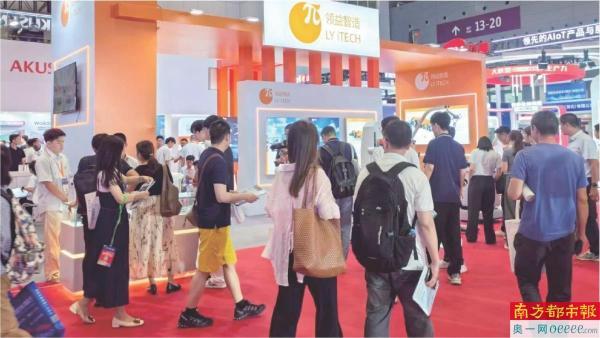
Core Viewpoint - Linyih Intelligent Manufacturing is preparing for an IPO in Hong Kong to alleviate liquidity concerns and support its global expansion strategy, while also transitioning from traditional manufacturing to high-value AI and robotics sectors [5][11]. Group 1: Financial Performance - For the first three quarters of 2025, the company reported revenue of 37.59 billion yuan, a year-on-year increase of 19.25%, and a net profit of 1.94 billion yuan, up 37.66% from the previous year [5][12]. - The operating cash flow reached 2.30 billion yuan, reflecting a significant increase of over 60% year-on-year, indicating a solid cash generation capability [12]. - However, short-term borrowings surged to 7.33 billion yuan, more than doubling from 3.20 billion yuan at the beginning of the year, raising concerns about short-term debt pressure [12][13]. Group 2: Strategic Focus and Expansion - The company aims to shed its traditional OEM label and pivot towards high-value sectors such as AI, humanoid robots, and advanced computing [6][9]. - The IPO proceeds will primarily fund investments in four key areas: humanoid robots, XR (extended reality), foldable screens, and servers, which are seen as the second growth curve for the company [6][9]. - Linyih Intelligent Manufacturing has established strategic partnerships with leading firms in the robotics sector and aims to leverage its precision manufacturing capabilities to become a key player in the robotics industry [6][7]. Group 3: Mergers and Acquisitions - The company has been actively acquiring firms in the electric vehicle supply chain, including a recent cash acquisition of Zhejiang Xianglong for 2.40 billion yuan, to enhance its automotive component offerings [9][10]. - The acquisition strategy is designed to build a product matrix that includes power batteries, automotive interior and exterior parts, and transmission systems, transitioning from a Tier 2 to a Tier 1 supplier [10]. - Linyih Intelligent Manufacturing is also looking globally for high-growth technology targets in AI, optical communication infrastructure, and robotics to further its expansion [10]. Group 4: IPO Implications - The Hong Kong IPO is expected to provide a direct avenue for equity financing, optimizing the capital structure and reducing the debt ratio, thereby alleviating short-term repayment pressures [11]. - The overseas financing platform will offer lower-cost foreign currency funds, which is crucial as nearly 50% of the company's revenue comes from international markets [11]. - The company is balancing the need for stable cash flow from its core consumer electronics business while making significant capital investments in AI and automotive sectors to avoid falling behind in technological advancements [11].
“新鸿蒙+新麒麟”双轮驱动 华为携产业链发力手机高端市场
Shang Hai Zheng Quan Bao· 2025-11-26 18:26
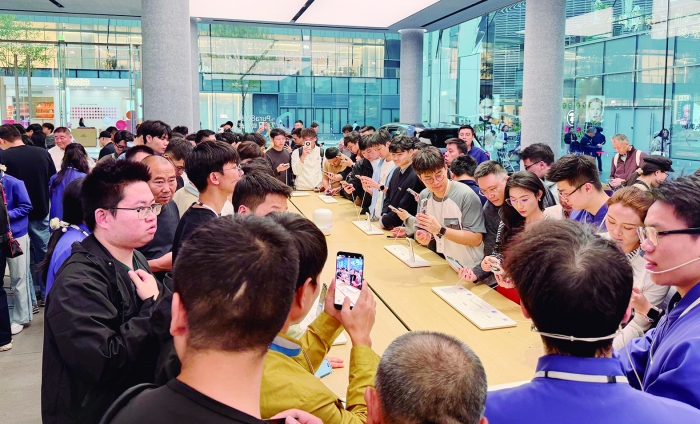
Core Viewpoint - Huawei's recent launch of the Mate 80 series and Mate X7 has garnered significant attention due to its integration of the latest HarmonyOS 6 and the new Kirin 9030 series processors, aiming to capture a larger share of the high-end smartphone market amidst a challenging industry landscape [2][3][4]. Group 1: Product Launch and Features - The Mate 80 series and Mate X7 were officially launched on November 25, featuring the latest HarmonyOS 6 and Kirin 9030 processors, with a focus on performance improvements and innovative technologies [2][3]. - The Mate 80 Pro Max shows a performance increase of 42% compared to its predecessor, while the Mate 80 RS and Mate X7 also exhibit similar performance enhancements [3][4]. - The Mate 80 series has been priced lower than its predecessor, with the starting price set at 4699 yuan, which is 800 yuan less than the previous model, indicating a strategic move to attract consumers despite rising global storage chip prices [2][4]. Group 2: Market Position and Competition - Counterpoint's data indicates a 2.7% year-on-year decline in China's smartphone sales in Q3 2025, highlighting the competitive pressures in the market [2]. - Huawei's market share in the high-end smartphone segment (priced above $600) reached 34.4% in Q3 2025, compared to Apple's 48%, showing a significant increase from 21.4% in 2023 [4][6]. - The successful launch of the new devices is expected to help Huawei recover lost ground in the high-end market, particularly as chip supply issues are resolved [4][6]. Group 3: Ecosystem Development - The HarmonyOS 6, launched on October 22, 2025, introduces a new architecture for efficient device collaboration and enhanced security features, positioning Huawei's ecosystem as a competitive alternative to Android and iOS [5][6]. - Huawei has developed 300,000 applications and services in collaboration with ecosystem partners, with major apps like Alipay and WeChat now fully supporting HarmonyOS [6]. - The number of devices running HarmonyOS 5 and 6 has surpassed 27 million, growing at a rate of 100,000 devices per day, indicating a robust expansion of the ecosystem [6]. Group 4: Industry Impact and Supply Chain - The dual breakthroughs in chip and operating system technology are invigorating the supply chain, with companies like O-film and Lingyi iTech ramping up production to meet anticipated demand [7]. - O-film has confirmed its strong technical capabilities in 3D ToF technology, which is integrated into the Mate 80 series, and is prepared to meet customer orders [7]. - Other suppliers, including Changxin Technology, are also positioned to support Huawei's new devices, reflecting a collaborative effort within the industry to enhance product offerings [7].
公司互动丨这些公司披露在机器人、芯片等方面最新情况
Di Yi Cai Jing· 2025-11-26 14:12
Robotics - Lingyi Zhi Zao has signed strategic cooperation agreements with several leading embodied intelligence companies to promote the hardware manufacturing of embodied robots [1] - Luxshare Precision is expected to ship 3,000 humanoid robots this year [1] Batteries - Tiannai Technology claims that single-wall products are the best choice for fast-charging batteries, with fourth-generation and pure single-wall products significantly enhancing battery rate and cycle life [1] - Ninebot reports that fluctuations in lithium carbonate prices have not directly impacted product pricing; the company has preemptively stocked multiple new electric bicycle products that meet new national standards [1] Chips - Xidi Micro has successfully integrated its high-performance power management chip products into the Meta supply chain through ODM manufacturers [1] - Silan Micro has launched four key analog chips for AI computing power [1] Electronics - BOE Technology Group indicates that the overall supply and demand in the industry is under pressure, with a forecasted decline in the shipment volume of foldable products in the second half of the year [1] - Luxshare Precision anticipates mass production of microchannel technology next year [1] - Zhihui Power, as a first-tier supplier to Google, provides mobile-related components through Foxconn and Taiwan's Compal [1] Others - Jinli Permanent Magnet holds indirect shares in Muxi Co., Ltd [1] - Chunhui Zhikong has begun bulk supply of satellite release devices to satellite manufacturers [1] - Nandu Property holds indirect shares in Yundongchu through the Saizhi Zhudragon Fund [1] - Chuangyuan Technology's subsidiary Suzhou Bearing supplies mainly needle bearing products for the commercial aerospace sector, although the supply volume is relatively small [1] - Shengyuan Environmental Protection has indirectly participated in investment in Moore Threads by subscribing to fund shares [1] - Shengyang Co., Ltd has launched full immersion liquid cooling energy storage systems and solutions into the market [1] - Weichai Power does not have a gas turbine business [1]



领益智造:第三、四季度正值生产旺季 公司处于高度运转状态
Mei Ri Jing Ji Xin Wen· 2025-11-26 08:29
每经AI快讯,11月26日,领益智造(002600)在互动平台表示,公司在客户供应链端的地位不断加 强,正在承接更多业务。第三、四季度正值公司生产旺季,公司处于高度运转的状态。 ...
领益智造:已与多家头部具身智能企业签订战略合作 推动具身机器人硬件制造业务落地
Zheng Quan Shi Bao Wang· 2025-11-26 08:25
人民财讯11月26日电,领益智造(002600)11月26日在互动平台称,公司已与多家头部具身智能企业签 订战略合作,正积极推动具身机器人硬件制造业务的落地。公司在机器人领域拥有伺服电机、减速器、 驱动器、运动控制器等执行层核心技术,在机器人底盘、灵巧手、关节模组、手臂、皮肤/外壳、散热 方案、充电方案等具备研发能力和量产经验,已为多家北美和国内行业头部客户提供相关硬件,也在人 形机器人/机械狗整机ODM组装方面有成熟经验。 ...
领益智造(002600.SZ):在机器人领域拥有伺服电机、减速器、驱动器、运动控制器等执行层核心技术
Ge Long Hui· 2025-11-26 08:05
格隆汇11月26日丨领益智造(002600.SZ)在互动平台表示,公司在机器人领域拥有伺服电机、减速器、 驱动器、运动控制器等执行层核心技术,在机器人底盘、灵巧手 、关节模组、手臂、皮肤/外壳、散热 方案、充电方案等具备研发能力和量产经验,已为多家北美和国内行业头部客户提供相关硬件,也已在 人形机器人/机械狗整机ODM组装方面有成熟经验。 ...
领益智造(002600.SZ):正积极推动具身机器人硬件制造业务的落地
Ge Long Hui· 2025-11-26 07:59
格隆汇11月26日丨领益智造(002600.SZ)在互动平台表示,公司正积极推动具身机器人硬件制造业务的 落地。公司在机器人领域拥有伺服电机、减速器、驱动器、运动控制器等执行层核心技术,在机器人底 盘、灵巧手 、关节模组、手臂、皮肤/外壳、散热方案、充电方案等具备研发能力和量产经验,已为多 家北美和国内行业头部客户提供相关硬件,也已在人形机器人/机械狗整机ODM组装方面有成熟经验。 公司因与客户签署了商业保密协议,具体合作信息受到商业保密协议的约束不便披露。 ...
领益智造涨2.01%,成交额8.37亿元,主力资金净流入7508.98万元
Xin Lang Cai Jing· 2025-11-26 03:21
Core Viewpoint - Lingyi Technology's stock price has shown significant volatility, with a year-to-date increase of 71.86% but a recent decline over the past 20 and 60 days, indicating mixed market sentiment [1][2]. Financial Performance - For the period from January to September 2025, Lingyi Technology reported a revenue of 37.59 billion yuan, representing a year-on-year growth of 19.39%, and a net profit attributable to shareholders of 1.94 billion yuan, up 38.17% year-on-year [2]. Stock Market Activity - As of November 26, Lingyi Technology's stock price was 13.68 yuan per share, with a trading volume of 837 million yuan and a market capitalization of 99.947 billion yuan [1]. - The stock has seen significant trading activity, with a net inflow of 75.09 million yuan from main funds and notable buying from large orders [1]. Shareholder Information - As of September 30, 2025, the number of shareholders increased to 539,100, a rise of 82.54%, while the average number of circulating shares per person decreased by 43.07% to 13,300 shares [2]. - The top shareholders include Hong Kong Central Clearing Limited and various ETFs, with some increasing and others decreasing their holdings [3]. Dividend Distribution - Lingyi Technology has distributed a total of 3.224 billion yuan in dividends since its A-share listing, with 1.512 billion yuan distributed over the past three years [3].