
邮储银行

Search documents
一钞难求 一转即赚 谁是纪念币钞背后的溢价推手
Zhong Guo Zheng Quan Bao· 2026-01-21 21:05
Core Insights - The demand for the Year of the Horse commemorative coins and notes is extremely high, leading to significant challenges in obtaining them through official channels, with many collectors reporting that they are unable to secure any during the reservation process [1][2] - The secondary market for these commemorative items is thriving, with notable price premiums observed, particularly for specific serial numbers deemed "lucky" [2][3] - There is a growing interest in beautifully packaged commemorative coin and note gift sets, which are being marketed as suitable for gifting, especially during the festive season [3] Market Dynamics - The limited supply and high demand for the Year of the Horse commemorative coins and notes have resulted in significant price premiums in the secondary market, with prices for the notes reaching up to 40 yuan for a 20 yuan note and 14 yuan for a 10 yuan coin [2] - The online trading platforms are also experiencing high demand, with prices for specific types of notes reaching as high as 1,200 yuan for certain serial combinations [3] - The market for these commemorative items is characterized by a "new notes lead the price, serial number matters, and supply-demand pricing" logic, indicating that scarcity and cultural significance play crucial roles in determining market prices [4] Cultural and Investment Considerations - The cultural significance of the Year of the Horse commemorative coins and notes, which carry auspicious meanings, contributes to their appeal, although the relatively high issuance volume may limit their long-term value appreciation [5] - Industry experts caution against speculative trading in these items, emphasizing that their collectible nature outweighs their investment potential, and investors should focus on the quality and grading of the items [4][5]
银行大额存单利率步入“0字头”时代
Xin Lang Cai Jing· 2026-01-21 20:32
Core Viewpoint - The interest rates for large certificates of deposit (CDs) have entered a "zero" era, with banks adopting a strategy of "short-term, high thresholds, and low rates" to adjust their liabilities deeply [1][2] Group 1: Interest Rate Trends - Over 40 banks have reported that the interest rates for products with a maturity of less than one year have generally fallen below 1%, with three-year rates often below 2% and five-year products nearly extinct [1] - The average interest rates for various deposit terms have dropped below 2% as of September 2025, with three-month rates at 0.944% and one-year rates at 1.277% [2] - Major state-owned banks have set the interest rates for one-month and three-month large CDs at 0.9%, indicating minimal returns compared to regular fixed deposits [2] Group 2: Changes in Deposit Products - Banks are increasingly offering short-term products, with many focusing on one-year or shorter maturities, while three-year CDs have seen a significant decline in issuance [1] - Some banks have raised the minimum deposit thresholds for specific products, with certain offerings requiring a minimum of 1 million yuan, reflecting a strategy to manage liabilities more effectively [2][3] Group 3: Market Dynamics and Policy Implications - The narrowing of net interest margins, which have dropped to a historical low of 1.42% as of Q3 2025, is a key driver behind the current adjustments in the banking sector [3] - The ongoing downward pressure on net interest margins necessitates a reduction in high-cost liabilities like large CDs to stabilize margins and support the broader economic policy of lowering financing costs [3][4] - Future strategies may shift from broad interest rate cuts to more structural adjustments, such as controlling the scale of long-term high-interest products and dynamically adjusting product thresholds [3][4]
个人消费贷“国补”升级 银行快速落地实操细则
Zheng Quan Ri Bao· 2026-01-21 16:13
Core Viewpoint - The recent announcement by the Ministry of Finance, the People's Bank of China, and the National Financial Regulatory Administration regarding the optimization of personal consumption loan interest subsidy policy marks a significant enhancement of the "national subsidy" policy for personal consumption loans, aiming to create a more inclusive and supportive consumption credit system [1] Group 1: Policy Enhancements - The policy extends the implementation period to the end of 2026, adding a four-month stability period to cover peak consumption seasons, alleviating market hesitation [2] - The support scope is expanded by removing restrictions on 15 key consumption areas and including credit card bill installments in the subsidy, thereby activating diverse consumption scenarios [2] - The subsidy incentive is strengthened by removing the cap on individual subsidies per transaction while maintaining an annual limit of 3,000 yuan per person per institution, increasing support for large purchases [2] - The number of participating financial institutions is increased by over 500, promoting policy implementation in county-level and niche markets [2] Group 2: Implementation and Impact - Banks have established convenient processes for handling credit card bill installment subsidies, with specific requirements for customers to sign supplementary agreements [3] - The subsidy funds will be directly deducted from interest during loan repayment or credit card billing, streamlining the financial process for consumers [3] - The policy is expected to significantly boost the consumption market, particularly in large purchases by reducing costs and stimulating demand for upgrades [4] - In daily consumption, the inclusion of credit card installment subsidies lowers the credit threshold for small, frequent purchases, enhancing the integration of consumption scenarios and payment tools [4]




多家银行落地消费贴息新政 并提示“未与任何贷款中介机构合作”
Zhong Guo Jing Ying Bao· 2026-01-21 14:20
Core Viewpoint - The recent policy optimization aims to lower consumer costs and activate consumption potential while reinforcing risk control measures to combat illegal arbitrage [1][5]. Group 1: Policy Implementation - Multiple banks, including Agricultural Bank, Bank of Communications, Postal Savings Bank, and China Merchants Bank, announced the implementation of the personal consumption loan interest subsidy policy as per the notification issued on January 16, 2026, effective from January 1, 2026 [1][2]. - The notification expands the scope of interest subsidies by removing previous restrictions on consumption areas, allowing residents to enjoy subsidies for various consumption fields and new credit card installment bills, provided they meet authenticity and compliance requirements [2][5]. Group 2: Application Process - Banks have clarified the application process for interest subsidies, with Agricultural Bank allowing customers to apply through mobile banking and customer service hotlines, while Bank of Communications offers an app for checking subsidy amounts and transaction details [3][4]. Group 3: Risk Control Measures - Banks have emphasized that they do not charge any fees for processing interest subsidies and will not engage third-party intermediaries for these services, aiming to protect customers from fraud [4][5]. - Experts have highlighted the risks posed by illegal intermediaries who may fabricate consumption purposes and documents to exploit the subsidy system, leading to potential financial disorder [5][6]. - A multi-layered risk control system has been established, involving banks, financial regulatory bodies, and the Ministry of Finance to monitor loan purposes and fund flows, ensuring compliance and accountability [6].

邮储银行滨州市分行精准赋能,为制造业单项冠军企业注入金融活水
Qi Lu Wan Bao· 2026-01-21 13:53
Core Insights - Postal Savings Bank of China (PSBC) is enhancing financial support for manufacturing sector champions and innovative enterprises through various measures since 2025, including policy incentives, product innovation, and service optimization [1] Group 1: Financial Support Initiatives - PSBC has introduced a specialized product called "Sci-Tech Loan" with a maximum credit limit of 100 million yuan, significantly exceeding conventional credit products, and offers a 15 basis points discount on internal fund transfer pricing [1] - A professional service team has been established, including two dedicated technology branches and 14 specialized small enterprise credit managers to provide tailored financial services [1] Group 2: Product Offerings - The bank has developed a diverse financial product matrix, including "Sci-Tech Loan" and "Sci-Tech e-Loan," which cater to various needs of technology-based SMEs and high-tech enterprises, allowing multiple collateral options such as credit and intellectual property pledges [2] - The "Sci-Tech e-Loan" utilizes an online model for rapid approval, significantly enhancing financing convenience [2] Group 3: Service Efficiency - PSBC has implemented a green approval channel for manufacturing champions, adopting a parallel operation model to improve approval efficiency and meet comprehensive financing needs [3] - The bank has successfully provided a 100 million yuan medium to long-term working capital loan to Binhu Chemical Group, a key client, through the green channel, and has also facilitated electricity bill financing, with a balance of 65 million yuan as of November 2025 [3] Group 4: Future Plans - PSBC aims to further deepen financial services for manufacturing champions, continuously optimize policy support, enrich product offerings, and enhance service efficiency to assist enterprises in overcoming key technological challenges and optimizing industrial structures [3]
政银企组团发力,金融“活水”精准浇灌
Xin Lang Cai Jing· 2026-01-21 13:24
(来源:中华工商时报) 转自:中华工商时报 日前,湖北省武汉市黄陂区举行"生态领航金融护航"专项对接会,政银企多方组团发力,为区域产业高 质量发展注入强劲动能。 黄陂区工商联作为联系服务民营企业的桥梁纽带,锚定区域发展特色,推动生态型商会建设与产业升 级、金融服务等重点工作深度融合,成为政策直达的"中转站"、金融服务的"连接器",为企业发展持续 赋能。 对接会上,武汉市工商联相关负责人表示,黄陂"生态领航"的理念与武汉市生态型商会建设高度契合, 这种"产业+金融+商会"的联动模式,有效凝聚发展合力,为区域生态产业高质量发展提供有力支撑。 此次"生态领航金融护航"专项对接会的成功举行,是黄陂以金融赋能产业、优化营商环境的生动实践。 未来,随着金融"活水"的持续注入,黄陂现代化强区建设必将积蓄更强劲的发展动能。(刘瑞宁穆艳) 对接会现场干货满满,中国银行黄陂支行、汉口银行黄陂支行、邮储银行黄陂支行带来量身定制的特色 惠企金融产品,精准对接企业融资需求。 13家企业与银行签订了授信协议,21.25亿元金融"活水"将精准浇灌黄陂产业沃土,助力企业加快转型 升级。 近年来,武汉市黄陂区持续优化营商环境,主动搭建政银企常 ...
信用卡分期“打折”,多家银行已着手落地执行
Di Yi Cai Jing Zi Xun· 2026-01-21 12:59
"信用卡分期本身已是成熟的支付与信贷基础设施,此次纳入贴息,意味着政策开始向交易端下沉,而 不仅停留在贷款发放端。"一位股份制银行人士对记者表示。 在贴息规则方面,政策同步"松绑"。通知明确取消单笔消费贴息金额不超过500元的限制,也取消了每 名借款人在一家经办机构可享受5万元以下累计贴息上限1000元的规定,仅保留"每名借款人在一家经办 机构年度累计贴息上限3000元"的限制。 银行存量体系可直接承接 1月20日,财政部发布多项财政贴息与担保政策。其中,《关于优化实施个人消费贷款财政贴息政策有 关事项的通知》(下称"通知")引发市场关注。与此前政策相比,本轮个人消费贷款财政贴息政策在实 施期限、支持范围及规则设计等方面均作出重要调整,尤其是信用卡账单分期业务被首次明确纳入中央 财政贴息支持范围。 在政策发布后,多家银行迅速作出回应并着手研究落地安排,包括工行、农行、中行、建行、交行、邮 储、招行。多位银行人士对记者表示,信用卡分期纳入贴息后,为银行消费金融业务打开了新的操作空 间,但在具体执行层面,贴息如何嵌入既有分期流程、哪些客户与交易能够真正覆盖,各家略有不同。 业内认为,这一调整不仅拓宽了财政贴息政策 ...
最高可省3000元!信用卡分期也可享受贴息,怎么向银行申请?
Bei Ke Cai Jing· 2026-01-21 12:39
Core Viewpoint - The recent announcement by four departments regarding the optimization of personal consumption loan interest subsidy policy expands the support scope to include credit card bill installments, with a subsidy rate of 1% per annum [5][6]. Group 1: Policy Details - The subsidy policy allows each borrower to enjoy a maximum annual subsidy of 3,000 yuan, enabling a personal consumption loan limit of up to 300,000 yuan at a single financial institution [7]. - The subsidy period has been extended by four months, allowing eligible consumers to benefit from the policy from September 1, 2025, to December 31, 2026 [9]. - The policy removes previous restrictions on consumption categories, allowing loans for amounts of 50,000 yuan and above to be used for various purposes, including but not limited to automotive, tourism, and education [10]. Group 2: Implementation by Banks - Multiple banks, including Agricultural Bank, Bank of China, and Postal Savings Bank, have quickly released implementation details, emphasizing the direct deduction of subsidy funds from loan interest or installment payments for eligible customers [8][11]. - Customers must sign a supplementary agreement with the bank to benefit from the subsidy, and banks will not charge any fees for this process [14][17]. - Specific banks have set different rules for credit card bill installment subsidies, with Agricultural Bank capping the subsidy at 50% of the agreed annualized interest rate [13]. Group 3: Compliance and Fraud Prevention - Banks have emphasized strict measures against fraudulent activities, stating that any false consumption or non-compliance will result in the denial of subsidy benefits [15][16]. - The banks will not engage third parties for processing the subsidy applications, ensuring that all transactions are conducted through official channels [15][17].

尾盘,又有大动作
Sou Hu Cai Jing· 2026-01-21 11:29
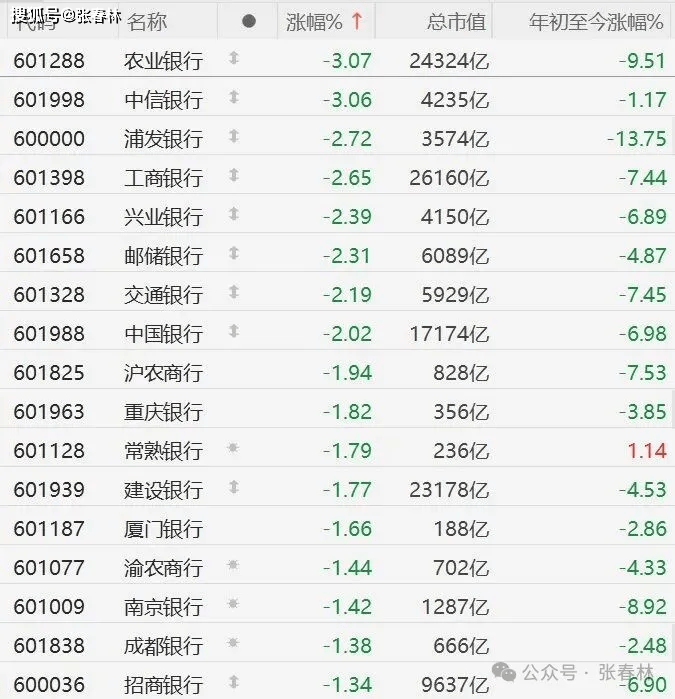
Market Overview - The market experienced a high and then a pullback, with the STAR 50 Index rising over 3%, indicating a mixed sentiment among investors [1] - Large funds are actively managing the market to prevent rapid index increases, aiming for a slow bull market [2] Index and Sector Performance - The Shanghai Composite Index is expected to fluctuate around the 4100-point mark, with an upper limit of 4190 points and a lower limit of 4000 points, suggesting a range-bound trading environment [3] - Key sectors showing strong performance include metals, gold, chips, and lithography machines, with the STAR 50 Index catching up after lagging behind other indices [3] Stock Performance - Traditional consumer stocks, particularly in the liquor sector, are experiencing a decline, while other sectors remain active [4] - A detailed table shows various banks' stock performance, with significant declines noted for major banks like Agricultural Bank (-9.51%) and Industrial and Commercial Bank (-7.44%) [5] Liquor Industry Insights - The liquor sector is anticipated to enter a new cycle around 2026, driven by economic recovery and potential monetary easing from the Federal Reserve [6][7] - Historical cycles of the liquor industry since 2003 indicate that demand has been influenced by various economic factors, suggesting a pattern that could repeat [6] Investment Strategy - The current market sentiment suggests a preference for sectors like chips and aerospace, while traditional sectors like liquor are viewed with skepticism [8] - The concept of contrarian investing is highlighted, emphasizing the challenges and potential rewards of investing in underperforming sectors [9]
1月20日贷款财政贴息四项政策点评:“一揽子”贷款财政贴息政策影响几何?
EBSCN· 2026-01-21 11:17
Investment Rating - The report maintains a "Buy" rating for the banking industry, indicating an expected investment return exceeding the market benchmark index by more than 15% over the next 6-12 months [29] Core Insights - The "package" loan interest subsidy policies aim to stimulate consumption and investment, focusing on enhancing effective domestic demand through financial and fiscal collaboration [2][7] - The new policies are expected to significantly increase the scale of interest subsidies compared to previous measures, with a projected subsidy scale of approximately 1000 to 2000 billion yuan for 2026 [17][19] Summary by Sections Loan Subsidy Policies - The policies include four main areas: subsidies for small and micro enterprises, equipment updates, service industry operators, and personal consumption loans, with a focus on key industries such as new energy vehicles and medical equipment [4][6] - The subsidy rate for small and micro enterprise loans is set at 1.5 percentage points, with a maximum loan amount of 50 million yuan per entity, potentially providing up to 150,000 yuan in subsidies [4][6] - The equipment update loan subsidy has been increased from 1% to 1.5%, expanding the scope to include technology innovation loans and related fields [4][6] - The personal consumption loan subsidy has removed previous restrictions, allowing for broader eligibility and a maintained subsidy rate of 1% [5][6] Economic Impact - The policies are designed to alleviate financial burdens on small and micro enterprises, encouraging investment and job stability, particularly in high-tech and essential service sectors [7][8] - The expected increase in loan demand from these sectors is anticipated to support the overall credit recovery in the economy, particularly for retail and service industries [7][8] Market Outlook - The report suggests that the coordinated fiscal and monetary policies will positively impact the banking sector's loan volume and pricing, particularly benefiting banks focused on small and micro enterprises and retail finance [23] - The banking sector has seen a decline in stock performance, and the new policies are expected to act as a catalyst for recovery, especially in the context of the "opening red" period for banks [23]