Amazon

Search documents
Got $5,000? 2 Stocks the Fed's Rate Decision Just Made More Attractive
The Motley Fool· 2026-03-29 14:34
Core Viewpoint - Lower interest rates typically lead to higher stock prices, but some companies can thrive even when rates are steady, indicating economic health and allowing for independent investment strategies [1]. Group 1: Alphabet (GOOGL) - Alphabet's primary revenue source is digital ads, which may be negatively impacted by higher interest rates, yet the company is focusing on AI-driven growth, particularly through Google Cloud, which saw a 36% revenue increase in 2025 compared to the overall company growth of 15% [3][4]. - The company is also gaining market share with Google Gemini and Waymo, which are expected to drive future growth beyond digital ads [5]. - In 2025, Alphabet reported a net income of $132 billion, a 32% increase from 2024, and has a liquidity of $127 billion, allowing for significant capital expenditures of $175 billion to $185 billion [7][8]. Group 2: Amazon (AMZN) - Amazon's largest revenue source is online sales, but its growth is primarily driven by Amazon Web Services (AWS), which contributed $46 billion to the company's $80 billion operating income in 2025 [9]. - AWS plays a crucial role in the AI sector, enhancing productivity across Amazon's operations, which can mitigate the impact of higher interest rates [10]. - In 2025, Amazon's net income was $78 billion, with a liquidity of $123 billion, enabling a planned capital expenditure of $200 billion without relying on debt [12]. The company's P/E ratio has decreased to 30, making it potentially undervalued compared to historical levels [13].




Amazon Acquires Fauna Robotics. Is This a Viable Threat to Tesla's Optimus Project?
The Motley Fool· 2026-03-29 12:26
Core Insights - Amazon's acquisition of Fauna Robotics is seen as a strategic move to potentially become a competitive player in the robotics space within three to five years [1][2] - Fauna Robotics specializes in a humanoid robot named Sprout, which is designed for social interaction rather than traditional household tasks [3][6] Company Developments - Fauna Robotics was founded by former engineers from Meta Platforms and Google, and has previously attracted significant investment, raising at least $30 million [2][4] - Sprout is a 42-inch, 50-pound bipedal humanoid robot priced at $50,000 for research and development partners, featuring a battery life of about three hours [3][4] Market Positioning - Fauna's Sprout is positioned differently from Amazon's previous robotics efforts, focusing on social interaction and modular AI capabilities, which may appeal to families with children and pets [6][11] - Amazon's Personal Robotics Group has faced challenges in the past, including the failure of the Astro home robot and the abandonment of the iRobot acquisition [5] Competitive Landscape - The competition includes Tesla's Optimus robot, which is designed for labor tasks and is expected to be produced at a high volume by 2027 [9][10] - The differentiation lies in Amazon potentially creating a household member with Sprout, while Tesla focuses on a labor robot, indicating different target markets [12][13] Implications for Investors - The integration of Sprout with Amazon's existing infrastructure, including its Prime membership base and Alexa technology, could enhance its market potential [11][12] - Investors should monitor developments in both Amazon and Tesla's robotics initiatives, as the outcomes may significantly impact their respective stock performances [13]


The Market Is Cracking - I'm Getting Ready To Buy My Favorite Stocks
Seeking Alpha· 2026-03-29 11:30
Core Viewpoint - The article emphasizes the importance of capitalizing on current market dislocation, suggesting that investors should focus on acquiring high-quality stocks during this period [1]. Group 1: Analyst Background - Leo Nelissen is identified as a macro-focused equity strategist and long-term investor with over a decade of experience on Seeking Alpha, where he has garnered a following of more than 50,000 readers [1]. - He combines macro analysis, geopolitical insights, and bottom-up research to identify high-quality businesses and long-term investment opportunities [1]. - Nelissen is the founder of Main Street Alpha, an investment group that focuses on macro strategy, real portfolios, dividend investing, and disciplined capital allocation for long-term investors [1].

10 AI Stocks I'm Buying Right Now
The Motley Fool· 2026-03-28 09:15
Core Viewpoint - Investing in artificial intelligence (AI) has been a significant driver of the stock market, with numerous investment opportunities emerging in AI stocks [1] Group 1: Nvidia - Nvidia is recognized as a leading AI stock due to its graphics processing units (GPUs), which are essential for AI training and inference, experiencing a revenue increase of 73% year over year in Q4 and projected 77% growth in Q1 [2] - The current stock price of Nvidia is $167.52, with a market cap of $4.1 trillion, and a gross margin of 71.07% [3][4] - Despite strong growth projections, Nvidia's stock has been underperforming recently, presenting a buying opportunity [4] Group 2: Broadcom - Broadcom is emerging in the AI computing units market, focusing on specialized AI chips for hyperscalers, which are expected to drive sales growth from less than $8.4 billion per quarter to over $100 billion by the end of 2027 [5][6] Group 3: Taiwan Semiconductor - Taiwan Semiconductor is a key player in chip manufacturing for AI, benefiting from increased AI spending and maintaining a strong position in the industry [7] Group 4: Microsoft - Microsoft is heavily investing in AI computing infrastructure, with a 39% year-over-year revenue increase in its latest quarter, and its stock is currently down 35% from its all-time high, making it a favorable buying opportunity [8][10] Group 5: Amazon - Amazon, similar to Microsoft, has a strong cloud computing division that recently reported its best quarter in over three years, with its stock down more than 22% from its all-time high, indicating a good buying opportunity [11] Group 6: Alphabet - Alphabet has transitioned from a laggard to a leader in the AI sector, with advanced generative AI tools and a robust cloud computing division, making it a strong investment option [12] Group 7: Meta - Meta Platforms, despite being down about 34% from its all-time highs, reported a 24% revenue growth in its latest quarter and is investing significantly in AI, presenting a high potential for future growth [13][14] Group 8: IonQ - IonQ is a quantum computing company viewed as a long-shot investment in AI, with significant upside potential as the technology matures [15][18] Group 9: Nebius - Nebius focuses on providing top-tier AI solutions and has a partnership with Nvidia, which enhances its credibility and investment appeal [19] Group 10: SoundHound AI - SoundHound AI specializes in audio recognition software with substantial market opportunities, particularly in sectors like banking and healthcare, and has already established a strong presence in the restaurant industry [20][21][22]





Every Magnificent Seven Stock Is Down This Year. This One Is a Screaming Buy
The Motley Fool· 2026-03-28 02:30
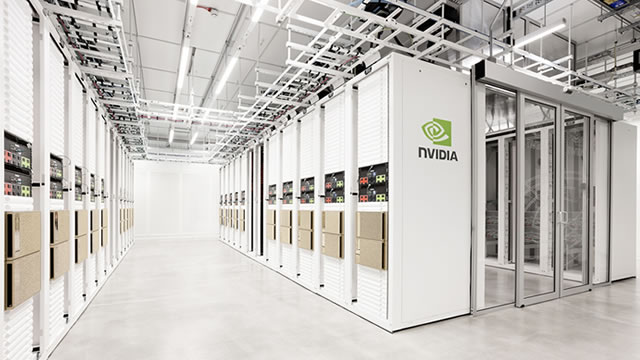
Core Viewpoint - The "Magnificent Seven" tech stocks, which include Apple, Alphabet, Tesla, Nvidia, Meta Platforms, Microsoft, and Amazon, are showing signs of fatigue after a strong performance in previous years, with all seven stocks underperforming the S&P 500 in 2023 [1][2]. Group 1: Performance and Market Sentiment - The Magnificent Seven stocks have all declined in value this year, indicating a shift in investor sentiment [2]. - Concerns regarding AI disruption and high capital expenditures in AI infrastructure have negatively impacted investor confidence, particularly affecting Microsoft, which is the biggest loser in the group [4]. - Investors appear to be rotating out of the Magnificent Seven, as evidenced by the performance of small-cap indices like the Invesco S&P SmallCap Information Technology ETF, which is up 6% this year [5]. Group 2: Financial Metrics and Valuations - Despite the downturn, the Magnificent Seven companies continue to report double-digit revenue growth, outpacing the S&P 500 [8]. - Valuations for the Magnificent Seven are becoming attractive, with most trading on par with the S&P 500's price-to-earnings (P/E) ratio of 25.6, excluding Tesla [6]. - Nvidia stands out as a potentially undervalued stock within the group, with a forward P/E of less than 21 and expected adjusted earnings per share growth from $4.77 to $8.29 [10][11]. Group 3: Future Outlook - Nvidia's CEO forecasts $1 trillion in revenue over the next two years, suggesting sustained revenue growth despite market skepticism [12]. - The current valuation of Nvidia implies that investors may believe the AI boom will slow down, which contradicts the company's recent accelerating revenue growth [12][13].
Only a Few "Magnificent Seven" Stocks Look Like Buys Right Now. This Is One of Them.
The Motley Fool· 2026-03-27 23:45
Core Viewpoint - The recent market sell-off has created challenges for investors, particularly in the tech sector, where companies like Amazon are facing high valuations amid geopolitical tensions and uncertainty surrounding AI [1] Company Overview - Amazon's stock is currently trading at approximately $199, having declined about 14% year to date, underperforming the S&P 500 [2] - The company plans to invest around $200 billion in capital expenditures this year, raising concerns about the potential return on such a massive investment [4] Financial Performance - Amazon's trailing-12-month free cash flow dropped to $11.2 billion at the end of 2025, down from $38.2 billion in 2024, indicating pressure from increased capital expenditures [4] - In contrast, Amazon's trailing-12-month operating cash flow surged 20% year over year to $139.5 billion for 2025, suggesting strong core business performance despite free cash flow constraints [5][6] Cloud Segment Growth - Amazon Web Services (AWS) is experiencing significant growth, with Q4 2025 sales increasing 24% year over year to $35.6 billion, marking the fastest expansion in over three years [8] - AWS is now operating at a $142 billion annualized run rate, highlighting the scale of its growth [8][9] Valuation Metrics - Amazon shares currently trade at a price-to-earnings ratio of about 28 and a price-to-operating-cash-flow ratio of 15, which are considered attractive given the company's market position and cloud growth [11] - The recent market pessimism may have created a buying opportunity, as the underlying cash flow provides a safety net for long-term investors [12]
Wipro Limited (WIT) Partners With Harness
Insider Monkey· 2026-03-27 21:27
Core Insights - Generative AI is viewed as a transformative technology by Amazon's CEO Andy Jassy, indicating its potential to significantly enhance customer experiences [1] - Elon Musk predicts that humanoid robots could create a market worth $250 trillion by 2040, representing a major shift in the global economy driven by AI innovation [2] - Major firms like PwC and McKinsey acknowledge the multi-trillion-dollar potential of AI, suggesting a broad consensus on its economic impact [3] Company and Industry Analysis - A breakthrough in AI technology is redefining work, learning, and creativity, leading to increased interest from hedge funds and top investors [4] - There is speculation about an under-owned company that may play a crucial role in the AI revolution, potentially concerning its competitors [4] - Prominent figures in technology and investment, including Bill Gates and Warren Buffett, recognize AI as a significant technological advancement with the potential for substantial social benefits [8] Market Opportunities - The AI ecosystem is expected to reshape how businesses, governments, and consumers operate, indicating vast investment opportunities [2] - The narrative suggests that investors may soon regret not owning shares in a specific AI company that is positioned to capitalize on this technological wave [9] - The company in question is described as quietly improving critical technology that underpins the AI revolution, suggesting a strategic advantage over larger competitors [6]

Stock Market Today, March 27: Amazon Falls as AI Spending Raises Margin Pressure
The Motley Fool· 2026-03-27 21:21
Core Viewpoint - Amazon's stock has declined due to concerns over rising AI-related capital spending, macroeconomic challenges, and slowing retail growth, leading investors to focus on the profitability of AWS and retail amidst heavier AI investments [1][4]. Company Performance - Amazon's stock closed at $199.34, down 4.02%, with a market capitalization of $2.2 trillion [1]. - The trading volume reached 55.4 million shares, which is nearly 13% above the three-month average of 49.1 million shares [2]. Market Context - The broader markets weakened, with the S&P 500 down 1.67% and the Nasdaq Composite down 2.15%, indicating a challenging environment for tech stocks [3]. - Competitors in the e-commerce and cloud computing sectors, such as Alibaba and Walmart, showed mixed performance, with Alibaba down 2.17% and Walmart up 0.58% [3]. Investor Sentiment - Investors are increasingly concerned about the impact of rising AI capital expenditures and softer growth expectations on Amazon's profitability [4]. - The focus is shifting towards how quickly Amazon's AI initiatives within AWS can translate into revenue and profit growth, rather than the scale of investments alone [4]. Strategic Initiatives - Amazon's plans to extend AI capabilities into physical retail and logistics suggest a broadening of spending beyond cloud services, which could lead to new revenue streams but also risks near-term margin pressure [5]. - The success of AWS's growth and AI-driven demand will be critical in justifying the current investment pace without further impacting profitability [5].

Amazon Rides on New Logistics and Delivery Innovations: What's Ahead?
ZACKS· 2026-03-27 18:01
Core Insights - Amazon is accelerating its logistics transformation, indicating a more efficient and faster fulfillment operation in the future [1] Group 1: Delivery Performance - In 2025, U.S. Prime members received over 8 billion items same or next day, a rise of over 30% year over year [2] - Same-day delivery volumes surged nearly 70% in the U.S., with close to 100 million customers utilizing this option [2] - North America segment operating margin increased to 9%, up from 8% in Q4 2024, while simultaneously reducing costs [2] Group 2: Fulfillment Network Innovations - Amazon's regionalized fulfillment network has improved local inventory placement, shortening delivery distances and reducing handling costs [3] - The expansion of same-day grocery delivery to over 2,300 U.S. cities and Amazon Pharmacy same-day delivery to more than 3,000 cities reflects a focus on high-frequency categories [3] - The Amazon Now ultra-fast delivery format is being piloted in several U.S. and U.K. communities, expanding beyond India into Mexico and the UAE [3] Group 3: Capital Expenditure and Partnerships - Amazon introduced one-hour and three-hour delivery options for over 90,000 products across hundreds of U.S. cities, with plans for further geographic expansion [4] - A partnership with FedEx allows for box-free, label-free Amazon returns at over 1,500 FedEx Office locations, expanding the returns network to more than 10,000 drop-off points [4] - Amazon plans approximately $200 billion in capital expenditure for 2026, focusing on fulfillment operations, delivery infrastructure, and automation [4] Group 4: Competitive Landscape - FedEx and Walmart are advancing their digital transformation agendas, with FedEx deploying AI-driven tools for logistics optimization and Walmart ramping up automation investments [5] - Both companies are investing significantly in next-generation technologies, indicating a competitive push against Amazon's market dominance [5] Group 5: Valuation and Earnings Estimates - Amazon shares have decreased by 9.6% over the past six months, compared to declines of 15.5% for the Zacks Internet – Commerce industry and 7% for the Zacks Retail-Wholesale sector [6] - Amazon's stock appears overvalued with a forward 12-month price/earnings ratio of 25.5X, higher than the industry's 21.24X [8] - The Zacks Consensus Estimate for Amazon's 2026 earnings is $7.78 per share, reflecting an 8.51% increase from the previous year [11]

Amazon Drops 3%: What Macro Pressure and AI Spending Concerns Mean for AMZN Stock Right Now
247Wallst· 2026-03-27 17:52
Core Viewpoint - Amazon's stock has dropped approximately 3% due to macroeconomic uncertainties and skepticism regarding its planned $200 billion AI capital spending in 2026, which may not yield sufficient near-term returns [2][5]. Macro Pressure - Amazon's stock decline is part of a broader trend, with the NASDAQ 100 down over 10% from its record high, influenced by geopolitical uncertainties and recession fears pushing investors towards safer assets [6]. - Consumer sentiment is also a concern, with the University of Michigan Consumer Sentiment Index at 56.4, indicating potential recessionary conditions that could negatively impact Amazon's retail business [7][8]. AI Spending Concerns - Amazon plans to invest approximately $200 billion in capital expenditures in 2026, a significant increase from $131.82 billion in 2025, raising questions about the timing of profitability from these investments [9]. - The company's free cash flow for 2025 was reported at $11.19 billion, down 65.95% year-over-year, highlighting the challenge of balancing capital spending with operating cash flow [9]. - Amazon's AI-related capital expenditures are expected to contribute to a collective investment of over $650 billion across the tech sector in 2026, marking a 60% increase from 2025 [9]. Leadership Changes - Amazon's Annapurna Labs chip division has experienced two senior executive departures recently, raising concerns about continuity in its strategy to compete with NVIDIA in AI chips [11]. Financial Performance - Despite the stock's decline, Amazon's fundamentals remain strong, with AWS revenue reaching $35.58 billion in Q4 2025, a 24% year-over-year increase, and advertising revenue at $21.32 billion, up 23% year-over-year [12]. - The consensus average price target for Amazon stock is $279.52, indicating potential upside from current trading levels [13]. Market Sentiment - Retail sentiment on platforms like Reddit has shifted from bullish to neutral, suggesting a decline in retail investor confidence alongside institutional caution [15]. - The upcoming Q1 2026 earnings report will be crucial for assessing the effectiveness of Amazon's AI capital expenditures and free cash flow recovery [16].