
Blackstone

Search documents
Blackstone gets India's central bank nod to buy up to 9.99% stake in Federal Bank
Reuters· 2026-02-05 15:02
India's central bank has given its approval to Blackstone for acquiring an aggregate stake of up to 9.99% in Federal Bank , the private lender said on Thursday. ...



Pagliuca: AI will retool the global economy and boost productivity
CNBC Television· 2026-02-04 16:03
>> WELCOME BACK TO WORLDWIDE EXCHANGE, THE SOFTWARE SECTOR TAKING A BEATING ON GROWING WORRIES OVER WHETHER AI WILL CHIP AWAY AT THE COMPETITIVE MOAT. THIS SECTOR HAS TRIED TO BUILD AGAINST THE ADVANCEMENT OF GENERATIVE AI TOOLS. PRIVATE EQUITY FIRMS, WHICH HAVE INVESTED HEAVILY IN SOFTWARE IN RECENT YEARS, ALSO SUFFERING IN THE SELL OFF YESTERDAY.BUT LET'S GET THE PERSPECTIVE ON THAT AND SO MUCH MORE FROM SOMEONE WHO'S BEEN AT THE TOP OF THE INVESTMENT GAME FOR MANY YEARS. JOINING ME NOW IS STEVE PAGLIUCA, ...

美股“SaaS末日”来临:“软件-PE”陷入“死亡循环”
华尔街见闻· 2026-02-04 11:56
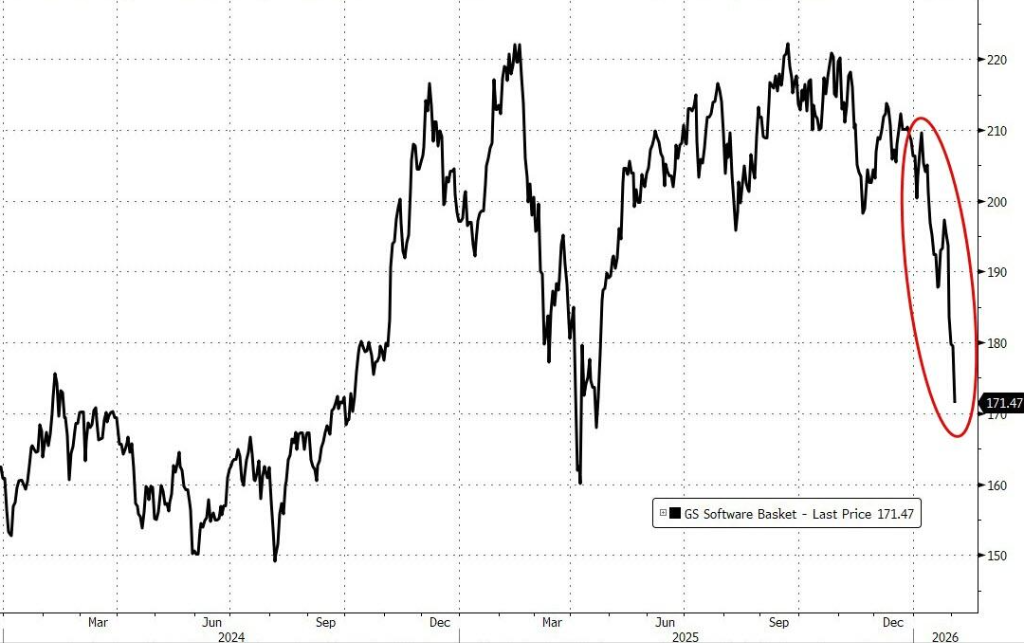
Core Viewpoint - The software industry is experiencing a significant downturn, with the S&P North American Software Index dropping 15% in January, marking the largest monthly decline since October 2008. This decline is exacerbated by fears surrounding AI advancements that threaten traditional software companies' market positions and pricing power [1][6]. Group 1: Market Sentiment and Trends - The current market sentiment is characterized by panic selling, described as a "get me out" mentality, with no signs of stabilization [3]. - The release of Anthropic's productivity tool for corporate lawyers has intensified fears, leading to a sharp decline in legal software and publishing company stocks [1][6]. - There is a stark divide in the market, with semiconductor companies viewed as beneficiaries of the AI supercycle, while software companies are seen as major losers [6]. Group 2: Impact on Private Credit and BDCs - The software sector's decline is impacting private credit markets, with software companies representing about 20% of Business Development Companies' (BDCs) portfolios, totaling approximately $100 billion [4][9]. - As software valuations plummet, BDCs like Blue Owl, Blackstone, and Ares are experiencing stock price declines due to concerns over potential contagion effects [10]. - The risk exposure of BDCs to software loans is significant, with Morgan Stanley reporting that software loans account for about 16% of their tracked BDC loan portfolios, totaling around $70 billion [12]. Group 3: Potential Losses and Stress Testing - Stress tests conducted by JPMorgan indicate that if 33% of software companies default, BDCs could face losses of $22 billion, reducing net asset values by 11%. In a more severe scenario with a 75% default rate, cumulative losses could approach $50 billion, diluting book values by 24% [14]. - Specific software loans are already showing signs of pressure, with secondary market prices significantly lower than BDC book valuations, indicating a disconnect between market perceptions and reported values [15][16]. Group 4: Future Outlook and Investor Sentiment - There is a prevailing view that the software industry could face a fate similar to that of print media or department stores, leading to uncertainty in growth projections and valuations [7]. - Despite potential long-term buying opportunities, current investor confidence remains low, complicating the assessment of what constitutes a "cheap" investment in the software sector [7].

KKR & Co. (NYSE:KKR) Quarterly Earnings Preview
Financial Modeling Prep· 2026-02-04 10:00
Core Insights - KKR & Co. is preparing for its quarterly earnings release on February 5, 2026, with projected earnings per share (EPS) of $1.21 and revenue of approximately $1.78 billion [1][6] Revenue and Growth - KKR is expected to see a revenue increase driven by a 20.4% rise in management fees and a 16.1% growth in assets under management (AUM) for the fourth quarter of 2025 [2][6] - Despite an anticipated decline in earnings compared to the previous year, KKR has consistently outperformed earnings expectations, exceeding the Zacks Consensus Estimate in the last four quarters [2] Financial Performance - The divestiture of Janney units has allowed KKR to monetize assets and focus on its core alternative investments, with significant growth in AUM and transaction fees in its capital markets business [3] - KKR's earnings surpassed the Zacks Consensus Estimate in the preceding quarter, although rising expenses have presented challenges [3] Valuation Metrics - KKR's financial metrics indicate a price-to-earnings (P/E) ratio of approximately 39.14, a price-to-sales ratio of about 5.50, and an enterprise value to sales ratio of around 7.40 [4][6] - The enterprise value to operating cash flow ratio is approximately 23.51, with an earnings yield of about 2.55% [5] - KKR's debt-to-equity ratio stands at approximately 1.83, and its current ratio is around 4.20, indicating a strong ability to cover short-term liabilities [5]


美股“SaaS末日”来临:“软件-PE”陷入“死亡循环”
美股IPO· 2026-02-04 01:02
Core Viewpoint - The software industry is facing a "doomsday crisis" due to the impact of AI, with the S&P North American Software Index experiencing a 15% drop in January, the largest monthly decline since 2008, leading to panic selling among investors [1][2][3]. Group 1: Market Impact - The S&P North American Software Index has seen a continuous decline for three weeks, with a significant drop of 15% in January, marking the largest monthly decline since October 2008 [2]. - The panic intensified after AI startup Anthropic released a productivity tool for corporate lawyers, causing stock prices of legal software and publishing companies to plummet [2][7]. - The software sector's crisis is not limited to the stock market but is also affecting the private credit market, with software companies representing about 20% of the portfolios of Business Development Companies (BDCs), totaling approximately $100 billion [3][10]. Group 2: Private Credit Risks - The collapse of the SaaS sector poses risks not only to the equity market but also to the debt market, with BDCs being particularly sensitive to declines in software stock and credit valuations [10]. - As software company valuations plummet, BDCs face asset impairment pressures, leading to potential credit tightening that could further squeeze the growth space of already struggling software companies, creating a "death spiral" [6][12]. - Analysts warn that if AI causes significant disruption to corporate borrowers, the default rate in U.S. private credit could soar to 13% [13]. Group 3: Stress Testing and Asset Valuation - JPMorgan conducted stress tests on BDC portfolios, indicating that under a scenario where 33% of companies default, the tracked BDCs could face losses of $22 billion, reducing net asset value by 11% [14]. - In a more severe scenario with a 75% default rate, cumulative net losses could approach $50 billion, diluting book value by 24% [14]. - Specific loan assets are already showing signs of pressure, with significant discrepancies between secondary market prices and BDC book valuations for software loans [15][18].

美股“SaaS末日”来临:“软件-PE”陷入“死亡循环”
Hua Er Jie Jian Wen· 2026-02-04 00:40
Core Viewpoint - The software industry is experiencing a significant downturn, with the S&P North American Software Index dropping for three consecutive weeks and a 15% decline in January, marking the largest monthly drop since October 2008 [1][3]. Group 1: Market Sentiment and Impact - The current market sentiment is characterized by panic selling, described as a "get me out" mentality, with no signs of stabilization [3]. - The release of Anthropic's productivity tool for corporate lawyers has intensified fears, leading to a sharp decline in legal software and publishing company stocks [1][7]. - There is a growing concern that advancements in AI technology may erode the competitive advantages of traditional software companies, leading to fears of being completely replaced [7]. Group 2: Private Credit Exposure - The software sector's decline poses risks not only to the stock market but also to the private credit market, with software companies representing about 20% of the portfolios of Business Development Companies (BDCs), totaling approximately $100 billion [3][9]. - As software company valuations plummet, private credit institutions face pressure to reassess their balance sheets, potentially tightening credit availability, which could further squeeze struggling software companies [5][10]. Group 3: Financial Analysis and Projections - Morgan Stanley's analysis indicates that if AI disrupts corporate borrowers aggressively, the default rate in U.S. private credit could soar to 13% [12]. - Stress tests conducted by Morgan Stanley suggest that under a scenario where 33% of companies default, tracked BDCs could face losses of $22 billion, reducing net asset value by 11% [13]. - In a more severe scenario with a 75% default rate, cumulative net losses could approach $50 billion, diluting book value by 24% [13]. Group 4: Market Dynamics and Valuation Challenges - The divergence in market performance is stark, with semiconductor companies benefiting from the AI supercycle while software companies are viewed as major losers [5]. - Despite some companies passing earnings tests, the overall pass rate is declining, indicating a harsh competitive environment within the industry [7]. - The market is struggling to assign reasonable valuations to software companies due to the uncertainty brought by AI, complicating the identification of attractive buying opportunities [7].
X @Bloomberg
Bloomberg· 2026-02-04 00:03
AirTrunk, the Blackstone-owned data center operator, has hired Tom Mackellar from Australian property developer Lendlease to spearhead its expansion in Asia Pacific, according to sources https://t.co/wxi8r6PqP6 ...
Blackstone Stock, Alternative Managers, BDCs Dive as Software Woes Infect Private Credit
Barrons· 2026-02-03 21:38
Core Viewpoint - The stock prices of Blackstone and other alternative investment managers are declining due to concerns over artificial intelligence impacting private credit markets, particularly those lending to technology companies [1]. Group 1: Company Impact - Blackstone, which operates the largest private credit fund, Blackstone Private Credit, has seen its stock drop by 7.2% [1]. - Business development companies (BDCs) that provide high-rate private credit loans to software and technology firms are also experiencing significant stock declines [1]. Group 2: Industry Trends - The fears surrounding artificial intelligence are negatively affecting the valuations of alternative investment managers with exposure to private credit [1].

Software Slump Drags Down Private-Fund Managers
WSJ· 2026-02-03 19:04
Core Viewpoint - Shares of private-asset managers, including Ares, Apollo, Blue Owl, and Blackstone, experienced a significant decline on Tuesday [1] Group 1: Company Impact - Ares and Apollo, two major players in the private-asset management sector, saw their stock prices drop sharply [1] - Blue Owl and Blackstone also faced similar declines, indicating a broader trend affecting the private-asset management industry [1] Group 2: Industry Trends - The downturn in share prices reflects growing concerns within the private-asset management industry, potentially signaling shifts in investor sentiment [1] - The decline may impact future fundraising and investment strategies for these firms, as market confidence appears to wane [1]


X @Bloomberg
Bloomberg· 2026-02-03 17:34
Blackstone President Jon Gray anticipates that dealmaking and initial public offerings will accelerate this year amid a favorable regulatory environment and lower interest rates https://t.co/LbtyeQsJYr ...