SaaS末日

Search documents
这届CEO,开始被AI淘汰了
创业邦· 2026-03-16 03:46
Core Viewpoint - The departure of Adobe CEO Shantanu Narayen highlights the pressure the software industry faces from AI advancements, as investors perceive a lack of urgency in adapting to AI technologies [6][9][42]. Group 1: CEO Departure and Company Performance - Shantanu Narayen announced his resignation after 18 years, during which he led Adobe's revenue growth from under $1 billion to over $10 billion and expanded the workforce from less than 10,000 to over 30,000 [7]. - Despite Adobe's strong quarterly performance, with adjusted earnings per share of $6.06 and revenue of $6.4 billion, the stock fell over 7% after the announcement, indicating investor concerns [10][11]. - The resignation was not due to scandals or poor performance but rather a perception that Narayen was slow to respond to AI developments [9]. Group 2: Industry Challenges and Competition - The software industry is experiencing significant turmoil, with a massive sell-off of SaaS and cloud computing stocks, leading to fears of a "SaaS apocalypse" as companies can now use AI to create custom tools at lower costs [14]. - Adobe's stock has dropped approximately 38% over the past year and nearly 60% over two years, reflecting broader industry pressures [15]. - Competitors like Canva, Blackmagic, and CapCut are aggressively entering the market, posing direct threats to Adobe's core creative products [23][24][26]. Group 3: AI Integration and Strategic Moves - Narayen attempted to position AI as a core strategy for Adobe, launching the Firefly generative AI platform, which aimed to differentiate itself by using legally sourced materials [17]. - However, the performance of Firefly has been disappointing, leading analysts to suggest that Adobe needs to find new growth strategies [19]. - Analysts have recommended that Adobe consider adopting a freemium model similar to CapCut to attract a larger user base [20]. Group 4: Brand Image and Regulatory Issues - Adobe has faced scrutiny over its use of third-party AI models and the ethical implications of its training data, which has damaged its brand image [30]. - The company has also encountered regulatory challenges regarding its subscription cancellation process, which has been criticized for being overly complex [30]. - Recent decisions, such as the abrupt halt in updates to its flagship animation software, have further contributed to perceptions of instability in Adobe's product strategy [32]. Group 5: Future Outlook and Challenges for Successor - The new CEO will face significant challenges, including monetizing Firefly, competing against emerging rivals, and repairing the brand's reputation [41]. - Adobe's guidance for the next quarter suggests revenue between $6.43 billion and $6.48 billion, with adjusted earnings per share slightly above analyst expectations, but investors are looking for bolder signals of growth [40].



华尔街“SaaS末日”论 AI软件冲击究竟怎样?
2 1 Shi Ji Jing Ji Bao Dao· 2026-02-26 23:14
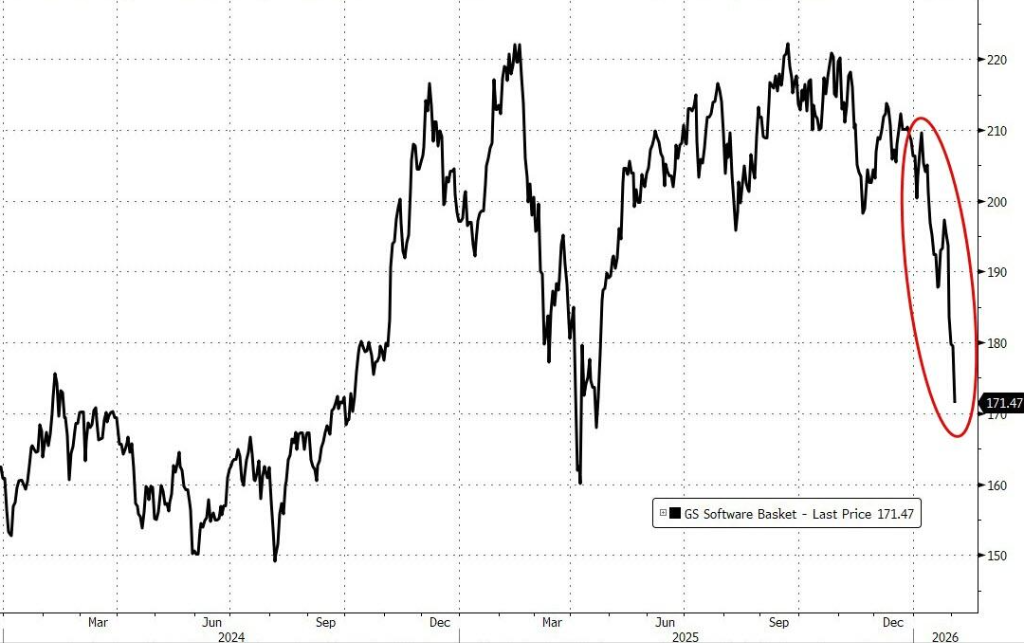
美东时间2月25日,Salesforce发布新一期财报,公司董事长兼首席执行官Marc Benioff在业绩交流会上 言语轻松地表示,"这不是我们第一次遭遇'SaaS末日危机'(的探讨),我记得在2020年出现'SaaS末日 危机'时,不仅是软件行业面临衰退,我们都陷入困境,但都挺过来了。这一次也肯定会化解。" 软件厂商看起来正持续遭遇来自AI的冲击。 这率先体现在二级市场层面。根据Wind统计,今年以来至2月25日收盘,以Salesforce、Adobe为代表的 美股软件巨头就遭遇了超25%的跌幅,2025年以来两家公司整体跌幅约为42%。 一时间,华尔街诞生了一个新词:"SaaSpocalypse"(SaaS末日)。这背后源于大模型公司Anthropic旗下 Claude系列产品持续更新,随着能力边界拓维,传统视角来看,软件服务商积累的研发和服务护城河似 乎在加速被减弱。 面对本轮AI技术革新,软件厂商们本身也在加速拥抱Agent(智能体)等新技术能力。除了加深与基础 大模型的能力融合并迭代垂域模型之外,投融资层面的合作也在发生。 这一次,"SaaS末日"会成真吗? "SaaS末日"论 今年以来,全球大模 ...
华尔街“SaaS末日”论沸反盈天,AI软件冲击究竟怎样?
2 1 Shi Ji Jing Ji Bao Dao· 2026-02-26 13:43
软件厂商看起来正持续遭遇来自AI的冲击。 这率先体现在二级市场层面。根据Wind统计,今年以来至2月25日收盘,以Salesforce、Adobe为代表的 美股软件巨头就遭遇了超25%的跌幅,2025年以来两家公司整体跌幅约为42%。 一时间,华尔街诞生了一个新词:"SaaSpocalypse"(SaaS末日)。这背后源于大模型公司Anthropic旗 下Claude系列产品持续更新,随着能力边界拓维,传统视角来看,软件服务商积累的研发和服务护城河 似乎在加速被减弱。 面对本轮AI技术革新,软件厂商们本身也在加速拥抱Agent(智能体)等新技术能力。除了加深与基础 大模型的能力融合并迭代垂域模型之外,投融资层面的合作也在发生。 这一次,"SaaS末日"会成真吗? "末日"将至? 今年以来,全球大模型厂商都在加速迭代模型,其中擅长编程能力的Anthropic陆续推出多款产品,被 认为是引发此次"SaaS末日"论的主角。 1月末,Anthropic发布Claude Cowork生产力工具的11款行业插件,覆盖法律、金融、销售等领域,被认 为传统软件"按席位收费"的模式将被瓦解,引发全球软件公司股价震动;2月,其再 ...
为平息AI冲击担忧,私营软件公司提前向债权人披露财报
Hua Er Jie Jian Wen· 2026-02-18 00:22
Core Insights - Several software companies, including McAfee and Rocket Software, have preemptively disclosed financial data to reassure lenders of their ability to withstand the impacts of artificial intelligence [1][5] - McAfee reported preliminary fourth-quarter revenue of $626 million, remaining stable year-over-year, while Rocket Software projected a 5.2% increase in 2025 revenue to approximately $1.4 billion [1][2] - The software industry is experiencing significant turmoil due to rapid advancements in AI technology, raising concerns about the sustainability of revenue growth for heavily indebted tech companies [5][6] Company Summaries - **McAfee**: The company relies on consumer cybersecurity subscriptions and reported an adjusted profit of $292 million for the fourth quarter, a 1% decline year-over-year. McAfee utilized AI technology to detect fraud, following a 9% drop in adjusted profit in the previous quarter due to one-time marketing investments and increased PC shipments [2][3] - **Rocket Software**: Supported by Bain Capital, Rocket Software's adjusted annual profit increased from $801 million to $850 million, with recurring revenue rising 6.3% to approximately $1.1 billion. The financial performance is linked to the recent acquisition of the Vertica analytics database from OpenText, which enhances AI-driven information management [3][4] - **Perforce Software**: This company reported a slight decline in annual revenue from $654 million in 2024 to $644 million. Management emphasized efforts to drive sales through AI integration in their products [4] - **Cloudera**: Although typically secretive about financial information, Cloudera highlighted strong performance in the fourth quarter of fiscal year 2026, with new and expanded business growing over 50% year-over-year. Their recurring revenue showed robust growth [4] Industry Context - The software industry is facing a fundamental shift due to rapid advancements in AI technology, leading to widespread concerns about the potential for AI to undermine revenue growth for companies heavily reliant on debt, a phenomenon referred to as the "SaaS apocalypse" [5] - In a week, the volume of distressed software loans surged by $18 billion, although many private lending institutions defended the sector, arguing that numerous borrowers will benefit from AI advancements [6]
Claude一个插件吓哭华尔街,软件公司集体暴跌,2万亿元一日蒸发
猿大侠· 2026-02-09 04:11
Core Viewpoint - The emergence of AI, particularly through Anthropic's new features, is perceived as a significant threat to the Software as a Service (SaaS) industry, leading to a dramatic sell-off in software stocks and a prevailing sentiment of "SaaS is dead" among investors [1][8][30]. Group 1: Market Reaction - The introduction of Anthropic's "plugins" and "silicon-based employees" resulted in a loss of approximately $285 billion in market value for Nasdaq [3]. - Following the initial drop, software stocks continued to decline, with the iShares expanded technology software industry ETF falling an additional 2% [6]. - The overall sentiment on Wall Street shifted to a state of panic, with many investors eager to exit their positions in software companies regardless of current prices [9][30]. Group 2: AI's Impact on SaaS - Anthropic's Claude Cowork can perform tasks traditionally handled by software, such as document drafting and legal compliance, significantly reducing the need for expensive SaaS solutions [12][16]. - The legal plugin introduced by Anthropic threatens the core functionalities of many legal software companies, which previously charged around $50,000 annually for their services [14][16]. - The competitive landscape is intensifying as AI tools like Claude Cowork are expected to disrupt various sectors, including finance, sales, and marketing, leading to widespread concerns about the viability of SaaS companies [25][22]. Group 3: Industry Perspectives - Analysts from Morgan Stanley highlighted that the introduction of AI capabilities in the legal sector would significantly increase competition, exacerbating the challenges faced by existing software companies [22]. - The perception that SaaS companies are merely intermediaries is growing, as AI technologies provide direct access to capabilities that were once reliant on software [40][41]. - Despite the current turmoil, some industry leaders argue that software will remain essential as a backend infrastructure, even if user interfaces evolve due to AI advancements [48].

48小时万亿蒸发,高盛用Claude「杀死」人类会计
36氪· 2026-02-09 00:10
Core Viewpoint - The software industry is undergoing a significant upheaval, with AI technologies threatening traditional software roles and business models, leading to massive sell-offs in the market and a potential "SaaS apocalypse" [4][9][60]. Group 1: Market Impact - Nearly $300 billion in wealth has evaporated, with the total cost approaching $1 trillion when including losses in Europe and Asia [9]. - Major software companies like Salesforce, Adobe, and Oracle are experiencing drastic declines in stock prices due to fears of obsolescence [8][61]. - The market is reacting to the realization that AI could replace many software functions, leading to a reevaluation of the value of traditional software [10][60]. Group 2: AI's Role in the Transformation - Goldman Sachs has announced the automation of accounting tasks using AI, indicating a shift in how financial services operate [12][20]. - AI agents are being developed to handle complex tasks traditionally performed by humans, such as compliance and transaction processing, which could lead to significant job losses in these sectors [22][24][26]. - The emergence of AI tools like Claude and Codex is seen as a pivotal moment, with the potential to redefine software development and operational workflows [34][38][49]. Group 3: Future of Software - The traditional SaaS model, which relies on user licenses, is under threat as AI can perform tasks without the need for multiple software accounts [56][66]. - Not all software will disappear; however, those that are shallow and do not integrate deeply into workflows are at risk of being rendered obsolete [66][71]. - The future software landscape may consist of robust data systems supported by flexible AI agents, shifting the role of humans from operators to overseers [72][78]. Group 4: Industry Perspectives - Investors are cautioned that no competitive advantage is permanent, and companies that were once seen as cash cows may quickly lose value [89]. - Historical patterns suggest that while some companies may fail, new giants will emerge, and the software industry will continue to evolve rather than collapse [79][81].



美股“SaaS末日”来临:“软件-PE”陷入“死亡循环”
华尔街见闻· 2026-02-04 11:56
Core Viewpoint - The software industry is experiencing a significant downturn, with the S&P North American Software Index dropping 15% in January, marking the largest monthly decline since October 2008. This decline is exacerbated by fears surrounding AI advancements that threaten traditional software companies' market positions and pricing power [1][6]. Group 1: Market Sentiment and Trends - The current market sentiment is characterized by panic selling, described as a "get me out" mentality, with no signs of stabilization [3]. - The release of Anthropic's productivity tool for corporate lawyers has intensified fears, leading to a sharp decline in legal software and publishing company stocks [1][6]. - There is a stark divide in the market, with semiconductor companies viewed as beneficiaries of the AI supercycle, while software companies are seen as major losers [6]. Group 2: Impact on Private Credit and BDCs - The software sector's decline is impacting private credit markets, with software companies representing about 20% of Business Development Companies' (BDCs) portfolios, totaling approximately $100 billion [4][9]. - As software valuations plummet, BDCs like Blue Owl, Blackstone, and Ares are experiencing stock price declines due to concerns over potential contagion effects [10]. - The risk exposure of BDCs to software loans is significant, with Morgan Stanley reporting that software loans account for about 16% of their tracked BDC loan portfolios, totaling around $70 billion [12]. Group 3: Potential Losses and Stress Testing - Stress tests conducted by JPMorgan indicate that if 33% of software companies default, BDCs could face losses of $22 billion, reducing net asset values by 11%. In a more severe scenario with a 75% default rate, cumulative losses could approach $50 billion, diluting book values by 24% [14]. - Specific software loans are already showing signs of pressure, with secondary market prices significantly lower than BDC book valuations, indicating a disconnect between market perceptions and reported values [15][16]. Group 4: Future Outlook and Investor Sentiment - There is a prevailing view that the software industry could face a fate similar to that of print media or department stores, leading to uncertainty in growth projections and valuations [7]. - Despite potential long-term buying opportunities, current investor confidence remains low, complicating the assessment of what constitutes a "cheap" investment in the software sector [7].

美股“SaaS末日”来临:“软件-PE”陷入“死亡循环”
Hua Er Jie Jian Wen· 2026-02-04 00:40
Core Viewpoint - The software industry is experiencing a significant downturn, with the S&P North American Software Index dropping for three consecutive weeks and a 15% decline in January, marking the largest monthly drop since October 2008 [1][3]. Group 1: Market Sentiment and Impact - The current market sentiment is characterized by panic selling, described as a "get me out" mentality, with no signs of stabilization [3]. - The release of Anthropic's productivity tool for corporate lawyers has intensified fears, leading to a sharp decline in legal software and publishing company stocks [1][7]. - There is a growing concern that advancements in AI technology may erode the competitive advantages of traditional software companies, leading to fears of being completely replaced [7]. Group 2: Private Credit Exposure - The software sector's decline poses risks not only to the stock market but also to the private credit market, with software companies representing about 20% of the portfolios of Business Development Companies (BDCs), totaling approximately $100 billion [3][9]. - As software company valuations plummet, private credit institutions face pressure to reassess their balance sheets, potentially tightening credit availability, which could further squeeze struggling software companies [5][10]. Group 3: Financial Analysis and Projections - Morgan Stanley's analysis indicates that if AI disrupts corporate borrowers aggressively, the default rate in U.S. private credit could soar to 13% [12]. - Stress tests conducted by Morgan Stanley suggest that under a scenario where 33% of companies default, tracked BDCs could face losses of $22 billion, reducing net asset value by 11% [13]. - In a more severe scenario with a 75% default rate, cumulative net losses could approach $50 billion, diluting book value by 24% [13]. Group 4: Market Dynamics and Valuation Challenges - The divergence in market performance is stark, with semiconductor companies benefiting from the AI supercycle while software companies are viewed as major losers [5]. - Despite some companies passing earnings tests, the overall pass rate is declining, indicating a harsh competitive environment within the industry [7]. - The market is struggling to assign reasonable valuations to software companies due to the uncertainty brought by AI, complicating the identification of attractive buying opportunities [7].