Daiichi Sankyo

Search documents
FDA Grants Label Expansion to AstraZeneca's Datroway in Lung Cancer
ZACKS· 2025-06-24 14:05
Core Insights - AstraZeneca (AZN) received FDA approval for its cancer drug Datroway for non-small cell lung cancer (NSCLC), expanding its label for a second indication [1][3] - The approval was based on clinical studies showing a 45% objective response rate (ORR) [2][7] - Datroway is the first TROP2-directed therapy approved in the U.S. for lung cancer [3] Company Performance - Year-to-date, AstraZeneca's shares have increased by 8%, while the industry has seen a 3% decline [4] Product Development - Datroway is the second antibody-drug conjugate (ADC) developed under the AstraZeneca-Daiichi partnership, following Enhertu [6] - The companies are jointly responsible for the development and marketing of Datroway, except in Japan where Daiichi has exclusive rights [6] - AstraZeneca and Daiichi are conducting extensive clinical trials for Datroway across multiple cancer indications, including eight late-stage studies in lung cancer and five in breast cancer [8] Market Potential - Datroway is projected to achieve peak annual sales of at least $5 billion, contributing to AstraZeneca's goal of reaching $80 billion in annual revenues by 2030 [9] - ADCs like Datroway are considered disruptive innovations in the pharmaceutical industry, enhancing cancer treatment through targeted delivery of cytotoxic drugs [9]



摩根大通:制药行业-数据手册-估值、产品销售趋势
摩根· 2025-06-23 13:16
Investment Rating - The report provides an investment rating for various pharmaceutical companies, with several companies rated as "Overweight" (OW), "Neutral" (N), and "Underweight" (U W) [5][10][11]. Core Insights - The pharmaceutical sector is projected to experience varying growth rates, with specific companies showing strong potential for earnings growth and valuation improvements over the next few years [5][10]. - The report highlights the importance of evaluating companies based on key financial metrics such as P/E ratio, EV/EBITDA, and growth rates in EBITDA and EPS [5][11]. Company Summaries - **AbbVie (ABBV)**: Rated OW with a target price of 200, showing a P/E of 15.2x for FY25E and an EBITDA CAGR of 8.9% from FY26-29 [5]. - **AstraZeneca (AZN)**: Rated OW with a target price of 14,000, P/E of 15.5x for FY25E, and an EBITDA CAGR of 6.7% from FY26-29 [5]. - **Eli Lilly (LLY)**: Rated OW with a target price of 1,100, P/E of 36.1x for FY25E, and an impressive EBITDA CAGR of 16.1% from FY26-29 [5]. - **Gilead Sciences (GILD)**: Rated OW with a target price of 130, P/E of 13.5x for FY25E, and an EBITDA CAGR of 5.7% from FY26-29 [5]. - **Johnson & Johnson (JNJ)**: Rated N with a target price of 185, P/E of 14.2x for FY25E, and an EBITDA CAGR of 5.9% from FY26-29 [5]. - **Regeneron Pharmaceuticals (REGN)**: Rated OW with a target price of 800, P/E of 14.6x for FY25E, and an EBITDA CAGR of 14.3% from FY26-29 [5]. - **Pfizer Inc (PFE)**: Rated N with a target price of 30, P/E of 8.0x for FY25E, and an EBITDA CAGR of -2.7% from FY26-29 [5]. Valuation Metrics - The report includes detailed valuation metrics for each company, such as market capitalization, P/E ratios, P/B ratios, and EV/EBITDA ratios, providing a comprehensive overview of the financial health and market positioning of the companies [5][10][11]. - The average P/E ratio across the companies analyzed is approximately 14.0x for FY25E, with a weighted average of 18.3x [5][10]. Growth Projections - The report projects significant growth in the pharmaceutical sector, with various companies expected to achieve substantial increases in earnings per share (EPS) and EBITDA over the next several years [5][10]. - Specific CAGR estimates for EBITDA and EPS growth are provided, indicating the expected performance trajectory for key players in the industry [5][10].
瑞银:美元_熊市为何延续及如何布局投资
瑞银· 2025-06-23 02:09
Investment Rating - UBS maintains a bearish outlook on the dollar, forecasting significant further weakness by year-end, with EUR/USD expected to reach 1.23 and JPY/USD at 130 [2][17]. Core Insights - The report identifies both cyclical and structural reasons for the continued weakness of the dollar, including high US net foreign debt, over-ownership of the dollar in global reserves, and potential policy actions that could further devalue the dollar [4][21][33]. - A weaker dollar is generally seen as positive for global equities, easing financial conditions and leading to earnings upgrades [5][74]. Summary by Sections Why Should the Dollar Continue to Weaken? - The dollar is expected to remain in a bear market due to long-term cycles and structural issues, including US net foreign debt nearing 90% of GDP and significant unhedged dollar positions held by foreign investors [4][21][23][33]. Tactical Factors Pointing to a Weaker Dollar - UBS forecasts US GDP growth to slow from 1.7% YoY in Q2 to 0.9% YoY in Q4, with expectations of four rate cuts by year-end, which contrasts with market expectations of only two [3][42][46]. Investment Implications - A weaker dollar is projected to positively impact global equities, with a 10% decline in the dollar potentially adding approximately 2% to MSCI AC EPS growth [5][79]. - Emerging markets are expected to be the clear winners from a weaker dollar, with significant relative performance improvements [6][83][90]. Regional Insights - Emerging markets and the Eurozone are expected to outperform in unhedged terms when the dollar weakens, while the US is likely to underperform [6][84][90]. - In local currency terms, Japan and the UK are projected to be the worst performers, while emerging markets are anticipated to be the best [84][90]. Sector and Stock Recommendations - In Europe and the UK, sectors such as retailing and budget airlines are expected to benefit from a stronger Euro, while pharma is seen as an underperformer [12]. - In the US, sectors like software, telecoms, and household products are expected to perform well if the dollar weakens [14]. Emerging Market Opportunities - Specific companies in emerging markets, such as Cathay and CTBC, are rated as buys and are expected to benefit significantly from a weaker dollar [13][121].
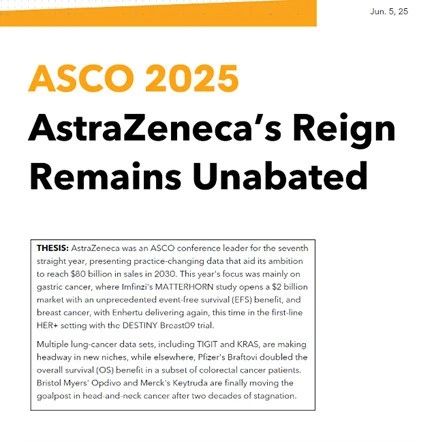
报告下载 | 2025 ASCO年会亮点:阿斯利康地位难以撼动;“中国疗法”贡献杰出
彭博Bloomberg· 2025-06-12 03:40
Core Insights - The 2025 ASCO Annual Meeting highlighted AstraZeneca's leadership with transformative data, aiming for $80 billion in sales by 2030, focusing on gastric and breast cancer treatments [2][6]. Section Summaries Gastric Cancer - AstraZeneca's Imfinzi is set to unlock a $2 billion market in perioperative gastric cancer, capitalizing on Merck's missed opportunity with the KEYNOTE-585 trial [6]. - The MATTERHORN study demonstrated unprecedented event-free survival (EFS) advantages, although it may miss out on a market of 217,000 patients in China due to data limitations [6]. Breast Cancer - Enhertu's performance in the DESTINY-Breast09 trial for first-line HER2-positive breast cancer continues to show promise [2]. - Updates from Jazz Pharmaceuticals and RemeGen on HER2-positive gastric cancer treatments were presented, indicating competitive advancements in this space [10]. Lung Cancer - Multiple datasets, including those for TIGIT and KRAS, are making progress in niche areas of lung cancer [2]. - Pfizer's PD-1xVEGF drug is anticipated to have a strong market presence, despite safety concerns [12][21]. Colorectal Cancer - Pfizer's SSGJ-707 shows potential with high efficacy, although it comes with significant safety concerns, as the market for this segment is expected to reach $60 billion [12][21]. Head and Neck Cancer - Bristol Myers' Opdivo and Merck's Keytruda have finally made progress in head and neck cancer after two decades of stagnation [2].
Zymeworks Announces Presentations Highlighting Breadth of Oncology Portfolio at Upcoming Medical Conferences
Globenewswire· 2025-05-22 21:00
Core Insights - Zymeworks Inc. is advancing its oncology programs with multiple presentations scheduled at major medical conferences, including ASCO and ESMO, highlighting its commitment to developing novel biotherapeutics for difficult-to-treat diseases [1][3][10] Oncology Programs - The company is particularly focused on zanidatamab, which is being presented at ASCO, showcasing long-term outcomes and survival data in HER2-positive gastroesophageal cancer [2][4][6] - Zymeworks' proprietary Azymetric™ platform is emphasized for its ability to develop clinically validated therapeutic antibodies, with zanidatamab being a key example [6][14] Upcoming Presentations - Zymeworks and its partners will present multiple abstracts at the ASCO Annual Meeting from May 31 to June 4, 2025, in Chicago, IL [3] - The ESMO Gynaecological Cancers Congress will also feature a trial-in-progress poster for ZW191, scheduled for June 19-21, 2025, in Vienna, Austria [10] Product Details - Ziihera (zanidatamab-hrii) is a bispecific HER2-directed antibody that has received accelerated approval from the FDA for treating advanced HER2-positive biliary tract cancer [18][34] - ZW171 is a bispecific antibody targeting mesothelin and CD3, designed to enhance T cell-mediated tumor cell killing, with promising preclinical data supporting its efficacy [15][34] - ZW191 is an antibody-drug conjugate targeting folate receptor-α, showing strong activity across various cancer models, including those with low levels of the target [16][17] Clinical Development - The company is actively recruiting for Phase 1 studies of ZW171 and ZW191, with plans for an investigational new drug application for ZW251 in mid-2025 [34] - Zymeworks has established partnerships with BeiGene and Jazz Pharmaceuticals for the development and commercialization of zanidatamab in different territories [33][34]

AstraZeneca Stock Declines 6% in 3 Months: Time to Buy the Dip?
ZACKS· 2025-05-21 14:05
Core Viewpoint - AstraZeneca's stock has faced a decline of 6.4% over the past three months, primarily due to broader market uncertainties and a volatile macroeconomic environment [1] Company Overview - AstraZeneca has a strong portfolio with 16 blockbuster drugs, each generating over $1 billion in sales, including Tagrisso, Fasenra, and Lynparza [4] - The company is optimistic about continued growth in its product portfolio, expecting strong performance from new drugs like Wainua and Airsupra [5] Oncology Segment - Oncology is AstraZeneca's largest segment, contributing approximately 41% to total revenues, with sales rising 13% to $5.6 billion in Q1 2025 [6] - The approval of new cancer drugs, such as Truqap, has led to significant sales, with $430 million in 2024 and $132 million in Q1 2025 [7] - AstraZeneca anticipates ongoing growth in oncology medicines, particularly Tagrisso and Enhertu, despite some challenges [8] Challenges and Headwinds - The Part D redesign is expected to negatively impact sales of older and newer drugs in the U.S. throughout 2025 [9] - Pricing pressures in Europe and the introduction of generics, such as Brilinta, are anticipated to affect sales [10] - Ongoing investigations at AstraZeneca's China subsidiary regarding medical insurance fraud and other issues may pose additional challenges [11] Stock Performance and Valuation - AstraZeneca's stock has increased by 8.2% this year, outperforming the industry and S&P 500 [12] - The stock is currently trading at a price/earnings ratio of 14.93, slightly above the industry average but below its five-year mean of 18.05 [15] - Earnings estimates for 2025 have risen from $4.47 to $4.50 per share over the past 60 days, indicating a positive outlook [19] Future Growth Prospects - AstraZeneca aims for total revenues to reach $80 billion by 2030, up from $54 billion in 2024, with plans to launch 20 new medicines [23] - The company expects to achieve a core operating margin in the mid-30s percentage by 2026, reflecting strong growth potential [24]

MRK, Daiichi Begin Pivotal Esophageal Cancer Study With ADC Drug
ZACKS· 2025-05-20 15:26
Core Insights - Merck and Daiichi Sankyo have initiated the phase III IDeate-Esophageal01 study for the B7-H3 directed ADC, ifinatamab deruxtecan (I-DXd), targeting advanced or metastatic esophageal squamous cell carcinoma (ESCC) patients [1][2] - The study aims to compare the safety and efficacy of I-DXd against an investigator's choice of chemotherapy in patients who have progressed after platinum-based therapy and immune checkpoint inhibitors [2] - The primary endpoint is overall survival, with secondary endpoints including progression-free survival and objective response rate [3] Company Developments - Merck's stock has decreased by 22.3% year-to-date, while the industry has seen a decline of 5.2% [6] - Merck acquired global co-development and co-commercialization rights for I-DXd and two other ADCs from Daiichi Sankyo for a potential total of up to $22 billion, retaining exclusive rights for Daiichi in Japan [8] - Merck has expanded its collaboration with Daiichi to co-develop MK-6070, a T-cell engager targeting DLL3, following its acquisition of Harpoon Therapeutics [9] Industry Context - ADCs are viewed as a disruptive innovation in the pharmaceutical industry, enhancing cancer treatment by using antibodies to deliver cytotoxic drugs directly to tumors [11] - Daiichi Sankyo is developing several ADCs across various cancer types, including Enhertu, which is marketed in partnership with AstraZeneca [12] - Pfizer has entered the ADC market by acquiring Seagen for $43 billion, adding three ADCs to its portfolio that have significantly contributed to its revenues in 2024 [13][14]

Esperion(ESPR) - 2025 FY - Earnings Call Transcript
2025-05-20 15:00
Financial Data and Key Metrics Changes - The company reported growth in Q2, overcoming headwinds faced in Q1, particularly related to Medicare and overall market conditions [4] - Prescription growth began to exceed expectations around mid-March, with co-pay issues for Medicare patients significantly reduced [5] Business Line Data and Key Metrics Changes - The lead products, NEXLETOL and NEXLASET, have seen increased traction, particularly in the statin intolerant population, which has been positively received by physicians [6][12] - The sales force has effectively communicated the benefits of the products, leading to a doubling or tripling of new prescribers since the statin intolerance campaign [12] Market Data and Key Metrics Changes - In Europe, the company has experienced consistent growth, with Daiichi Sankyo reporting 20-30% growth each quarter since launch [15] - The company is catching up with Daiichi in Europe, indicating a strong competitive position [15] Company Strategy and Development Direction - The company plans to develop a triple combination therapy in the U.S., which includes bempedoic acid, ezetimibe, and two commonly prescribed statins [17][18] - The company is also pursuing international agreements, with Otsuka Pharmaceuticals commercializing the product in Japan and other agreements in Canada, Australia, and Israel [21][22][24] Management's Comments on Operating Environment and Future Outlook - Management expressed optimism about reaching profitability soon, with a growth trajectory that supports self-funding for future projects [42][43] - The company is excited about the potential of a new compound targeting primary sclerosing cholangitis (PSC), which represents a significant market opportunity [37][38] Other Important Information - The company has a strong patent portfolio, with potential extensions beyond 2031, which could reshape the company's financial outlook [28][30] - The recent settlement with MicroLabs regarding generic Nexletol is confidential, but management believes it sets a precedent for future negotiations with other ANDA filers [26][29] Q&A Session Summary Question: How are revenues tracking for NEXLETOL and NEXLASET? - Management noted that Q2 is off to a great start, with prescription growth exceeding expectations since mid-March [4][5] Question: What is the current target population for NEXLETOL and NEXLASET? - The focus is on the statin intolerant population, which has been well received by physicians [6] Question: Can you comment on the expansion of the drug in Europe? - Daiichi Sankyo has shown consistent growth in Europe, and the company expects to surpass them eventually [15] Question: What are the plans for a triple combination therapy? - The company is developing a triple combination therapy that could significantly improve patient adherence and outcomes [17][18] Question: What is the timeline for the PSC drug development? - The PSC drug is currently in preclinical stages, with expectations to launch in the early 2030s [41] Question: How does the company view its path to profitability? - Management is optimistic about reaching profitability soon, with a solid growth trajectory and cash position [42][43]

新冠再现感染潮,亚洲疫情概念股大涨
Hua Er Jie Jian Wen· 2025-05-19 12:21
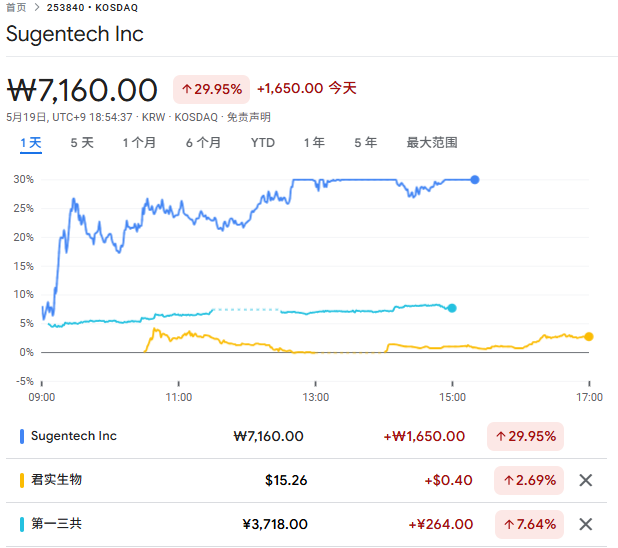
Group 1 - The resurgence of COVID-19 in Asia has led to increased expectations for demand in testing and vaccine production, resulting in a collective surge in stock prices of related companies [1][3] - South Korean diagnostic kit manufacturer Sugentech saw its stock price rise by as much as 29%, while Japanese vaccine manufacturer Daiichi Sankyo's stock increased by 7.4% due to an upgraded target price from UBS [1] - Other companies, such as Shanghai Junshi Bioscience in Hong Kong, also experienced stock price increases, with a rise of 4.3% [1] Group 2 - The new wave of COVID-19 is spreading rapidly in Asia, with predictions that it may reach levels seen during last summer's peak, according to the Chinese Center for Disease Control and Prevention [3] - The Korea Disease Control and Prevention Agency (KDCA) has extended the seasonal COVID-19 vaccination period by two months until the end of June, particularly recommending early vaccination for vulnerable groups [3] - The stock prices of various South Korean COVID-19 testing and vaccine companies, including Humasis, LabGenomics, Seegene, and SD Biosensor, have generally increased, with SK Bioscience's stock rising by 7.2% [3]
MacroGenics (MGNX) 2025 Conference Transcript
2025-05-08 15:30
Summary of MacroGenics Conference Call Company Overview - **Company**: MacroGenics - **Industry**: Precision Medicines, specifically in oncology and immunotherapy Key Points and Arguments 1. **R&D Focus**: MacroGenics has a strong history of drug discovery and development, currently having four assets in the clinic, all homegrown, leveraging both internal platform technology and licensed drug linker chemistry for their ADC portfolio [3][49] 2. **Lead Asset**: The lead asset is Lorigirilimab, a bispecific molecule targeting PD-1 and CTLA-4, with a randomized phase two study fully enrolled, expecting data later this year [4][50] 3. **ADC Programs**: Two ADC programs utilizing a Topo-1 based drug linker are in phase one dose escalation, with promising prospects anticipated [5][50] 4. **T Cell Engager**: A bispecific molecule targeting CD3 and CD123 is part of an option-based deal with Gilead, also in phase one dose escalation [5][51] 5. **Future Innovations**: Additional molecules are being advanced in research labs, with one ADC program, MGC030, expected to enter the clinic next year [6][52] Bispecific Molecule Insights 1. **Lorigirilimab's Efficacy**: Initial monotherapy data showed a 26% confirmed overall response rate (ORR) in a late-line castrate-resistant prostate cancer population, with significant PSA reductions [11][12] 2. **Durability of Response**: Patients exhibited long durable responses, with some remaining on study for over two years, which is notable compared to previous treatments [12] 3. **Lorikeet Study**: A randomized phase two study combining Lorigirilimab with docetaxel is ongoing, aiming to demonstrate improved progression-free survival (PFS) compared to docetaxel monotherapy [13][18] Ovarian Cancer Study 1. **Lynette Study**: Focuses on ovarian and gynecological cancers, aiming to show meaningful activity and durability in a historically less responsive indication [19][20] 2. **Response Rates**: Traditional PD-1 monotherapy has shown single-digit response rates, while combinations with CTLA-4 have improved this to 25-30% [19][20] B7-H3 Targeting 1. **MGC026 Development**: A next-generation ADC targeting B7-H3 is being developed, leveraging a proprietary platform that enhances potency and reduces toxicity [25][26] 2. **Broad Application**: B7-H3 has a wide expression across various solid tumors, with ongoing studies in small cell lung cancer and other indications [29][30] Financial and Operational Insights 1. **Cash Position**: As of year-end 2024, MacroGenics had $200 million in cash, with a runway extending into the second half of 2026 [34] 2. **Non-Dilutive Capital**: The company has successfully raised approximately $475 million in non-dilutive capital over the past three years, avoiding formal market offerings since February 2019 [35][37] 3. **Gilead Collaboration**: The partnership with Gilead includes an exclusive option for the CD123 CD3 DART molecule, with ongoing phase one trials focusing on hematologic malignancies [38][39] Leadership Transition 1. **CEO Search**: A nationwide search for a new CEO is underway, with Scott Koenig continuing to support the company during the transition [45]