GE HealthCare Technologies Inc.

Search documents
最新!2款创新器械获批上市!
思宇MedTech· 2025-12-25 08:58
Core Medical: Interventional Left Ventricular Assist System - The National Medical Products Administration (NMPA) has approved the interventional left ventricular assist device and the interventional left ventricular assist catheter pump kit from Shenzhen Core Medical Technology Co., Ltd. [2] - This interventional left ventricular assist system is designed to provide short-term left ventricular support during high-risk percutaneous coronary intervention (PCI) for adult patients with severe coronary artery disease and reduced left ventricular ejection fraction [7]. - The system utilizes self-developed axial magnetic flux multi-drive technology, achieving high flow output and stable performance with a smaller outer diameter, which helps reduce blood damage risk and supports longer clinical use [7][8]. Antai Kangcheng: Tumor Electric Field Therapy Device - The tumor electric field therapy device from Hunan Antai Kangcheng Biotechnology Co., Ltd. has also been approved by the NMPA [2]. - This device consists of a main unit, distribution box, disposable electrode pads, power adapter, lithium-ion battery, and charging dock, and is intended for treating patients aged 22 and older diagnosed with supratentorial glioblastoma [10]. - The device is to be used in conjunction with temozolomide (TMZ) after surgical and radiotherapy treatments [10][11]. Industry Overview - As of now, a total of 391 innovative medical devices have been approved for listing in China [3].


报名!医工交叉加速成果转化专场 | 未来产业创新研讨会
思宇MedTech· 2025-12-22 09:10
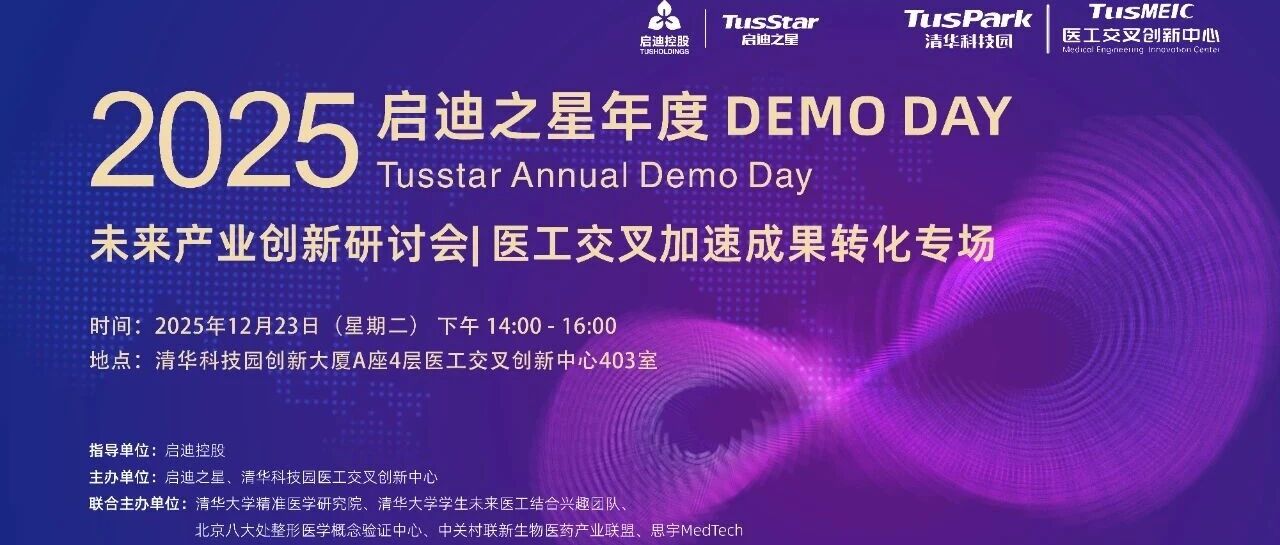
Core Viewpoint - The event aims to promote the integration of medical and engineering fields, focusing on technological innovation and the deep integration of the medical industry, while providing a platform for collaboration among experts, investors, and innovative enterprises [1]. Event Details - The Future Industry Innovation Seminar on Medical-Engineering Cross-Integration will be held on December 23, 2025, at Tsinghua Science Park Medical-Engineering Cross-Innovation Center [1]. - The event is part of the "2025 Tsinghua Star Annual DEMO DAY" series, gathering clinical experts, investment institutions, industry associations, and innovative companies [1]. - The agenda includes registration, opening remarks, mentor awarding, platform introduction, keynote speeches, and networking opportunities [2][3]. Keynote Topics - Topic 1: "Promoting Results Transformation and Iteration from Technology to Artificial Joints in Total Knee Replacement" presented by a professor from Tsinghua University [3]. - Topic 2: "Exploration of Trends in China's Biopharmaceutical Industry and Investment Development" by the General Manager of a medical fund [3]. - Topic 3: "Medical-Engineering Cross-Validation Platform Supporting Medical Technology Results Transformation" by the head of a validation center [3]. - Topic 4: "Global Medical Technology Innovation Ecosystem" by the editor-in-chief of a medical technology media matrix [3]. Organizing Entities - The event is organized by Tsinghua Holdings, Tsinghua Star, and Tsinghua Science Park Medical-Engineering Cross-Innovation Center, with support from various academic and industry organizations [2].
Global Veterinary Stereotactic Radiosurgery System Market to Hit USD 7.46 Billion by 2032 – SNS Insider
Globenewswire· 2025-12-20 15:00
Market Overview - The veterinary stereotactic radiosurgery system market was valued at USD 3.29 billion in 2024 and is projected to reach USD 7.46 billion by 2032, with a compound annual growth rate (CAGR) of 10.78% from 2025 to 2032 [1][9] Growth Drivers - Key factors driving market growth include the increasing prevalence of cancer in pets, growing awareness among pet owners regarding advanced treatment options, and rapid technological advancements in precision radiation therapy [2] - The U.S. market is expected to grow from USD 1.23 billion in 2024 to USD 2.75 billion by 2032, with a CAGR of 10.65% during the same period [3][4] Market Trends - Major trends include the integration of advanced imaging technologies, improved treatment planning software, and collaborations between veterinary clinics and technology providers [5] - The rising humanization of pets and the willingness of owners to pursue premium treatment options are expected to further accelerate market growth [5] Market Segmentation - By Product: Linear Accelerators (LINAC) held a 52.28% market share in 2024, while Proton Beam Radiation Therapy (PBRT) is the fastest-growing segment with a CAGR of 11.28% [10] - By Application: Tumor treatment dominated the market in 2024, with Neurological Disorders emerging as the fastest-growing segment at a CAGR of 11.68% [11] - By Type: Dogs accounted for 72.94% of the market share in 2024, while small animals are the fastest-growing segment with a CAGR of 12.61% [12][13] - By End-User: Academic & Research Institutions are the largest segment, while Hospitals & Clinics are witnessing the highest growth due to rising pet cancer diagnoses [14] Regional Insights - North America held a dominant market share of 47.60% in 2024, supported by a mature veterinary healthcare system and increased pet ownership [15] - The Asia Pacific region is the fastest-growing area with a CAGR of 11.65%, driven by rising pet ownership and disposable income in countries like China, India, Japan, and South Korea [15] Major Players - Key players in the veterinary stereotactic radiosurgery system market include Xstrahl Ltd, Accuray Incorporated, Varian Medical Systems, and Elekta AB [8]

主题阿尔法 - 企业如何缓解关税影响?从三季度财报中得到的启示-Thematic Alpha x US Public Policy-How Are Companies Mitigating Tariff Impacts What We Learned From 3Q Earnings
2025-12-18 02:35
Summary of Key Points from the Earnings Call on Tariff Mitigation Strategies Industry Overview - The discussion revolves around the impact of tariffs on various sectors, particularly focusing on how companies are adapting to these challenges in the current economic environment. The effective tariff rate is expected to remain around 15% in the near term, with potential changes depending on the Supreme Court's decision regarding IEEPA tariffs [1][10]. Core Insights and Arguments 1. **Tariff Policy Uncertainty**: The Supreme Court's decision on IEEPA tariffs could significantly alter the tariff landscape, raising questions about future tariff policies and potential refunds of collected revenues [1][2][10]. 2. **Mitigation Strategies**: Companies are employing five key strategies to mitigate tariff impacts: - **Pricing Power**: Companies are increasingly passing costs onto consumers, with pricing power becoming the most mentioned strategy [3][4][16]. - **Supplier Negotiation**: Firms are negotiating with suppliers to share the burden of tariff costs, particularly those with high order volumes [16]. - **Redirecting Products**: Multinational companies are redirecting goods to markets without tariffs, such as moving products from China to Europe [16]. - **Stockpiling Inventory**: Companies are building inventory ahead of potential tariffs, although this strategy is less favored due to associated costs [16]. - **Diversifying Supply Chains**: Companies are reorganizing supply chains under strategies like China+1, nearshoring, or reshoring to reduce reliance on tariff-affected regions [16]. 3. **Sentiment Analysis**: Management teams in healthcare, industrials, and IT express the highest confidence in mitigating tariff risks, while consumer staples and communication services show lower sentiment scores [5][21]. 4. **Trends in Strategy Implementation**: There has been a decrease in mentions of tariff mitigation strategies, indicating a potential peak in tariff pressures and increased confidence in existing strategies [4][20]. Pricing power has overtaken supply chain diversification as the primary strategy mentioned by companies [20]. 5. **Sector-Specific Insights**: - **Industrials and Consumer Discretionary**: These sectors have the highest mentions of pricing power and are actively negotiating with suppliers [20][35]. - **Healthcare**: This sector has seen a significant decrease in mentions of mitigation strategies, indicating a shift in focus or confidence [27]. Additional Important Insights - **Impact of Inventory Levels**: Depleting inventory stockpiles in sectors like consumer discretionary and industrials may be driving companies to rely more on pricing power as a mitigation strategy [35][39]. - **Long-Term Strategy Shifts**: Some companies are shifting their focus from immediate supply chain diversification to long-term goals due to the high costs and complexities involved [33]. - **Illustrative Company Examples**: Various companies, such as Carrier Global, Newell Brands, and Whirlpool, have shared insights on their specific strategies and the impacts of tariffs on their operations [54][57][59]. Conclusion - The current economic environment presents ongoing challenges due to tariffs, but companies are adapting through a combination of pricing strategies, supplier negotiations, and supply chain diversification. The sentiment across sectors varies, with industrials and healthcare showing differing levels of confidence in their ability to manage tariff impacts.
Hologic's Genius AI Detection Shows Value by Spotting Missed Cancers
ZACKS· 2025-12-17 14:31
Core Insights - Hologic's AI-powered mammography solutions are gaining traction in clinical settings, particularly with the 3DQuorum technology, which enhances radiologists' workflows and maintains high cancer detection effectiveness [1] - The Genius AI Detection solution has demonstrated comparable performance to radiologists in identifying challenging breast cancer cases, with new data indicating its potential to increase cancer detection rates [1][9] Technology Performance - A study involving 7,500 digital breast tomosynthesis exams revealed that the Genius AI Detection solution flagged approximately 32% of false-negative mammograms, accurately identifying the location of breast cancer in one-third of these cases [2][3][9] - The AI technology successfully flagged nearly 90% of previously identified breast cancer cases by radiologists, showing a higher likelihood of detecting invasive ductal carcinomas and lymph node-positive cancers [4] Study Limitations - The study's findings may not be generalizable due to its single-center design, predominantly Caucasian patient population, and the use of a specific version of the AI software, which limits the applicability of results to other settings or algorithms [5] Industry Updates - GE Healthcare announced a contract to supply over 300 CT scanners to Indonesia, aiming to improve healthcare access for over 280 million people [6] - Becton, Dickinson and Company is expanding its diagnostic offerings in Europe, focusing on respiratory and STI diagnostics with new assays developed in partnership with Certest Biotec [7] Stock Performance and Valuation - Hologic's stock has increased by 10% over the past three months, outperforming the industry growth of 8.6% [8] - The company is currently trading at a forward five-year price-to-sales ratio of 3.86X, which is lower than the industry average of 4.36X [10]


GE医疗创新中心在天津启用,增投5亿推进仪器设备“本土化”
仪器信息网· 2025-12-17 03:55
Core Viewpoint - GE Healthcare is committed to the Chinese market, emphasizing its strategic importance and denying rumors of selling its business in China. The company has taken concrete actions to reinforce its presence, including significant investments in local R&D and production facilities [2][3]. Group 1: Strategic Actions - GE Healthcare has established the East Hemisphere Headquarters Innovation Center for MRI in Tianjin, marking it as the only system-level MRI R&D base outside the U.S. The company plans to invest 500 million yuan over the next five years for high-end MRI equipment localization [2]. - The company has adjusted its strategy in China to focus on "precision cultivation," which includes organizational restructuring and layoffs in non-core positions, affecting less than 5% of the total workforce [2][3]. Group 2: Recruitment Strategy - GE Healthcare maintains a "reduction and increase" recruitment strategy, with approximately 150 positions open in China since 2025, primarily in R&D, production, and digitalization sectors [3]. Group 3: Localization and Production - GE Healthcare has developed the largest production base in China, with six major production sites and seven factories across various cities. The Beijing base has achieved over 50% localization for MRI core components, while the Shanghai Zhangjiang factory produces 60% of global contrast agents [5]. - The company has launched the first phase of its Precision Medicine Industrialization Base in July 2025, focusing on high-end nuclear medicine production and key component localization [5]. Group 4: R&D Focus - R&D is a core component of GE Healthcare's strategy in China, with increased investments since 2025. The Tianjin MRI Innovation Center will focus on core components and cutting-edge AI technology [6]. - The Ver sana series ultrasound devices, developed in Wuxi, feature AI-assisted diagnostic systems, achieving over 60,000 units shipped globally in the first eight months of 2025 [6]. Group 5: Market Strategy - GE Healthcare has shifted its market strategy to focus on "replacement demand" as the Chinese market transitions from new equipment installation to equipment replacement. The company offers high-end CT/MR replacement solutions emphasizing precision, lower radiation doses, and efficient workflows [7]. - The company is also targeting grassroots healthcare through products like the Ver sana series ultrasound devices and the Precision Medicine Industrialization Base, addressing the need for local healthcare solutions [7].


调研超600人,英伟达这份报告揭示AI医疗未来发展方向
3 6 Ke· 2025-12-16 01:12
Core Insights - The AI healthcare market in China is projected to reach 115.7 billion yuan by 2025 and further increase to 159.8 billion yuan by 2028, indicating rapid growth in the sector [1] - A survey conducted by NVIDIA involving over 600 professionals across various roles in the healthcare and life sciences sectors provides insights into the current state and future trends of AI applications in these fields [1] Group 1: Current AI Applications in Healthcare - The three primary AI use cases in healthcare are medical imaging and diagnostics (47%), clinical decision support (43%), and disease diagnosis and risk prediction (40%) [2] - AI applications in medical imaging are particularly crucial in addressing issues like resource shortages and uneven distribution of quality healthcare, especially in rural areas where misdiagnosis rates are significantly higher [5][6] - AI enhances diagnostic efficiency and accuracy by processing large volumes of data, thereby reducing the risks of misdiagnosis and improving patient outcomes [6] Group 2: Future Trends and Developments - In the next five years, the most impacted areas by AI are expected to be advanced medical imaging and diagnostics (51%), virtual health assistants (34%), and precision medicine (29%) [8] - The integration of AI in medical imaging is anticipated to expand beyond qualitative analysis to include quantitative assessments, enhancing diagnostic capabilities [10] - Virtual health assistants are emerging as a significant trend, driven by increasing consumer demand for health management and the potential to reshape the healthcare industry through enhanced user engagement [11][12] Group 3: Challenges and Solutions - Data-related challenges, including privacy concerns and insufficient training data, are identified as major obstacles to implementing AI in healthcare, with 33% of respondents highlighting these issues [13] - NVIDIA is addressing these challenges by providing a comprehensive solution that includes advanced AI computing platforms and tools tailored for healthcare applications [14] - The NVIDIA Isaac for Healthcare framework supports the development of medical robots by generating realistic training data and reducing development costs through digital twin technology [15][16] Group 4: Collaborations and Industry Impact - NVIDIA has partnered with leading companies like Johnson & Johnson and GE Healthcare to enhance their AI capabilities and streamline product development processes [17] - The NVIDIA Inception program offers support to healthcare startups, helping over 4,000 companies with discounts, technical assistance, and market exposure [18] - NVIDIA's initiatives aim to improve efficiency and address significant challenges in the healthcare sector, contributing to the overall advancement of AI in healthcare [18]

广发证券股份有限公司投行业务管理委员会委员、董事总经理袁海峰先生致辞
Shang Hai Zheng Quan Bao· 2025-12-14 22:22
健信超导扎根医用磁共振成像设备核心部件行业多年,形成了包括1.5T、3.0T及开放式零挥发超导磁体 和1.5T无液氦超导磁体在内丰富的产品矩阵,已成为全球排名第一的超导磁体独立供应商。 尊敬的各位嘉宾、各位投资者朋友: 大家好! 非常感谢各位参加宁波健信超导科技股份有限公司首次公开发行股票并在上交所科创板上市网上投资者 交流活动。在此,我谨代表广发证券,向大家表示热烈的欢迎及衷心的感谢! 作为健信超导本次发行上市的保荐人及主承销商,广发证券在与公司长期合作进程中,既见证其稳健快 速发展,亦深切体会到公司管理层具备的超前行业洞察力与深厚的从业经验。我们相信,以本次发行上 市为重要契机,健信超导必将在为国内企业提供更多超导技术国产方案的同时,努力开拓全球市场,开 启高质量发展新篇章。 在今天的网上交流中,我们将认真负责地回答各位投资者和各位朋友提出的问题,让大家能更全面、深 入地了解健信超导,把握投资机会,共享健信超导发展的硕果。欢迎大家踊跃提问,积极参与申购。 最后,预祝健信超导首次公开发行A股圆满成功!谢谢大家! (文章来源:上海证券报) 在零挥发超导技术领域,公司追平了与国际巨头约20年的技术差距,并通过设 ...

健信超导:持续自主研发创新 努力成为全球磁共振核心部件行业领导品牌——宁波健信超导科技股份有限公司首次公开发行股票并在科创板上市网上投资者交流会精彩回放
Shang Hai Zheng Quan Bao· 2025-12-14 22:02
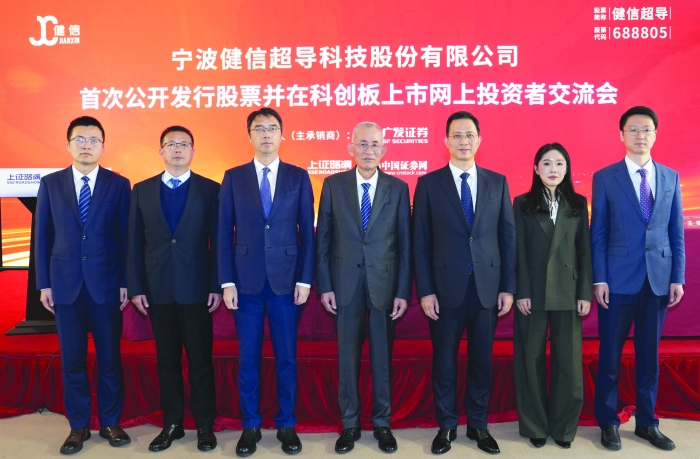
路演嘉宾合影 健信超导:持续自主研发创新努力成为全球磁共振核心部件行业领导品牌 ——宁波健信超导科技股份有限公司首次公开发行股票并在科创板上市网上投资者交流会精彩回放 问:公司的主营业务是什么? 许建益:公司主要从事医用磁共振成像(MRI)设备核心部件的研发、生产和销售,主要产品包括超导 磁体、永磁体和梯度线圈。公司以"让磁共振成为老百姓用得起的日常诊查手段"为使命,通过自主研发 和持续创新,推动磁共振技术迭代进步及推广普及。 出席嘉宾 宁波健信超导科技股份有限公司董事长许建益先生 宁波健信超导科技股份有限公司董事、总经理姚海锋先生 宁波健信超导科技股份有限公司董事、副总经理、董事会秘书许卉女士 宁波健信超导科技股份有限公司财务总监叶来刚先生 广发证券股份有限公司投行业务管理委员会委员、董事总经理袁海峰先生 广发证券股份有限公司保荐代表人周寅先生 广发证券股份有限公司保荐代表人王振先生 经营篇 问:请介绍公司的产品矩阵。 许建益:公司已形成包括1.5T零挥发超导磁体、1.5T无液氦超导磁体、3.0T零挥发超导磁体和开放式零 挥发超导磁体在内的丰富产品矩阵,成为全球排名第一的超导磁体独立供应商。在零挥发超导技术 ...
Tempus AI's Strategic Push to Expand Beyond Oncology
ZACKS· 2025-12-11 13:11
Core Insights - Tempus AI (TEM) is advancing its suite of algorithms and diagnostic software across multiple medical fields, including oncology, digital pathology, radiology, cardiology, and neuropsychology [1][9] Company Developments - Tempus has partnered with Northwestern University's Abrams Center to utilize AI for rapid advancements in Alzheimer's disease research, employing its AI-powered data analytics platform, Lens, to analyze genomic data [2] - The company has received two new FDA 510(k) clearances for its updated Tempus Pixel cardiac imaging platform and ECG–Low EF software, enhancing capabilities in cardiac MR image analysis and identifying patients with reduced left ventricular ejection fraction [3][9] - Strategic acquisitions have bolstered Tempus' position in the market, including the acquisition of Arterys in 2022 for AI tools in imaging data analysis and Paige, which brought a dataset of nearly 7 million clinically annotated pathology slides [4][9] Industry Context - GE HealthCare has launched the Voluson Performance series for women's health ultrasound and is acquiring icometrix for AI-powered brain imaging analysis [5] - NANO-X IMAGING LTD received CE mark certification for its Nanox.ARC system, which generates tomographic images from a single sweep [6] Stock Performance - Tempus' stock has increased by 74% over the past year, significantly outperforming the industry, which saw a decline of 1.5%, while the S&P 500 composite rose by 14.5% [7] Valuation Metrics - Tempus currently has a forward 12-month Price-to-Sales (P/S) ratio of 8.76X, compared to the industry average of 5.77X, indicating a higher valuation [10] Earnings Estimates - The loss per share estimate for Tempus AI for 2025 has remained unchanged over the past 30 days, with estimates at -0.05 for the current quarter, -0.13 for the next quarter, and -0.65 for the current year [11][12]