Synchron

Search documents
全球首例意念操控苹果iPad!创新企业家陈天桥早于马斯克布局脑机接口
Tai Mei Ti A P P· 2025-08-08 00:08
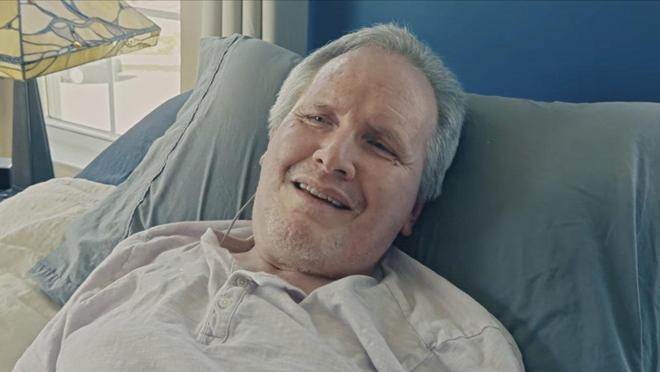
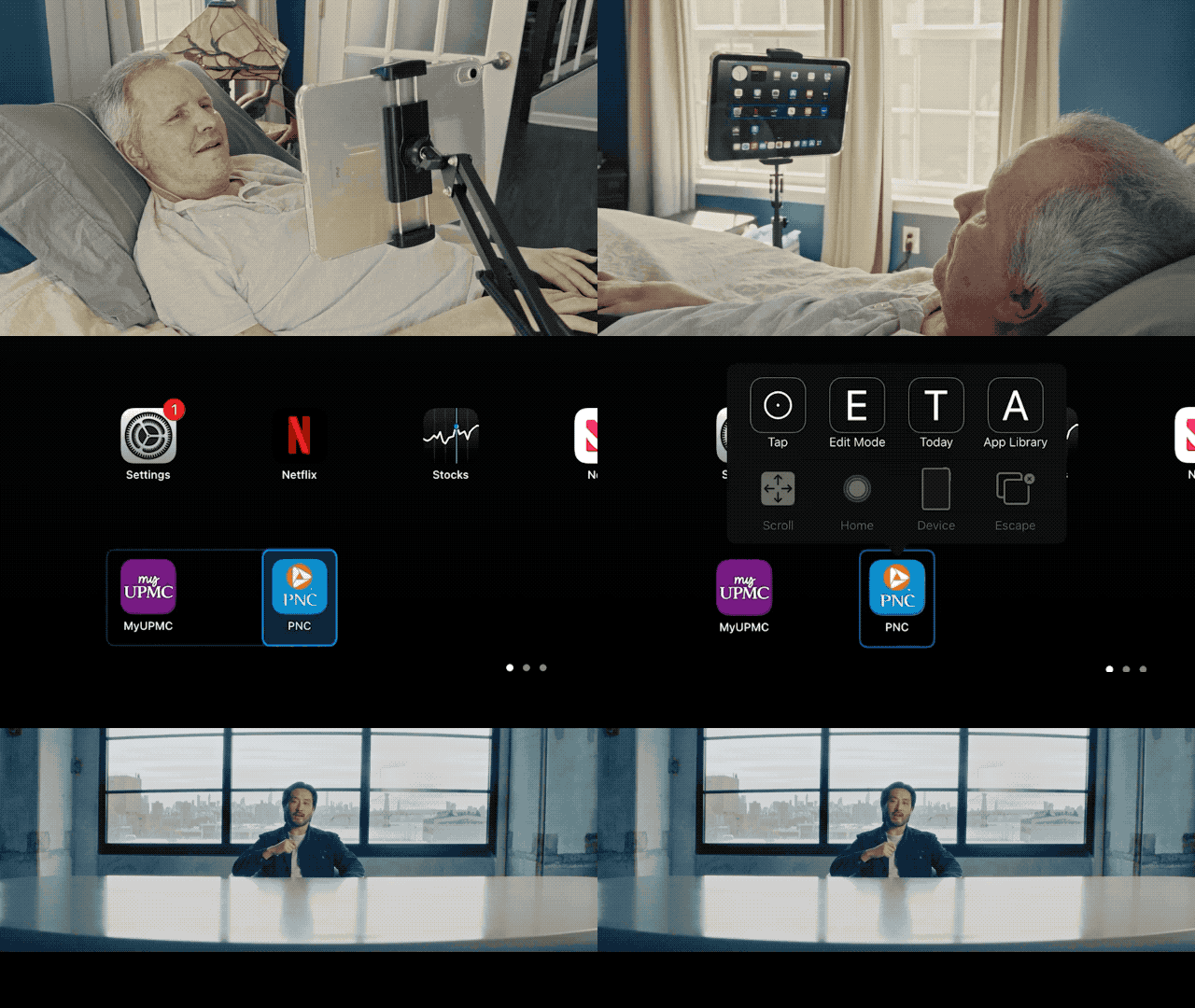
人类终于可以用"意念"操作苹果iPad。 今年8月初,美国血管介入脑机接口企业Synchron首次公开展示了其完全通过意念操控iPad的成果。 Synchron发布推文称,借助苹果全新BCI HID协议及无障碍功能,一位ALS(肌萎缩侧索硬化症)患者 实现了完全通过思维操控iPad的历史性创举。特别致敬参与者Mark的勇气,以及苹果团队在推动无障 碍科技前沿发展中的卓越贡献。 "这是全球首次见证苹果设备实现原生思维操控,"Synchron创始人、CEO汤姆·奥克斯利(Tom Oxley) 博士表示,Mark的体验既是技术突破,也预示着人机交互的未来——认知输入将成为主流控制模式。 而且,这项演示借助苹果内置的无障碍功能"切换控制"及5月推出的全新脑机接口人机交互设备(BCI HID)协议实现,标志着脑信号首次成为苹果设备的原生输入方式。 值得关注的是,创新企业家、慈善家、天桥脑科学研究院创始人陈天桥,早于马斯克对脑机接口这一硬 核科技赛道进行超前布局。2021年,陈天桥就完成了对Synchron的多轮投资,而且早于两位投资 Synchron的世界前首富比尔·盖茨和贝索斯。 免开颅植入,ALS患者用脑机接口意念 ...


脑机接口新进展,渐冻症患者用意念操控苹果设备
Xin Lang Cai Jing· 2025-08-07 09:16
8月7日,智通财经获悉,美国血管介入脑机接口企业Synchron近日首次公开演示,植入血管介入脑机接 口系统的渐冻症患者,凭借意念便可以操控iPhone、iPad等,无需肢体动作或语音指令。这标志着苹果 公司将脑信号识别作为一种与触摸、键盘和语音并列的原生输入方式。 前中国内地首富陈天桥在2021年便已完成对Synchron的投资。陈天桥曾表示,"大脑是人类最后的疆 域,也是最具挑战性的研究领域。我们相信,通过对Synchron等前沿技术公司的投资,能够加速脑科学 与人工智能的融合发展。" 目前,Synchron已在多项临床试验中取得进展,在美国让6名患者的大脑运动皮层实现了精确部署和覆 盖,让其通过意念来操作电子设备发送电子邮件、网上购物和社交媒体互动等。 ...
《环球时报》记者走进中国脑机接口实验室
Huan Qiu Wang Zi Xun· 2025-08-06 22:59
来源:环球时报 解读言语,促进康复 当《环球时报》记者走进北京脑科学与类脑研究所的大楼时,发现不同实验室里的装备大相径庭——既 有闪烁的机房,也有正在测试的机械臂,还有生化实验室。这也反映了脑机接口的跨学科特性——它同 时涉及医学、机械、通信和计算等不同领域。北京脑科学与类脑研究所于2018年成立,并根据北京市前 瞻布局的"智能脑机系统增强计划",牵头成立了北京芯智达神经技术有限公司(简称芯智达)。 芯智达业务发展总监李园在接受《环球时报》记者采访时介绍说,大脑活动最根本的工作机制是通过细 胞之间电信号的发放和传导,实现人体从最基础的吃饭、睡觉等生存动作,到产生复杂的记忆和情绪。 基于这个认识,如果通过工程技术手段,把大脑活动产生的电信号精准地采集出来,然后进行非常低延 时的传输,再通过外部的计算设备实现解码,就能解读出大脑电信号的含义。这是脑机接口最根本的原 理。 目前外界关注的脑机接口技术主要用于医学复健领域,例如可利用读取的大脑信息帮助瘫痪病人控制其 他设备(操作机械臂或控制电脑光标)。美国Neuralink公司的演示视频显示,手术后的瘫痪病人可以在 不移动任何四肢或手指、完全依靠神经信号的情况下移动光 ...
苹果「脑控」iPad 首次公开演示:四肢瘫痪的他,用一个念头重新拥抱世界
3 6 Ke· 2025-08-05 05:38
Core Insights - The article discusses the groundbreaking development of brain-computer interface (BCI) technology by Synchron, which allows ALS patients to control Apple devices using their thoughts, marking a significant advancement in assistive technology [3][4][5]. Group 1: Technology Overview - Synchron's Stentrode is a minimally invasive brain-computer interface that captures neural signals through a micro-stent implanted in the brain's blood vessels, enabling users to control digital devices [3][5][18]. - The BCI HID (Brain-Computer Interface Human Interface Device) protocol introduced by Apple integrates brain signals as a native input method alongside touch, keyboard, and voice, facilitating a new form of interaction with Apple devices [7][11][21]. - The system provides visual feedback to users, allowing them to see the strength of their neural signals and make precise selections on their devices [11][13]. Group 2: User Experience - Mark Jackson, an ALS patient, is one of the first users of Stentrode, and he has reported significant improvements in his ability to interact with technology, including sending messages and controlling applications [9][30]. - The integration of AI, such as GPT-4o, enhances the BCI experience by predicting user needs and providing contextual options, making the interaction more intuitive and efficient [26][29][32]. - Synchron aims to make BCI technology as ubiquitous as keyboards and mice, focusing on improving the quality of life for individuals with severe mobility impairments [9][21][33]. Group 3: Market Potential - There are approximately 150,000 potential users in the U.S. with severe upper limb disabilities who could benefit from BCI technology, highlighting a significant market opportunity for Synchron [33]. - The global prevalence of spinal cord injuries, which affects around 15.4 million people, further underscores the demand for innovative assistive technologies like BCI [33][35]. Group 4: Competitive Landscape - Synchron's approach contrasts with Neuralink's invasive methods, as Stentrode offers a safer, less risky alternative for patients who cannot undergo traditional brain surgery [14][21][22]. - The collaboration between Synchron and Apple is seen as a pivotal moment in the BCI field, emphasizing the importance of safety and user experience in technology development [21][33].
苹果“脑控”iPad 首次公开演示:用一个念头重新拥抱世界
Hu Xiu· 2025-08-05 05:11
Core Insights - The article discusses the groundbreaking demonstration of a brain-computer interface (BCI) technology that allows individuals with severe physical disabilities, such as ALS patients, to control Apple devices using their thoughts [1][3][4]. Group 1: Technology Overview - Mark Jackson, an ALS patient, is among the first to use Synchron's Stentrode, a brain-machine interface that captures neural signals through a minimally invasive procedure [3][6]. - The BCI HID (Brain-Computer Interface Human Interface Device) protocol introduced by Apple integrates brain signals as a native input method alongside touch, keyboard, and voice [4][8]. - Stentrode operates by being implanted in the brain's blood vessels, capturing signals that are then interpreted to control digital devices [6][34]. Group 2: User Experience and Impact - Jackson has successfully learned to perform complex tasks such as launching applications and sending messages using only his thoughts, significantly enhancing his quality of life [12][15]. - The BCI HID provides visual feedback to users, allowing them to see the strength of their neural signals and improve their focus during interactions [19][20]. - Synchron aims to make BCI technology as ubiquitous as keyboards and mice, emphasizing the importance of standardized interaction protocols [17][18]. Group 3: Competitive Landscape - The article contrasts Synchron's approach with Elon Musk's Neuralink, highlighting Synchron's non-invasive method versus Neuralink's invasive techniques [26][41]. - While Neuralink's device has more electrodes for capturing data, Synchron's Stentrode offers a safer and less invasive alternative, which may appeal to a broader audience [39][42]. Group 4: Future Developments - Synchron is working on integrating AI technologies, such as GPT-4o, to enhance the functionality of their BCI systems, allowing for more intuitive user interactions [48][51]. - The company plans to establish BCI HID as a cross-platform standard, enabling seamless integration of BCI devices into the digital ecosystem [24][60]. - As of now, Synchron has implanted Stentrode in several patients, with estimates suggesting a significant potential user base among individuals with severe upper limb disabilities [61][62].
只用意念操控iPad!苹果借助脑机接口首次实现“思维驱动”
Jin Shi Shu Ju· 2025-08-05 03:08
Core Insights - Synchron, a brain-computer interface developer, showcased a video demonstrating a patient with ALS controlling an iPad using thoughts, marking the first native thought-driven control of Apple devices [2][4] - The project utilizes a new device interface protocol introduced by Apple in May, allowing brain input signals from Synchron's Stentrode implant to be converted into operational commands for iPhone, iPad, and Vision Pro [4] - Synchron's CEO, Tom Oxley, emphasized that this technology represents a breakthrough in human-computer interaction, with cognitive input expected to become a mainstream control method in the future [4] Company Developments - Synchron's Stentrode device is implanted via a minimally invasive procedure, avoiding traditional open-brain surgery risks, and reads brain signals to translate them into screen interactions [4] - Earlier reports indicated that Apple was collaborating with Synchron to develop technology enabling users to control devices through brain signals, aimed at assisting individuals with severe spinal injuries or diseases [5] - The anticipated release of new technical standards by Apple later this year is expected to enhance the functionality and accessibility of brain-computer interfaces [5] Market Potential - Morgan Stanley estimated that approximately 150,000 individuals in the U.S. with severe upper limb disabilities could be potential early users of brain-computer interface devices [6] - Synchron has implanted the Stentrode device in at least 10 individuals since 2019, with expectations for commercial approval of such devices by 2030, although Oxley believes Synchron may achieve approval sooner [6]

苹果“脑控”iPad技术曝光
财联社· 2025-08-05 00:31
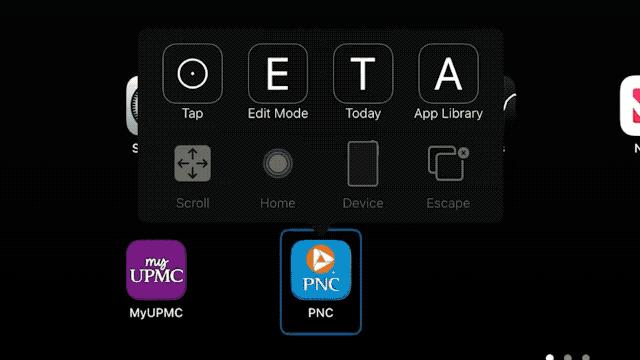
Core Viewpoint - Apple is developing a brain-computer interface (BCI) technology standard called BCI HID, which aims to translate brain signals into commands that can be understood by Apple devices like iPhone, iPad, Mac, and Vision Pro [2][5]. Group 1: Technology Development - The BCI HID protocol is designed to create a new operational language and interaction logic specifically for brain signals, differing from existing methods that simulate mouse inputs [2]. - Synchron, a startup, is collaborating with Apple on this technology, with its core product, Stentrode, being a metal mesh device implanted in the brain through a minimally invasive procedure [2][5]. Group 2: User Experience - Mark Jackson, a participant with ALS, demonstrated the technology by controlling an iPad using only his thoughts, showcasing the potential for users to interact with devices without physical movement [4][6]. - The BCI HID includes a feature similar to "shortcuts," allowing users to perform actions like "return to home" or "reply to email" through pre-set thoughts [5]. Group 3: Feedback Mechanism - The system provides real-time feedback on the user's neural activity, enhancing device control and helping users focus their thoughts for more accurate operations [8][10]. - A feature called "switch control" visually indicates the strength of neural signals, improving user interaction with the device [8]. Group 4: Market Potential - Morgan Stanley estimates that in the U.S., around 150,000 individuals with severe upper limb disabilities could become early users of BCI devices, with initial commercial approvals expected by 2030 [10].

马斯克的脑机接口公司最新计划:每年为2万人植入芯片
Sou Hu Cai Jing· 2025-07-24 04:45
Group 1 - Neuralink aims to implant brain chips in approximately 20,000 people annually by 2031, targeting an annual revenue of at least $1 billion [1] - The company plans to establish at least five large clinical centers for brain-machine interfaces within the next six years and launch three product lines: Telepathy, Blindsight, and Deep [1][2] - The projected revenue breakdown includes $100 million from 2,000 implants of the Telepathy version in 2029, $500 million from 10,000 Blindsight implants in 2030, and over $1 billion from 20,000 Deep implants for Parkinson's treatment [1] Group 2 - Since its establishment in 2016, Neuralink has raised approximately $1.3 billion, achieving a valuation of around $9 billion [2] - The company received FDA breakthrough device designation in May 2023, allowing it to conduct human clinical trials, with the first patient successfully implanted in January 2024 [2] - Neuralink's technology focuses on a closed-loop system of "implant-read-feedback-process," which is crucial for its commercialization strategy [2] Group 3 - The global brain-machine interface market is projected to grow from $2.62 billion in 2024 to $12.4 billion by 2034, with a compound annual growth rate of 16.48% [4] - Neuralink faces challenges including the risks associated with deep brain implantation, concerns over brain data privacy, and competition from companies like Synchron and Precision Neuroscience [4] - The success of Neuralink's strategic goals will test its capabilities in technology, safety, ethics, regulation, and market dynamics, potentially marking a turning point in the brain-machine interface era [4]

实现多个国际首次!美媒:脑机接口技术,“中国正迎头赶上”
Huan Qiu Shi Bao· 2025-07-21 22:40
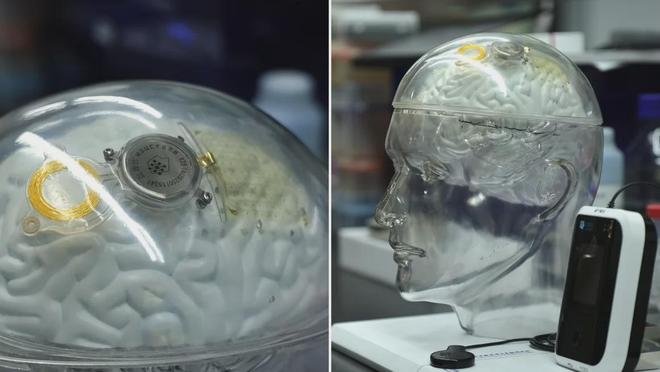
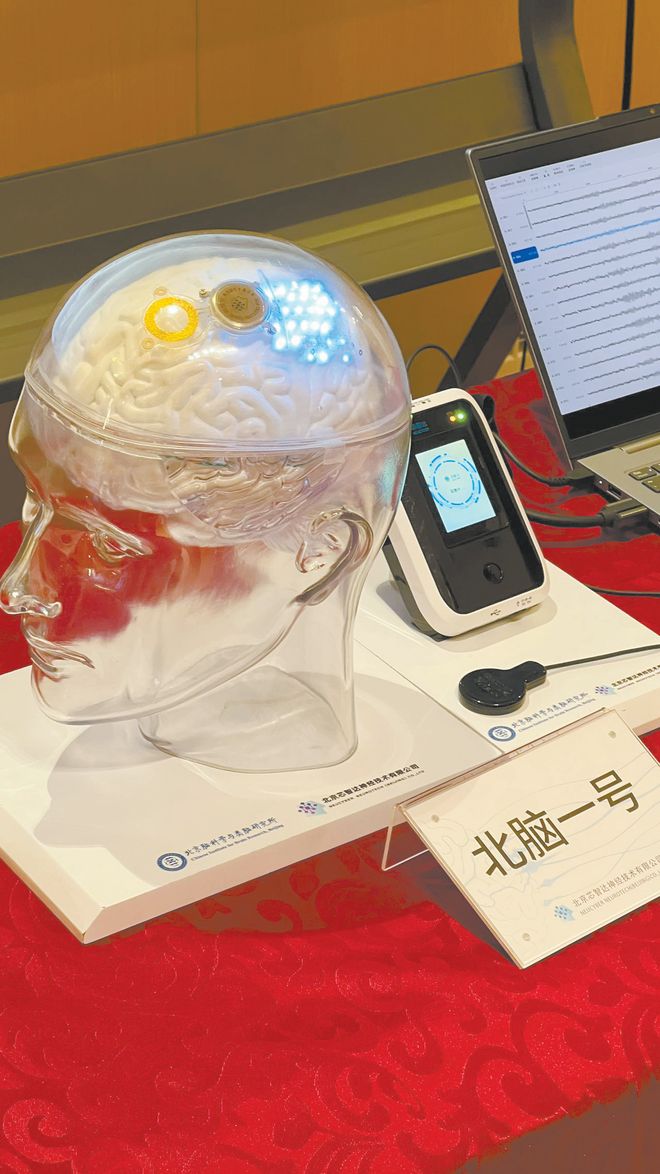
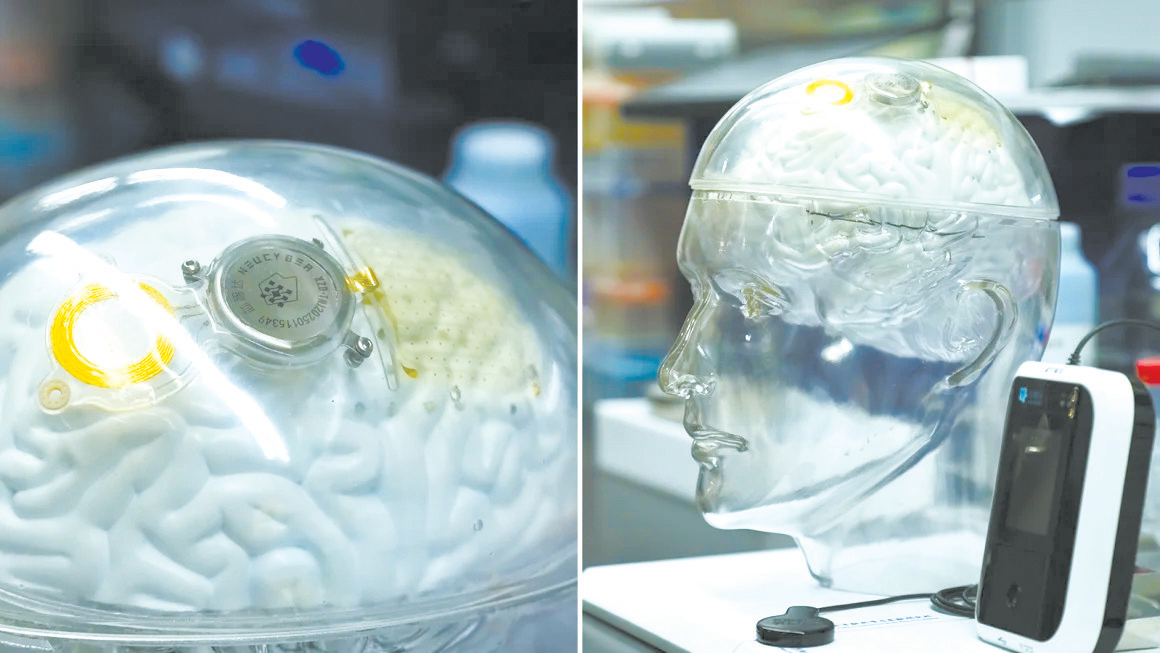
【环球时报特约记者 谢昭 环球时报记者 马俊】脑机接口技术被认为是当前最热门的前沿领域之一,美国富豪埃隆·马斯克创立的Neuralink公司已经成功实施 了多例相关手术。美国有线电视新闻网(CNN)20日注意到,中国当前在该领域正迎头赶上,"正在接近全球先进水平,在复杂性上与美国和英国相当"。 帮患者重建交流能力 所谓脑机接口技术,是指从大脑采集高质量的脑电信号,然后将其处理解码后输出,实现对其他设备的操作。CNN称,北京脑科学与类脑研究所研制的无 线脑机接口芯片已经在临床试验中植入5名患者的大脑中。《环球时报》记者此前在采访中了解到,按照脑电波接收方式的不同,脑机接口主要分为三条技 术路线:不用手术,只是将电极贴在头皮上采集脑电波的无创(非侵入式)模式;通过手术让电极贴着大脑皮层,但并没有插进脑组织的半侵入式;利用微 针或微丝将电极直接插入脑组织的侵入式。从理论上看,采集电极与大脑组织离得越近,收集的脑电波信号质量就越好,但手术风险性也越大。 北京脑科学与类脑研究所研制的名为"北脑一号"的芯片只有硬币大小,属于半侵入式。CNN引用美国乔治城大学神经科学教授马克西米利安·里森胡贝尔的 评论称,大多数美国公司采 ...
美教授:中国这项技术也在反超,令人兴奋
Guan Cha Zhe Wang· 2025-07-21 04:17
Core Insights - The article discusses the advancements in brain-computer interface (BCI) technology, particularly focusing on the "Beinao-1" chip developed in China, which has shown promising results in clinical trials for patients with conditions like ALS [1][5][10]. Group 1: Technology Development - The "Beinao-1" chip is a wireless BCI that allows patients to communicate their thoughts through text on a screen, demonstrating high accuracy in decoding brain signals [1][5]. - The Beijing Institute for Brain Science and Brain-like Research (CIBR) has initiated clinical trials, with plans to implant the chip in 50 to 100 patients in the coming year [1][5]. - The technology is described as "semi-invasive," allowing for sufficient signal capture without the higher risks associated with more invasive methods used by some U.S. companies [4][10]. Group 2: Market Potential - The global BCI market was valued at approximately $2.6 billion last year and is projected to grow to $12.4 billion by 2034 [7]. - The demand for BCI technology is described as "very strong," with numerous requests from potential patients [1][5]. Group 3: Competitive Landscape - Experts indicate that while the U.S. has historically led in BCI technology, China is rapidly catching up and even leading in certain areas [2][10]. - The article highlights the competitive nature of BCI research between China and the U.S., with both countries recognizing the technology's potential [2][7]. - Comparisons are made between China's "Beinao-1" and U.S. companies like Neuralink, noting differences in implantation techniques and signal recording methods [10]. Group 4: Research and Collaboration - The NeuCyber NeuroTech company, incubated by CIBR, focuses on developing BCI products like "Beinao-1" [4]. - Recent collaborations in Shanghai have also yielded breakthroughs in BCI technology, further enhancing the prospects for patients with speech impairments [10].