
Warby Parker Inc.

Search documents
谷歌与Xreal联合推出Aura AR眼镜 对标Meta的Orion计划
Xin Lang Ke Ji· 2025-05-21 11:49
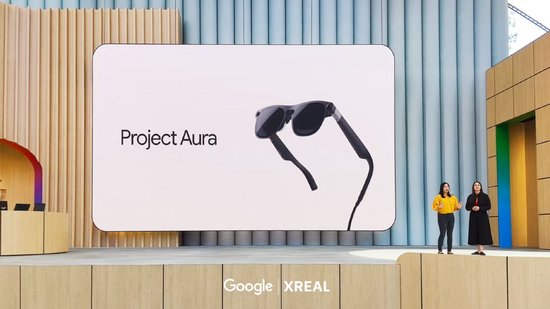
Core Insights - Google has entered the smart glasses market by collaborating with Xreal to launch the first smart glasses equipped with an augmented reality (AR) operating system [1][3] - The product, named Project Aura, was showcased at the Google I/O conference and runs on the newly released Android XR system, which aims to replicate the Android experience across various devices [3][5] - Google is also working with Samsung on a head-mounted display called Project Moohan and is developing non-AR glasses in partnership with Gentle Monster and Warby Parker [3][5] Product Details - Project Aura is expected to be available to consumers by the end of this year or early next year, with a price range significantly lower than competitors, estimated between $200 and $600 [4][5] - The glasses will feature a lightweight optical see-through design, allowing users to access common Android applications [4][5] - The device will prioritize developers initially, enabling them to create augmented experiences using familiar Android tools [4] Competitive Landscape - Xreal's CEO indicated that the Android XR smart glasses are designed to compete with Meta's upcoming AR glasses, which are expected to launch by 2027 [4] - Meta has also introduced a new version of its smart glasses with a display, priced between $1,000 and $1,400, while Xreal aims to offer a more cost-effective alternative [4][5] - Google’s strategy involves partnering with established hardware brands like Samsung and Xreal, rather than developing its own devices from scratch, contrasting with Apple's approach of self-developing products like the Vision Pro [5][6] Strategic Implications - The Android XR system is central to Google's strategy to expand its operating system beyond smartphones into areas like TVs, cars, and smart home devices [5] - The collaboration with Xreal allows Google to leverage its software expertise while Xreal focuses on hardware development, enhancing the potential for competitive products in the AR space [5][6] - The integration of augmented reality and artificial intelligence is seen as a significant advantage for the upcoming smart glasses, potentially redefining user experiences in both entertainment and professional settings [6]



Warby Parker宣布同谷歌合作开发AI眼镜 可获后者至多1.5亿美元投资
news flash· 2025-05-21 09:49
Core Insights - Warby Parker has announced a partnership with Google to develop AI glasses that can be worn all day, based on Android XR technology [1] - Google has committed to providing up to $75 million in funding for the product development and commercialization costs of Warby Parker [1] Company Summary - Warby Parker is collaborating with Google to create innovative AI eyewear [1] - The partnership aims to leverage Google's technological expertise and financial support to enhance Warby Parker's product offerings [1] Industry Summary - The collaboration signifies a growing trend in the eyewear industry towards integrating advanced technology, such as AI, into consumer products [1] - The investment from Google highlights the increasing interest of tech companies in the eyewear market, potentially leading to more innovations and competition [1]

携手谷歌(GOOGL.US)开发智能眼镜 Warby Parker(WRBY.US)股价应声大涨
Zhi Tong Cai Jing· 2025-05-21 00:56
Core Insights - Google announced a partnership with Warby Parker to develop smart glasses, leading to a 15.63% increase in Warby Parker's stock price [1] - Google is committing up to $150 million for the project, having already invested $75 million and planning to invest an additional $75 million upon reaching specific milestones [1] - The smart glasses are expected to launch sometime after 2025 and will be based on Google's Android XR system, integrating the Gemini AI assistant for voice interaction [1] Group 1 - The collaboration with Warby Parker marks Google's return to the smart glasses market after the controversial launch of Google Glass in 2013 [2] - Google is also partnering with other developers and manufacturers, including Samsung, Qualcomm, Sony, Xreal, Magic Leap, and Gentle Monster, to develop Android XR [2] Group 2 - The partnership with Warby Parker will create competition with Meta and EssilorLuxottica, who have launched their second generation of smart glasses and plan to release a third generation with a small display [1]

Google 眼镜回来了,AI 时代的涅槃重生
3 6 Ke· 2025-05-21 00:10
Core Insights - Google has re-entered the smart glasses market with the launch of Project Aura, a lightweight smart glasses product developed in collaboration with Xreal, marking a new era for wearable technology [3][6][20] - The Android XR platform, built in the Gemini era, is positioned as a new growth engine for Google, moving away from traditional smartphone operating systems [4][5][18] - The integration of Gemini's AI capabilities enhances the functionality of Android XR glasses, enabling features like real-time translation and advanced visual search [9][11][18] Product Features - Project Aura is a lightweight smart glasses product that includes dual cameras, visual sensors, and a built-in display, designed to support Gemini's visual and voice interaction capabilities [10][18] - The glasses are equipped with dual stereo speakers and multiple microphones for calls and recordings, enhancing user interaction [10][18] - Gemini's capabilities allow for real-time translation in multiple languages, making the glasses suitable for various practical applications, including travel and cross-language communication [11][18] Market Positioning - Google is collaborating with fashion brands Gentle Monster and Warby Parker to position Android XR glasses as stylish tech products, learning from the success of Meta and Rayban [20][22] - The shift in consumer perception towards smart glasses, with privacy concerns becoming less of a focus, allows for a more favorable market environment for new products [20][23] - The potential for a significant market explosion in smart glasses is anticipated, driven by advancements in AI and user-friendly designs [23]

Google to Partner With Eyewear Brands on AI-Equipped Smart Glasses
PYMNTS.com· 2025-05-20 23:50
Core Insights - Google anticipates that its smart glasses, powered by the Android XR operating system and Gemini AI model, will serve as a convenient and omnipresent AI assistant [1] - The company has partnered with eyewear brands Gentle Monster and Warby Parker to develop stylish and comfortable Android XR-equipped glasses, with plans to add more partners in the future [1] Group 1 - The vision for Android XR is to create an AI assistant that can see the world from the user's perspective and provide hands-free assistance [2] - Android XR is described as the first Android platform developed in the Gemini era, supporting a range of devices including headsets and glasses [2] - The smart glasses will feature a camera, microphone, and speakers, allowing users to access apps without needing to hold their phones [3] Group 2 - Android XR-equipped smart glasses will offer private information through an optional in-lens display, understand user context, provide live language translation, and assist with various tasks [4] - Google has expanded its partnership with Samsung to include the development of smart glasses, creating a software and hardware platform for the ecosystem [5] - Developers will be able to start building applications for the Android XR platform later this year [5] Group 3 - The rise of AI is driving a new wave of next-generation smart glasses, with companies like Meta, Amazon, Snap, Baidu, and Xiaomi also investing in this connected wearable technology [6]
Google turns to Warby Parker to develop smart glasses, competing with Meta's Ray-Bans
Business Insider· 2025-05-20 23:15
Core Insights - Google is launching a new line of AI eyewear to compete with Meta's Ray-Ban glasses, emphasizing personal style and customization [1][4] - The new glasses will be part of Google's Android XR platform, developed in partnership with Samsung, and will support augmented reality and AI features [2][3] Product Development - The first line of smart glasses featuring multimodal AI is expected to launch after 2025, with additional products planned in collaboration with Warby Parker [3] - Google has committed up to $150 million to this partnership, with $75 million allocated for product development and commercialization [4] Market Context - Warby Parker's stock rose nearly 15% following the announcement of the collaboration with Google [4] - Meta's Ray-Ban smart glasses have seen sales triple over the past year, with prices ranging from $300 to $500, and a new version with a built-in display is expected to launch later this year [6][7] Competitive Landscape - Meta is also developing a more advanced line of AR glasses, codenamed "Artemis," aimed for release by 2027, while Google is working on its own "Project Aura" glasses [8] - Google has been exploring smart glasses for over a decade, with previous attempts like Google Glass being discontinued in 2023 [9] Technology Demonstration - A live demo of the Project Aura glasses showcased features such as messaging, appointment scheduling, and live language translation, although the demo experienced some glitches [10]

Google commits $150M to develop AI glasses with Warby Parker
TechCrunch· 2025-05-20 21:37
Investment Commitment - Google will commit up to $150 million to Warby Parker to develop AI-powered smart glasses based on Android XR [1] - Google has already invested $75 million in Warby Parker's product development and will invest an additional $75 million contingent on meeting certain milestones [1] Partnerships and Collaborations - At Google I/O 2025, Google announced partnerships with several companies, including Samsung and Gentle Monster, to develop smart glasses with Gemini AI and AR capabilities [2] Strategic Approach - Google appears to be adopting a strategy similar to Meta's by partnering with Warby Parker, leveraging the eyewear company's popular frame designs and retail presence [3] - The first line of eyewear from the collaboration is expected to launch "after 2025" and will feature multimodal AI with both prescription and non-prescription options [4]

Warby Parker pops 15% on $150 million Google smart glasses partnership
CNBC· 2025-05-20 19:11
Core Insights - Warby Parker shares increased by over 15% following Google's announcement of a smart glasses partnership at its I/O developer conference [1] - Google has pledged up to $150 million for the project, with $75 million already invested in product development and an additional $75 million contingent on Warby meeting collaboration milestones [1] - The first products from the partnership are expected to launch after 2025, utilizing Google's Android XR operating system and Gemini AI assistant [1][2] Company and Industry Analysis - The collaboration between Warby Parker and Google is set to compete with the existing partnership between Meta and EssilorLuxottica, which has already launched multiple generations of smart glasses [3] - This partnership marks Google's re-entry into the eyewear market, following the controversial launch of Google Glass in 2013, which faced privacy issues [4]

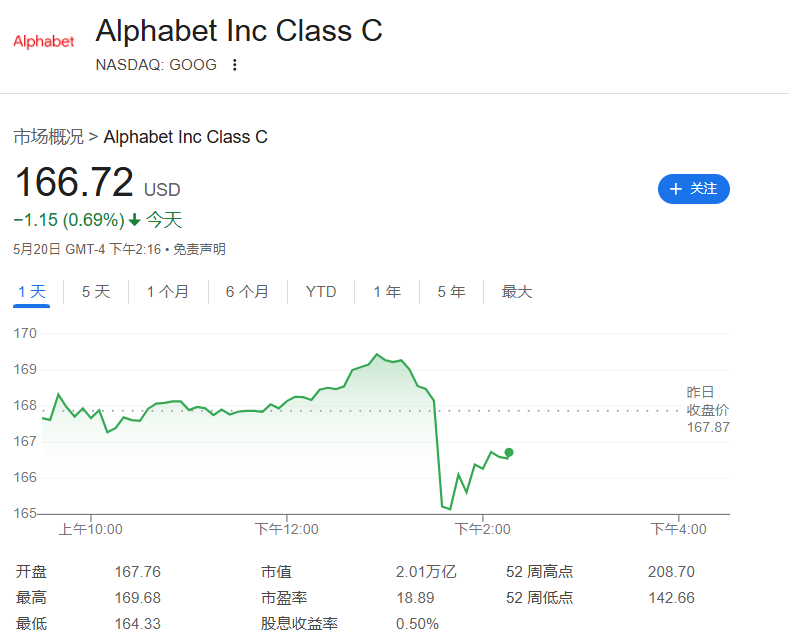
美国眼镜公司Warby Parker(WRBY)股票恢复交易,涨幅扩大至21.53%。其合作伙伴谷歌公司母公司Alphabet跌幅收窄至0.7%。
news flash· 2025-05-20 18:23
Group 1 - Warby Parker's stock has resumed trading with an increase of 21.53% [1] - Alphabet, the parent company of Google, has seen its decline narrow to 0.7% [1]
Warby Parker甩谷歌公司构建合作伙伴关系,共同开发智能眼镜。谷歌承诺向对方投资至多1.5亿美元。
news flash· 2025-05-20 18:03
Core Insights - Warby Parker has established a partnership with Google to jointly develop smart glasses, marking a significant collaboration in the eyewear and technology sectors [1] - Google has committed to invest up to $150 million in this partnership, indicating a strong financial backing for the initiative [1] Company Summary - Warby Parker is expanding its product offerings by venturing into the smart glasses market through collaboration with a major tech player [1] - The partnership with Google is expected to leverage both companies' strengths, combining Warby Parker's expertise in eyewear with Google's technological capabilities [1] Industry Implications - The collaboration highlights a growing trend of convergence between technology and traditional retail sectors, particularly in the eyewear industry [1] - The investment from Google signifies confidence in the potential of smart eyewear, which may lead to increased competition and innovation within the market [1]