混合现实(MR)

Search documents
eBay禁止AI智能体自动购物丨合规周报(第223期)
2 1 Shi Ji Jing Ji Bao Dao· 2026-01-26 05:31
Group 1: AI Security Discussions - During the Davos World Economic Forum, AI security was highlighted as a core technological risk facing enterprises, with concerns about the rapid proliferation of AI Agents impacting deployment rhythms [2] - EY's Raj Sharma emphasized the need for industrial-grade security systems for AI agents, which currently lack clear identity and tracking mechanisms, contrasting with traditional IT systems [2] - KPMG's Tim Walsh noted that AI has become a central topic in cybersecurity discussions, leading some companies to slow down AI project progress to ensure security systems are robust before data migration [2] Group 2: Meta's AI Role Restrictions - Meta Platforms announced a temporary ban on underage users accessing its AI roles while updating its platform, although they can still use the AI assistant with age-appropriate protections [3] - This decision follows previous measures introduced in October to protect underage users from inappropriate content and sensitive topics [3] Group 3: eBay's Policy on AI Shopping - eBay updated its user agreement to prohibit third-party generative AI from interacting with its platform for automatic shopping without permission, effective February 20, 2026 [4] - This move comes as various AI companies have launched automatic shopping features, highlighting eBay's intent to control AI interactions on its platform [4] Group 4: Douyin's Account Recovery Efforts - Douyin's 2025 governance white paper revealed a 60% increase in the coverage of its "anchor health score" mechanism, with 370,000 accounts being indefinitely recovered for violations [5] - The AI model improved violation handling efficiency by 31%, leading to a 37% reduction in overall violation exposure [5] Group 5: OpenAI's Revenue Growth - OpenAI reported over $1 billion in new annual recurring revenue in the past month, entirely from its API business, marking a significant milestone for the company [6][7] - The growth is attributed to the API team's efforts, indicating a shift from a consumer subscription model to a comprehensive AI service provider [7] Group 6: Apple's Advertising Expansion - Apple confirmed the introduction of more advertising placements in App Store search results starting March 3, 2024, with plans to expand globally by the end of March [8] - This expansion aims to provide advertisers with more opportunities to reach users, as approximately 65% of app downloads occur after a search [8] Group 7: Vivo's AI Glasses Project Cancellation - Vivo has reportedly halted its AI glasses project, which had been in development for six months, due to concerns about differentiation in the current market [9] - Following the cancellation, Vivo will refocus its efforts on mixed reality (MR) technology [9]
传vivo叫停AI眼镜项目 将深耕MR赛道
Zheng Quan Shi Bao Wang· 2026-01-23 07:34
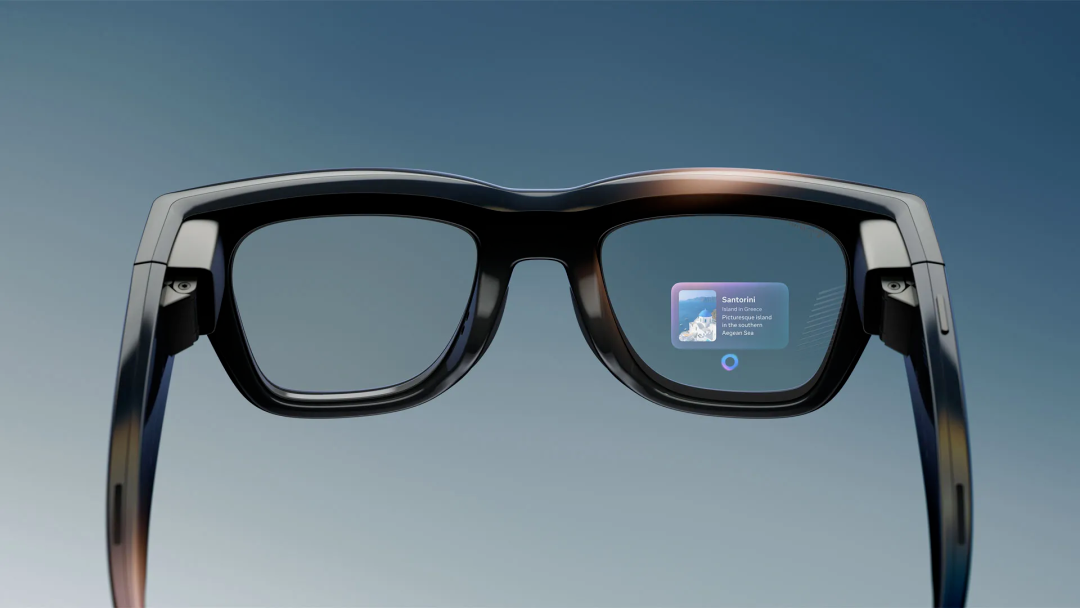
Core Viewpoint - Vivo has halted its AI glasses project due to insufficient product differentiation, despite the growing competition in the AI glasses market [1][3] Group 1: Vivo's AI Glasses Project - Vivo has stopped the development of its AI glasses project, which had been in secret preparation for nearly six months [1] - The project involved collaborations with several ODM manufacturers, including GoerTek and Zhongke Chuangda, for solution and prototype validation [1] - Internal evaluations indicated that the AI glasses could not achieve significant product differentiation, leading to uncertainty in both experience and market acceptance [1][3] Group 2: Market Trends and Projections - The AI glasses market is experiencing a surge, with major tech companies like Baidu, Xiaomi, and Alibaba entering the space, and low-cost white-label AI glasses emerging in markets like Huaqiangbei [2] - IDC forecasts that global smart glasses shipments will reach 12.8 million units in 2025, a 26% year-on-year increase, with China's market expected to exceed 2.75 million units, growing by 107% [2] - By 2026, global shipments are projected to surpass 23.7 million units, with China's market reaching over 4.9 million units, marking a significant growth phase [2] Group 3: Vivo's Focus on Mixed Reality (MR) - Despite halting the AI glasses project, Vivo will continue to focus on the mixed reality (MR) sector, emphasizing devices with greater immersion and spatial computing potential [3] - Vivo has already launched its first MR glasses, the Vivo Vision Explorer, although specific pricing and public sales have not yet been initiated [4] - The decision to pause the AI glasses project reflects Vivo's strategic focus amid a complex macroeconomic environment and rising costs [3]
传vivo叫停AI眼镜项目 官方暂无回应
Ju Chao Zi Xun· 2026-01-23 02:48
Core Viewpoint - Vivo has halted its AI glasses project after about six months of secret preparation, indicating a strategic shift towards mixed reality (MR) development instead of pursuing AI glasses due to concerns over product differentiation and market competition [1][3][5] Group 1: Project Details - The AI glasses project involved collaboration with several well-known ODMs, including GoerTek and Zhongke Chuangda, to develop prototype products but did not reach mass production [1] - Internal discussions at Vivo explored various forms and technical paths for the AI glasses, including integrating audio and video functions and equipping a single green display [3] - The decision to pause the project was influenced by the assessment from Vivo's management, led by Executive Vice President Hu Baishan, who concluded that the current AI glasses lacked significant differentiation in user experience and core functionality compared to existing and potential competitors [3] Group 2: Strategic Shift - The halt of the AI glasses project does not signify a withdrawal from exploring new human-computer interaction interfaces; rather, it reflects a reallocation of resources and a clearer strategic focus [3][5] - Vivo will continue to concentrate on MR research and development, having already launched a substantial product in this area, the "Vivo Vision Exploration Edition" MR headset, set to be released in August 2025 [3][4] - The Vivo Vision Exploration Edition emphasizes comfort with a weight of 398 grams and features a Qualcomm Snapdragon XR2+ platform, which reportedly offers 2.5 times the performance of its predecessor [4] Group 3: Market Implications - Vivo's decisive adjustment to the AI glasses project highlights the cautious approach of consumer electronics giants in the face of cutting-edge hardware innovation, emphasizing the need to avoid homogenized competition and find paths with genuine user value and technological barriers [5] - The focus on the MR sector, which is perceived to have greater differentiation potential, illustrates Vivo's strategic choices and prioritization of resources [5] - As MR/AR/VR technologies continue to evolve and market education deepens, Vivo's future actions in the MR field and its strategy to build a collaborative ecosystem centered around smartphones and MR devices will be of significant interest to the industry [5]

曾经盛极一时的VR、元宇宙,现在怎么样了?
Feng Huang Wang· 2026-01-15 10:47
Core Insights - Meta has conducted a new round of layoffs, affecting over 1,000 employees, primarily in the Reality Labs department responsible for VR/AR hardware and metaverse projects [1][2][4] - The company is shifting its focus from the ambitious metaverse vision to more practical applications like AI smart glasses, indicating a strategic retreat from its previous investments in immersive digital environments [2][4][12] - The metaverse, once seen as the future of interaction, is now viewed as a failed concept, with significant financial losses reported in Meta's metaverse initiatives [3][7][11] Company Strategy - Meta's layoffs represent a significant strategic withdrawal from the metaverse vision that CEO Mark Zuckerberg has promoted since 2014, with plans to cut about 10% of the Reality Labs workforce, which consists of approximately 15,000 employees [4][12] - The company has invested heavily in the metaverse, with losses exceeding $60 billion since 2020, and Reality Labs alone has accumulated losses of over $70 billion since 2021 [7][12] - The focus is now on developing AI technologies and products, with plans to produce over 10 million AI glasses by 2026, reflecting a shift in priorities towards more immediate technological advancements [14][16] Industry Trends - The concept of the metaverse is being redefined, with Gartner predicting that by 2026, 30% of organizations will be ready with products and services for the metaverse [14] - The competition is shifting from VR to mixed reality (MR) and lightweight AI glasses, with major companies like Meta and ByteDance entering the market with new products [14][15] - The industry is witnessing a consolidation of efforts towards AI integration, with Meta establishing a new department called "Meta Computing" to enhance its infrastructure and capabilities in AI [16][17]

跳票到2027年?Meta新型MR眼镜或再延期
WitsView睿智显示· 2025-12-08 09:33
Core Viewpoint - Meta is delaying the release of its new mixed reality (MR) glasses, codenamed "Phoenix," from the second half of 2026 to the first half of 2027 to ensure a higher quality user experience and address significant changes in core user experience [1][4]. Group 1: Delay Reasons - The delay is attributed to the need for more time to refine details and ensure a reliable final product, as stated by Meta's Reality Labs VP Maher Saba [1][4]. - The decision to postpone is not aimed at adding new features but rather to enhance the quality of the existing experience [4]. Group 2: Product Design and Features - The MR glasses are reported to resemble Apple's Vision Pro and will utilize a split "Puck" power supply design, despite internal concerns about the external power source [1]. - The design considerations include weight, comfort, and overheating risks, leading to the retention of the external power solution [1]. Group 3: Future Plans - Meta plans to release a limited edition wearable device, codenamed "Malibu 2," in 2026, alongside a new generation of Quest headsets focused on immersive gaming with significant functional upgrades [4].
前苹果大牛归国创业,「万有引力」打造首颗全功能空间计算MR芯片
3 6 Ke· 2025-12-02 07:04
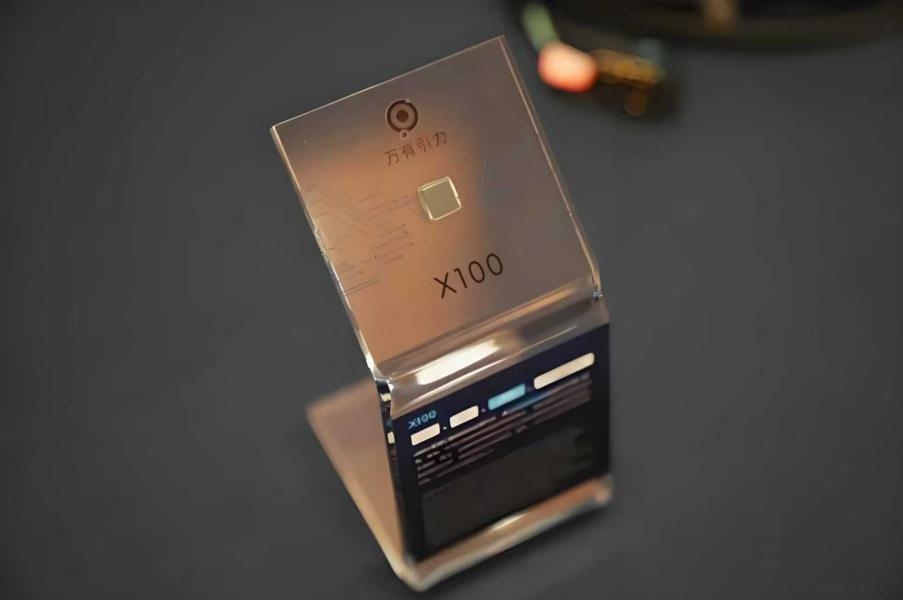
Core Insights - The global spatial computing industry is reaching a critical point of large-scale implementation, with Chinese chip company GravityXR making significant advancements [1][3] - GravityXR launched three self-developed spatial computing chips and a comprehensive "Extreme Domain" solution, marking a technological breakthrough in the next-generation computing platform [1][5] Company Overview - GravityXR focuses on designing next-generation spatial computing chips, providing a complete suite of technical services including chip platforms, hardware solutions, and software [3] - The company has raised nearly 2 billion yuan in funding from notable investors, positioning itself as a potential "unicorn" [3] Product Launch - The newly launched chips include the G-X100, a full-function MR chip, the G-VX100 for AI/AR applications, and the G-EB100 for real-time 3D rendering [1][8] - The G-X100 chip features a 5nm process, achieving global leadership in several key technical indicators, with a latency of less than 9ms [6][10] Technological Innovations - The G-X100 chip supports dual 8K/120Hz output and integrates advanced features such as eye and gesture tracking, and depth perception algorithms [6][9] - The G-VX100 chip is designed for low-power visual enhancement and can be integrated into lightweight smart devices [8] Industry Impact - GravityXR's "dedicated chip + full-stack platform" approach aims to resolve long-standing industry challenges, facilitating the transition from concept to large-scale industrialization [5][14] - The company's solutions are expected to accelerate the digital transformation across various sectors, including industrial manufacturing, healthcare, and education [15][16] Market Potential - The integration of spatial computing with AI is anticipated to create new market opportunities, enhancing the capabilities of AI models and enabling new applications [15][16] - WellsennXR predicts that global sales of AI smart glasses will reach 18 million units by 2027, indicating significant growth potential in the spatial computing market [16]

Vision Pro不是iPhone:短期内不会对苹果业务产生实质影响
Xin Lang Ke Ji· 2025-11-26 07:55
Core Insights - Analysts indicate that Apple's mixed reality headset, Vision Pro, is unlikely to have a significant impact on the company's business in the coming years [1] - Compared to previous products like iPod, iPhone, and iPad, Vision Pro will require more time to become a popular product and drive revenue growth [1][3] Product Launch and Market Strategy - Apple plans to launch Vision Pro in early 2024, initially limited to select markets in the U.S. and requiring reservations for purchase, highlighting its niche and complex nature [1] - The initial price of Vision Pro is set at $3,700, significantly higher than the Apple Watch's starting price of $349, which may limit its market penetration [4][6] Sales Performance and Projections - Historical context shows that iPod, iPhone, and iPad quickly became major revenue contributors, while Apple Watch took longer to gain traction [3][4] - Initial sales targets for Vision Pro were set at millions but have since been revised down to an estimated 400,000 to 500,000 units for the first year, projecting around $1.5 billion in revenue [5][6] Future Developments - Apple is expected to introduce a more affordable version of Vision Pro and a second-generation model by 2026, which may include enhanced features and improved connectivity [6] - For Vision Pro to achieve sales comparable to iPad, it would need to increase its annual sales to approximately 8 million units, a target deemed unlikely given current pricing and market conditions [5][6]

科技绘新景:国庆中秋假期里的文旅“智”变
Bei Jing Ri Bao Ke Hu Duan· 2025-10-07 07:17
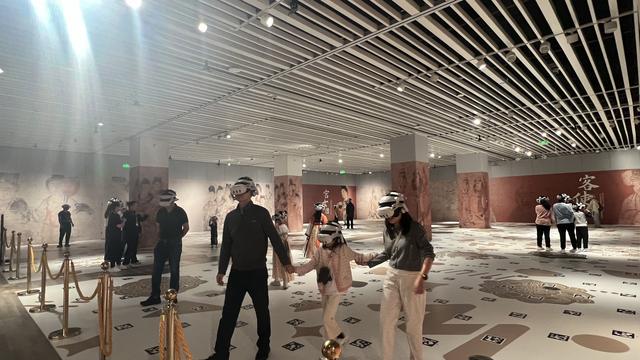
Core Insights - The integration of technology into cultural and tourism experiences is enhancing visitor engagement and creating immersive environments across various locations in China [1][3][11] Group 1: Technological Innovations in Cultural Experiences - The "West Expo Treasures" digital art interactive experience project showcases ancient artifacts using digital technology, allowing visitors to engage with history in a tactile manner [1] - The Shaanxi History Museum's VR experience enables visitors to immerse themselves in Tang Dynasty scenes, enhancing the historical experience with high-definition visuals [3] - The Zhejiang Provincial Museum's new AR-guided tour brings ancient artifacts to life, demonstrating the application of cutting-edge technology in cultural settings [3] Group 2: Enhanced Visitor Experiences - Various locations, such as Chongqing and Guangdong, are utilizing light shows and projections to narrate local legends and enhance the aesthetic appeal of historical sites [4][6] - The Zhuhai Chimelong Ocean Kingdom's light and drone show offers a spectacular visual experience, combining technology with entertainment to attract visitors [6][8] Group 3: Smart Tourism Management - The implementation of smart management systems in popular tourist destinations, like Lijiang Ancient Town, is improving visitor satisfaction by monitoring crowd flow and providing real-time guidance [9][11] - The use of advanced infrastructure and intelligent applications in tourism is fostering a synergy between cultural preservation and modern tourism practices [9][11] Group 4: Future of Cultural and Tourism Integration - The ongoing technological advancements are transforming the cultural and tourism sectors, making technology an essential component for high-quality development in the industry [11] - Experts emphasize that technology should serve cultural purposes and enhance visitor experiences, ensuring a balance between innovative presentation and cultural depth [11]
“逛展”全球数贸会:杭州科创新势力吸睛
Zhong Guo Xin Wen Wang· 2025-09-29 00:24
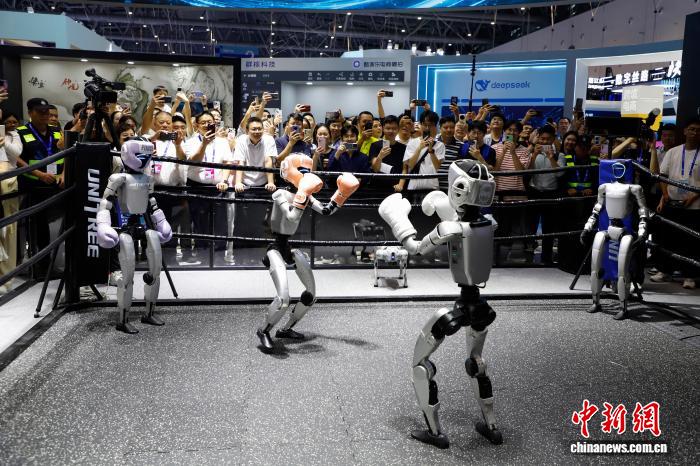
Group 1: Event Overview - The fourth Global Digital Trade Expo is being held in Hangzhou, Zhejiang from September 25 to 29, attracting nearly 11,000 international merchants [1] - The event highlights the "Kechuang New Forces" of Hangzhou, showcasing the city's emerging industries and innovations [1] Group 2: Company Innovations - Yushu Technology Co., Ltd. showcased its G1 humanoid robot in a fighting competition, demonstrating advanced algorithms for motion control, including balance and autonomous recovery after being knocked down [3] - Qiangnao Technology Co., Ltd. presented its Revo2 bionic dexterous hand, which can perform delicate tasks with a grip strength of up to 50N while weighing only 383g, utilizing non-invasive brain-computer interface technology [4][5] - Chuanhe Lingjing Technology Co., Ltd. introduced mixed reality (MR) and virtual reality (VR) technologies, creating immersive experiences that blend traditional culture with modern technology, attracting interest from international clients [6]
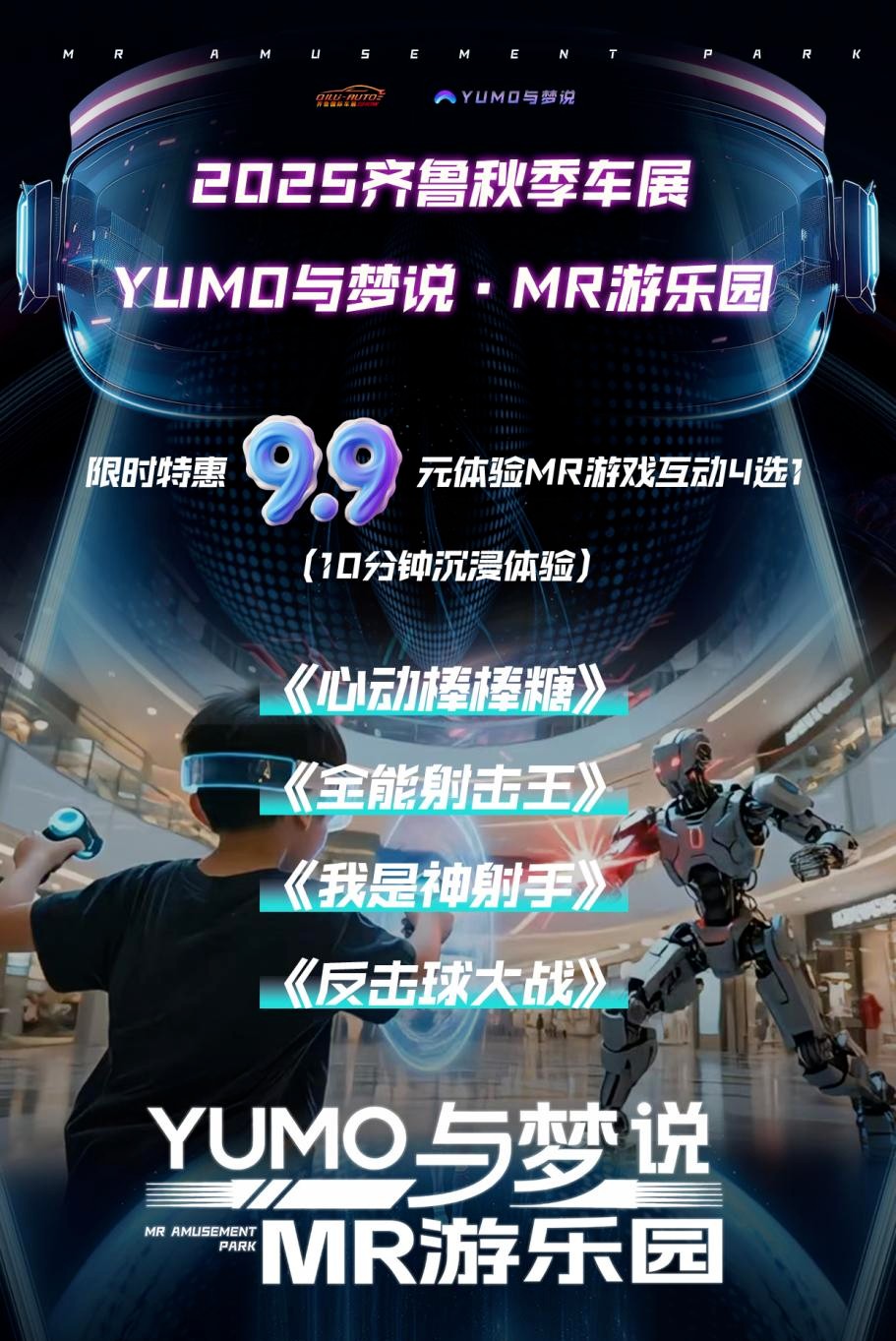
YUMO与梦说联合2025齐鲁秋季车展推出MR游乐园 弘阳广场店限时秒杀同步开启
Qi Lu Wan Bao· 2025-09-04 01:14
Core Insights - The immersive experience brand "YUMO与梦说" will collaborate with the 2025 Qilu Autumn Auto Show to create a dedicated MR amusement park, offering a unique technological experience at the event [1] - During the event, citizens can enjoy a 10-minute MR game interaction for only 9.9 yuan, with a choice of four different games, enhancing the automotive exhibition with technological fun [1] Game Offerings - The four MR games include: - "Heartfelt Lollipop," which creates a sweet and romantic interactive scene - "All-Round Shooting King," simulating a battlefield environment to test players' reflexes and skills - "I Am a Sharpshooter," featuring an archery scene for players to showcase their skills - "Counterattack Ball Battle," focusing on competitive gameplay for an exciting experience [3] - A new MR-themed game, "Dinosaur Raising Plan," will be launched at the subsequent pop-up store, allowing players to experience the growth of dinosaurs [3] XR and MR Technology - MR (Mixed Reality) focuses on real-time dynamic interaction, where virtual content interacts with the real environment following physical rules, while XR (Extended Reality) emphasizes immersive scene exploration with limited interaction [5] - The collaboration represents an innovative attempt to merge technology with culture and the automotive industry, providing diverse entertainment options for citizens [5]