
韵达股份

Search documents
快递费上调确认!继义乌后,广东 也涨了:底价上调0.4元,各家不得低于1.4元揽收
Mei Ri Jing Ji Xin Wen· 2025-08-13 08:26
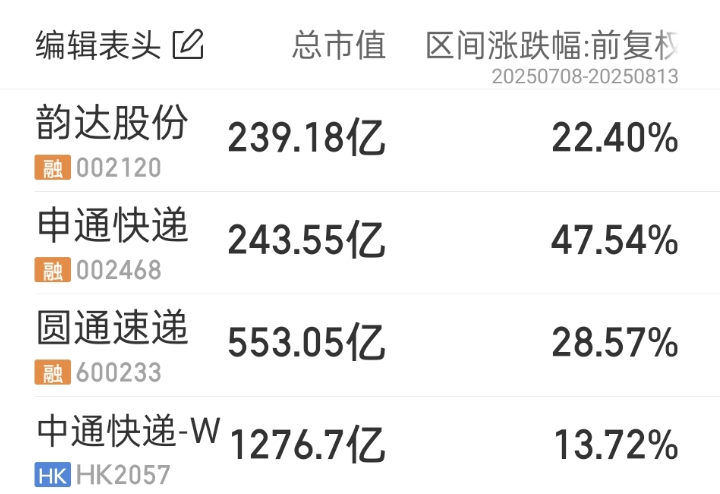
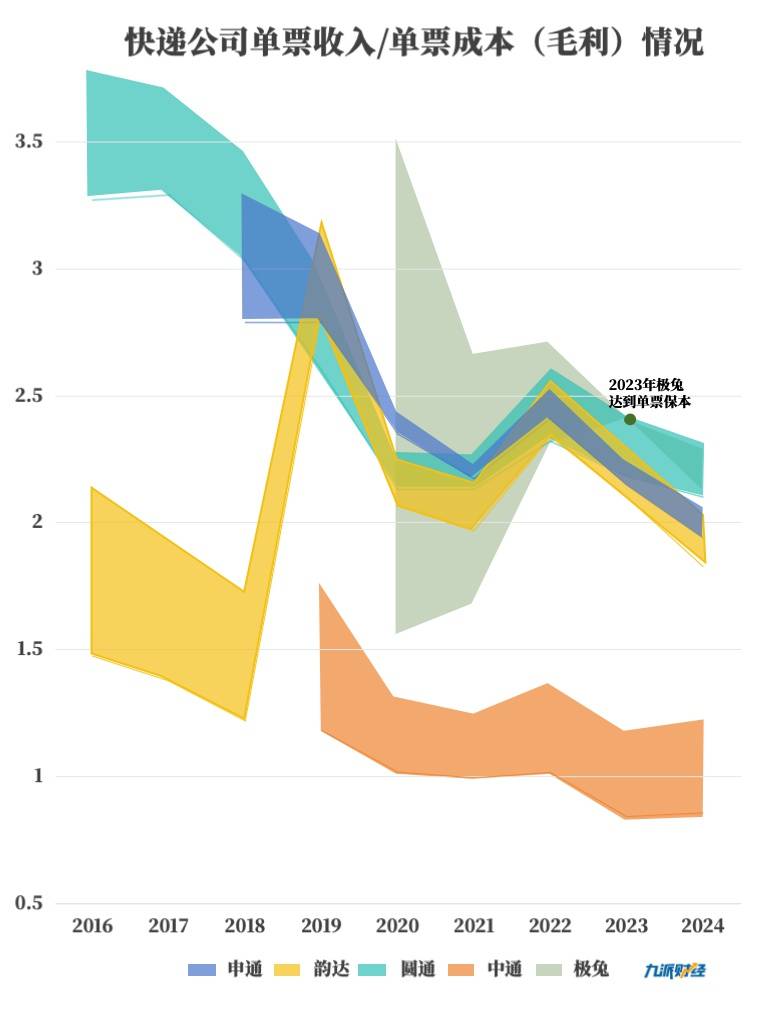
Group 1 - The core point of the news is that starting from August 5, the minimum express delivery price in Guangdong Province has been raised to 1.4 yuan per ticket, with a cost increase of 0.4 yuan, impacting the entire industry [1][3] - The price increase is a response to the long-standing "low-price competition" in the express delivery industry, which has led to reduced profit margins for grassroots outlets and poor service quality [1][3] - Prior to Guangdong, Zhejiang Yiwu had already implemented a price increase mechanism, indicating a potential nationwide trend in express delivery price hikes [1][3] Group 2 - According to statistics from the State Post Bureau, the average express delivery price in China has significantly decreased from 28.55 yuan in 2007 to 7.49 yuan in June of this year [2] - In June, the average revenue per ticket for major express companies was as follows: SF Express at 13.67 yuan, Shentong at 1.99 yuan, Yunda at 1.91 yuan, YTO at 2.10 yuan, and Zhongtong at 1.99 yuan, showing a decline of over 40% for several companies compared to 2017 [2] - The State Post Bureau has emphasized the need for improved industry regulation and the elimination of "involutionary" competition, which has led to a significant increase in the stock prices of major express companies since July 8 [3]

彰显可持续发展实力,韵达股份万得(Wind)ESG评级跃升至AA级!
Quan Jing Wang· 2025-08-13 05:51
近日,万得(Wind)公布2024年环境、社会及治理(ESG)评级结果,韵达股份(002120)ESG评级从 2023年的BBB级、2024年的A级跃升至AA级,实现大幅提升,在5000多家A股上市公司中处于领先水 平。此次评级中,韵达股份环境(E)、社会(S)、公司治理(G)三大维度得分均超行业平均水平。 根据《Wind ESG评级方法论》,获得AA评级的公司定义为"企业管理水平高,ESG风险低,可持续发 展能力强"。公开数据显示,国内A股上市公司达到AA级及以上评级的仅占2.9%,此次获评彰显了韵达 股份在ESG领域的卓越管理能力和可持续发展综合实力。 在公益慈善方面,韵达通过捐赠资金、物资和人力的方式,努力改善教育、医疗、环保等领域的现状。 自2017年上海韵达公益基金会成立以来,韵达通过"韵∙苗"助学项目,为1800余名困难学子提供了经济 资助。2024年,韵达社会公益捐赠总投入924.16万元,组织开展志愿服务2次,员工志愿服务100余人。 治理层面,韵达股份严格遵循三会一层协调运转的公司治理结构,职责明确,运作规范。面向投资者, 公司高度重视信息披露、股东权益保护以及投资者关系管理等工作。2024 ...


你的快递费 开始贵了,包邮时代终结!运费暗涨30%,你的商品正在悄悄变贵
Sou Hu Cai Jing· 2025-08-12 23:20
Core Viewpoint - The recent surge in express delivery fees in Guangdong has significantly impacted e-commerce businesses, leading to increased operational costs and potential losses for sellers [1][3][10]. Group 1: Price Increase and Its Impact - Express delivery fees in Guangdong have increased by 0.4 to 0.7 yuan per package overnight, causing significant financial strain on e-commerce sellers who rely on high volumes of shipments [1][3]. - The average delivery price in Guangdong has risen from 1.0 yuan to 1.4 yuan, with some areas experiencing increases of up to 40% [3][5]. - The price hike is a response to regulatory measures aimed at curbing "internal competition" and ensuring that delivery prices do not fall below cost [3][5]. Group 2: Historical Context and Industry Dynamics - The express delivery industry has been in a price war for over a decade, with average delivery prices dropping from 28.55 yuan in 2007 to 7.49 yuan by mid-2025 [5][7]. - Major express companies have seen significant declines in revenue per package since their initial public offerings, with declines of 38% to 43% reported by various firms [5][7]. - The current situation reflects a long-standing trend of aggressive price competition that has led to unsustainable business practices within the industry [5][12]. Group 3: Future Outlook and Industry Restructuring - The price increase may provide an opportunity for the industry to recover, with projections indicating that a 0.1 yuan increase per package could significantly boost net profits for major companies [8][12]. - The industry is expected to undergo a restructuring phase, where larger companies may consolidate market share while smaller firms either get absorbed or focus on niche markets [12]. - Regulatory changes and incentives for improved service quality are anticipated to drive a shift from price-based competition to service-based competition in the express delivery sector [12][13]. Group 4: Consumer Behavior and Market Response - E-commerce sellers are adjusting their pricing strategies in response to increased delivery costs, often passing these costs onto consumers [10][11]. - There is a noticeable change in consumer expectations regarding service quality, with customers beginning to accept higher prices for better service [13]. - The overall market sentiment indicates a growing acceptance of price increases as a necessary adjustment for improved service standards in the express delivery industry [13].

快递费一夜暴涨!电商人哭晕,9.9包邮将成历史?
Sou Hu Cai Jing· 2025-08-12 15:29
Core Viewpoint - The recent surge in express delivery fees, driven by policy changes, has sparked significant concern among e-commerce merchants, with potential annual losses estimated at 21.9 million for high-volume businesses [1][4]. Group 1: Price Increase Impact - Major express delivery companies, including Shentong, YTO, Zhongtong, and Yunda, have collectively raised their base prices from 1 yuan to over 1.4 yuan per package, particularly affecting small items [1][3]. - The price increase is seen as a response to the government's call to end "bloodletting competition" in the logistics sector, aiming to improve service quality [3][4]. Group 2: Merchant and Consumer Reactions - Merchants are facing a dilemma: raising prices may lead to reduced customer traffic, while not raising prices could result in unsustainable profit margins [3][4]. - There are concerns that if merchants pass on the increased delivery costs to consumers, low-cost shipping options like "9.9 yuan with free shipping" may disappear, impacting consumer purchasing behavior [4]. Group 3: Industry Challenges - The express delivery industry has been struggling with declining per-package revenue, approaching cost levels, and a high turnover rate among delivery personnel, leading to service quality issues [4]. - Despite the government's strict regulations against pricing below 1.4 yuan, the effectiveness of these measures remains uncertain due to potential non-compliance by franchise operators [4].
申通快递20250812
2025-08-12 15:05
Summary of Shentong Express Conference Call Company Overview - **Company**: Shentong Express - **Industry**: Express Delivery Key Points and Arguments 1. **Direct Operation Rate**: Shentong Express has increased its direct operation rate to 94%, significantly enhancing operational efficiency and processing capacity, effectively reducing unit costs [2][3][4] 2. **Capacity Expansion**: The company plans to increase its capacity by nearly 80% over three years with a capital expenditure of 10 billion, raising daily capacity from 42 million items in 2021 to approximately 75 million by 2024 [2][3] 3. **Business Volume Growth**: In 2023, Shentong Express achieved a business volume growth rate of 35.2%, significantly surpassing the industry average, narrowing the market share gap with Yunda [2][6] 4. **Profitability Improvement**: Cost control and revenue optimization measures have improved the net profit per ticket, with expectations for net profit to double due to price increases in the South China region [2][12] 5. **Free Cash Flow**: The company is expected to achieve positive free cash flow in 2024, driven by operational model changes and capacity enhancements [2][7] 6. **Industry Policy Support**: National postal policies are aimed at preventing vicious competition in the express delivery industry, promoting high-quality development and protecting frontline employees' rights [2][8] 7. **Acquisition of Daniao Logistics**: The acquisition of Daniao Logistics for 360 million yuan is expected to help Shentong become the third-largest player in the industry and open up new cooperation opportunities [4][17] 8. **Future Profit Projections**: For 2025, Shentong Express anticipates a net profit of over 300 million yuan, with a net profit per ticket of 0.05 yuan, which could double if it reaches 0.10 yuan [4][13] 9. **Market Valuation**: The current P/E ratio is below 9, indicating that the company is undervalued compared to the industry average [4][13] 10. **Regional Price Increases**: A price increase of 0.4 yuan in the South China region is expected to significantly boost profits for Shentong and its competitors [12][14] Additional Important Content 1. **Operational Efficiency**: The company has optimized franchise management and product offerings, particularly in heavy cargo, which has contributed to its growth since 2018 [3][6] 2. **Response to Market Conditions**: Shentong Express has adapted to market changes, including the impact of the pandemic and competition from Jitu Express, which led to losses in 2020-2021 [3][6] 3. **Long-term Development Potential**: The company is well-positioned for long-term growth due to its strategic initiatives and partnerships, particularly with Alibaba [16][19] 4. **Risks**: Potential risks include a return to aggressive price competition or slower-than-expected growth in business volume, which could impact performance [20]

快递反内卷,涨价能持续、能扩散吗?
2025-08-12 15:05
Summary of the Conference Call on the Express Delivery Industry Industry Overview - The express delivery industry is experiencing intense price competition, with a price increase and volume increase ratio reaching 40% in the first half of 2025, surpassing the 34% and 32% seen in 2020 and 2021 respectively [5][1] - The government is implementing measures to combat "involution" in the industry, including price correction drafts and compliance guidelines from regulatory bodies [1][6] Key Points and Arguments - **Market Dynamics**: The express delivery market is expected to grow by 16.3% in 2025, with future growth projected at 6%-9% over the next two to three years. Companies are expected to manage this growth without excessive price competition [1][15][16] - **Company Performance**: - **SF Express**: Maintains healthy growth with cost reductions due to volume increases, showing no signs of involution [7] - **Yunda**: Focused on stable development, with price increases slightly above industry levels [7] - **YTO Express**: Achieved increases in volume, revenue, and prices, indicating high-quality development [8] - **Shentong**: Experienced a smaller price drop than the industry average, with a volume increase above the average [8] - **Postal Express**: Underperformed compared to YTO and Shentong, with lower pricing [9] - **Franchisee Issues**: Franchisees are facing intense competition, with a significant portion of the revenue being retained by them, leading to price wars [10] Government Measures - The government has taken steps to address involution, including: - Emphasizing political and economic correctness in central meetings [6] - Implementing price correction drafts for the first time since 1998 [6] - Enforcing compliance guidelines for online trading platforms [6][17] Future Trends - **Technological Advancements**: The industry is expected to benefit from digitalization and automation, leading to cost reductions and improved efficiency [19][22] - **New Revenue Streams**: New business avenues such as cross-border delivery, factory delivery, and emergency logistics are anticipated to enhance industry revenue and profits [19][22] - **Profit Projections**: The total profit for five major companies in the industry is expected to reach 30 billion in 2025, potentially increasing to 50-60 billion by 2030 [21][22] Regional Insights - **Jinhua**: Experienced a price drop of 0.09 yuan in the first half of 2025, with a projected annual decrease of 0.13 to 0.14 yuan [11] - **Linyi**: Saw a price reduction of 0.15 yuan, with an expected total decrease of 0.22 to 0.23 yuan for the year [12] - **Jieyang**: Noted significant price competition, with a drop of 0.37 yuan in the first half of 2025 [13] - **Baoding**: Experienced a price drop of 0.76 yuan, with an annual forecast of around 1 yuan [14] Conclusion - The express delivery industry is navigating a complex landscape of price competition, regulatory scrutiny, and technological advancements. The focus on maintaining healthy competition and exploring new revenue streams is expected to drive growth and profitability in the coming years.
广东快递底价上调0.4元:运费整体上涨,对低客单价商家影响大
Sou Hu Cai Jing· 2025-08-12 09:13
Core Viewpoint - The recent increase in express delivery base prices in Guangdong and Yiwu reflects concerns over the intense competition and low profitability in the express delivery industry, which has led to a downward trend in per-package revenue for major companies [1][2][3]. Group 1: Price Adjustments - Starting from August 4, the base price for express delivery in Guangdong has been raised by 0.4 yuan per package, bringing the average price to over 1.4 yuan [1]. - Yiwu also raised its express delivery base price by 0.1 yuan to 1.2 yuan starting July 18 [1]. - The overall express delivery costs have increased by approximately 0.4 yuan, although delivery personnel have not yet received news of a corresponding increase in their compensation [1]. Group 2: Revenue Trends - Major express companies, including Shentong, Yunda, Zhongtong, and Yunda, have seen a significant decline in per-package revenue, with figures for 2024 projected at 2.05 yuan, 2.3 yuan, 1.21 yuan, and 2.01 yuan respectively, representing a decrease of about 30% to 40% compared to 2019 [3]. - In June, Shentong and Yunda reported further declines in per-package revenue, dropping below the 2 yuan mark to 1.99 yuan and 1.91 yuan respectively, while Zhongtong decreased to 2.1 yuan [5]. - SF Express maintains a relatively stable per-package revenue of around 15 to 16 yuan, but has also experienced a decline of 11% to 14% compared to the previous year due to industry price wars [5][12]. Group 3: Delivery Challenges - The continuous decline in per-package revenue has led express companies to implement cost control measures, including reducing delivery fees for last-mile services [7]. - The delivery personnel face pressure to choose between home delivery and depositing packages at collection points, with a significant increase in the use of collection points, reaching a 72% entry rate in 2022 [11]. - Complaints regarding non-delivery to specified addresses have surged, with over 19,000 complaints related to this issue, highlighting the challenges in balancing delivery efficiency and service quality [11]. Group 4: Impact on Low-Cost Merchants - The recent price adjustments in express delivery services are expected to significantly impact low-cost merchants, as the low logistics cost is crucial for their survival [15]. - Merchants have indicated that a delivery cost exceeding 3 yuan is no longer sustainable for their profit margins, as the historical rate has been around 1 yuan for small packages [15].


物流板块8月12日跌0.61%,福然德领跌,主力资金净流出3.45亿元
Zheng Xing Xing Ye Ri Bao· 2025-08-12 08:22
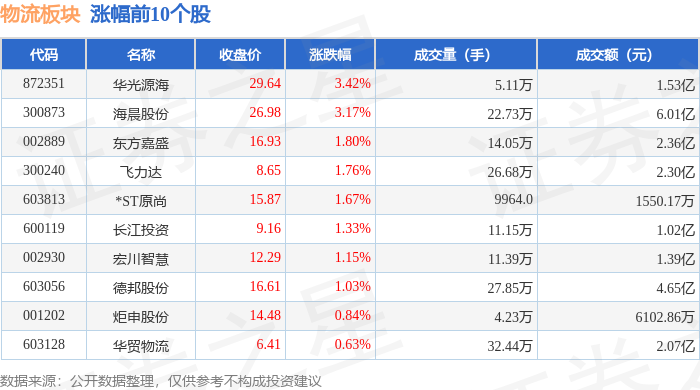
Market Overview - The logistics sector experienced a decline of 0.61% on August 12, with Furan De leading the drop [1] - The Shanghai Composite Index closed at 3665.92, up 0.5%, while the Shenzhen Component Index closed at 11351.63, up 0.53% [1] Individual Stock Performance - Notable gainers in the logistics sector included: - Shixinihai (872351) with a closing price of 29.64, up 3.42% on a trading volume of 51,100 shares and a turnover of 153 million yuan [1] - Haichen Co. (300873) closed at 26.98, up 3.17% with a trading volume of 227,300 shares and a turnover of 601 million yuan [1] - Dongfang Jiasheng (002889) closed at 16.93, up 1.80% with a trading volume of 140,500 shares and a turnover of 236 million yuan [1] - Major decliners included: - Furan De (605050) closed at 15.55, down 10.01% with a trading volume of 248,300 shares and a turnover of 405 million yuan [2] - Tianshun Co. (002800) closed at 16.56, down 5.43% with a trading volume of 440,500 shares and a turnover of 784 million yuan [2] - Shentong Express (002468) closed at 16.07, down 5.19% with a trading volume of 590,700 shares and a turnover of 963 million yuan [2] Capital Flow Analysis - The logistics sector saw a net outflow of 345 million yuan from institutional investors, while retail investors contributed a net inflow of 285 million yuan [2] - Notable capital flows included: - Haichen Co. (300873) had a net outflow of 58.81 million yuan from institutional investors [3] - Donghang Logistics (601156) experienced a net inflow of 30.06 million yuan from institutional investors [3] - Feilida (300240) had a net inflow of 26.69 million yuan from institutional investors [3]


你的快递费 开始贵了
Xin Lang Cai Jing· 2025-08-12 06:58
Group 1 - The core point of the article is that starting from August 4, the minimum price for express delivery in Guangdong Province has been raised by 0.4 yuan per ticket, with the average price per ticket exceeding 1.4 yuan [1] - The price adjustment is mandated by relevant authorities, and companies are prohibited from collecting below the cost price of 1.4 yuan, or they will face severe penalties [1] - As of August 5, major express delivery companies in the Tongda system (Shentong, Yuantong, Zhongtong, Yunda) have begun implementing the price increase [1] Group 2 - The current price increase primarily affects low-priced items from e-commerce, particularly packages weighing 0.3 kilograms or less [1] - Industry observers and e-commerce practitioners have been consulted regarding the price adjustment, but as of the report's publication, no responses have been received from the contacted express companies [1]

新华视点·追踪丨国家邮政局:指导相关快递企业优化收费计重规则
Xin Hua Wang· 2025-08-12 06:37
稿件发出后,国家邮政局高度重视,迅速组织开展核查工作,指导相关企业结合自身实际,参照快递服 务国家标准优化完善服务收费计重规则,即计费重量以千克为单位,保留小数点后至少1位。 据了解,目前多家企业已优化计重收费规则,并进行公示(公布)—— 新华社北京7月17日电(记者叶昊鸣、张千千)新华社"新华视点"栏目7月11日播发《快递计重、停车计 时等"向上取整",合理吗?》,报道部分快递企业向消费者提供服务时存在"向上取整"计重现象, 即"不足1公斤按1公斤计算"等形式。 圆通:首重不足1千克的,按1千克计算;续重以0.1千克为计费单位,不足0.1千克的,按0.1千克计算。 中通:使用秤、卷尺等计量用具测量快件的实际重量和体积,确定正确的计费重量。计费重量以千克为 单位,保留小数点后至少1位。 极兔:首重1千克,不足1千克按1千克计费;续重以0.1千克为计重单位,即1.3千克按1.3千克计算运 费。 下一步,邮政管理部门将持续督促各企业按照已公布的收费规则开展经营活动,履行服务承诺。 【纠错】 【责任编辑:薛涛】 京东:首重不足1千克的,按1千克计算;续重以0.5千克为计费单位,不足0.5千克的,按0.5千克计算。 ...