
中国建筑

Search documents
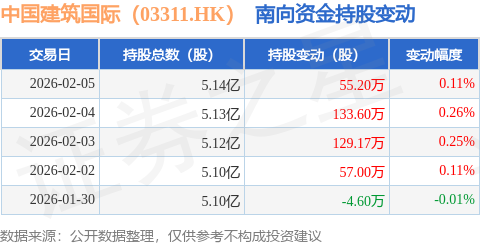
中国建筑国际(03311.HK):2月5日南向资金增持55.2万股
Sou Hu Cai Jing· 2026-02-05 19:43
Group 1 - The core point of the article highlights that southbound funds have increased their holdings in China State Construction International (03311.HK) by 552,000 shares on February 5, 2026, marking a total net increase of 3.70 million shares over the past five trading days [1] - Over the last 20 trading days, there have been 10 days of net reductions in holdings by southbound funds, totaling a decrease of 4.97 million shares [1] - As of now, southbound funds hold 514 million shares of China State Construction International, which represents 9.72% of the company's total issued ordinary shares [1] Group 2 - The total number of shares held by southbound funds on February 5, 2026, is 514 million, with a change of 552,000 shares, reflecting a 0.11% increase [2] - The previous trading day, February 4, 2026, saw an increase of 1.34 million shares, which is a 0.26% change [2] - The company primarily engages in construction business, infrastructure project investment, toll road operations, project supervision services, and facade engineering, among other activities [2]



国资委披露87家央企负责人激励收入:中石油董事长86.21万元、中石化董事长84.81万元、中国移动总经理21.61万元
Sou Hu Cai Jing· 2026-02-05 15:05
Core Viewpoint - The State-owned Assets Supervision and Administration Commission (SASAC) announced the incentive income for executives of central enterprises for the 2022-2024 term, which consists of annual salary and term incentive income, with the latter being distributed every three years [1][3]. Group 1: Incentive Income Overview - A total of 87 central enterprises have disclosed their incentive income for the 2022-2024 term [3]. - Notable executives and their respective incentive incomes include: - Jie Houliang, Chairman of China National Petroleum Corporation, with an incentive income of 86.21 million RMB [3]. - Ma Yongsheng, Chairman of Sinopec, with an incentive income of 84.81 million RMB [5]. - Wang Dongjin, Chairman of CNOOC, with an incentive income of 86.06 million RMB [7]. - Zhang Wei, Chairman of State Grid Corporation, with an incentive income of 78.17 million RMB [10]. - Meng Zhenping, Chairman of China Southern Power Grid, with an incentive income of 83.54 million RMB [11]. Group 2: Additional Executive Incentive Incomes - Other notable executives include: - Wen Shugang, Chairman of China Huaneng Group, with an incentive income of 63.47 million RMB [12]. - Zou Lei, Chairman of China Datang Corporation, with an incentive income of 80.02 million RMB [14]. - Liu Mingsheng, Chairman of State Power Investment Corporation, with an incentive income of 26.02 million RMB [16]. - Wang Xiangming, Chairman of China Resources Group, with an incentive income of 82.44 million RMB [36]. - Miao Jianmin, Chairman of China Merchants Group, with an incentive income of 85.08 million RMB [34].
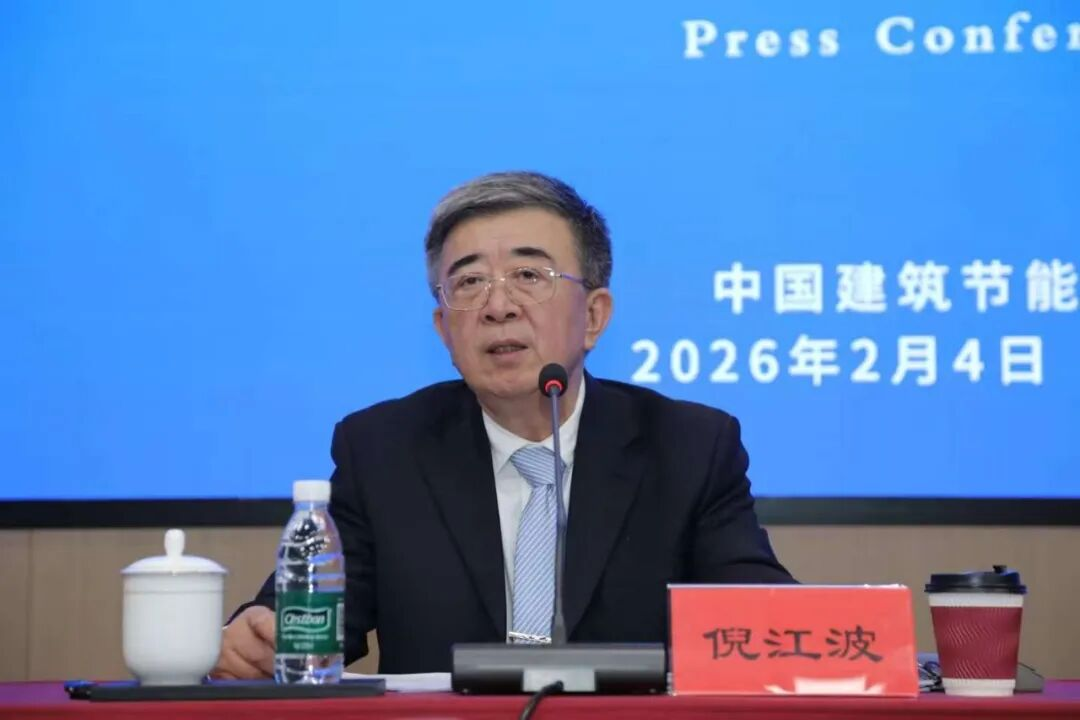
中国建筑节能协会成功发布2025年中国城乡建设领域碳排放报告
Jing Ji Wang· 2026-02-05 08:19
Core Viewpoint - The "Research Report on Carbon Emissions in China's Urban-Rural Construction Sector (2025)" was released, providing a comprehensive analysis of carbon emissions in the construction sector, supporting the goals of carbon peak and carbon neutrality, and promoting high-quality green transformation in the industry [1][3]. Group 1: Carbon Emission Data - In 2024, the total carbon emissions from the construction industry in China (including building materials and construction) reached 2.78 billion tons of CO₂, a decrease of 0.06 billion tons compared to 2023 [6]. - Among these, carbon emissions from residential buildings accounted for approximately two-thirds, totaling 1.81 billion tons of CO₂, while civil engineering emissions were 0.97 billion tons [6]. - During the operational phase, carbon emissions from civil buildings in 2024 were 2.47 billion tons of CO₂, representing 22.1% of national energy consumption [6]. Group 2: Emission Sources and Types - By building type, carbon emissions from public buildings, urban residential buildings, and rural residential buildings accounted for 43%, 39%, and 18% respectively [6]. - In terms of emission sources, electricity accounted for 66.8% of carbon emissions, while fossil energy and thermal energy each contributed 16.6% [6]. Group 3: Research and Methodology Enhancements - The report introduced new topics such as "greenhouse gas emissions from refrigerants in residential buildings" and "dynamic updates of carbon emission factors for core building materials," enhancing the carbon emission research framework [6]. - It also addressed shortcomings in the accounting of non-CO₂ greenhouse gas emissions and the lag in updating carbon emission factors [6]. Group 4: Industry Impact and Future Directions - The release of the report is expected to provide important data support for precise policy-making and efficient emission reduction in the construction sector [3][7]. - The China Building Energy Efficiency Association aims to deepen research on carbon emissions data in the construction sector and establish a technical exchange and cooperation platform to facilitate the implementation of green transformation mechanisms [7].
如何看当前时点地产链投资机会
2026-02-05 02:21
Summary of Conference Call Records Industry: Real Estate Key Points - The real estate industry has undergone a deep cleansing of its fundamentals, with positive policy signals expected to gradually restore holdings, leading to valuation elasticity. In January, the second-hand housing market in core cities showed signs of recovery, with increased transaction volumes and decreased listing volumes, optimizing supply-demand relationships and narrowing price declines [1][2][3] - Multiple authoritative media outlets have released positive signals regarding the financial asset attributes of real estate and the cancellation of restrictive measures. Many real estate companies are no longer required to report the "three red lines" indicators monthly, indicating a period of intensive policy implementation, which enhances the investment value of the real estate sector [3] - The investment strategy for the building materials industry chain should focus on balance and early layout of related opportunities. Global expansion of balance sheets and marginally increasing liquidity in the A-share market support potential excess return opportunities in the building materials sector [1][4] - The A-share market's IPO financing is expected to be at historical average levels, but the second half of the year may see quarterly financing amounts exceeding expectations, which could signal a warning for the technology sector as relative returns may decrease [5] - The current economy is at the end of a Kondratiev wave depression, with non-ferrous metals and commodities being favorable investment options. The adjustment in the real estate market is nearing its end, with potential investment opportunities expected to emerge [6] Additional Insights - The real estate sector is currently in a core configuration window with high win rates and odds. As of Q4 2025, the sector's holdings accounted for approximately 0.43% of stock investment value, indicating a significant underweight that has persisted for 24 quarters [2] - The recovery of the Hong Kong real estate sector serves as a reference for the mainland market, with historical data suggesting that the adjustment in actual housing prices in China has been sufficient, leading to an increase in the sector's win rate [2] - The building materials sector's investment strategy emphasizes early positioning in response to market changes, with a focus on companies with low valuations and strong resource reserves, such as China Trade and Greentown China [4] - The cement industry is highlighted for its potential, with profitability closely tied to capacity utilization rates. Companies like Conch Cement are expected to see significant profit increases if prices rise [10] - The home appliance sector is anticipated to recover as real estate data stabilizes, which will directly boost demand for white goods and kitchen appliances [13] Industry: Building Materials Key Points - The investment strategy for the building materials industry should focus on both expansion and balance, with an emphasis on early positioning in real estate-related opportunities [4] - Companies with low valuations and strong resource reserves, such as China Trade and Greentown China, are recommended for investment [4] - The cement industry is expected to enter a new recovery cycle, with significant profit potential linked to price increases [10] Industry: Home Appliances Key Points - The home appliance sector is nearing the end of its darkest period, with potential investment opportunities arising as real estate data stabilizes and consumer demand is expected to recover [13] - The sector's current low valuations present opportunities for growth, particularly in white goods and kitchen appliances, which are closely tied to real estate performance [13] Additional Insights - Companies like Midea, Haier, and Gree are highlighted for their strong dividend yields, making them attractive investment options [13] - Newer companies in the market, such as Roborock and Ecovacs, are also noted for their competitive positioning and potential for valuation recovery [13]
六增一降,全年累计新签合同额超14万亿元!七家建筑央企成绩单来了
Hua Xia Shi Bao· 2026-02-04 10:32
Group 1 - The core viewpoint of the article highlights that seven major state-owned construction enterprises in China have signed new contracts exceeding 14 trillion yuan for the year 2025, demonstrating resilience in infrastructure amid economic pressures and structural adjustments in the real estate sector [2][4] - The industry shows characteristics of concentration among leading firms, overall stability, localized pressure, and structural transformation, with the top three companies accounting for over 70% of the total new contracts signed [2][5] - The shift from scale expansion to quality improvement in domestic infrastructure investment is emphasized, with traditional construction demands declining while new energy, water conservancy, and rail transport projects are on the rise [3][7] Group 2 - The total new contracts signed by the seven construction state-owned enterprises reached over 14 trillion yuan, achieving the annual goal of stability, structural optimization, and strong resilience [4] - The leading three companies, China State Construction, China Railway Construction, and China Railway, dominate the industry, with their combined new contracts exceeding 10.3 trillion yuan, representing over 70% of the total [5] - The only company experiencing a decline in new contracts is China Metallurgical Group, which saw a 10.8% decrease due to shrinking demand in traditional metallurgy and construction markets [5][9] Group 3 - The construction sector is undergoing a profound restructuring, with traditional construction and heavy asset sectors slowing down, while infrastructure, clean energy, overseas projects, and urban renewal are becoming the main growth drivers [7][8] - The overseas market has become a significant growth engine for construction state-owned enterprises, with substantial increases in new contracts signed abroad, particularly in regions like Southeast Asia and Africa [8] - The article notes that while the order scale exceeds 14 trillion yuan, the industry still faces challenges such as profit pressure, slow payment cycles, and high debt ratios [9][10] Group 4 - The article anticipates that the new contract growth rate for construction state-owned enterprises will remain stable in 2026, with an expected increase of about 5% to 10% [11] - The central government's policies are expected to support investment stabilization and potentially accelerate infrastructure investment, benefiting leading firms in the sector [11]



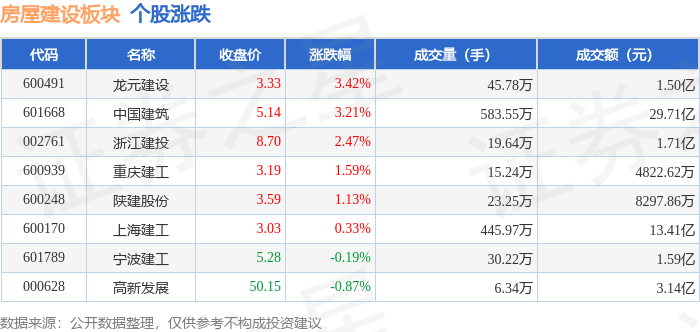
房屋建设板块2月4日涨2.57%,龙元建设领涨,主力资金净流入2.26亿元
Zheng Xing Xing Ye Ri Bao· 2026-02-04 08:57
Group 1 - The housing construction sector increased by 2.57% on February 4, with Longyuan Construction leading the gains [1] - The Shanghai Composite Index closed at 4102.2, up 0.85%, while the Shenzhen Component Index closed at 14156.27, up 0.21% [1] - Major stocks in the housing construction sector showed varied performance, with China State Construction and Longyuan Construction seeing significant increases in their closing prices [1] Group 2 - The net inflow of main funds in the housing construction sector was 226 million yuan, while retail funds saw a net inflow of 31.6 million yuan [1] - The table of fund flows indicates that China State Construction had a net inflow of 400 million yuan from main funds, while retail funds experienced a net outflow [2] - Longyuan Construction had a net inflow of approximately 11.18 million yuan from main funds, with retail funds showing a net outflow [2]


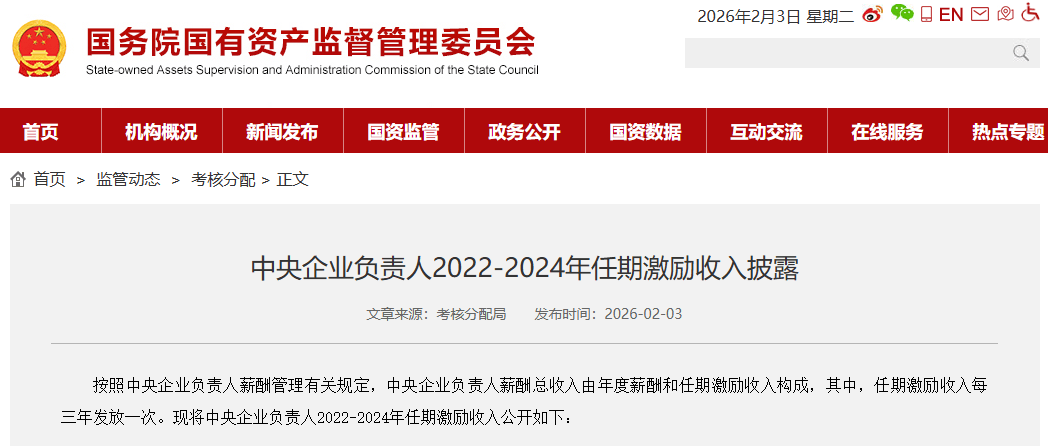
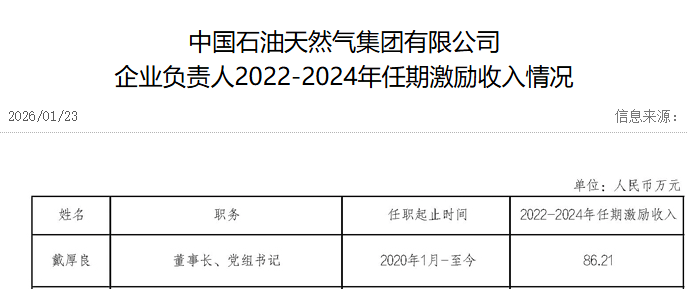
87家央企负责人任期激励收入披露:中石油董事长86.21万元、中石化董事长84.81万元、中国移动总经理21.61万元……



Sou Hu Cai Jing· 2026-02-04 04:20
Core Viewpoint - The State-owned Assets Supervision and Administration Commission (SASAC) announced the incentive income for executives of central enterprises for the 2022-2024 term, with a total of 87 enterprises disclosing their incentive income figures. Group 1: Incentive Income Overview - The total incentive income for central enterprise executives consists of annual salary and term incentive income, with the latter being distributed every three years [1]. - Notable figures include: - Jiao Houliang, Chairman of China National Petroleum Corporation, with an incentive income of 86.21 million RMB for the 2022-2024 term [1]. - Ma Yongsheng, Chairman of Sinopec, with an incentive income of 84.81 million RMB [3]. - Wang Dongjin, Chairman of China National Offshore Oil Corporation, with an incentive income of 86.06 million RMB [4]. Group 2: Specific Executive Incentive Income - Zhang Wei, Chairman of the National Oil and Gas Pipeline Group, has an incentive income of 78.17 million RMB [6]. - Meng Zhenping, Chairman of China Southern Power Grid, has an incentive income of 83.54 million RMB [8]. - Temperature of incentive income varies across different enterprises, with some executives like Liu Mingsheng from China Power Investment Corporation receiving 26.02 million RMB for the 2022-2024 term [13]. Group 3: Additional Notable Executives - Chen Zhongyue, Chairman of China Unicom, has an incentive income of 80.49 million RMB [17]. - Xu Peng, from China First Automobile Group, has an incentive income of 82.54 million RMB [23]. - Wang Xianming, Chairman of China Resources Group, has an incentive income of 82.44 million RMB [54].
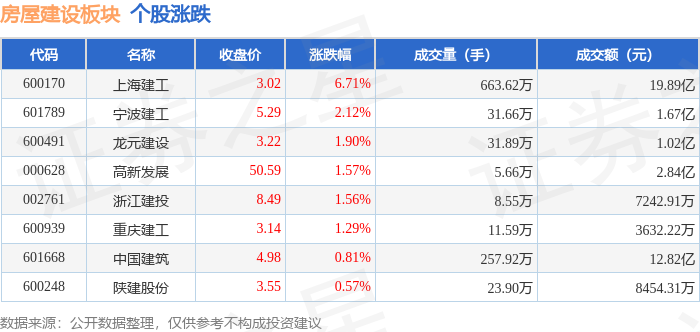
房屋建设板块2月3日涨1.44%,上海建工领涨,主力资金净流入3.14亿元
Zheng Xing Xing Ye Ri Bao· 2026-02-03 09:03
Group 1 - The housing construction sector increased by 1.44% on February 3, with Shanghai Construction leading the gains [1] - The Shanghai Composite Index closed at 4067.74, up 1.29%, while the Shenzhen Component Index closed at 14127.1, up 2.19% [1] - Major stocks in the housing construction sector showed varied performance, with Shanghai Construction rising by 6.71% to a closing price of 3.02 [1] Group 2 - The net inflow of main funds in the housing construction sector was 314 million yuan, while retail investors experienced a net outflow of 166 million yuan [1] - Shanghai Construction had a significant net inflow of 271 million yuan, accounting for 13.60% of its trading volume [2] - China State Construction saw a net inflow of 78.05 million yuan, representing 6.09% of its trading volume [2]


基建ETF华夏(159635)涨1.24%,半日成交额811.13万元
Xin Lang Cai Jing· 2026-02-03 03:39
Group 1 - The core viewpoint of the article highlights the performance of the Infrastructure ETF Huaxia (159635), which rose by 1.24% to 1.140 yuan with a trading volume of 8.1113 million yuan as of the midday close on February 3 [1] - The major holdings of the Infrastructure ETF Huaxia include several companies, with notable increases in stock prices: XCMG Machinery up 2.75%, Zoomlion up 4.40%, and Sany Heavy Industry up 2.20% [1] - The performance benchmark for the Infrastructure ETF Huaxia is the CSI Infrastructure Index return, managed by Huaxia Fund Management Co., Ltd. Since its establishment on June 28, 2022, the fund has achieved a return of 12.52%, with a monthly return of 0.75% [1]


中国建筑20260202
2026-02-03 02:05
Summary of China State Construction Engineering Corporation Conference Call Company Overview - **Company**: China State Construction Engineering Corporation (CSCEC) - **Industry**: Construction and Real Estate Key Points Financial Performance and Projections - **2025 Profit Outlook**: CSCEC expects a slight decline in profit for 2025, primarily due to a decrease in gross margin from real estate operations and accounts receivable issues in construction [2][6] - **Revenue and Contract Growth**: New contract value reached 4.5 trillion yuan in 2025, a 1% year-on-year increase. The construction business grew by 0.5% to 2.6 trillion yuan, while the infrastructure sector saw a 4.1% increase to 1.47 trillion yuan [4] - **Real Estate Sales**: Contract sales in the real estate sector were 394.8 billion yuan, down 6% year-on-year [4] - **Land Acquisition**: The company acquired over 9 million square meters of land, primarily in first- and second-tier cities, laying a foundation for sustainable development [4] Cash Flow and Financial Health - **Cash Flow Improvement**: Operating cash flow turned positive with over 10 billion yuan in the first three quarters, expected to improve further in Q4, traditionally a peak collection period [8] - **Inventory Impairment**: Increased inventory impairment provisions reflect the company's cautious stance on current market conditions and project clientele, varying by city and project [9] Strategic Focus and Future Plans - **"15th Five-Year Plan"**: The plan is viewed as a critical period for building a world-class enterprise, focusing on intrinsic development in construction, rapid advancement in infrastructure, and stabilizing the real estate sector while enhancing quality [10] - **Investment Strategy**: The company is concentrating investments, with over 75% directed towards real estate, emphasizing projects with clear returns [5][11] - **Urban Renewal Projects**: These projects straddle real estate and construction, with varying investment needs and return rates, indicating a strategic focus on urban renewal as a growth area [12] Market Conditions and Industry Dynamics - **Real Estate Sector Challenges**: The real estate industry is under pressure, necessitating a wait for policy optimization and fundamental improvements [2][7] - **Government Support**: Infrastructure business is expected to benefit from national policy support, particularly in energy, water conservancy, and transportation sectors [2][7] Mergers and Acquisitions - **M&A Strategy**: The company is focused on mergers and acquisitions that create synergies within specific sectors, with less emphasis on large-scale mergers between state-owned enterprises [13][14] Conclusion - CSCEC is navigating a challenging market environment with a cautious yet strategic approach, focusing on sustainable growth, cash flow improvement, and leveraging government support in infrastructure while managing risks in the real estate sector.