GEICO

Search documents
USAA car insurance review 2026: 3.7 out of 5 stars
Yahoo Finance· 2025-09-11 18:31
USAA rating: 3.7 out of 5 stars USAA is known for its competitive rates, excellent financial strength, and service to military personnel and their families. Drivers with no military affiliation may not be eligible for USAA auto insurance. For those who qualify, USAA rates are well below average auto premiums. The company also scores well on J.D. Power customer service surveys, but has a higher-than-average complaint rating with the National Association of Insurance Commissioners (NAIC). You manage your au ...
GEICO car insurance review 2026: 3.1 out of 5 stars
Yahoo Finance· 2025-09-10 18:05
Core Insights - GEICO has a rating of 3.1 out of 5 stars, noted for its discounts but lacks certain coverage options like new car replacement and a diminishing deductible program [1] - The company has a high credit rating indicating financial strength, but its premiums are on the higher side of average [2] - Customer satisfaction scores are below average in several regions according to J.D. Power, with mixed reviews regarding the claims process [8][24] Coverage and Discounts - GEICO offers a total of 11 different coverage types, including liability, collision, and comprehensive insurance [5][12] - The company provides 23 different discounts, including those for safe driving, vehicle safety features, and military service [6][17] - Average monthly costs for full coverage are approximately $202, which is slightly above the average of $190 across major insurers [15] Customer Satisfaction and Claims - J.D. Power scores indicate that GEICO scored below average in customer satisfaction across seven out of eleven regions [8] - The claims satisfaction score is five points below the average, with customer reviews highlighting slow response times and mixed experiences [24][25] - GEICO's mobile app is highly rated, facilitating payments, claims management, and roadside assistance requests [23][28] Financial Strength and Premiums - GEICO maintains high credit ratings, reflecting its financial stability and low risk of claim denial due to resource issues [23] - The average annual cost for basic coverage is $1,440, which is 6.2% higher than the average for other insurers [13][16] - The company offers accident forgiveness coverage, allowing customers to waive surcharges after their first qualifying claim, although this is limited to certain states [9][10]
Is Berkshire Hathaway the Smartest Investment You Can Make Today?
The Motley Fool· 2025-09-04 08:14
Core Viewpoint - Berkshire Hathaway's stock has underperformed since Warren Buffett announced his retirement, creating a potential buying opportunity due to reasonable pricing and substantial cash reserves [1][2][5]. Leadership Transition - Warren Buffett, at 95, is stepping back and passing leadership to Greg Abel, along with investment lieutenants Todd Combs and Ted Weschler [2][6]. - The transition marks the first time in over six decades that Berkshire will operate without Buffett and the late Charlie Munger, leading to investor caution [5][6]. Investment Strategy and Performance - Combs and Weschler have been instrumental in shifting Berkshire's investment strategy, including significant investments in technology companies like Apple, Amazon, and Snowflake [11][12]. - Their track record suggests that Berkshire may continue to adapt and thrive in a changing investment landscape [12]. Financial Position - Berkshire Hathaway is highly diversified across various industries, with insurance being the largest segment, including GEICO and a global reinsurance division [13]. - As of June 30, Berkshire held $340 billion in cash and short-term investments, generating $5 billion in investment income in the first half of 2025, an increase of 11.3% from the same period in 2024 [14]. Future Outlook - The new leadership will be closely scrutinized, but the company's diverse business model and cash-rich balance sheet position it well for pursuing new growth opportunities [15].

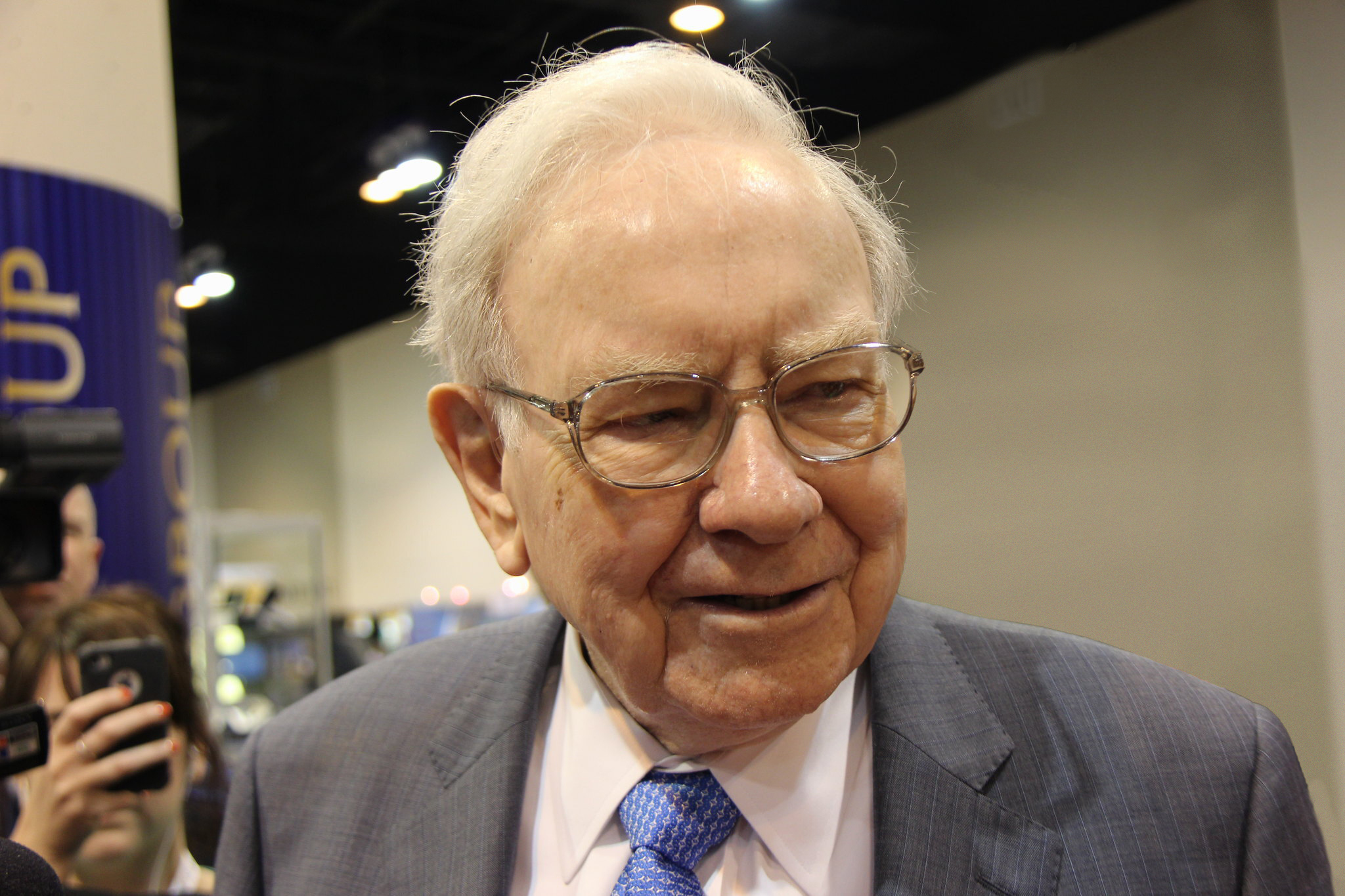
Should You Buy Berkshire Hathaway Stock While It's Under $500? Warren Buffett Gives Investors a Clear Answer.
The Motley Fool· 2025-08-15 08:05
Core Viewpoint - Berkshire Hathaway's stock is currently viewed as undervalued by analysts despite a 12% drop from its record high earlier this year, with target prices ranging from $485 to $597 per share, indicating potential upside [1][2] Company Overview - Berkshire Hathaway is a holding company with a diverse portfolio of subsidiaries selected for their sustainable competitive advantages and strong leadership, particularly in the insurance sector which generates significant investable capital [3] - Under Warren Buffett's leadership, Berkshire has made substantial investments in notable companies like Apple and Coca-Cola, resulting in a 210% increase in book value per share over the last decade, outperforming the S&P 500's 200% return [4] Recent Financial Performance - In the second quarter, Berkshire reported a 1% decline in revenue to $92.5 billion and a 4% decrease in operating earnings to $11.1 billion, primarily due to a 12% drop in insurance underwriting profits, although this was partially offset by a 19% increase in railway profits [5] - The company faces potential challenges ahead as economists predict that tariffs could slow GDP growth, impacting Berkshire's revenues, particularly in its manufacturing, services, and retail segments [6] Share Buyback Activity - Warren Buffett has not repurchased any Berkshire stock in the last four quarters, indicating that he believes the stock is currently overvalued, despite having previously repurchased $78 billion in stock over a 24-quarter period [7][8][9] - Buffett's comments in his 2023 shareholder letter suggest that there are limited opportunities for significant acquisitions or stock purchases that could impact Berkshire's financials, leading to a cautious approach towards share repurchases [8]

If You'd Invested $1,000 in Progressive Stock (PGR) 10 Years Ago, Here's How Much You'd Have Today
The Motley Fool· 2025-08-11 10:26
Core Insights - Progressive Insurance has demonstrated exceptional stock performance, averaging annual gains of 24% over the past decade, significantly outperforming the S&P 500's 12.5% [2] - A $1,000 investment in Progressive shares would have grown to approximately $10,073, with reinvested dividends yielding an average annual gain of 26% [2] - The company has a technological advantage, having utilized telematics for driver data collection for over 15 years, contributing to its profitability [4] Company Performance - Progressive has surpassed GEICO in market share as of 2023, indicating strong competitive positioning in the insurance industry [4] - The company's recent forward-looking price-to-earnings (P/E) ratio is 15, which is below its five-year average of 19, suggesting potential undervaluation [4] - Progressive offers a growing dividend, with a recent yield of 2%, enhancing its attractiveness to investors [4] Industry Context - The insurance industry is generally resistant to economic downturns and tariffs, making it a stable investment option [4] - Despite the perception that insurance is not an exciting sector, it remains essential for individuals and businesses, ensuring consistent demand [4]


What Should You Do With Berkshire Stock Ahead of Q2 Earnings?
ZACKS· 2025-07-29 18:21
Core Insights - Berkshire Hathaway (BRK.B) is projected to see an increase in revenues but a decrease in earnings for the second quarter of 2025, with revenues estimated at $98.5 billion, reflecting a 5.2% year-over-year growth, while earnings per share (EPS) are expected to decline by 2.6% to $5.24 [1][2][7]. Revenue and Earnings Estimates - The Zacks Consensus Estimate for BRK.B's second-quarter revenues is $98.5 billion, indicating a 5.2% increase from the previous year [1]. - The consensus estimate for earnings per share is $5.24, which shows no change over the past 30 days and represents a year-over-year decrease of 2.6% [2][5]. Earnings Surprise History - Berkshire Hathaway has a mixed earnings surprise history, beating the Zacks Consensus Estimates in two of the last four quarters, with an average surprise of 13.39% [3]. Earnings Prediction Model - The current model does not predict an earnings beat for Berkshire Hathaway, as it has an Earnings ESP of 0.00% and a Zacks Rank of 3 (Hold) [4][5]. Factors Influencing Q2 Results - The insurance operations are expected to benefit from improved pricing, solid retention rates, and increased average premiums, alongside a favorable catastrophe environment aiding underwriting profitability [6][7]. - GEICO is anticipated to see gains from higher premiums, lower claims frequency, and improved operational efficiencies [8]. - Investment income is expected to rise due to higher yields and an expanded asset base [8]. Segment Performance - The utilities and energy segment is projected to perform well, driven by increased earnings from natural gas pipelines and energy operations [9]. - The railroad subsidiary, BNSF, may face challenges from an unfavorable business mix but could benefit from higher unit volumes and lower operating expenses [8]. Valuation and Market Performance - BRK.B's stock is trading at a price-to-book value of 1.58X, slightly above the industry average of 1.53X, and is considered attractively valued compared to other insurers [12][13][14]. - The stock underperformed relative to the industry, sector, and S&P 500 in the second quarter of 2025 [12]. Investment Thesis - The insurance operations are crucial to Berkshire Hathaway's business model, accounting for about 25% of total revenues and serving as a key growth driver [15]. - The insurance float has increased significantly, providing a low-cost capital source for investments in high-quality businesses [17]. - The company's strong financial position supports ongoing share repurchases, contributing to long-term shareholder value [18]. Strategic Considerations - Berkshire Hathaway's diversified portfolio across various industries offers dynamism to shareholders [19]. - However, concerns regarding return on capital, potential declines in earnings, and premium valuation suggest a cautious approach for investors [20].
Why umbrella insurance is worth considering
Yahoo Finance· 2025-07-22 22:33
Accidents happen. Someone can slip on ice on the walkway to your house and break several bones. You could rear-end the car in front of you on a rainy night. Your dog could bite the mail carrier. Your home or auto insurance can cover the costs of these accidents if you’re on the hook for them. Sometimes, though, costs can exceed what your insurance will cover. Then you’re at risk of having to pay out of pocket – that is, unless you have an umbrella policy. Learn more: How does car insurance work? The bas ...
“巴菲特接班人”格雷格·阿贝尔:我们从不低估努力的价值……
聪明投资者· 2025-07-13 01:42
Group 1 - Todd Combs, the current CEO of GEICO and one of Warren Buffett's two handpicked investment deputies, has written a noteworthy introduction in the latest edition of "Security Analysis" [1] - Combs emphasizes three simplified principles in investing, which are crucial for long-term success [2] - A classic paid article featuring Combs discusses four key elements for achieving long-term compounding in life, highlighting the importance of curiosity and perseverance [2] Group 2 - A recent dialogue between Chen Guangming and Howard Marks discusses decisive actions taken during significant market fluctuations in April, revealing many shared insights [2] - Li Xunlei's latest sharing clarifies the essence of national debt and outlines asset allocation directions [2] - Wang Chao from Franklin Templeton discusses the arrival of the "DeepSeek" moment in innovative drugs, asserting that good data and progress can translate into productivity or value [2] - Kevin Kelly suggests that smart glasses could be the next iPhone, expressing a belief that Chinese companies may outperform Apple in this sector [2]

MSP Recovery Law Firm Secures Major Legal Win for MSP Recovery as Maryland Supreme Court Upholds Validity of Medicare Recovery Assignments for MSP Recovery and Its Healthcare Clients, Paving the Way for Medicare Recovery Rights Being Pursued Against GEICO
GlobeNewswire News Room· 2025-07-12 21:16
Core Viewpoint - The Supreme Court of Maryland's ruling in favor of MSP Recovery Law Firm affirms the legality of recovery agreements under the Medicare Secondary Payer Act, allowing healthcare entities to recover over $1 billion in unpaid Medicare reimbursements from GEICO [4][5][6]. Group 1: Legal Context and Implications - The case involves class action lawsuits against GEICO for over $1 billion in unpaid Medicare reimbursements, with plaintiffs being healthcare entities that assigned their recovery rights to MSP Recovery [2]. - The court ordered data matching between MSP Recovery and GEICO, revealing significant unpaid Medicare secondary payments owed by GEICO, which is legally required to reimburse Medicare when it is the primary payer [3]. - The Supreme Court rejected GEICO's arguments that the recovery actions were void under Maryland law, affirming that the assignments are valid and do not violate public policy [4]. Group 2: Impact on Medicare and Healthcare Industry - The ruling reinforces the ability of Medicare Advantage Organizations to assign recovery rights, enabling MSP Recovery to pursue claims effectively through litigation [6]. - This decision is significant for Medicare enforcement efforts, highlighting that billions in unreimbursed Medicare Secondary Payer Claims exist, which the Centers for Medicare and Medicaid Services (CMS) must address [6]. - MSP Recovery Law Firm emphasizes its commitment to protecting public healthcare funds and holding primary payers accountable for their obligations under the Medicare Secondary Payer Act [5].

“巴菲特投资接班人”托德·库姆斯经验之谈:投资中的三个简化原则
聪明投资者· 2025-07-08 06:50
Core Viewpoint - The article emphasizes the importance of simplifying complex investment analysis while maintaining a deep understanding of the underlying fundamentals of companies and industries [4][6][30]. Group 1: Investment Philosophy - The essence of successful investing lies in balancing short-term demands with long-term goals, recognizing that perfect information is unattainable and focusing on risk and return [1][2]. - A key judgment standard is to simplify while ensuring a deep understanding of the essence of the business [4][7]. Group 2: Identifying Quality Companies - A good company is characterized by its competitive advantages, often referred to as a "moat," which should be as wide as possible [10]. - Essential structural features of quality companies include low capital intensity, pricing power, stable recurring revenue, enduring market position, and long-term growth potential [11]. - The analysis should start from the balance sheet and cash flow statement rather than the income statement to reveal the true operational essence of a company [12]. Group 3: Management Team Evaluation - The integrity of the management team is crucial; if management is not trustworthy, it is advisable to avoid the stock altogether [15]. - Evaluating management involves examining their incentive structures, time allocation, and conducting thorough market research to cross-verify their capabilities [19][20]. - The allocation of resources by management during critical times can significantly impact long-term outcomes, making capital allocation a key indicator of management quality [17][18]. Group 4: Pricing and Valuation - Determining a "reasonable" price for a company is more challenging than assessing its quality, and it should be grounded in an understanding of the business's fundamentals [22]. - The concept of a company's moat should be assessed not just on historical performance but also on current competitive positioning and potential vulnerabilities [24]. - A clear valuation model is essential, focusing on future cash flows and the necessary capital investments to sustain growth [28][27]. Group 5: Practical Insights - Investors should ask critical questions to ensure a comprehensive understanding of the company, such as its sustainable competitive advantages and its resilience in downturns [25][26]. - The article highlights the importance of focusing on shareholder returns and examining the company's capital structure to understand the volatility of equity value [29].