
中信银行

Search documents
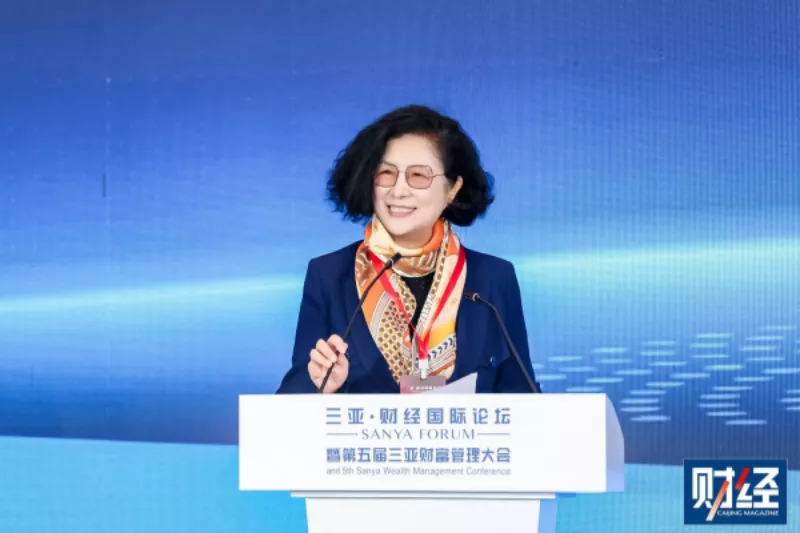
《财经智库》总裁张燕冬:坚定的开放方向、稳定的制度供给至关重要
Cai Jing Wang· 2025-12-27 14:29
Core Viewpoint - The "2025 Sanya Financial International Forum and the Fifth Sanya Wealth Management Conference" focuses on the future positioning of Hainan Free Trade Port and new opportunities in Sanya, amidst a complex global economic environment and China's structural transformation towards high-quality development [1][4]. Group 1: Event Overview - The forum is co-hosted by the Sanya Municipal Government, Caijing Magazine, Caijing.com, Caijing Think Tank, Sanya Central Business District Management Bureau, and Sanya Economic Research Institute [1]. - This event marks the first appearance of Caijing after joining the CITIC Group, highlighting the group's support for the forum [3][4]. Group 2: Economic Context - The global economy is currently in an adjustment cycle with increasing uncertainty, while China is focusing on balancing growth stabilization, risk prevention, and transformation promotion [4][5]. - The official launch of the Hainan Free Trade Port's full island closure operation on December 18, 2025, signifies a critical milestone in China's high-level opening-up process [5]. Group 3: Sanya's Role - Sanya is becoming increasingly important as a key functional area in the Hainan Free Trade Port, focusing on modern services and financial elements [5]. - The Sanya Wealth Management Conference has evolved over five years to address how finance can better serve the real economy and manage risks under open conditions [5][6]. Group 4: Future Discussions - The forum aims to explore deeper discussions on financial functions, wealth management, offshore trade, and cross-border investment under the new operational framework of the free trade port [6].

太豪爽!中期分红近2300亿元,A股半数上市银行发“红包”
券商中国· 2025-12-27 07:17
Core Viewpoint - The article discusses the recent trend of mid-term dividends among listed banks in China, highlighting the significant cash distributions made by state-owned banks and the increasing participation of smaller banks in dividend payouts [1][2][3]. Group 1: Mid-term Dividends Overview - As of December 26, 21 A-share listed banks have implemented mid-term dividends, totaling nearly 230 billion yuan, with an observed trend of earlier dividend announcements and increased payout ratios [2]. - State-owned banks are the primary contributors to mid-term dividends, with five major banks distributing a total of approximately 189.89 billion yuan in cash dividends [3]. - The Agricultural Bank of China and Industrial and Commercial Bank of China led the mid-term dividend payouts, with 41.82 billion yuan and 50.40 billion yuan respectively [3]. Group 2: Participation of Smaller Banks - More small and medium-sized banks are joining the mid-term dividend trend, with 13 local listed banks announcing their plans, collectively distributing over 18.5 billion yuan [6]. - Qilu Bank and Zijin Bank have recently disclosed their mid-term dividend plans, with Qilu Bank proposing a payout of 0.121 yuan per share, totaling 745 million yuan [6]. - The trend indicates that many banks are maintaining or increasing their dividend payout ratios compared to the previous year, with some banks showing increases of 0.9% to 4.5% [6]. Group 3: Future Dividend Plans - Postal Savings Bank has outlined a clear plan for mid-term dividends, proposing a payout of 1.23 yuan per 10 shares, amounting to approximately 14.8 billion yuan, which represents 30% of its net profit [4]. - China Merchants Bank has indicated that its mid-term cash dividend distribution will occur between January and February 2026, with a proposed payout ratio of 35% [6]. - Several other banks, including Industrial Bank and Everbright Bank, have also announced their mid-term dividend plans, with payout ratios exceeding 25% [5].




以“新”助新以“合”聚力 广东发布低空金融“十二条”
Xin Lang Cai Jing· 2025-12-27 00:10
Core Viewpoint - The Guangdong Financial Regulatory Bureau, in collaboration with multiple financial and regulatory bodies, has introduced the "Twelve Measures for Financial Support of Guangdong's Low Altitude Economy Cluster Development," aiming to enhance financial services for the rapidly growing low altitude economy in Guangdong, which has already surpassed a production value of 100 billion yuan [1][2]. Group 1: Financial Support and Development - The low altitude economy in Guangdong has seen significant growth, with core enterprises' financing scale nearing 50 billion yuan, accounting for approximately 60% of the national financing scale in this sector [1]. - The introduction of specialized financial products, such as "Science and Technology Innovation Loans" and "Innovation Points Loans," by 50 technology branches reflects the optimization of bank credit products tailored for low altitude economy enterprises [1][2]. Group 2: Policy Innovations - The "Twelve Measures" emphasize inclusive regulation and differentiated regulatory incentives for beneficial financial explorations in the low altitude economy, focusing on medium to long-term evaluations and appropriate regulatory tolerance for phase risks [2]. - The establishment of specialized service departments or teams within financial institutions is encouraged to develop targeted financial products for the low altitude economy [2]. Group 3: Collaborative Ecosystem - The "Twelve Measures" aim to enhance collaboration among government, financial institutions, and enterprises to address challenges such as information asymmetry and high trial costs in the low altitude economy [3]. - Financial institutions are encouraged to deepen internal and external cooperation, promoting integrated service models and enhancing cross-border financial services in the Greater Bay Area [3]. Group 4: Policy Synergy - Continuous engagement and information sharing between industry and financial regulatory departments are emphasized to create a comprehensive understanding of low altitude economy enterprises, improving the precision and effectiveness of financial services [4].
中信银行广州分行执科技金融之笔 擘画大湾区新质生产力跃升新蓝图
2 1 Shi Ji Jing Ji Bao Dao· 2025-12-26 23:07
Core Viewpoint - CITIC Bank Guangzhou Branch is leveraging technology finance to enhance direct financing channels for technology enterprises and is committed to supporting the national strategy and the development of the Guangdong-Hong Kong-Macao Greater Bay Area [1][2][3] Group 1: Financial Innovations and Services - CITIC Bank Guangzhou Branch has successfully issued a 1 billion yuan technology innovation bond, marking it as the first of its kind in the region [1] - The branch has served 1,009 specialized and innovative enterprises, achieving a 100% service coverage rate [1] - The bank is implementing a service support system focused on equity investment and integrated financial services, enhancing its role in the Greater Bay Area [2][3] Group 2: Strategic Goals and Development - The branch is aligned with the national strategy to build a competitive and vibrant Bay Area, focusing on high-quality development through technology finance [3] - It aims to create a comprehensive service ecosystem that integrates government, enterprises, and individuals, enhancing collaboration and resource sharing [4][8] - The bank is actively participating in the "Nansha Financial 30 Measures" to promote cross-border financial innovation and improve service quality [5][6] Group 3: Cross-Border Financial Services - CITIC Bank Guangzhou Branch has established itself as a leading provider of cross-border financial services, facilitating various innovative financial products and services [5][6][7] - The bank has successfully executed multiple cross-border financing projects, including the first cross-border fixed asset loan and international factoring business [5][6] - It is enhancing its service chain for foreign enterprises, offering tailored financial solutions to reduce costs and improve operational efficiency [7] Group 4: Ecosystem Development and Collaboration - The bank is building a "technology finance ecosystem" that supports the entire lifecycle of technology enterprises, from incubation to growth and listing [9] - It has organized nearly 200 events since 2025 to support over 5,000 enterprises, focusing on financing roadshows and policy seminars [8][9] - The establishment of the Xinyin Investment in Guangzhou signifies the bank's commitment to integrating into national strategies and supporting the development of strategic emerging industries [9]
强化硬科技金融支持力度 AIC基金加速落地
Zhong Guo Jing Ying Bao· 2025-12-26 18:55
Core Viewpoint - The recent establishment of equity investment funds initiated by bank-affiliated financial asset investment companies (AIC) is driven by multiple factors, including the expansion of AIC's initiating entities from state-owned banks to national joint-stock banks, and the provision of more quality investment opportunities through pilot expansions [1] Group 1: AIC Fund Establishment and Characteristics - AIC equity investment funds are characterized by large amounts, long cycles, strong professional research capabilities, and high risk tolerance, making them typical "patient capital" focused on early-stage, small, and hard technology investments [1] - The first provincial AIC equity investment fund in Guangdong, with a total scale of 10 billion yuan and an initial scale of 2 billion yuan, focuses on the entire industrial chain of artificial intelligence and robotics [2] - The Nanjing AIC pilot fund, with a scale of 1 billion yuan, participated in a D-round financing for a communication company, showcasing the application of patient capital [2] - The first AIC mother fund in Shenzhen has a scale of 7 billion yuan and targets industries related to the "20+8" industrial cluster, including digital economy and high-end manufacturing [3] Group 2: Expansion of AIC Initiating Entities - As of 2025, the initiating entities of AIC have expanded from the first batch of state-owned banks to include national joint-stock banks, with several banks announcing plans to establish AICs with significant capital contributions [4][5] - The expansion of AIC initiating entities is a policy-level adjustment to adapt to a diversified market, with considerations for capital adequacy and risk tolerance of regional banks [5] Group 3: Regulatory Support and Optimization - The regulatory environment for AIC has been relaxed, allowing for broader investment scopes and increased limits on investment amounts and ratios [6][7] - AICs are now encouraged to engage in equity investments without the primary goal of debt-to-equity swaps, marking a shift in their operational focus [6] - The regulatory framework emphasizes the need for AICs to enhance risk management capabilities and optimize internal management processes [7] Group 4: Strategic Recommendations for AIC - AICs are advised to adopt a "loan-equity linkage" model to mitigate risks associated with high-risk, long-cycle investments, utilizing structured designs to distribute risks [8] - Collaboration between AICs and their parent banks should evolve from merely being a "funding channel" to "ecosystem co-construction," enhancing product innovation and organizational synergy [8]
中国银行业协会发布《中国银行业中间业务发展报告暨创新案例选编》
Xin Lang Cai Jing· 2025-12-26 12:21
Core Viewpoint - The report highlights the trends, characteristics, significant changes, and achievements in the development of intermediary business in China's banking sector, while also analyzing the challenges faced and forecasting future directions [1][5] Group 1: Service National Strategy and Improve Service Quality - Due to factors such as slowing economic growth and policy interest rate cuts, commercial banks are experiencing a continuous narrowing of net interest margins, necessitating a shift towards intermediary business with lighter capital and assets [2][6] - Commercial banks are actively serving key sectors like advanced manufacturing, strategic emerging industries, and the elderly care industry, while enhancing product innovation and accelerating business transformation [2][6] - The implementation of fee reduction policies aims to improve financial service quality and optimize customer financial experiences, thereby supporting high-quality economic development [2][6] Group 2: Strengthen Management Capabilities and Solidify Operational Foundation - Intermediary business is crucial for commercial banks to serve the real economy and promote their own high-quality development [7] - In the context of narrowing net interest margins and tightening capital constraints, banks are enhancing refined management and professional capabilities to achieve cost reduction and efficiency improvement [7] - The report emphasizes the need for product and service innovation, building a versatile talent pool, deepening technological empowerment, and strengthening compliance management to enhance value creation capabilities [7] Group 3: Learn from International Experience to Promote Transformation and Upgrading - The report reviews the overall development and structural characteristics of intermediary business in European and American banks over the past three years, comparing income structure, product service innovation, and management models [3][7] - By integrating China's national conditions and policy guidance, the report suggests adopting mature practices from international banks in terms of management philosophy, operational models, and technological innovation to facilitate the transformation and upgrading of intermediary business in China [3][7] Group 4: Select Excellent Cases to Showcase Good Practices - The report selects exemplary cases of intermediary business product innovation from various banks, including the China Development Bank, Agricultural Development Bank of China, and others, showcasing innovation models, service effectiveness, significance, and specific application scenarios [4][7] - This selection aims to demonstrate the innovative development of intermediary business in commercial banks and the effective practices in addressing key issues [4][7]
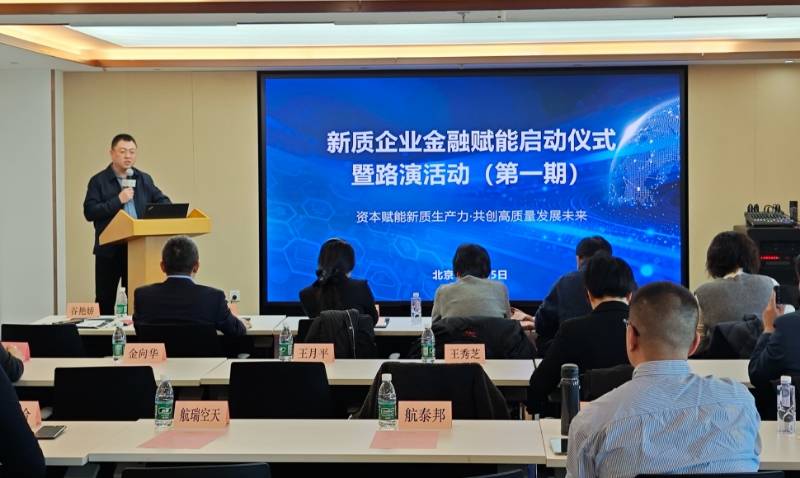
资本赋能新质生产力·首期新质企业金融赋能路演活动(第一期)在北京成功举办
Xi Niu Cai Jing· 2025-12-26 12:02
中国生产力促进中心协会监事长韩丽娟在致辞中强调,发展新质生产力是高质量发展的内在要求,金融作为国民经济血脉,其创新性配置对新质生产力发展 至关重要;协会始终践行国家战略,通过发起新质企业培育计划,构建完整培育体系,此次路演是搭建资本对接平台的关键实践,将依托新质企业培育平 台,整合多方资源,针对新质企业初创期、成长期、成熟期的差异化融资需求提供全生命周期赋能,创新服务模式并配套技术指导、合规辅导等支持,重点 筛选先进制造业、人工智能、生物医药等领域优质项目,同时引导金融资源兼顾新兴产业与传统产业转型、促进区域资源互动,精准破解新质企业发展难 题,为企业加速成长保驾护航,共同助力高质量发展目标落地。 中国生产力促进中心协会特色产业专业委员会副主任、林澤资本董事长刘夫林表示,特色产业是新质生产力落地生根的重要载体。协会特色产业专业委员会 将充分发挥桥梁纽带作用,联动金融机构、投资主体与产业链企业,搭建高效资源对接平台,推动资本精准赋能特色产业领域新质企业,全面激活产业创新 活力。 北京北航天汇科技孵化器有限公司副总经理翟彬提出,孵化器是新质企业成长的核心培育土壤。未来将依托自身资源优势,为新质企业提供技术支持、场 ...
中信银行(601998) - 中信银行股份有限公司董事会会议决议公告
2025-12-26 10:30
证券代码:601998 证券简称:中信银行 公告编号:临2025-087 中信银行股份有限公司董事会会议决议公告 本行董事会及全体董事保证本公告内容不存在任何虚假记载、误导性陈述或 者重大遗漏,并对其内容的真实性、准确性和完整性承担法律责任。 中信银行股份有限公司(以下简称本行)于 2025 年 12 月 10 日以书面形式 发出有关会议通知和材料,于 2025 年 12 月 26 日以书面传签形式完成召开并形 成决议。本次会议应参与表决董事 10 名,实际参与表决董事 10 名。会议的召开 符合《中华人民共和国公司法》等有关法律、行政法规、部门规章、规范性文件 和《中信银行股份有限公司章程》的规定。根据表决结果,会议审议通过了以下 议案: 一、审议通过《2025年业务连续性专项审计报告》 表决结果:赞成10票 反对0票 弃权0票 二、审议通过《关于与关联方开展授信类交易的议案》 方合英董事长、魏强董事因与该项议案存在利害关系,回避表决,该议案有 效表决票数为8票。 表决结果:赞成8票 反对0票 弃权0票 董事会同意2026年本行与中国中信金融资产管理股份有限公司开展同业借 款等授信类关联交易累计金额不超过1 ...
中信银行(601998) - 中信银行股份有限公司信息披露暂缓及豁免工作制度
2025-12-26 10:16
第二条 本工作制度所称"信息"是指所有可能对本行 证券及其衍生品种交易价格产生较大影响的信息,以及有关 上市地证券监管机构以及上市地证券交易所要求披露的其他 1 信息。 第三条 本工作制度所称"披露"是指本行及相关信息 披露义务人依据法律、行政法规、部门规章和其他有关规定, 对已经或可能对本行证券及其衍生品种交易价格产生重大影 响的信息,在规定的时间内、在符合规定条件的媒体上、按 规定的程序、以规定的方式向社会公众公布,并按规定程序 送达上市地监管部门及上市地交易所。 第四条 本行及其他信息披露义务人应当真实、准确、 完整、及时、公平地披露信息,不得滥用暂缓或者豁免披露 规避信息披露义务、误导投资者,不得实施内幕交易、操纵 市场等违法行为。 第五条 本行及其他信息披露义务人应当审慎确定信息 披露暂缓、豁免事项,履行内部审核程序后实施。 第一章 总 则 第一条 为规范中信银行股份有限公司(简称"本行") 信息披露暂缓与豁免行为,保护本行和投资者的合法权益, 根据《中华人民共和国保守国家秘密法》《上市公司信息披 露管理办法》《上市公司信息披露暂缓与豁免管理规定》(简 称"证监会《管理规定》")、《上海证券交易所股 ...
中信银行(601998) - 中信银行股份有限公司信息披露管理办法
2025-12-26 10:16
第一章 总 则 第一条 为加强中信银行股份有限公司(以下简称 "本行")信息披露工作管理,规范信息披露行为,保 护本行、股东、债权人及其他利益相关者的合法权益, 根据《中华人民共和国证券法》《上市公司信息披露管 理办法》《上海证券交易所股票上市规则》《上海证券 交易所上市公司自律监管指引第 2 号——信息披露事务 管理》《香港联合交易所有限公司证券上市规则》《内 幕消息披露指引》等相关法律、法规及部门规章的规定、 上市地证券交易所不时修改的规则及《中信银行股份有 限公司章程》(以下简称"本行章程"),制定本办法。 第二条 本办法所称"信息""重大信息"或"重 大事项"是指所有可能对本行证券及其衍生品种交易价 格产生较大影响的信息,以及有关上市地证券监管机构 以及上市地证券交易所要求披露的其他信息。 第三条 本办法所称"披露"或"公开披露"是指 本行及相关信息披露义务人将重大信息在规定的时间内、 在符合规定条件的媒体上、按规定的程序、以规定的方 式向社会公众公布,并按规定程序送达上市地证券监管 1 机构及上市地证券交易所。 第四条 本办法所称"信息披露管理部门"是指本 行董事会办公室。 第五条 本办法所称"信息 ...