Stripe

Search documents
X @Wu Blockchain
Wu Blockchain· 2025-07-23 07:17
Stablecoin & Payment Industry Trends - Coinbase partnered with Stripe and Shopify to integrate USDC payments for global merchants [1] - JP Morgan launched JPMD, a stablecoin-like payment product [1] - Fiserv plans to issue its own stablecoin to support its network of 90 billion annual transactions [1] - Walmart and Amazon are reportedly developing their own tokens [1] Market Potential - U S Treasury Secretary suggests U S dollar stablecoins could unlock a 2 trillion dollar market potential [1]

X @Bloomberg
Bloomberg· 2025-07-22 11:08
Glade Brook Capital Partners — with stakes in SpaceX, Stripe and Perplexity — has raised $515 million for a new fund. https://t.co/QNNBNERPyK ...
稳定币元年:从加密交易到跨境支付革命|2025中国经济半年报
Hua Xia Shi Bao· 2025-07-22 06:20
Core Insights - The year 2025 is projected to be a turning point for stablecoins, transitioning from the periphery to mainstream adoption, with a global market cap exceeding $250 billion and annual transaction volume surpassing $35 trillion, outpacing Visa and Mastercard combined [1][3][4] Regulatory Framework - A global regulatory framework for stablecoins is taking shape, with major financial centers establishing clear compliance paths, marking 2025 as a watershed year for stablecoin regulation [3][4] - Hong Kong's Stablecoin Ordinance, effective August 1, 2025, introduces a licensing system for fiat-backed stablecoin issuers, balancing financial stability and innovation [3] - The U.S. GENIUS Act aims to create a comprehensive legal and regulatory framework for payment stablecoins, emphasizing the maintenance of the dollar's dominance and implementing tiered regulation [4] - The EU's MiCA regulation, effective from 2025, focuses on unified regulation to protect consumers and market integrity, requiring stablecoin issuers to register within the EU [4][5] Market Dynamics - Traditional financial institutions and tech giants are rapidly entering the stablecoin space, expanding its use from crypto trading to real-world payment solutions [8][9] - Major banks in the U.S. are exploring the launch of stablecoins, with institutions like JPMorgan and Bank of America in preliminary discussions [8] - Payment giants like Visa and Mastercard are accelerating their stablecoin initiatives, with Visa collaborating with crypto exchanges for cross-border transactions and Mastercard launching comprehensive stablecoin payment solutions [9] Cross-Border Payment Revolution - Stablecoins are positioned to revolutionize cross-border payments, addressing inefficiencies in traditional financial systems and offering a more flexible regulatory environment [10] - The ability of stablecoins to facilitate peer-to-peer transactions without relying on local banking systems makes them particularly suitable for emerging markets [10] Real World Assets (RWA) - The rise of stablecoins is facilitating the tokenization of real-world assets (RWA), enhancing liquidity and reducing transaction costs [11][14] - Major financial institutions are actively exploring RWA tokenization, with significant projects underway in the U.S., Dubai, and Hong Kong [13][14] - The global RWA market is projected to reach $16 trillion by 2030, with stablecoins expected to penetrate 30%-50% of this market [14]
设计软件独角兽Figma上市在即,估值或达160亿美元
Hua Er Jie Jian Wen· 2025-07-22 00:16
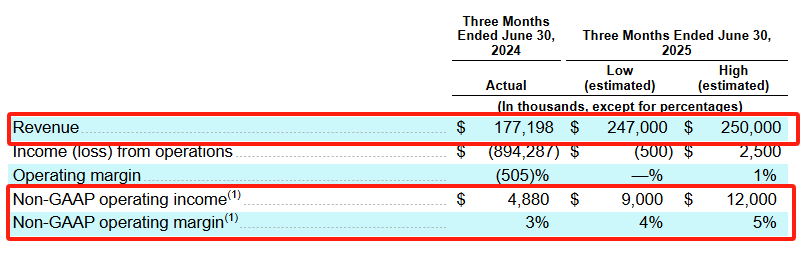
Group 1 - Figma has filed for an IPO with a valuation potentially reaching $16 billion, significantly lower than the $20 billion acquisition price offered by Adobe, which was canceled due to regulatory opposition [1][2] - The company plans to issue approximately 37 million shares at a price range of $25 to $28 per share, aiming to raise up to $1 billion, with a fully diluted valuation of $16.4 billion [2] - Figma's preliminary Q2 performance shows revenue between $247 million and $250 million, representing a year-over-year growth of 39% to 41%, with a non-GAAP operating profit of $9 million to $12 million [2][3] Group 2 - Figma's rapid growth is attributed to a large and high-quality customer base, with over 13 million monthly active users, of which only one-third are designers [4] - As of March 31, the company had approximately 450,000 enterprise customers, with 1,031 clients contributing over $100,000 in annual revenue, marking a 47% year-over-year increase [5] - The company was founded in 2012 by Dylan Field and Evan Wallace, with Field being the largest individual shareholder, holding 51.1% of voting rights prior to the IPO [5]

X @mert | helius.dev
mert | helius.dev· 2025-07-20 11:54
let me give it a shot*puts on suit*pick Solana for the fastest, cheapest, and most scalable platform for your appenjoy a unified, delightful UX without fragmentation that has led to the highest app revs and volumes in all of cryptobenefit from the most battle tested platform in all of crypto that has handled the biggest onchain activity spikes at once, including from the president of the United States himselfprogram any compliance req w token extensions and app controlled execution w.o the colossal overhead ...
喝点VC|YC内部对谈给AI时代下迷茫的年轻人支招:AI时代不靠学历履历,而是靠判断力、自主性及动手解决问题的能力
Z Potentials· 2025-07-19 03:27
Core Viewpoint - The discussion emphasizes the shift in personal core competencies in the AI era from traditional qualifications to judgment, autonomy, and execution skills, highlighting the importance of hands-on experience and understanding real-world problems [3][7][8]. Group 1: Entrepreneurial Pathways - The current entrepreneurial landscape is characterized by a sense of urgency and anxiety regarding job security due to AI advancements, leading to questions about the future of stable employment [4][5]. - Traditional career paths that relied on degrees and resumes are becoming less secure, with companies now valuing problem-solving abilities and hands-on experience over mere compliance [7][8]. - Successful entrepreneurs are those who engage directly with real-world challenges, demonstrating curiosity and proactive problem-solving rather than following established templates [7][19]. Group 2: Education and Skills - The role of education is being re-evaluated, with a focus on whether it truly prepares individuals for the demands of the AI-driven job market, where execution and independent thinking are paramount [8][9]. - Many current educational programs are seen as outdated, failing to equip students with the necessary skills to thrive in a rapidly changing technological landscape [9][10]. - The importance of practical experience through personal projects is highlighted as a more effective learning method than traditional classroom education [11][12]. Group 3: Market Entry Strategies - Entering from a niche market is identified as a key strategy for startup success, with examples like Airbnb and Stripe illustrating how small, focused beginnings can lead to significant market impact [44][45]. - The emphasis is on deeply understanding a small market and iterating on products based on user feedback, rather than trying to appeal to a broad audience from the outset [45][46]. - Companies that successfully identify and serve a specific user base can gradually expand into larger markets, demonstrating the effectiveness of a targeted approach [44][45].

X @CoinDesk
CoinDesk· 2025-07-17 18:53
💸 Cross-border payroll has been a significant challenge.CoinDesk's latest thought leadership article focuses on a new integration between @airtminc, @StableCoin by Stripe, and @StellarOrg and how they are fixing the problem—with stablecoin payouts that are fast, cheap and live.Check out the case study now at https://t.co/4TW0fFAWqH [Partner] ...
Should Stripe Go Public?
20VC with Harry Stebbings· 2025-07-17 05:00
Market Access & Investment - Retail investors are currently unable to access Stripe shares, despite its category-defining status [1] - Stripe has the capacity to raise significant capital from private markets [1] Company Perspective - Stripe founders (Patrick and John) have expressed reluctance towards tokenizing shares, citing the company's identity as a small Irish family business [2]

Circle CEO: Stablecoins Are Going Mainstream — Fast
Benzinga· 2025-07-15 23:08
Core Insights - Circle's CEO Jeremy Allaire presents a vision for stablecoins as a transformative element in digital finance, emphasizing their growing acceptance in both retail and institutional transactions [1][2] - Stablecoins are described as a significant enhancement to the financial system, enabling instant, low-cost, and borderless payments, with increasing adoption among households, businesses, and governments [2][3] - Allaire envisions a future where stablecoins become the primary medium for online transactions, supported by major financial institutions integrating USDC for cross-border settlements [3][4] Industry Trends - The market for stablecoins is projected to expand into the trillions as traditional banks and payment providers begin to adopt these digital currencies [3][4] - JPMorgan Chase's CEO suggests that banks may need to collaborate on a digital solution to remain competitive against digital finance companies like Circle [4] - Allaire notes that stablecoins are still in their early stages, indicating significant growth potential for Circle as the financial sector increasingly embraces them [4][5] Company Performance - Circle's stock (CRCL) experienced a decline of 4.58%, closing at $195.33 [5]


2025稳定币加密货币找到了杀手级应用?
Sou Hu Cai Jing· 2025-07-15 06:20
Core Insights - Stablecoins are emerging as a "killer application" in the cryptocurrency space, particularly in cross-border payments, due to their low volatility, fast settlement, and low costs [1][2][6] - The total global stablecoin transaction volume reached $6.6 trillion in the past 12 months, marking a year-on-year growth of over 60%, with a market capitalization stabilizing above $240 billion [1][2][18] - Major companies like Stripe, PayPal, Visa, and Mastercard are increasingly entering the stablecoin market, indicating strong institutional interest and potential for further growth [2][3][19] Market Update & Overview - The stablecoin market has seen explosive growth, with transaction volumes surpassing $5 trillion in 2024, compared to Visa's total payment volume of $16 trillion [18] - The market cap of stablecoins exceeded $200 billion in December 2024 and reached over $230 billion in February 2025 [18] - The number of stablecoin transactions has also surged, with over 14 billion transactions recorded [1][18] Applications & Use Cases - Stablecoins are particularly advantageous in cross-border payments, significantly reducing transaction times from 2-5 days to within 24 hours and cutting fees by over 50% [3][6] - In emerging markets like Argentina, stablecoins are being used to hedge against local currency devaluation, while businesses in Southeast Asia and Latin America are utilizing them for international supplier payments [3][6] - Companies like Circle and Ripple are developing platforms that facilitate real-time cross-border payments and international settlements [3][6] Ecosystem Development - The stablecoin ecosystem is evolving into a multi-layered service structure, similar to credit card and stock trading systems, with various players providing different services [4][12] - Traditional financial institutions, including JPMorgan and Standard Chartered, are exploring stablecoin-related services, indicating a shift towards integration with traditional finance [4][5] - Companies like BitPay and Transak are enhancing the infrastructure by offering services that bridge fiat and stablecoin transactions [4][5] Regulatory Landscape - Regulatory frameworks for stablecoins are becoming clearer, with the EU approving ten companies for stablecoin issuance under the Markets in Crypto Assets regulation [5][18] - The U.S. Senate is considering bipartisan legislation to address regulatory uncertainties surrounding stablecoins, which could further legitimize their use [5][18] - As regulations solidify, more banks and payment companies are viewing stablecoins as compliant payment tools rather than fringe innovations [5][6] Future Outlook - Stablecoins are expected to evolve from mere payment tools to integral components of financial infrastructure, potentially working alongside Central Bank Digital Currencies (CBDCs) [6][12] - The ongoing technological advancements and ecosystem maturation suggest that stablecoins will play a crucial role in the future of digital finance, enabling automated payments and treasury management for businesses [6][12] - The rise of stablecoins is reshaping perceptions of money and payment systems, driven by their ability to address traditional financial inefficiencies and cryptocurrency volatility [6][12]