
Berkshire Hathaway

Search documents
Berkshire Hathaway Should Acquire All Of Kraft Heinz (Rating Upgrade)
Seeking Alpha· 2025-10-07 14:42
Core Insights - The article highlights the investment strategies and achievements of Paul Franke, a seasoned investor with 39 years of trading experience, emphasizing his contrarian stock selection style and the development of a system called "Victory Formation" for identifying stocks based on supply/demand imbalances [1]. Group 1: Investment Strategies - Paul Franke suggests using 10% or 20% stop-loss levels on individual stock choices to manage risk effectively [1]. - A diversified approach is recommended, advocating for ownership of at least 50 well-positioned stocks to achieve consistent outperformance in the stock market [1]. - The "Bottom Fishing Club" articles focus on identifying deep value candidates or stocks that are experiencing significant upward momentum reversals [1]. Group 2: Analytical Approach - Franke employs daily algorithm analysis of both fundamental and technical data as part of his investment strategy [1]. - The "Volume Breakout Report" articles discuss positive trend changes that are supported by strong price and volume trading actions, indicating potential investment opportunities [1].


3 Ways To Treat Your Savings Like Trump Treats a Business Deal
Yahoo Finance· 2025-10-07 11:11
Core Insights - The article discusses how President Donald Trump's real estate strategies and dealmaking skills can be applied by individuals to enhance their savings and investment opportunities [1][2]. Group 1: Investment Strategies - Patience in Dealmaking: Trump emphasizes the importance of waiting for the right investment opportunity rather than making hasty decisions. This approach mirrors Warren Buffett's investment philosophy of patience [3][4]. - Aggressive Investment: When a promising deal arises, Trump invests aggressively, utilizing all available capital. This strategy highlights the need to be prepared to act quickly when significant opportunities present themselves [4]. Group 2: Use of Leverage - Leveraging Investments: Trump effectively uses leverage in his real estate deals, a strategy that is also employed by other successful investors like Warren Buffett. Leverage can amplify returns but also carries risks [5]. - Margin Trading and Options: Stock investors can utilize leverage through margin trading accounts or by purchasing deep in-the-money call options, which allows for greater exposure to stocks with less initial capital [6][7].
Billionaire Philippe Laffont Sold Warren Buffett Favorite Domino's Pizza and Has Loaded Up on a Hydrogen Stock That's Rallied 156% in a Month
The Motley Fool· 2025-10-07 07:06
Group 1: Coatue Management's Portfolio Changes - Coatue Management's billionaire boss, Philippe Laffont, sold all 322,621 shares of Domino's Pizza during the first quarter of the year, having held the stock since Q4 2023 [6][5] - Laffont's decision to sell Domino's Pizza may be attributed to profit-taking, as he is known for being an active trader who capitalizes on gains [7][8] - The sale of Domino's Pizza comes amid concerns about inflation impacting the company's bottom line, with rising ingredient costs potentially forcing price increases that could alienate customers [9] Group 2: Domino's Pizza Valuation Concerns - Domino's Pizza has a strong track record with 31 consecutive years of same-store sales increases, which has led to a premium valuation [10] - However, the stock's forward price-to-earnings (P/E) ratio has fluctuated between 22 and 27, raising concerns about its valuation in a historically high-priced market [11][12] Group 3: Investment in Hydrogen Stock - Philippe Laffont has made a significant investment in Plug Power, acquiring 4,098,713 shares, which has seen a stock surge of over 60% recently [14] - Plug Power aims to establish a green hydrogen ecosystem, expanding beyond forklifts to include hydrogen vehicles and infrastructure [16] - Despite the potential, Plug Power has faced challenges with profitability, having lost over $7 billion since its inception and continuing to burn cash [19][20]


924行情一周年:你成了别人口中的“老登”吗?
雪球· 2025-10-07 04:13
Core Viewpoint - The article discusses the significant market differentiation observed over the past year, particularly between technology stocks and traditional consumer sectors, highlighting the struggles of investors who have remained committed to consumer stocks while technology stocks have soared [3][4]. Group 1: Market Performance - The article reflects on the drastic changes in market performance since the "924行情," where many investors saw substantial gains in technology stocks, while those invested in consumer sectors faced losses [3][4]. - A detailed ETF performance table shows that traditional sectors like liquor and coal have negative returns, while technology-related ETFs have seen significant gains, with some like the AI-focused ETFs achieving over 60% returns [6][7]. Group 2: Investment Sentiment - The terms "老登" (Old Deng) and "小登" (Young Deng) are introduced to describe traditional investors versus those embracing technology, illustrating the generational and strategic divide in investment approaches [4][5]. - The article draws parallels between current market sentiments and historical events, such as the dot-com bubble, where traditional value investors faced criticism for their cautious strategies while technology stocks surged [8][22]. Group 3: Long-term Investment Perspective - The article emphasizes the cyclical nature of markets, suggesting that patience and a long-term view are essential for investors holding undervalued assets, as market dynamics will eventually shift [24][26]. - It encourages investors to remain steadfast in their strategies, likening investment to a marathon where the true value of companies will be reflected in their stock prices over time [26].

Should You Buy Berkshire Hathaway While It's Below $500?
The Motley Fool· 2025-10-07 01:14
Core Viewpoint - Berkshire Hathaway has faced challenges in 2023, particularly following Warren Buffett's announcement of his impending retirement, leading to an 8% decline in stock value compared to the S&P 500's 18% gain, creating uncertainty for investors [2][3]. Group 1: Company Performance - Berkshire Hathaway's stock has seen a significant increase of over 250,000% since its IPO in 1980, with a current market cap exceeding $1 trillion, making it the tenth-largest company globally [4]. - The company has an average annual gain of more than 15%, which outperforms the long-term average gain of the S&P 500 [5]. Group 2: Leadership Transition - Concerns exist regarding the potential decline in performance after Buffett's departure, but it is deemed unlikely that Berkshire will experience subpar performance due to its strong organizational structure and management practices [5][6]. - Buffett has left behind extensive instructional materials and a clear management philosophy, ensuring continuity in leadership and decision-making [8][9]. Group 3: Unique Business Model - Berkshire Hathaway operates uniquely as a mutual fund and private equity firm, owning a diverse portfolio of publicly traded stocks and wholly owned businesses, allowing for long-term investment strategies without the pressure of short-term shareholder demands [10][11]. - The company has a significant cash reserve of over $300 billion, providing flexibility to wait for optimal investment opportunities rather than being forced to distribute cash to shareholders [13]. Group 4: Investment Opportunity - Current market conditions present a potential buying opportunity for Berkshire Hathaway's B shares, which are priced under $500, as investor sentiment appears to be shifting positively following a recent pullback [14].
6 Warren Buffett gurus say his latest deal is a winner —and might not be his last as Berkshire Hathaway CEO
Business Insider· 2025-10-06 15:35
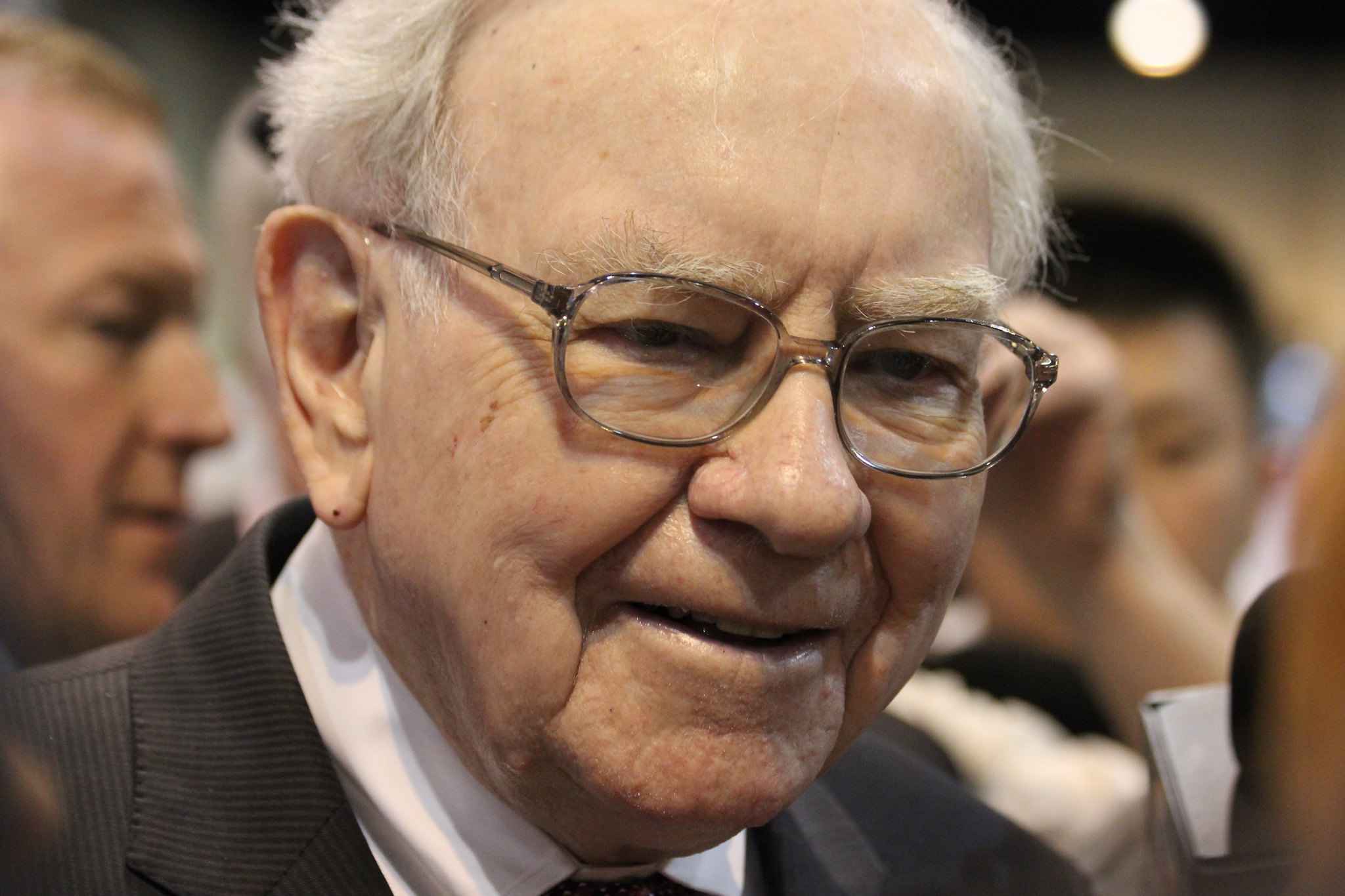
Core Insights - Berkshire Hathaway has announced a $9.7 billion cash acquisition of Occidental Petroleum's chemicals business, OxyChem, marking its largest acquisition since 2022 [1][4] - The deal is seen as beneficial for both parties, with Berkshire securing favorable terms and Occidental reducing its debt significantly [2][3][12] Berkshire Hathaway - The acquisition of OxyChem is viewed as a strategic move, as Berkshire has a history of investment in Occidental, having previously provided $10 billion to finance Occidental's acquisition of Anadarko Petroleum in 2019 [2][4] - Berkshire's cash reserves stood at a record $344 billion at the end of June, positioning the company well for this acquisition [4] - Analysts suggest that the purchase price of about eight times OxyChem's trailing 10-year average pre-tax earnings of $1.2 billion is favorable if earnings trends hold [5][11] Occidental Petroleum - Occidental aims to use the proceeds from the sale of OxyChem to reduce its debt by $6.5 billion, targeting a debt level below $15 billion [4][6] - The company has faced challenges with depressed oil prices affecting its chemicals division, projecting OxyChem's profits to fall to a five-year low of $850 million this year [11] - The sale is expected to help Occidental strengthen its balance sheet and potentially resume stock buybacks [6][12] Leadership Transition - Greg Abel is set to succeed Warren Buffett as CEO of Berkshire Hathaway at the end of the year, while Buffett will remain as chairman [13] - The OxyChem acquisition is considered a fitting final deal for Buffett, reflecting his long-term relationship with Occidental [13][14] - Analysts believe that Abel will likely collaborate with Buffett during the transition period, especially in identifying future investment opportunities [14][15]

Forget billionaire Charlie Munger’s rule about saving your first $100K — why everything changes at the $20K mark
Yahoo Finance· 2025-10-06 14:00
Core Insights - The importance of achieving the first six figures in savings, specifically $100,000, is emphasized as a significant milestone for building wealth, according to Charlie Munger [1][2] - Compounding power is unlocked at this threshold, but even a lower milestone of $20,000 can be transformative for many families [2][4] Group 1: Savings Crisis - A significant portion of Americans face a savings crisis, with 21% having no emergency savings and 37% struggling to cover an unexpected $400 expense [3] - The median net worth for adults under 35 is only $39,000, which is less than half of Munger's $100,000 benchmark [4] Group 2: Mindset and Flexibility - Lack of savings restricts personal flexibility, forcing individuals to prioritize survival over opportunities for career advancement or education [5] - Individuals without emergency savings spend nearly twice as much time worrying about financial issues compared to those with at least $2,000 in savings [6]
Oracle vs JPMorgan Chase: Which Will Be the Next $1 Trillion Stock?
Yahoo Finance· 2025-10-06 13:05
Group 1: Market Cap Insights - The exclusive $1 trillion market cap club includes notable companies like Berkshire Hathaway, the Magnificent Seven, and Broadcom [1] - Oracle and JPMorgan Chase are approaching the $1 trillion market cap, with Oracle at $787 billion and JPMorgan Chase at approximately $862 billion [2] Group 2: JPMorgan Chase Overview - JPMorgan Chase is recognized as a leading bank in the U.S., investing heavily in technology, particularly artificial intelligence, while maintaining a reputation as a stable institution [3] - The bank has a strong investment banking unit, consumer and commercial lending divisions, and a growing payments business, with its U.S. deposit market share increasing from over 7% in mid-2008 to nearly 11.8% as of June this year [4] - JPMorgan Chase is investing $18 billion annually in technology to enhance its banking services, targeting a 17% return on tangible common equity (ROTCE) through economic cycles [5] Group 3: Stock Performance - JPMorgan Chase's stock has appreciated over 48% in the past year and approximately 220% over the last five years, trading at a peer-leading three times tangible book value per share [6] Group 4: Oracle Overview - Oracle, a late entrant in the cloud business, is emerging as a significant player in the artificial intelligence cloud sector, leveraging its cloud infrastructure for AI advancements [9]


Warren Buffett once said ‘money has no utility’ to him. Here’s the personal asset he prizes above all others
Yahoo Finance· 2025-10-06 09:23
Group 1 - Warren Buffett emphasizes that money has no utility to him, while time is valuable, highlighting a philosophical approach to wealth [2][3] - Buffett's wealth accumulation is largely attributed to the power of compound interest, with 99% of his wealth generated after the age of 50 [3][4] - The Berkshire Hathaway chairman became a billionaire at 56, illustrating the importance of consistent, long-term investing [3] Group 2 - For secure savings growth, a certificate of deposit (CD) is recommended as a low-risk option that can yield competitive interest rates [5] - The downside of a CD includes penalty fees for early withdrawal, which investors should consider [5] - The Wealthfront Cash Account offers a base variable APY of 3.75%, with an exclusive boost for Moneywise readers, totaling an APY of 4.25%, significantly higher than the national deposit savings rate [6][7]
2 Warren Buffett stocks to buy with $100 today
Finbold· 2025-10-06 09:14
As Warren Buffett approaches the end of his tenure as CEO of Berkshire Hathaway (NYSE: BRK.A) , his investment moves continue to serve as a key indicator for investors seeking profitable, long-term plays.Now, while Buffett has made notable shifts in his portfolio over the years, investors with modest capital of $100 can mirror his investments by purchasing some of his recent stock picks with potential for growth.To this end, Finbold has identified the following two equities worth considering.UnitedHealth (N ...

