创尔生物

Search documents
中国化妆品市场月报(1月)-20260211
青眼情报· 2026-02-11 11:05
▶ 国家统计局:统计局:2025 年全年化妆品类零售额 4653 亿元,同比增长 5.1%。 出品方: 青眼情报 化妆品行业月报由青眼情报出品,每月 15 日发布。报告聚焦上一个月美妆行业动态, 内容涵盖中国美妆行业重大事件(包括本土及外资头部企业动态、渠道平台变革、产业园 及峰会等)、相关政策法规,以及行业资本事件(融资、并购、上市退市情况)、新品介 绍及新原料备案/注册情况,旨在为行业从业者提供全面及时的资讯参考。 一、 中国化妆品市场零售数据 中国化妆品市场月报(1 月) ► 朝云拟最高 4.5 亿元收购河北康达 100%股权,旨在进一步提升该集团在家 居护理品类在北方区域的市场竞争力。 ► 毛戈平与路威凯腾签订战略合作框架协议,双方将共同组建专注于全球高端 美妆领域的股权投资基金。 ► 锦波生物向养生堂定向发行股票的注册申请获批,本次发行股票的募资金额 不超过 20 亿元。 该战略投资落地,养生堂系将成为锦波生物第二大股东。 ► 中国化工企业天津利安隆集团在马来西亚投资约 21.7 亿元建设化妆品化工 研发中心及现代化生产工厂。 本土头部企业大事件 1. 投融资 ► 嘉亨家化控股股东曾本生向杭州拼便宜 ...
恒大债务牵连?创尔生物IPO折戟,许家印前妻持股冻结成“绊脚石”
Sou Hu Cai Jing· 2026-01-23 09:30
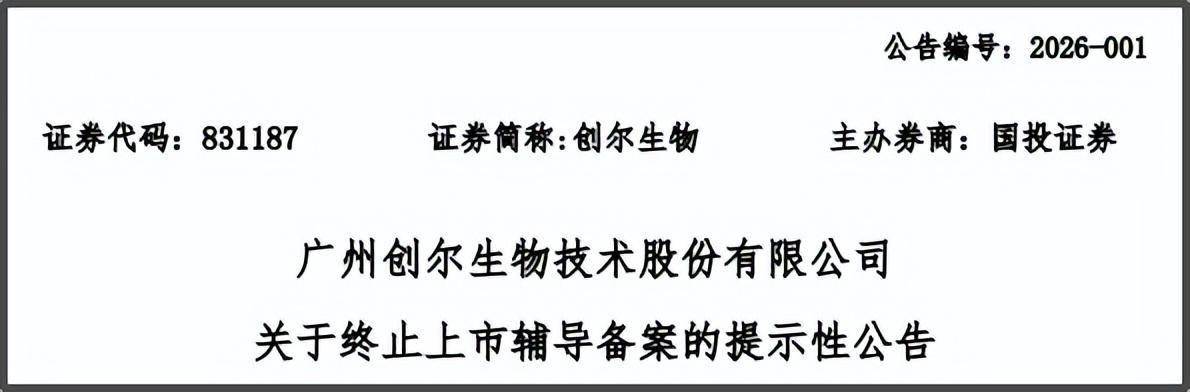
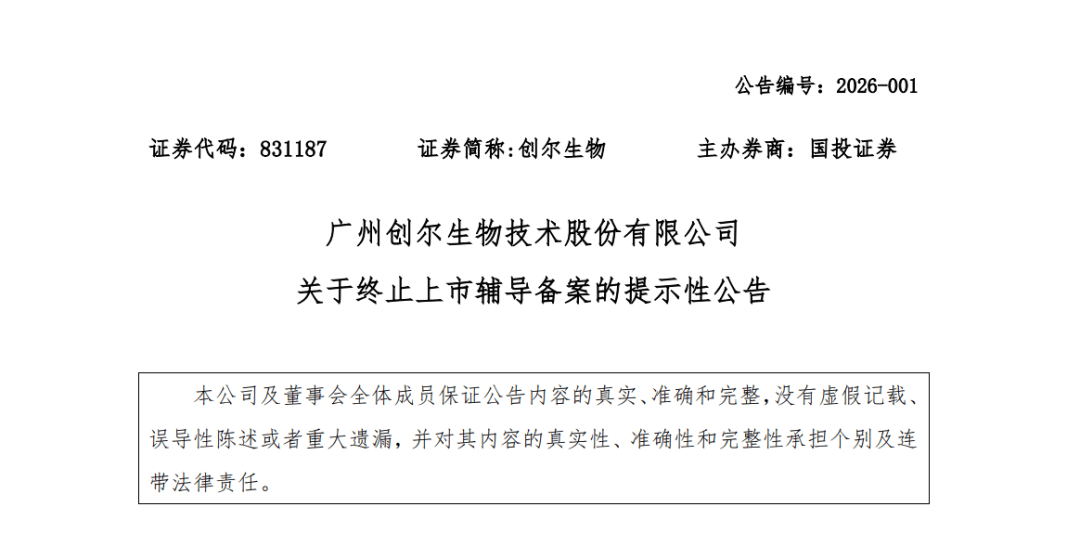
《星岛》记者 秦亦 深圳报道 近期,创尔生物(NQ:831187)发布公告,宣布终止北交所上市辅导备案,意味着该公司推进三年之久 的IPO之路正式折戟,一场筹备已久的资本市场冲刺最终未能如愿。 ▲创尔生物终止上市辅导。 创尔生物主要产品为医疗器械类和生物护肤类,在医疗器械方面,该公司已掌握生物医用级活性胶原大 规模无菌提取制备技术,拥有2个Ⅲ类及2个Ⅱ类医疗器械注册证。2017-2019年,公司胶原类产品在我 国医药级胶原市场的市场份额分别为3.04%、3.40%和5.23%。 创尔生物并未在公告中披露股东股权冻结的细节,但据《星岛》了解,这与其二股东丁玉梅有直接关 联。根据创尔生物2025年半年报显示,丁玉梅持有该公司365.36万股,持股比例4.30%,成为第二大股 东。不过,这部分股权已悉数被司法冻结,无任何可流通空间。 事实上,创尔生物的上市之路并非一帆风顺,2020年该公司曾冲击科创板,2021年撤回上市申请材料后 转向北交所,如今却因一桩股权隐患再度停摆。 | | | | | | | | | 期末 | 单位:股 | | --- | --- | --- | --- | --- | --- | --- ...


恒大债务牵连?创尔生物IPO折戟,许家印前妻持股冻结成绊脚石
Sou Hu Cai Jing· 2026-01-23 08:37
Core Viewpoint - Chuang'er Bio has officially terminated its IPO preparation after three years of efforts, marking a significant setback in its capital market ambitions [1]. Company Overview - Chuang'er Bio specializes in medical devices and bio-skincare products, having developed large-scale sterile extraction technology for bio-medical grade active collagen, with 2 Class III and 2 Class II medical device registrations [3]. - The company's market share in the pharmaceutical-grade collagen market in China was 3.04% in 2017, 3.40% in 2018, and 5.23% in 2019 [3]. IPO Journey - The company's IPO journey has faced challenges, including an attempt to list on the Sci-Tech Innovation Board in 2020, which was followed by a withdrawal of the application in 2021 and a shift to the Beijing Stock Exchange [4]. - In July 2023, Chuang'er Bio signed a listing guidance agreement with Guotou Securities and submitted the necessary materials to the Guangdong Securities Regulatory Bureau, but the process was halted due to unresolved shareholder equity freeze issues [4]. Shareholder Issues - The termination of the IPO guidance was influenced by a long-standing equity freeze involving the company's second-largest shareholder, Ding Yumei, who holds 365,360 shares (4.30% ownership) that are currently frozen [4][6]. - Ding Yumei's equity freeze is linked to her previous marriage to Xu Jiayin, the former chairman of the now-defunct Evergrande Group, and is part of a broader debt resolution process involving Evergrande [6][7]. Legal and Financial Context - In 2022, Ding Yumei was reported to have reached a "technical divorce" with Xu Jiayin, interpreted as a financial separation to avoid debt liabilities [7]. - Legal actions have been initiated to recover approximately $6 billion in dividends and compensation from Xu Jiayin, Ding Yumei, and other former executives of Evergrande, leading to global asset freezing orders against Ding Yumei [7].
大股东股权被冻结!又一美妆企业IPO失败
Sou Hu Cai Jing· 2026-01-19 02:40
Core Viewpoint - The cosmetic industry faces its first IPO termination case in 2026, as Chuang'er Bio announces the cessation of its listing guidance due to unresolved shareholder equity freeze issues, marking its second failed IPO attempt [1][3][11]. Group 1: IPO Termination Reasons - The termination of the IPO guidance is attributed to the long-term unresolved issue of shareholder equity freeze, particularly involving the second-largest shareholder Ding Yumei, whose shares are frozen due to legal actions related to Evergrande's debt crisis [3][5][8]. - The company had previously attempted to go public, facing setbacks including two failed applications to the Sci-Tech Innovation Board and a subsequent shift to the Beijing Stock Exchange, which also did not yield results [10][11]. Group 2: Financial Performance and Challenges - Chuang'er Bio has struggled with fluctuating financial performance, with revenue consistently hovering between 240 million and 400 million RMB over the past six years, indicating a clear growth ceiling [12][14]. - The company's revenue for 2025 was reported at 214 million RMB for the first half, reflecting a year-on-year increase of 16.98%, but net profit plummeted by 55.99% to 13.21 million RMB, highlighting a trend of "increased revenue without increased profit" [13][14]. Group 3: Industry Context and Competitive Landscape - The collagen market is projected to surpass hyaluronic acid, becoming the leading ingredient in skincare by 2025, with a forecasted market size of 108.3 billion RMB by 2027, growing at a compound annual growth rate of 42.4% [16]. - Competitors like Juzhi Bio and Jinbo Bio have significantly outpaced Chuang'er Bio in both revenue and profitability, with Juzhi Bio's revenue soaring from 2.36 billion RMB in 2022 to 5.54 billion RMB in 2024, while Chuang'er Bio's growth remains stagnant [17][20]. Group 4: Regulatory and Technological Challenges - Regulatory tightening and the decline of the "medical device" business model have adversely affected Chuang'er Bio, which previously relied on its medical dressing products for competitive advantage [18]. - The shift in technology from animal-derived collagen to recombinant collagen has created a gap, with competitors advancing in this area while Chuang'er Bio remains focused on traditional collagen products [19][20]. Group 5: Future Outlook - The termination of the IPO is seen as a culmination of long-standing issues in industry competition, technological positioning, and capital utilization, suggesting that Chuang'er Bio must find a sustainable growth engine and differentiate itself in a competitive landscape to consider future IPO attempts [21].
“胶原贴敷料第一股”终止上市!
Sou Hu Cai Jing· 2026-01-16 07:44
Core Viewpoint - Chuang'er Bio has terminated its IPO counseling due to unresolved shareholder equity freeze issues, marking a significant setback in its long and tumultuous journey towards public listing [1][5][10]. Company Overview - Founded in 2002, Chuang'er Bio specializes in the research, development, and production of active collagen biomedical materials, and is recognized as a high-tech enterprise in China [4]. - The company launched its core brand "Chuangfukang," which held an 8% market share in the Chinese patch-type medical skin repair dressing market in 2019, ranking second in the industry [1][16]. Financial Performance - In the first half of 2025, Chuang'er Bio reported a revenue of 214 million yuan, a year-on-year increase of 16.98%, but its net profit attributable to shareholders dropped significantly by 55.99% to 13.21 million yuan [4][12]. - The company's revenue structure shows that collagen products accounted for 87.83% of total revenue, indicating its reliance on this segment [4][13]. IPO Journey - Chuang'er Bio's IPO attempts have been fraught with challenges, including two failed attempts to list on the Sci-Tech Innovation Board and the Beijing Stock Exchange due to financial performance issues and shareholder equity freezes [10][14]. - The company’s second-largest shareholder, Ding Yumei, has had her shares frozen, which has been a critical factor in the termination of the IPO process [5][8]. Industry Context - The tightening of regulatory policies in the "medical device" sector has significantly impacted the growth of companies like Chuang'er Bio, which was once a leader in the collagen dressing market [16][17]. - Competitors such as Jinjian Bio and Fuhua have successfully entered the capital market and expanded their technological and market advantages, leaving Chuang'er Bio at a disadvantage [17][19]. Market Dynamics - The collagen product market is becoming increasingly competitive, with new entrants intensifying the pressure on established players like Chuang'er Bio [18]. - The shift towards restructured collagen products is becoming a market and technological trend, benefiting companies that adapt to these changes [19].

2025生物制造产业大会在广州国际生物岛举行
Guang Zhou Ri Bao· 2025-10-12 01:59
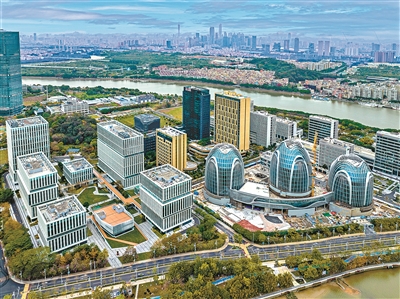
Core Insights - Guangdong aims to establish a trillion-yuan scale biomanufacturing industry cluster, with a focus on innovation and collaboration among government, industry, academia, and investment sectors [2][3]. Industry Development Goals - The "Action Plan for Accelerating the Construction of Biomanufacturing Industry Innovation High Ground" outlines a target of approximately 500 billion yuan in biomanufacturing output by 2027, progressing towards a trillion-yuan scale by 2035 [3]. - The biomanufacturing industry cluster is centered around Guangzhou and Shenzhen, with collaboration from cities like Zhuhai and Foshan [3]. Policy Initiatives - The upcoming "Several Measures to Promote Biomanufacturing Empowering Manufacturing Industry" will address issues such as incomplete industrial chains and lagging standard systems [4]. - Specific measures include establishing a comprehensive biomanufacturing standard system and supporting the formation of a standardization technical committee [4]. Innovation and Achievements - Local companies like Chuang'er Bio and Muen Bio have made significant advancements, with Chuang'er's collagen product receiving regulatory approval and Muen's microbial protein achieving GRAS certification in the U.S. [5]. - These innovations highlight Guangzhou's strong capabilities in biomanufacturing [5]. Infrastructure and Research Support - Guangzhou has integrated biomanufacturing into its "12218" modern industrial system, aiming to create a nationally competitive industry cluster by 2027 [6]. - The establishment of the Guangzhou Frontier Biotechnology and Biomanufacturing Innovation Promotion Center aims to facilitate the commercialization of research outcomes and enhance talent development [7][8].
2025年中国功能性护肤品行业产品布局分析 “妆字号”产品矩阵不断拓展【组图】
Qian Zhan Wang· 2025-09-15 04:11
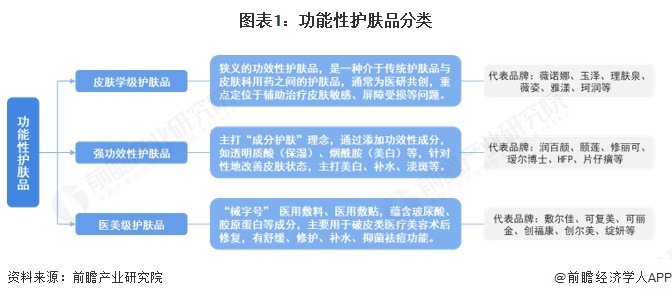
Core Viewpoint - The functional skincare industry in China is experiencing a rise of domestic brands, with products categorized into three main segments: dermatological skincare, high-efficacy skincare, and medical aesthetic skincare [1][2]. Group 1: Industry Overview - Functional skincare products are designed to alleviate or assist in treating specific skin issues, classified as either cosmetic (妆字号) or medical devices (械字号) [1]. - The industry is characterized by a growing presence of domestic brands, indicating a shift in market dynamics [1]. Group 2: Market Segmentation - The functional skincare market is divided into three segments: - Dermatological skincare, typically developed by cosmetic companies in collaboration with dermatologists, includes brands like Winona and La Roche-Posay [2]. - High-efficacy skincare, which emphasizes chemical ingredients, features brands such as WIS and HFP [2]. - Medical aesthetic skincare, developed by companies with a background in biomedicine or medical devices, includes brands like Fulejia and Kefu Mei [2]. Group 3: Product Composition - Dermatological skincare products focus on simplified and targeted ingredients, with examples like Winona's "Soothing Moisturizing Cream" containing ingredients such as sea buckthorn and hyaluronic acid [4]. - High-efficacy skincare products highlight active ingredients like niacinamide and salicylic acid [4]. - Medical aesthetic skincare products, such as those from Chuangfukang, contain fewer ingredients, focusing on essential components like collagen [4]. Group 4: Company Product Strategies - Companies in the functional skincare sector are diversifying their product lines, with many offering both cosmetic and medical device products [6]. - For instance, Betaini focuses on dermatological skincare while also extending into medical device products [6]. Group 5: Company Registration Data - Various companies have registered a significant number of products under both cosmetic and medical device categories, indicating a robust presence in the market: - Huaxi Biological has 1,766 cosmetic registrations and 27 medical device registrations [7]. - Fulejia has 3 cosmetic registrations and 110 medical device registrations [7].
日化护肤半年报|贝泰妮2025年上半年业绩双降、归母净利润降49% 却拿过半收入做营销
Xin Lang Zheng Quan· 2025-09-12 09:24
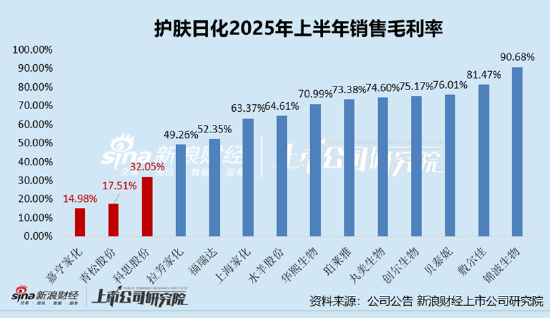
Core Insights - The skincare and daily chemical industry in A-shares has shown a high gross profit margin but low net profit margin, with over 80% of companies having a gross profit margin above 50% and more than half having a net profit margin below 10% [1][4] - The significant gap between gross and net profit margins is attributed to high sales expenses, which consume profits, with Marubi Biological's sales expense ratio reaching 56.5%, making it the highest in the industry [1][6] Group 1: Financial Performance - The top three companies by gross profit margin in the first half of 2025 are Jinbo Biological (90.68%), Fulejia (81.47%), and Beitaini (76.01%) [2] - Only four companies reported a gross profit margin below 50%, namely Lafang, Kesi, Qingsong, and Jiaheng, with margins of 49.26%, 32.05%, 17.51%, and 14.98% respectively [2] - The leading companies in net profit margin are Jinbo Biological (45.5%), Fulejia (26.61%), and Polaroid (15.41%), while Jiaheng, Lafang, and Qingsong have low margins of -6.26%, 1.58%, and 2.66% respectively [4] Group 2: Marketing and R&D Expenditure - The high marketing expenses in the industry are closely linked to the high gross profit but low net profit, with many companies spending over 40% of their revenue on marketing [6][9] - Marubi Biological's sales expense ratio is 56.5%, while its R&D expense ratio is only 2.3%, indicating a heavy reliance on marketing over research and development [8] - The focus on marketing over R&D has led to severe product homogenization, limiting innovation and hindering brand development [8][9] Group 3: Industry Challenges - The industry faces challenges in balancing marketing and R&D expenditures, with a need to shift from marketing-driven to product-driven strategies [9]
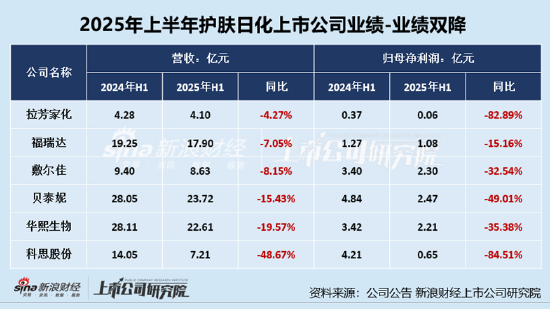
护肤日化半年报|华熙生物、贝泰妮、敷尔佳、福瑞达难扭业绩颓势2025年上半年业绩双降
Xin Lang Cai Jing· 2025-09-12 09:14
Core Viewpoint - The skincare and daily chemical industry in A-share listed companies has shown significant performance divergence in the first half of 2025, with 14 representative companies analyzed for their financial results [1]. Group 1: Performance Analysis - Six companies experienced declines in both revenue and net profit: Lafang Jiahua, Furuida, Fulejia, Beitaini, Huaxi Biological, and Kesi Co. [1] - Lafang Jiahua reported revenue of 410 million yuan, a decrease of 4.27% year-on-year, and a net profit of 6 million yuan, down 82.89% compared to the previous year [1]. - Furuida achieved revenue of 1.79 billion yuan, a decline of 7.05% year-on-year, with a net profit of 108 million yuan [1]. - One company, Chuang'er Biological, saw revenue growth of 16.98% to 214 million yuan but a net profit decline of 55.99% to 13 million yuan [1]. - Jiaheng Jiahua reported revenue of 514 million yuan, an increase of 21.72% year-on-year, but a net loss of 32 million yuan, with losses widening compared to the previous year [1]. Group 2: Factors Influencing Performance - Jiaheng Jiahua's significant net loss is closely linked to its Huzhou base, with new business expansions impacting operational performance [2]. - Lafang Jiahua's dual decline in performance is attributed to changes in the domestic and international operating environment, compounded by intensified industry competition, despite increased market investment [2].




护肤日化半年报|拉芳家化、科思股份业绩双降且归母净利润暴跌超8成
Xin Lang Zheng Quan· 2025-09-12 09:09
Core Viewpoint - The skincare and daily chemical industry in A-share listed companies has shown significant performance divergence in the first half of 2025, with 6 companies experiencing both revenue and profit declines, while 6 others reported growth in both metrics, 1 company saw revenue growth without profit increase, and 1 company reported a loss [1][2]. Performance Summary - Among the 14 selected listed companies, 6 companies reported both revenue and profit declines: - Lafang Cosmetics: Revenue of 410 million, down 4.27%, net profit of 6 million, down 82.89% [2] - Furuida: Revenue of 1.79 billion, down 7.05%, net profit of 108 million, down 15.16% [2] - Fulejia: Revenue of 863 million, down 8.15%, net profit of 230 million, down 32.54% [2] - Beitaini: Revenue of 2.372 billion, down 15.43%, net profit of 247 million, down 49.01% [2] - Huaxi Biological: Revenue of 2.261 billion, down 19.57%, net profit of 221 million, down 35.38% [2] - Kesi Co.: Revenue of 721 million, down 48.67%, net profit of 65 million, down 84.51% [2] - One company, Chuang'er Biological, reported revenue growth of 16.98% to 214 million but a net profit decline of 55.99% to 13 million [3][4]. - One company, Jiaheng Cosmetics, reported revenue of 514 million, up 21.72%, but a net loss of 32 million, with losses significantly widening [5][6]. The loss was attributed to increased operational costs and fixed expenses related to its Huzhou base [5]. Industry Challenges - Lafang Cosmetics faced significant pressure from changing domestic and international operating environments, leading to increased sales and financial expenses despite a revenue decline [6].