
杭州宇树科技有限公司

Search documents
人形机器人:正从概念验证迈向产业实训
Zheng Quan Ri Bao· 2025-12-15 16:15
Core Insights - Humanoid robots are increasingly being integrated into China's manufacturing sector, transitioning from experimental phases to practical applications in various industrial environments [1][2][3] Industry Overview - Over 150 humanoid robot companies exist in China, with more than half being startups or companies from other sectors [1] - The industry is experiencing a convergence of policy support, technological advancements, and capital influx, leading to the formation of a comprehensive supply chain [1][3] Application in Manufacturing - Humanoid robots are being deployed in factories, such as Midea's washing machine plant, where they perform tasks like quality inspection and maintenance [2] - These robots are evolving from fixed instruction executors to cognitive entities capable of perception, reasoning, and decision-making [2] Market Developments - Significant contracts have been awarded to companies like Zhiyuan Robotics and UBTECH, indicating a growing demand for humanoid robots in various applications [3] - The industry is on the brink of mass production, with a clear increase in orders and supply chain readiness, although widespread implementation will take time [3] Competitive Landscape - China has a strong presence in the global humanoid robot market, with 35 companies listed among the top 100 worldwide [4] - The manufacturing ecosystem in China serves as a valuable training ground for humanoid robots, allowing for rapid technological advancements [4][5] Challenges and Constraints - The deployment of humanoid robots faces challenges such as scene adaptation difficulties and insufficient data feedback loops, which hinder algorithm optimization [6] - The commercial value of humanoid robots is harder to quantify compared to traditional industrial robots, posing a barrier to mass production [6] Future Outlook - The humanoid robot industry is in a critical transition phase, focusing on technological iteration and scene validation rather than large-scale application [7] - The industry is expected to achieve breakthroughs in cost-performance ratios, transforming advanced technology into accessible production capabilities [7]

阅兵式上展示的机器狼+激光武器,都已经民用化?
机器人大讲堂· 2025-09-10 06:39
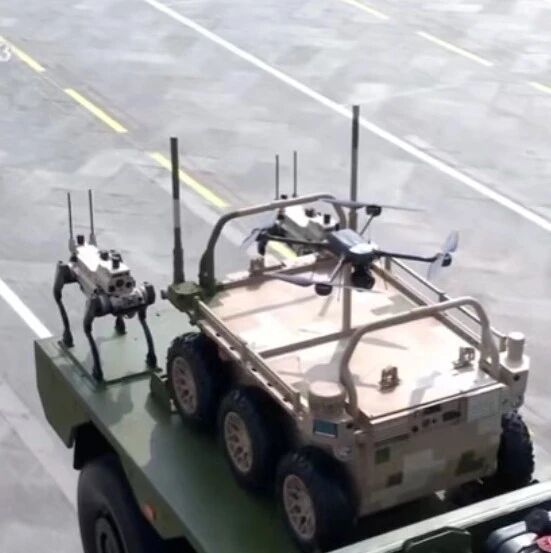
Core Viewpoint - The article discusses the integration of robotic technology and laser weapons, highlighting the advancements in military and civilian applications, particularly focusing on the "machine wolf" and laser-equipped robotic dogs. Group 1: Robotic Technology - The "machine wolf" is a four-legged robotic platform developed by a subsidiary of China Weaponry Equipment Group, designed for military applications, featuring advanced mobility and autonomous capabilities [7]. - The robotic dog developed by Sichuan Hong'an Base Intelligent Technology Co., Ltd. is a civilian product that integrates a laser clearing device, capable of cutting trees with a maximum power of 2000 watts [4][5]. - The laser clearing device can cut trees with a diameter of 20 to 30 centimeters in about one minute, showcasing the efficiency of the technology [4]. Group 2: Military Applications - The "machine wolf" is designed for various military operations, including reconnaissance, explosive ordnance disposal, and support roles, with a modular design allowing for quick adaptation to different missions [7][9]. - The integration of laser weapons with robotic platforms is seen as a potential future direction for combat, leveraging the high mobility and stealth of robotic dogs [8][10]. - The cost-effectiveness of robotic dogs and tactical laser weapons compared to traditional military equipment like fighter jets and tanks makes them suitable for high-risk missions with minimal casualties [10]. Group 3: Market Potential - The global laser weapon market is projected to grow from $6.7 billion in 2024 to $33.4 billion by 2034, with a compound annual growth rate of 17.6% [13]. - Companies like Lianchuang Optoelectronics and Ruike Laser are leading in the development of military-grade laser systems, with significant advancements in technology and market presence [12][14]. - The integration of laser systems into various platforms, including vehicles and drones, is becoming increasingly feasible, indicating a shift towards more advanced military capabilities [8][10].



武汉人形机器人加速量产
Chang Jiang Ri Bao· 2025-09-02 00:28
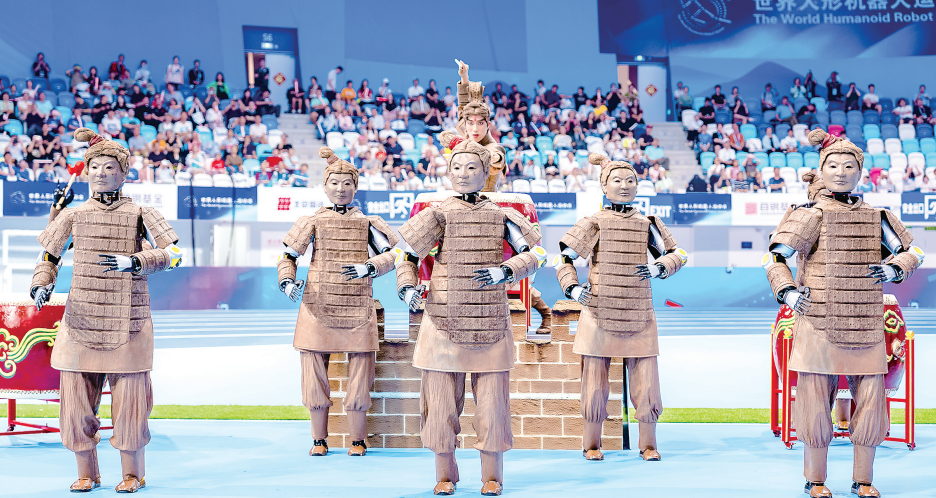
Group 1 - The first World Humanoid Robot Games took place, featuring 280 teams from 16 countries competing in 487 events, marking a significant step for humanoid robots beyond laboratory settings [5] - The humanoid robot "Photon" from Wuhan's Guanggu Dongzhi Intelligent Technology Co., Ltd. won the group dance championship by performing "Qin Terracotta Soul" in collaboration with a dancer, showcasing advancements in humanoid robot technology [5][6] - The event highlighted the rapid development and commercialization of humanoid robots, with Wuhan's industry and academic teams achieving notable success, including a championship and two runner-up positions [5][11] Group 2 - The establishment of the Hubei Humanoid Robot Innovation Center and an investment fund of 10 billion yuan aims to accelerate the development of the humanoid robot industry in Hubei [2][8] - The Chinese government has set ambitious goals for the adoption of intelligent terminals and agents, aiming for over 90% penetration by 2030, indicating strong support for the AI and robotics sectors [3] - The competition featured various projects, with local universities achieving commendable results, such as the "Tianwen 3" robot completing a 100-meter race in 1 minute and 26 seconds, demonstrating the capabilities of student-led innovations [11][12] Group 3 - The humanoid robot industry is expected to reach a trillion-level market scale by 2025, with various regions in China accelerating their industrial layouts around humanoid robots [12][13] - The first humanoid robot 4S store opened in Beijing, showcasing over 100 robot products, indicating a growing market for consumer-oriented humanoid robots [14] - Industry leaders emphasize the need for humanoid robots to become affordable and intelligent enough for household use within the next 3 to 5 years, suggesting a shift towards more practical applications in daily life [14]
宇树公布新专利:定位误差降至厘米级、准确识别跟踪动态目标
Feng Huang Wang· 2025-08-19 06:34
Core Viewpoint - Hangzhou Yushu Technology Co., Ltd. has announced a patent for a "Dynamic Spatiotemporal Synchronization Mapping Method and System Based on Multi-Sensor Data Fusion," which addresses the issue of insufficient spatiotemporal synchronization in multi-sensor fusion [1] Summary by Relevant Categories Patent Details - The patent aims to solve the problem of inadequate spatiotemporal synchronization during multi-sensor fusion, enabling robots to accurately identify and track dynamic targets [1] - It effectively resolves the issue of sensor data misalignment in dynamic scenes, reducing positioning errors to the centimeter level and significantly improving spatiotemporal synchronization accuracy [1]
世界人形机器人“奥林匹克”赛出中国AI新气象
Zheng Quan Ri Bao· 2025-08-15 16:42
Core Viewpoint - The 2025 World Humanoid Robot Games, held in Beijing, showcases advancements in humanoid robotics and highlights the competitive landscape of the robotics and communication industries [1][9]. Group 1: Event Overview - The event took place from August 15 to 17, featuring over 280 teams and more than 500 robots from 16 countries competing in various disciplines such as athletics, soccer, and dance [1]. - The competition serves as a platform to demonstrate China's technological advancements and the full industry chain from robotics to communications [1]. Group 2: Competition Highlights - The first gold medal was won by Lingyi Technology's robot, which completed the 1500-meter race in 6 minutes and 34 seconds, benefiting from years of technological development and a "soft and hard collaborative" technology system [3]. - Robots faced challenges such as algorithm decision-making and balance control, with a specific focus on improving cornering control through advanced algorithms [4]. Group 3: Technological Innovations - The robots utilized open-source decision-making algorithms and high-precision hardware, making them the preferred choice for many international teams in the soccer competition [6]. - The event highlighted the transition from single-machine competition to multi-machine collaboration and tactical intelligence in robotics [6]. Group 4: Real-World Applications - The event also featured practical applications of robotics, such as service robots in hotels and precision sorting robots in pharmaceuticals, showcasing the technology's real-world value [7]. - The challenges faced during the competition are expected to drive advancements in dynamic motion control and real-time perception technologies [7]. Group 5: Industry Insights - The Beijing Shougang Fund revealed that over 100 robots were rented for the competition, indicating a growing interest in practical applications of robotics in various sectors [9]. - The robotics industry is moving towards mass production and commercialization, with humanoid robots expected to find broader applications in the coming years [9]. Group 6: Communication Technology Support - The event relied heavily on AI communication technology to ensure precise control of the robots, with any signal fluctuations potentially impacting performance [10]. - Beijing Unicom implemented a comprehensive 5G-A network to support the event, showcasing the importance of robust communication infrastructure in robotics competitions [11].
宇树上海子公司夺得400米项目金牌,王兴兴回应
第一财经· 2025-08-15 10:49
Core Viewpoint - The article highlights the success of the H1 robot from Shanghai Gaoyi Technology Co., Ltd., which won the 400-meter event at the 2025 World Humanoid Robot Games, indicating the company's strong position in the robotics industry [1][3]. Company Summary - Shanghai Gaoyi Technology Co., Ltd. is fully owned by Hangzhou Yushu Technology Co., Ltd. [1][3]. - The founder of Yushu Technology, Wang Xingxing, mentioned plans for the company's branches to have specific roles and the intention to attract top talent from Shanghai [1][3].

宇树上海子公司夺得400米项目金牌,王兴兴回应
Xin Lang Cai Jing· 2025-08-15 10:29
Group 1 - The 2025 World Humanoid Robot Games 400-meter event concluded on August 15, with the first place awarded to the H1 robot from Shanghai Gaoyi Technology Co., Ltd [1] - Shanghai Gaoyi Technology Co., Ltd is fully owned by Hangzhou Yushu Technology Co., Ltd, indicating a strong corporate structure [1] - Wang Xingxing, the founder of Yushu Technology, stated that future branches of Yushu will have specific roles and the company will continue to recruit talented individuals from Shanghai [1]
中科创达:公司目前和宇树科技暂无业务合作
Zheng Quan Ri Bao· 2025-08-13 12:12
Group 1 - The company holds a 6.7797% stake in Shenzhen Anchuan Technology Equity Investment Partnership (Limited Partnership) [2] - Shenzhen Anchuan Technology Equity Investment Partnership (Limited Partnership) owns a 0.2925% stake in Hangzhou Yushu Technology Co., Ltd. [2] - Currently, there is no business cooperation between the company and Yushu Technology, and the indirect shareholding ratio is low [2]

金融活水润科创:国寿寿险三大“工具箱”激活民营经济新引擎
Zhong Guo Jing Ji Wang· 2025-08-08 07:27
Core Viewpoint - China Life Insurance Company actively responds to national calls, aiming to provide diverse and high-quality financial services to support the high-quality development of the private economy and small micro-enterprises [1][2]. Group 1: Insurance Solutions for Small and Micro Enterprises - The company has developed targeted insurance solutions such as the "Employee Welfare Insurance" series, which covers accidental death, disability, and medical expenses, effectively alleviating economic pressure on enterprises facing accident risks [2][3]. - In Yunnan, the company has served over 6,000 enterprises, providing risk protection for over 450,000 individuals and processing more than 43,000 claims totaling 62.87 million yuan [3]. - In Hainan, the company has insured 2,204 small and micro-enterprise clients, covering 375,500 individuals and providing risk protection exceeding 158 billion yuan [3]. Group 2: Comprehensive Service Models - The company has launched a "Full Cycle Escort Plan" to help private enterprises reduce costs and increase efficiency, offering services such as free cleaning and equipment maintenance [4]. - In Shandong, over 20 enterprises have received free initial setup services, achieving a customer satisfaction rate of 100% [4]. Group 3: Investment in Technology and Innovation - The company invested 1.023 billion yuan in the National Investment (Shanghai) Technology Achievement Transformation Venture Capital Fund, which subsequently invested 600 million yuan in Qi Anxin [8]. - In 2020, the company allocated 3 billion yuan to the National Small and Medium Enterprises Development Fund, which has invested in companies like Hangzhou Yushu Technology [8]. - Qi Anxin is a leader in the enterprise-level cybersecurity market, while Hangzhou Yushu Technology specializes in high-performance robots, contributing to various sectors including agriculture and public rescue [8]. Group 4: Support for Private Enterprises - The company emphasizes its role in supporting the private economy and strategic emerging industries through equity investments and partnerships with quality private enterprises [9]. - It has provided funding support to numerous private enterprises, including Ningde Times, BYD, Meituan, Alibaba, and Xiaomi, facilitating industrial upgrades and high-quality development [9].

做好民营企业的成长伙伴 中国人寿寿险公司三大“工具”激活民营经济新引擎
Jin Rong Shi Bao· 2025-08-08 07:27
Core Viewpoint - The recent private enterprise symposium signals strong national support for the private economy, guiding the insurance industry on how to better serve its development [1] Group 1: Support for Private Economy and SMEs - China Life Insurance Company aims to leverage its role as an economic stabilizer and social stabilizer to provide diverse and high-quality financial services to the private economy and small and micro enterprises [1] - The company has innovated products and services to support the growth of private enterprises, including the "Employee Welfare Insurance" series, which covers accidental death, disability, and medical expenses [2] - In 2024, the company served over 6,000 enterprises, providing risk protection for over 450,000 employees, with a total claim amount of 62.87 million yuan [2] Group 2: Risk Management Solutions - In Hainan, the company focuses on developing group health insurance and accident insurance for small and micro enterprises, providing comprehensive risk management solutions [3] - In 2024, the company insured 2,204 small and micro enterprise clients, covering 375,500 individuals, with total risk protection exceeding 158 billion yuan [3] Group 3: Innovative Service Models - The company has introduced a "Full Cycle Escort Plan" to help private enterprises reduce costs and improve efficiency, offering services such as cleaning and equipment maintenance [4] - In Shandong, over 20 enterprises have received free initial cleaning services, achieving a customer satisfaction rate of 100% [4] Group 4: Investment in Private Economy - China Life Insurance Company has invested 3 billion yuan in the National SME Development Fund, holding an 8.39% partner share [6] - The company has supported various private enterprises, including NIO, BYD, Meituan, Alibaba, and Xiaomi, through equity investments to facilitate industrial upgrades and high-quality development [6] - The company emphasizes its commitment to supporting national strategies and the real economy through market-oriented operations [6]