Canoo

Search documents
Rivian Is Copying Tesla’s Playbook, but Is RIVN a Better Buy Than TSLA for 2026?
Yahoo Finance· 2025-12-12 20:21
The slump in the U.S. electric vehicle (EV) industry continued in 2025, and several startups, including Nikola (NKLAQ) and Canoo (GOEVQ), filed for bankruptcy, continuing the spate of bankruptcies from the previous year. Most U.S. EV startups that went public between 2020 and 2021 have already gone out of business or become inconsequential. Rivian (RIVN) and Lucid Motors (LCID) are the only two EV startups of some consequence still standing, even as they trade at a fraction of their all-time highs. Both ...


X @TechCrunch
TechCrunch· 2025-12-09 17:44
NASA and USPS stop using Canoo EVs despite CEO’s pledged support https://t.co/nMUPoMOifC ...
NASA and USPS stop using Canoo EVs despite CEO's pledged support
TechCrunch· 2025-12-09 17:42
Core Viewpoint - NASA and the United States Postal Service (USPS) have ceased using electric vans from the now-bankrupt EV startup Canoo, citing the company's inability to meet mission requirements and the completion of evaluation processes for the vehicles [2][3]. NASA's Involvement - NASA purchased three electric vans from Canoo in 2023 for astronaut transportation to the Artemis launchpad but has since transitioned to leasing an Airstream-built "Astrovan" from Boeing due to Canoo's failure to meet requirements [2]. USPS's Evaluation - The USPS acquired six Canoo vehicles for evaluation in 2024, but has declared that they are no longer in use following the completion of the evaluation, with no further investments planned [3]. Department of Defense (DOD) Engagement - Canoo provided at least one demonstration vehicle to the DOD prior to its bankruptcy, but the DOD has not confirmed whether it continues to use the vehicle [4]. Bankruptcy and Asset Sale - Canoo filed for bankruptcy in January 2025 after struggling financially and failing to establish a market for its electric vans. Former CEO Tony Aquila made a $4 million bid for the company's assets, motivated by a desire to support government programs [5]. - The bankruptcy judge approved the sale of Canoo's assets to Aquila in April, despite interest from other parties, including a California-based electric trucking company and a U.K. financier [6][8]. Bidding Controversies - Harbinger, a potential bidder, accused Canoo of asset concealment and claimed that the bankruptcy trustee favored Aquila's bid. Another bidder, Garson, expressed willingness to pay up to $20 million but did not formalize his bid in time [9][10].



Chamath Palihapitiya Is Back in the SPAC Game. Should You Buy His New AEXA Stock Now?
Yahoo Finance· 2025-10-06 19:47
Core Viewpoint - The SPAC market, which gained popularity during the Covid-19 pandemic, has seen mixed results, leading to skepticism among investors regarding future SPAC deals [1][2]. Group 1: SPAC Market Overview - The SPAC craze of 2020 and 2021 attracted many retail investors due to favorable market conditions, but it also resulted in several unsuccessful ventures alongside a few successful ones like DraftKings and SoFi Technologies [1][2]. - Notable failures in the SPAC market include companies like Nikola, Canoo, and Lordstown Motors, which have not performed well post-merger [2]. Group 2: American Exceptionalism Acquisition Corp. A (AEXA) - Chamath Palihapitiya, known as the "SPAC King," has launched a new SPAC, American Exceptionalism Acquisition Corp. A (AEXA), which is currently trading on the NYSE and is looking to partner with companies in sectors such as AI, energy, defense, or decentralized finance [3]. - AEXA stock was launched on September 26 with an IPO of 30 million shares priced at $10 each, plus an additional 4.5 million shares from underwriters' over-allotment, valuing the company at $345 million [4]. Group 3: Palihapitiya's Approach - Palihapitiya acknowledges past challenges in the SPAC market, particularly regarding sponsor compensation and retail investor involvement, and claims that AEXA will be managed differently to improve its chances of success [5][6]. - He emphasizes that lessons learned from previous SPAC experiences will inform the management and operational strategies of AEXA [6].
Should You Buy Lucid Stock Ahead of Its 1-for-10 Reverse Stock Split?
The Motley Fool· 2025-08-29 17:54
Group 1 - Lucid Group is implementing a reverse 1-for-10 stock split, effective August 29, which often indicates financial trouble for a company [1][2] - The stock price has fallen over 30% since the announcement of the reverse split on July 17, and the current market capitalization is approximately $6.3 billion [1][3] - The reverse split is intended to maintain share prices above internal minimums set by institutional buyers, rather than to meet Nasdaq's $1 minimum listing requirement [2][3] Group 2 - Historically, stocks undergoing a reverse split tend to experience a price drop, including an immediate decline and a subsequent downward drift over the following months [5][6] - Lucid's reverse split may lead to the liquidation of odd share lots, which could further contribute to downward pressure on the stock price [6] - A similar situation occurred with Canoo, which experienced a 7% drop on the day of its reverse split and continued to decline over the following weeks [7] Group 3 - In its latest earnings report, Lucid reported a larger-than-expected loss and reduced its production forecast for the year from about 20,000 vehicles to 18,000 to 20,000 vehicles [8] - The expiration of the $7,500 federal EV tax credit on September 30 is expected to negatively impact EV sales, indicating a challenging second half of 2025 for the U.S. EV industry [8] - Despite some positive developments, such as a partnership with Uber and a 38% year-over-year increase in vehicle deliveries in Q2, Lucid remains unprofitable and is behind on production targets for its Gravity SUV [9][10]


这一地的“零小理”们,究竟还有没有“出头之日”?
Zhong Guo Qi Che Bao Wang· 2025-08-08 02:57
Core Insights - The American electric vehicle (EV) market is facing significant challenges, with many new entrants struggling for survival and some already filing for bankruptcy [3][4][9] - Recent investments, such as Uber's $300 million investment in Lucid, highlight the ongoing need for financing among these companies to continue operations [2][5] - The decline in EV sales growth in the U.S. and the tightening of funding conditions have exacerbated the difficulties faced by new EV manufacturers [5][6] Group 1: Financial Struggles - Fisker filed for bankruptcy protection in June 2024, with assets valued between $500 million and $1 billion and debts exceeding $500 million, primarily due to quality issues and production shortfalls [3][6] - Canoo initiated bankruptcy proceedings in January 2025 after failing to secure financing, with debts of $164 million [3][6] - Over 10 American EV startups are reported to be in financial crisis or heading towards bankruptcy or restructuring in the first half of 2024-2025 [3][5] Group 2: Market Dynamics - Bloomberg New Energy Finance indicates that nearly 60% of global EV sales will be concentrated in China in 2024, while U.S. market growth is declining by 15% year-on-year [5][6] - Only four out of the top ten U.S. EV startups have cash reserves that can sustain operations for over a year, with some like Nikola having reserves for less than three months [5][6] - The high-interest rate environment has led to a 70% drop in industry financing compared to the peak in 2021, indicating a loss of investor patience with "PPT-driven" companies [5][6] Group 3: Competitive Landscape - Traditional automakers like General Motors and Ford are accelerating their EV transitions, launching over ten new models in 2024, which increases competitive pressure on new entrants [7][8] - The reduction of EV subsidies in the U.S. has made electric vehicles more expensive for consumers, further complicating the market for new players [7][8] - The shift in policy under the Trump administration has created uncertainty in the industry, impacting strategic planning for many new EV companies [8][9] Group 4: Lessons Learned - Many new EV companies failed to focus on core technology development after receiving significant funding, instead prioritizing marketing and expansion, leading to their current predicaments [9][10] - The industry's transition from "PPT-driven" to "value-driven" models is seen as a necessary evolution for healthier market development [10]

美企想“挑战”中国,输了让出稀土主导权!不料中方出手,一招制敌
Sou Hu Cai Jing· 2025-06-23 06:46
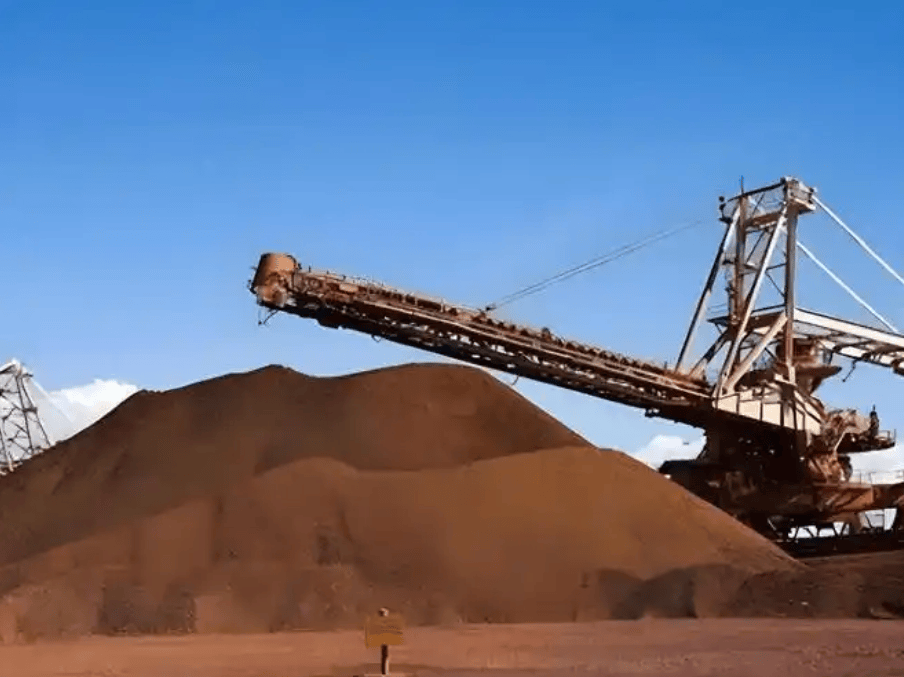
Group 1 - China holds an undisputed dominant position in the global critical minerals sector, prompting the U.S. to focus on Oklahoma to challenge this dominance [1] - Oklahoma is becoming a hub for critical minerals, with the only nickel refinery in the U.S. and the largest lithium refinery under construction [3] - Companies like MLB Industrial and Westwin Elements are expanding operations in Oklahoma, with Westwin aiming to refine 200 tons of nickel annually, potentially meeting 10% of U.S. nickel demand [5] Group 2 - The U.S. Department of Defense is negotiating nickel supply agreements with Westwin, which will be used for military drone batteries [5] - Stardust Power plans to build a lithium refinery in Oklahoma, targeting an annual production of 50,000 tons, which would account for about 20% of U.S. projected lithium demand by 2030 [5] - A new rare earth magnet production facility is expected to begin operations in early 2024, with an initial annual output of 1,200 tons, sufficient for over 400,000 electric vehicles [5] Group 3 - Despite the optimism, challenges remain for U.S. companies in Oklahoma, including a weak education system and difficulties in attracting skilled talent [6] - The U.S. faces significant obstacles in establishing a domestic critical minerals supply chain, including a lack of commercially viable natural reserves and a shortage of skilled engineers [6] - The Center for Strategic and International Studies (CSIS) indicates that even with planned facilities, U.S. production will be far below China's, potentially less than 1% of China's 2018 output [6] Group 4 - In response to U.S. efforts, China's Ministry of Commerce is accelerating the review of export license applications for rare earths, which could impact the global rare earth market [8][9] - China is open to dialogue with other countries regarding export controls, which may influence the competitive landscape for critical minerals [9]
焦头烂额的特朗普,等来了一个喜讯,美企为他分忧:挑战中国稀土
Sou Hu Cai Jing· 2025-06-21 05:13
Core Viewpoint - The article discusses the challenges faced by the U.S. in reducing its reliance on China for rare earth elements, highlighting the ambitious plans of American companies and the significant obstacles they encounter in achieving these goals [1][7][23]. Group 1: U.S. Companies' Ambitions - An Oklahoma company, Westwin Elements, claims it can refine 200 tons of nickel annually, with plans to increase production to 34,000 tons in five years, potentially meeting 10% of U.S. nickel demand [3]. - Other U.S. companies are also pursuing critical minerals, including a battery manufacturer aiming to extract 50,000 tons of lithium from brine and a rare earth company planning to produce 1,200 tons of rare earth magnets annually [5]. - The U.S. Department of Defense is in discussions with Westwin Elements for nickel supply agreements aimed at military applications [3]. Group 2: Challenges in Resource Availability - The U.S. Geological Survey indicates that the U.S. has limited rare earth reserves, with over 95% being light rare earths, while heavy rare earths, crucial for military applications, are predominantly supplied by China [7][19]. - Oklahoma lacks large-scale rare earth deposits, forcing companies like Westwin Elements to import raw materials from Australia, incurring high transportation costs [9]. Group 3: Technological Disadvantages - China holds over 90% of global rare earth separation patents, with its technology significantly outperforming U.S. capabilities in terms of cost and efficiency [11]. - U.S. companies struggle with outdated technology, as evidenced by Blue Line's failure to develop its own separation technology and reliance on purchasing outdated technology from Japan [11]. Group 4: Industry Ecosystem and Workforce Issues - The U.S. lacks a comprehensive rare earth processing ecosystem, with no single company capable of completing the entire processing chain, unlike China, which has over 3,000 supporting enterprises [13]. - There is a significant talent gap in the U.S. rare earth industry, with a shortage of over 23,000 skilled workers, and local educational institutions failing to provide adequate training [15]. Group 5: Government Support and Economic Viability - The U.S. government has invested $439 million since 2020 to build a complete rare earth supply chain, but experts estimate that even with all planned facilities operational, production would be minimal compared to China's output [17]. - Some U.S. companies appear to exploit government funding opportunities without genuine intentions to establish a sustainable rare earth industry, as seen in the case of Canoo, which declared bankruptcy after receiving state funds [17]. Group 6: Current Supply Shortages - The U.S. military's reliance on rare earths is critical, with specific components of advanced fighter jets requiring substantial amounts of rare earth materials, and the Department of Defense has acknowledged that a disruption in supply could severely impact production [19][21]. - The automotive industry, particularly electric vehicle manufacturers like Tesla and Ford, is facing production halts due to unstable rare earth supplies, leading to significant financial losses [21].


押注俄克拉荷马州,美企扬言:我们可以挑战中国稀土的主导地位
Guan Cha Zhe Wang· 2025-06-19 06:55
Group 1 - Oklahoma has become a focal point for U.S. investment in critical minerals, boasting the only nickel refining machine in the country and leading in the number of related facilities [1][3] - The state is home to the largest lithium refining plant, two lithium-ion battery recycling plants, a rare earth magnet facility, and multiple e-waste collection facilities, with more projects underway [1][3] - Companies like Westwin Elements and Stardust Power are establishing operations in Oklahoma, with Westwin aiming to refine 200 tons of nickel annually and Stardust planning to produce 50,000 tons of lithium per year by 2030 [3][6] Group 2 - Westwin Elements is negotiating a nickel supply agreement with the U.S. Department of Defense, intending to keep its production within the U.S. for military applications [4] - The state government is promoting Oklahoma as a business-friendly environment, attracting companies by simplifying regulatory processes [3] - The establishment of a rare earth magnet production facility in Oklahoma is expected to yield an initial output of 1,200 tons, sufficient for over 400,000 electric vehicles [6] Group 3 - Despite the investments, challenges remain, including a weak education system ranked 48th in the U.S., which hampers the attraction of skilled labor [7] - The U.S. Department of Defense has invested over $439 million since 2020 to develop domestic supply chains for critical minerals, with a goal to establish a complete rare earth supply chain by 2027 [8] - Analysts predict that even when new facilities are operational, their output will be significantly lower than China's, potentially less than 1% of China's 2018 production [8]
Luminar secures up to $200M following CEO departure and layoffs
TechCrunch· 2025-05-22 00:30
Core Insights - Luminar has secured a deal with Yorkville Advisors Global and another unnamed investor to raise up to $200 million through the sale of convertible preferred stock over an 18-month period [1] - The company has undergone significant leadership changes, with founder Austin Russell replaced by Paul Ricci as CEO and board chair, alongside a new round of layoffs [2] Financial Arrangement - Luminar will initially issue $35 million in convertible preferred stock, with the option to issue additional tranches of up to $35 million every 60 days at a purchase price of 96% of the stated value [3] - The proceeds from the initial issuance are intended for general corporate purposes and debt retirement, enhancing the company's financial flexibility [4] Company Background - Luminar was founded in 2012 and gained prominence during the autonomous vehicle technology boom, merging with Gores Metropoulos Inc. in 2021 at a market valuation of $3.4 billion, but currently has a market cap of $179 million [5][7] - The company has faced challenges, including multiple restructurings and a workforce reduction of about 30% in 2024, resulting in the layoff of 212 employees [8]