EV Group

Search documents
混合键合设备:AI算力时代的芯片互连革命与BESI的领航之路
材料汇· 2026-01-27 15:17
Core Viewpoint - Advanced packaging is emerging as a new engine for computing power in the "post-Moore's Law" era, addressing the limitations of traditional chip performance improvements through innovative bonding technologies [4][5]. Group 1: Hybrid Bonding Overview - Hybrid bonding is an advanced packaging technology that combines dielectric bonding and metal interconnects, allowing for high-density, high-performance 3D integration [8][19]. - The development of hybrid bonding has evolved through various stages, from wire bonding to flip chip, and now to hybrid bonding, which enables ultra-fine pitch stacking and packaging [10][11]. - Hybrid bonding can be categorized into wafer-to-wafer (W2W) and chip-to-wafer (C2W) processes, with C2W offering higher flexibility and lower defect rates for smaller chips [14][16]. Group 2: Advantages and Challenges of Hybrid Bonding - The technology allows for extreme interconnect density and performance breakthroughs, achieving interconnect pitches below 1 μm, significantly enhancing data transfer bandwidth [23]. - Hybrid bonding is compatible with existing wafer-level manufacturing processes and can be integrated with TSV and micro-bump technologies, providing cost optimization potential [24]. - Challenges include yield issues, surface smoothness requirements, cleanliness standards, and complex testing processes that need to be addressed for successful mass production [26]. Group 3: Market Demand and Future Prospects - Major HBM manufacturers, including Samsung, Micron, and SK Hynix, have committed to adopting hybrid bonding technology for HBM5, which aims to meet the extreme demands of AI and high-performance computing [28]. - TSMC's SolC technology, which utilizes hybrid bonding, is expected to double its production by 2026, highlighting the growing adoption of this technology [29][30]. - The global market for hybrid bonding equipment is projected to exceed $600 million by 2030, with significant growth anticipated in the Asia-Pacific region [37]. Group 4: Competitive Landscape - The hybrid bonding equipment market is dominated by international players such as BESI, EV Group, and SUSS MicroTec, with BESI holding a market share of 67% in 2023 [44]. - The competitive landscape is evolving, with Chinese companies like Piotech entering the market, indicating advancements in domestic semiconductor equipment capabilities [42].





混合键合与TCB,先进封装两大热门
半导体行业观察· 2025-08-31 04:36
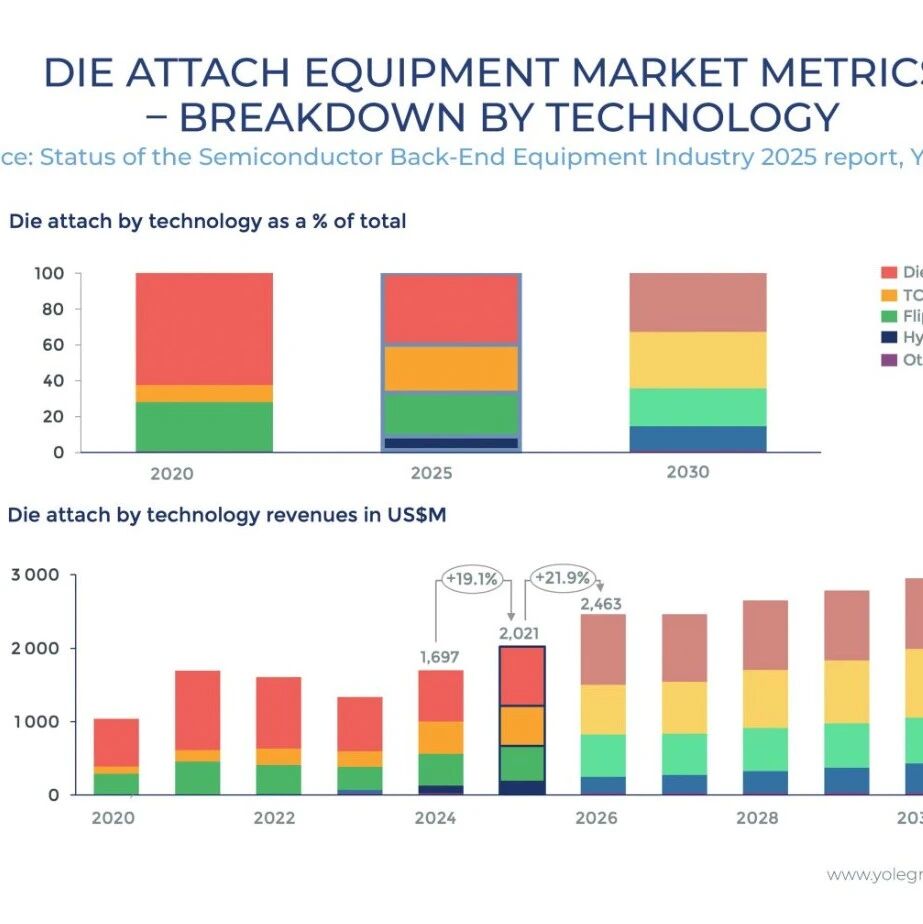
Core Insights - Advanced packaging is becoming a key driver for the growth of the back-end equipment market, with total revenue expected to reach approximately $6.9 billion in 2025 and grow to $9.2 billion by 2030, reflecting a compound annual growth rate (CAGR) of 5.8% [2] - The growth is primarily driven by technologies used for building HBM stacks, chiplet modules, and high I/O substrates, reshaping the supply chain and market dynamics for foundries, IDMs, and OSATs [2][3] - The demand for high bandwidth, proximity, and power efficiency in AI and high-performance computing is pushing the need for advanced packaging solutions [3] Back-End Equipment Market Overview - The back-end equipment market is experiencing strong growth due to advanced packaging, AI acceleration, and heterogeneous integration [2] - The market is expected to see significant contributions from high-precision bonding machines, thermal compression bonding (TCB), and hybrid bonding technologies [3][6] Thermal Compression Bonding (TCB) - TCB is currently the leading technology, with revenue projected to grow from approximately $542 million in 2025 to about $936 million by 2030, representing a CAGR of 11.6% [6] - Major players in TCB include Hanmi, ASMPT, and others, with significant orders tracking the ramp-up of HBM3E capacity [6][11] Hybrid Bonding - Hybrid bonding is identified as a strategic driver for future chiplet and HBM generations, with revenue expected to rise from about $152 million in 2025 to approximately $397 million by 2030, showing a CAGR of 21.1% [11] - The technology is gaining traction due to its potential in logic-to-memory stacking, although its application is still limited by material and process maturity [11][12] Flip Chip Bonding - The flip chip bonding market is projected to grow from approximately $492 million in 2025 to $622 million by 2030, driven by demand from AI accelerators and large network ASICs [17] - The technology is evolving towards no flux processes to enhance reliability and reduce residues [17] Wafer Thinning and Preparation - The wafer thinning market is expected to reach about $582 million in 2025 and grow to approximately $845 million by 2030, driven by the adoption of TSV and ultra-thin die in memory and logic stacking [19] - Key players in this segment include DISCO and ACCRETECH, with challenges related to precision and stress management [19] Structural Changes in Packaging - The packaging process is becoming integral to system performance, with bandwidth and energy consumption targets being addressed at the interposer and stack levels [21] - The integration of front-end process control into packaging production is creating a clear growth hierarchy, with traditional bonding machines experiencing low single-digit CAGR while TCB and hybrid bonding show steep growth curves [22]
晶圆越做越薄背后
半导体行业观察· 2025-03-21 01:08
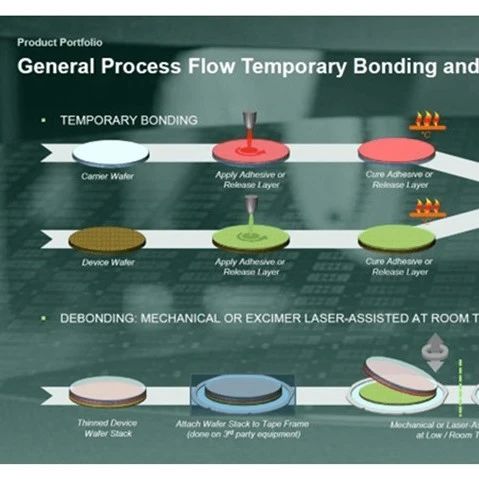
Core Viewpoint - The demand for ultra-thin wafers is increasing due to the transition from planar SoC to 3D-IC and advanced packaging, which enhances performance and reduces power consumption [1][18]. Group 1: Thin Wafer Processing - The total thickness of HBM modules, which include 12 DRAM chips and basic logic chips, is still less than that of high-quality silicon wafers [1]. - Thin wafers play a crucial role in fan-out wafer-level packaging and advanced 2.5D and 3D packaging for AI applications, which are growing faster than mainstream ICs [1]. - The processing of ultra-thin wafers requires careful decisions regarding temporary bonding adhesives, carrier wafers, and debonding processes [1][3]. Group 2: Challenges in Wafer Thinning - Engineers face challenges in preventing defects or micro-cracks, especially at the wafer edges, which can significantly impact yield [10]. - The thinning process involves a balance of grinding, chemical mechanical polishing (CMP), and etching to meet strict total thickness variation (TTV) specifications [8]. - The most common TSV architecture in silicon features a diameter of 11 micrometers and a depth of 110 micrometers, with a barrier metal and oxide insulation layer occupying 1 micrometer of that diameter [9]. Group 3: Temporary Bonding and Debonding - The industry is refining thinning steps, adhesives, and debonding chemicals, with temporary bonding typically performed under vacuum thermal compression or UV exposure [3][7]. - Glass and silicon carrier wafers are both used, with glass being popular due to its thermal expansion coefficient (CTE) compatibility with silicon [5]. - Mechanical debonding methods are preferred for thinner wafers, as they allow for lower stress levels and better thermal budgets [15]. Group 4: Adhesive Properties and Requirements - Ideal adhesives should bond at low temperatures and withstand high-temperature processing without degrading performance [7]. - The adhesive's uniformity in thickness is critical, as any inconsistency can lead to uneven back grinding and processing challenges [7][8]. - The choice of adhesive is influenced by temperature stability, with some materials capable of withstanding temperatures up to 350°C [7]. Group 5: Yield and Reliability - Chip manufacturers are seeking customized solutions for specific device types, emphasizing the need for tool reliability and process repeatability [2]. - The industry is focused on achieving high yield and reliability in producing ultra-thin devices with thicknesses below 50 micrometers [18]. - The management of back and edge defects is essential for maintaining yield, with selective plasma etching and CVD being employed to mitigate edge defects [10][11].