Evonik

Search documents
全球封闭型聚氨酯固化剂行业总体规模、主要企业国内外市场占有率及排名
QYResearch· 2025-12-24 09:25
封闭型聚氨酯固化剂是一种通过使用封闭剂(如酮肟、醇类、胺类、酯类等)将异氰酸酯官能团暂时失活的交联剂,可 在储存和运输过程中避免 NCO 与水、醇等发生副反应,具有优异的贮存稳定性与环境兼容性。在固化条件(通常为加 热至 100 ~ 180 ℃)下,封闭剂解离,释放活性 NCO ,与树脂中的羟基发生交联,形成高性能的聚氨酯网络结构。其 固化后涂层具有优异的耐水性、耐化学性、附着力和机械强度,广泛用于汽车涂装、金属防腐、木器涂料、电子封装、 织物后整理等高性能涂装领域。作为低 VOC 和环保配方的关键助剂,封闭型聚氨酯固化剂正朝着低温解封、快速反 应、高交联效率等方向持续发展。 封闭型聚氨酯固化剂行业发展总体概况 0 1 封闭型聚氨酯固化剂行业近年来呈现稳步发展的态势,其驱动力主要来自环保法规趋严、高性能涂料与胶黏剂需求增长以及下游 应用领域的不断拓展。与传统游离异氰酸酯固化剂相比,封闭型聚氨酯固化剂在储存稳定性、安全性及施工便利性方面具备显著 优势,能够在常温或较低温度下保持反应活性被 "封闭",在加热或特定条件下释放活性基团实现交联固化。这一特性使其广泛应 用于工业涂料、粉末涂料、电子封装、木器涂饰、汽车零 ...

【市场聚焦】全球食品包装防雾添加剂市场格局明朗,前五大厂商市占率近六成
QYResearch· 2025-12-05 01:53
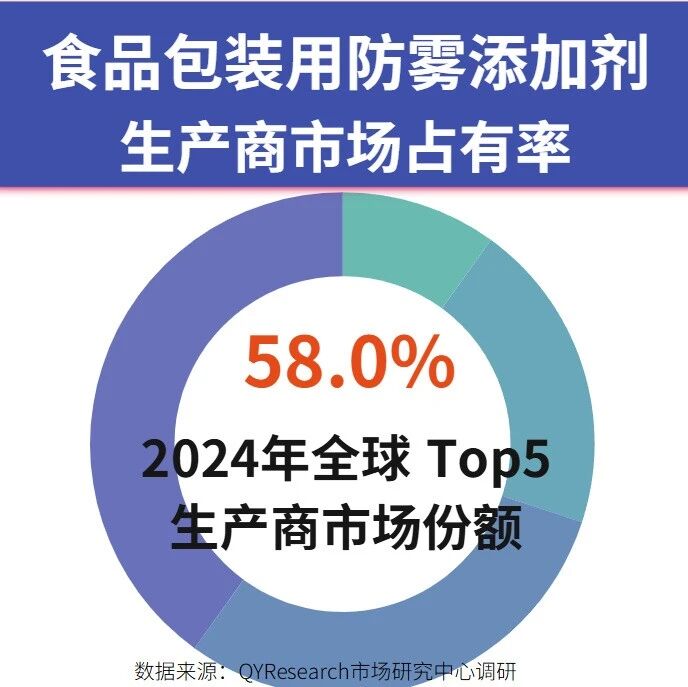
Core Viewpoint - The article discusses the significance and growth potential of anti-fog additives used in food packaging, highlighting their role in enhancing product visibility and consumer experience while addressing market trends and industry dynamics [2][5][8]. Industry Overview - Anti-fog additives are functional agents that prevent fog formation on plastic food packaging materials, ensuring clear visibility and maintaining shelf appeal [2]. - The global production of food packaging anti-fog additives is projected to reach 900,000 tons in 2024, with an average price of $360 per ton and a gross margin of 15%-30% [5]. Industry Chain - The industry chain consists of three segments: upstream (raw material supply), midstream (additive production), and downstream (film and sheet production) [4]. - Upstream involves suppliers of petrochemical and fatty chemical raw materials, while midstream focuses on the formulation and processing of anti-fog additives [4]. - Downstream includes film manufacturers who incorporate anti-fog agents into packaging for various food products, driven by consumer demands for "fog-free, high transparency, and recyclable" solutions [4]. Market Drivers and Opportunities - The increasing demand for fresh refrigerated foods and visually appealing packaging is a key driver for the anti-fog additive market [8]. - The expansion of modern retail, cold chain logistics, and e-commerce for fresh produce creates opportunities for anti-fog solutions in packaging [10]. Market Trends - The anti-fog additive market is expected to grow at a compound annual growth rate (CAGR) of 3.75%, reaching a market size of $430 million by 2031 [5]. - The primary application area for these additives is food packaging films, particularly for fresh produce, meat, dairy, and ready-to-eat foods [11]. - Glycerol esters remain the dominant chemical in the food packaging sector due to their cost-effectiveness and safety [11].
Lanxess AG (LNXSY) Earnings Report Analysis
Financial Modeling Prep· 2025-11-07 18:03
Core Insights - Lanxess AG reported an earnings per share (EPS) of -$0.01, missing the estimated EPS of $0.002 [1][5] - The company's actual revenue was approximately $1.54 billion, falling short of the estimated $1.64 billion [2][5] - Following the earnings report, Lanxess shares experienced a significant decline, dropping 14% [2][5] - The company adjusted its guidance to the lower end, with all business units underperforming expectations [2] Challenges - The underperformance is attributed to challenges such as Chinese dumping, US trade policies, weak demand, and uncertainty surrounding the sale of Envalior [2] - Despite these challenges, Lanxess has managed to maintain steady EBITDA margins, showcasing its resilience [3] Financial Ratios - The company has a price-to-earnings (P/E) ratio of approximately -8.88, indicating negative earnings [3] - The price-to-sales ratio stands at about 0.24, suggesting that the stock is valued at 24 cents for every dollar of sales [3] - The enterprise value to sales ratio is approximately 0.19, reflecting the company's valuation relative to its sales [3] - The enterprise value to operating cash flow ratio is around 2.59, indicating how many times the operating cash flow can cover the enterprise value [4] - The earnings yield is approximately -11.26%, consistent with the negative earnings situation [4] Liquidity Position - Lanxess maintains a strong liquidity position, with a current ratio of about 2.41, meaning its current assets are more than twice its current liabilities [4]

Evonik: Revised Outlook Necessitates A Q3 2025 Update
Seeking Alpha· 2025-09-30 16:13
Analyst’s Disclosure:I/we have a beneficial long position in the shares of EVKIY, BASFY either through stock ownership, options, or other derivatives. I wrote this article myself, and it expresses my own opinions. I am not receiving compensation for it (other than from Seeking Alpha). I have no business relationship with any company whose stock is mentioned in this article. While this article may sound like financial advice, please observe that the author is not a CFA or in any way licensed to give financia ...
橡胶炭黑的前景
Sou Hu Cai Jing· 2025-09-17 21:08
Market Demand - Rubber carbon black is a crucial industrial material widely used in rubber, plastics, printing inks, and paints, with increasing demand driven by the growth of the global automotive and aerospace industries [2] - The demand for rubber carbon black is also rising in the plastic, printing ink, and paint sectors, indicating a sustained growth trajectory for the market in the future [2] Industry Landscape - The global rubber carbon black market is characterized by a certain level of concentration, dominated by companies from developed countries such as the United States, Europe, and Japan, with leading firms including Cabot, Evonik, and Mitsubishi Chemical [2] - China's rubber carbon black industry is rapidly developing, with Chinese companies accounting for over 40% of global production capacity, although there remains a gap compared to international leaders [3] Technological Innovation - Technological innovation is a key driver for the development of the rubber carbon black industry, necessitating the continuous development of new technologies and products to meet market demands [3] - Current focus areas for technological innovation in the rubber carbon black industry include: 1. Green and environmentally friendly technologies, such as utilizing biomass waste as raw materials for production [4] 2. High-performance technologies to enhance product quality [4] 3. Low-cost production technologies to improve profitability and competitiveness [4]

全球化工装置_更多供应关停之际,制造业或存下行风险_更多供应关停之际,制造业或存下行风险Global Chemicals Cracker_ Potential downside to manufacturing while more supply is being shut_ Potential downside to manufacturing while more supply is being shut
2025-08-31 16:21
Summary of Key Points from the Conference Call Industry Overview - The conference call primarily discusses the **Global Chemicals Cracker** industry, focusing on the dynamics of chemical demand and supply, particularly in relation to tariffs and manufacturing activity [1][2]. Core Insights and Arguments - **Chemical Demand Risks**: There is a potential downside to manufacturing as more supply is being shut down. The reversal of pre-emptive inventory builds due to tariffs could pose unexpected risks to chemical demand [1][2]. - **Supply Rationalization**: Despite announcements of supply rationalization, it appears insufficient to rebalance markets. The average spread in August remained flat, with a notable increase in EU TDI prices offset by declines in Asia [1][2]. - **Capacity Reductions**: Ten Korean companies are set to reduce naphtha cracking capacity by approximately 2.7-3.7 million tons, representing 18-25% of total capacity. Korea accounts for 6% of global ethylene/propylene capacity [2]. - **China's Supply Dynamics**: China's Ministry of Industry and Information Technology (MIIT) may phase out smaller refining and chemical facilities, but older crackers owned by Sinopec and PetroChina are expected to see upgrades, leading to net supply additions rather than closures [2]. - **Global Economic Indicators**: Citi's global economic surprise index increased in July but has since fallen in August, primarily due to China. Industrial production in China expanded by 6% YoY in July, but austerity measures are beginning to impact demand [2]. Margin and Performance Analysis - **Margin Trends**: The average spread was stable month-over-month in August, with lower spreads in Asia offset by TDI in Europe. BASF's average weighted spread decreased by approximately 1% month-over-month, indicating a potential EBITDA of around €7.3 billion, which is about 3% below consensus [3][10]. - **Sector Performance**: The chemical sector's weak performance in Q2 suggests that chemical demand has not significantly benefited from pre-buying. The outlook for September is critical to assess demand trends for the remainder of 2025 [2][3]. Company-Specific Developments - **BASF**: The company reported a marginal decline in its weighted average spread for chemicals and materials, translating to a negative net pricing impact of approximately €0.1 billion for the second half of the year [10]. - **Arkema**: European acrylic acid margins were flat month-over-month, but margins in China dropped by about 22% due to lower prices. Arkema is viewed positively for its long-term earnings resilience [10]. - **Clariant**: The company is favored for its defensive portfolio, which is less reliant on commodity pricing and more focused on higher quality end markets [10]. - **Dow Chemical**: Dow announced a 50% cut to its dividend due to a prolonged soft commodity cycle and missed Q2 earnings expectations [15]. - **LG Chem**: The company is focusing on high-value-added products amid industry oversupply, with a realistic outlook on cathode shipment guidance [14]. Additional Important Insights - **Market Sentiment**: The overall sentiment in the chemical industry remains cautious, with expectations of continued low margin conditions for the rest of the year [11][15]. - **Investment Recommendations**: Within diversified chemicals, companies such as AKE, CLN, EVK in Europe, and LG Chem, PChem, and Kumho in Asia are highlighted as favorable investment opportunities [4][10]. This summary encapsulates the key points discussed in the conference call, providing insights into the current state and future outlook of the global chemicals cracker industry.
中科院青岛能源所李福利等:以CO2为原料的第三代生物炼制现状
合成生物学与绿色生物制造· 2025-07-14 13:29
Core Viewpoint - The article discusses the advancements in third-generation biorefining technology that utilizes one-carbon (C1) resources, such as CO2, to produce biofuels and chemicals, contributing to carbon capture and utilization, and supporting carbon neutrality goals [1][3][9]. Summary by Sections 1. Development of Biorefining Technology - The oil crisis in the 1970s spurred research and industrialization of biofuels, leading to the introduction of biorefining concepts in the 1980s [7]. - The first-generation biorefining technology, using food crops, faced challenges related to resource efficiency and competition with food production [8]. - The second-generation technology, based on lignocellulosic biomass, has potential but is hindered by high costs and technical barriers [8]. 2. Third-Generation Biorefining Technology - Third-generation biorefining aims to convert CO2 and renewable energy sources into fuels and chemicals, overcoming limitations of previous technologies [9]. - This technology has shown significant progress, with over 10 carbon fixation pathways validated, and some CO2 fixation technologies have reached commercialization [4][9]. - Examples include projects that convert industrial emissions into bioethanol, significantly reducing CO2 emissions [4]. 3. Carbon Fixation Pathways - More than 10 carbon fixation pathways have been identified, including natural pathways like the Calvin cycle and engineered pathways [11][36]. - The article details various pathways, such as the Wood-Ljungdahl pathway and reductive TCA cycle, highlighting their unique characteristics and potential for industrial application [16][33]. 4. Engineering of Carbon Fixation - Key factors influencing carbon fixation efficiency include energy sources, substrate types, and enzyme characteristics [36]. - Engineering efforts focus on optimizing microbial strains for better CO2 utilization and product yield, with examples of successful modifications in various microorganisms [38]. 5. Commercialization and Future Prospects - The commercialization of third-generation biorefining technologies is underway, with successful projects demonstrating the feasibility of using CO2 as a raw material [4][9]. - Future developments are expected to enhance the efficiency and cost-effectiveness of these technologies, contributing to sustainable bio-manufacturing [9][36].

全球有机硅表面活性剂市场生产商排名及市场占有率
QYResearch· 2025-06-19 09:27
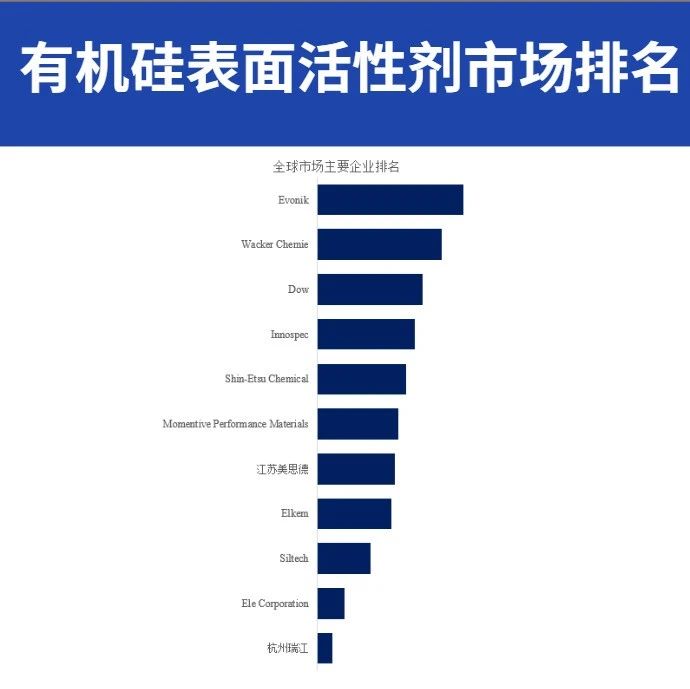
Core Viewpoint - The global market for silicone surfactants is projected to reach $2.05 billion by 2031, with a compound annual growth rate (CAGR) of 4.9% over the coming years [1]. Market Overview - Silicone surfactants are characterized by a unique structure that reduces surface tension between different substances, making them effective in emulsification, spreading, wetting, and foaming applications [1]. - The market is dominated by non-ionic silicone surfactants, which hold approximately 62.1% of the market share [7][9]. - The personal care sector is the largest downstream market, accounting for about 44.4% of the demand [12]. Key Players - Major manufacturers in the global silicone surfactant market include Evonik, Wacker Chemie, Dow, Innospec, Shin-Etsu Chemical, Momentive Performance Materials, Jiangsu Maysta Chemical, Elkem, Siltech, and Ele Corporation [6]. - In 2024, the top five manufacturers are expected to hold around 23.0% of the market share [6]. Driving Factors - The increasing demand for personal care and cosmetics is a primary driver for the silicone surfactant market, as these products enhance texture and moisturizing properties in formulations [15]. - Rapid expansion in the construction and polyurethane foam industries is also contributing to market growth, driven by the demand for energy-efficient buildings and lightweight automotive materials [15]. - The agricultural sector is leveraging silicone surfactants for their superior wetting properties, improving the efficiency of pesticides and herbicides [15]. Challenges - High costs of raw materials and production processes pose significant challenges for the silicone surfactant market, limiting their widespread application, especially in price-sensitive sectors [16]. - Environmental concerns regarding certain types of silicone surfactants, particularly non-biodegradable ones, are leading to increased regulatory pressures [16]. - Market saturation and competition from alternative surfactants are also significant risks, as bio-based and synthetic non-silicone surfactants gain traction due to lower costs and better environmental compatibility [16]. Industry Trends - The development of bio-based and sustainable silicone surfactants presents substantial growth opportunities, driven by increasing environmental regulations and consumer preferences for eco-friendly products [17]. - Emerging opportunities in the pharmaceutical and healthcare sectors are being explored, particularly for drug delivery systems and medical emulsions [19]. - The expansion of e-commerce and direct sales channels is providing niche and specialized silicone surfactant formulations with more efficient access to global markets [19].
HPQ Fumed Silica Reactor Pilot Plant Produces First Material
Globenewswire· 2025-02-27 12:30
Core Insights - HPQ Silicon Inc. is advancing its proprietary Fumed Silica Reactor (FSR) process through successful pilot-scale testing, marking a significant step towards commercial production of fumed silica [1][2][4] - The first batch test of the FSR pilot plant has produced material with characteristics consistent with lab-scale production, indicating the process's viability [2][3][5] - The company aims to transition to semi-continuous production, significantly increasing material throughput and targeting the production of at least 200 kg of commercial-grade fumed silica [7] Company Developments - HPQ Silicon's technology provider, PyroGenesis Inc., confirmed successful material production during the first batch test of the FSR pilot plant, with further analysis planned to validate product quality [2][5] - The pilot plant represents a 20-fold scale-up from laboratory conditions, focusing on replicating validated lab-scale operations while assessing performance under real-world conditions [4][5] - The upcoming batch tests will ensure consistent production of high-surface-area fumed silica, with specifications aimed to meet or exceed lab-scale results [6] Industry Context - The fumed silica industry has traditionally relied on fossil-fuel-intensive production methods, and the FSR process aims to revolutionize this by eliminating carbon emissions while maintaining product quality [8] - The transition to semi-continuous production will enhance efficiency and set a new standard for sustainable fumed silica production, aligning with global decarbonization efforts [8]