
Foxconn

Search documents
Alphabet-owned robotics software company Intrinsic joins Google
TechCrunch· 2026-02-25 20:00
Google is moving further into physical AI by bringing a familiar robotics software platform under its wing.Alphabet-owned Intrinsic, which builds AI models and software designed to make industrial robots more accessible, is joining Google, the companies announced on Wednesday. Intrinsic will remain a distinct entity within Google but will work closely with Google DeepMind and will tap into Google’s Gemini AI models and cloud services. Alphabet declined to share information regarding funding or purchase pri ...



Deconstructing Nvidia's Vera Rubin — The Successor To Blackwell That's 10x More Efficient
Youtube· 2026-02-25 15:11
Core Insights - Nvidia's Vera Rubin system is generating significant interest in the AI sector due to its potential to address major bottlenecks in AI infrastructure [1][4] - The new system promises to be ten times more efficient in performance per watt compared to the previous Blackwell system [2] - Vera Rubin is currently in volume production and is expected to ship later this year, despite facing supply chain challenges [4][5] Group 1: System Specifications and Performance - Vera Rubin features 1,152 GPUs across 16 racks, utilizing approximately 100,000 more components than Grace Blackwell [12] - The system is designed to deliver about 50 petaflops of AI performance, which is approximately 2.5 times the performance of its predecessor [13] - Each rack consumes roughly 220 kW of power, which is double that of the Blackwell system [21] Group 2: Supply Chain and Production - The Vera Rubin system comprises 1.3 million components sourced from over 80 suppliers across more than 20 countries [3] - Nvidia is collaborating with various manufacturers, including TSMC for silicon and Foxconn for assembly [9][30] - The company is committed to reshoring and plans to manufacture up to $500 billion of AI infrastructure in the U.S. by 2029 [30] Group 3: Cooling and Efficiency - Vera Rubin is Nvidia's first fully liquid-cooled system, which is expected to reduce water consumption compared to traditional cooling methods [19][21] - The system's design allows for quicker assembly and disassembly, improving maintenance efficiency [26] - The NVLink technology enhances memory access and processing speed, doubling the line rate from 1.8 TB per second to 3.6 TB per second [22] Group 4: Market Position and Competition - Nvidia's stock has increased over 100% since the announcement of the Blackwell system, indicating strong market demand [6] - The company anticipates competition from AMD's upcoming Helios system, which may drive further demand for AI infrastructure [32] - Despite competitors developing their own AI chips, major clients continue to rely on Nvidia's technology, highlighting its strong market position [35]

Xiaomi challenges India tax authority over tariffs on royalties in closely watched case
Reuters· 2026-02-25 09:08
Core Viewpoint - Xiaomi is challenging an Indian tax ruling that claims the company evaded $72 million in tariffs on royalty payments, which could have significant implications for the contract manufacturing industry in India [1][3][6]. Group 1: Tax Dispute Details - An Indian tax tribunal ruled that Xiaomi undervalued import values for at least three years leading up to 2020 by not including 2% to 5% royalties paid to foreign firms like Qualcomm [2]. - Xiaomi argues that the tribunal incorrectly classified it as the "beneficial owner" of the components, which led to the tax on royalties [3]. - The tribunal's decision is seen as damaging to established practices in the manufacturing sector, according to Xiaomi [4]. Group 2: Implications and Reactions - The case is being closely monitored by global investors and companies, as a ruling in favor of Indian authorities could increase scrutiny on royalty agreements across various sectors [6]. - If the ruling is upheld, it may empower authorities to seek taxes on other related payments made by companies exercising effective control over imported goods [6]. - Xiaomi's former contract manufacturers, Flextronics and Bharat FIH, are also contesting the tribunal's decision in the Supreme Court [5]. Group 3: Financial Impact - The customs tax demand of $72 million could escalate to over $150 million with interest and penalties if Xiaomi loses the case, which could strain the company's finances given its profits of $31.7 million in the 2023-2024 financial year [9]. - Additionally, approximately $610 million of Xiaomi India's bank funds have been frozen due to allegations of illegal remittances, further complicating the company's financial situation [10]. Group 4: Legal Proceedings - During a recent hearing, Xiaomi's lawyer argued that import taxes should be paid by the importers (contract manufacturers) and that royalties should not be taxable as they are not linked to imports [11]. - The Indian tax tribunal accused Xiaomi of "deliberate suppression of facts," asserting that royalties need to be taxed as they are for critical technology related to imported parts [11].

Apple to Build the Mac Mini in the United States for the First Time
CNET· 2026-02-24 22:31
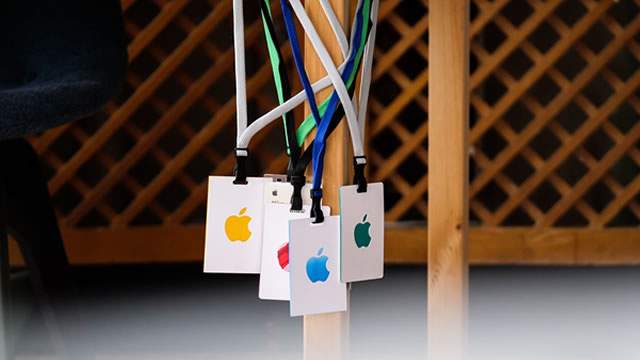
Houston, we have some production. Apple announced Tuesday that it will be making its Mac Mini desktop computer in the US for the first time, shifting some manufacturing from its Asian plants, and will also increase AI server production at its existing Houston facility.The California-based tech giant also said it will open the Advanced Manufacturing Center, a 20,000-square-foot facility where students, supplier employees and businesses will receive hands-on training in making Apple products, in the same city ...


Inside Apple's Multibillion-Dollar Push to Make Chips in the U.S. | WSJ
Youtube· 2026-02-24 02:00
Core Viewpoint - The article discusses Apple's significant investment of $600 billion in the United States over the next four years, aimed at reshoring its chip supply chain amid rising tensions with China and the need for greater domestic manufacturing capabilities [2]. Group 1: Investment and Reshoring Efforts - Apple is committing to invest $600 billion in the U.S. over the next four years to reduce dependence on foreign chip manufacturing [2]. - The reshoring initiative is driven by the need to mitigate risks associated with relying on Taiwan for advanced chips, especially given geopolitical tensions [8][9]. - The Arizona facility of Taiwan Semiconductor Manufacturing Company (TSMC) is a crucial part of Apple's reshoring strategy, with a projected cost of $165 billion [13]. Group 2: Supply Chain and Manufacturing Processes - The supply chain begins with silicon wafers produced from pure sand sourced from North Carolina, which are essential for chip manufacturing [4]. - TSMC's Arizona site is still under development, with only one fabrication plant currently operational, while two more are under construction [13][14]. - The complexity of chip manufacturing means that the Arizona facility may not reach production levels comparable to Taiwan for a decade or more [14]. Group 3: Challenges and Future Outlook - Apple faces challenges in scaling up production in the U.S. due to the intricate nature of chip manufacturing, which requires advanced infrastructure and equipment [15]. - The company is currently producing 10,000 wafers per month at the Global Wafers facility, but achieving the necessary quality and purity for Apple’s standards is a lengthy process [6][7]. - Despite the investment and efforts, Apple's overall manufacturing footprint in the U.S. remains small compared to its global operations, with less than 1 million Mac Minis sold annually compared to around 240 million iPhones [27][28].
Apple Plans to Manufacture Mac Mini in Houston
WSJ· 2026-02-24 02:00
Group 1 - The company will relocate some desktop computer production to a Foxconn facility located in Texas [1]

iPhone becomes India’s top single export item
Asymco· 2026-02-23 17:51
Five iPhone assembly plants — three operated by Tata Group entities and two by Foxconn — supported by a supply chain of around 45 companiesApple Inc.’s iPhone became India’s top single export item in 2025, with shipments worth $23 billion, largely to the US, driven by the government’s PLI scheme and supply chain diversification from China. Smartphones emerged as India’s leading export category with Apple contributing 76 per cent. Smartphones were India’s top export category for the first time, surpassing au ...
PPL(PPL) - 2025 Q4 - Earnings Call Transcript
2026-02-20 17:00
Financial Data and Key Metrics Changes - The company achieved ongoing earnings of $1.81 per share, reflecting a 7.1% growth from the previous year and aligning with the midpoint of the forecast [4][5] - GAAP earnings for 2025 were reported at $1.59 per share, compared to $1.20 per share in 2024, indicating significant year-over-year improvement [30] Business Line Data and Key Metrics Changes - Kentucky results increased by $0.09 per share, driven by higher sales volumes and additional capital expenditures [31] - Pennsylvania results increased by $0.04 per share, led by higher transmission revenue and distribution rider recovery [31] - Rhode Island results decreased by $0.02 per share due to higher operating costs, but higher distribution revenue partially offset this decline [31] Market Data and Key Metrics Changes - The company reported a significant increase in data center interconnection requests, totaling approximately 25.2 gigawatts, a 23% increase since the last quarterly update [18] - In Kentucky, the economic development pipeline reflects over 9 gigawatts of potential new load, with data centers exceeding 8 gigawatts [19] Company Strategy and Development Direction - The updated business plan extends the company's growth outlook while maintaining a focus on customer affordability and a strong credit profile [7] - The capital investment plan is projected at $23 billion from 2026 to 2029, an increase from the previous $20 billion plan, emphasizing investments in transmission and distribution networks [9][38] - The company aims for a 10.3% rate-based compound annual growth rate (CAGR) from 2025 to 2029, supported by critical investments [21][39] Management's Comments on Operating Environment and Future Outlook - Management highlighted the need for new, reliable generation resources to meet growing demand, particularly from data centers [44][45] - The company remains committed to minimizing bill increases for customers while ensuring financial strength and supporting economic growth [46] Other Important Information - The company modified its annual dividend growth rate target to 4%-6% while issuing equity to fund its capital plan [11] - The recent Kentucky rate case approved an aggregate increase of approximately $233 million in annual electric and gas revenues [12] Q&A Session Summary Question: Update on Pennsylvania rate case - Management indicated that discussions are ongoing, with a focus on data center load impacts and net metering rules [50][51] - The process is advancing as expected, with a final order anticipated in June [52] Question: Joint venture and bidding into auctions - Management stated that they would not wait for an earnings call to announce significant developments related to the joint venture [62] - The joint venture is evaluating participation in special auctions for new generation but will not modify the company's risk profile significantly [64] Question: Data center backlog and generation sources - Management noted that hyperscalers are focused on speed to connect to the grid and are not overly concerned about the source of generation [72] - There is a strong commitment from customers to stay in the region despite generation concerns [78] Question: Potential investment opportunities and EPS growth - Management refrained from quantifying the potential size of investment opportunities but expressed confidence in the growth plan [82]

AI-enabled robotics could shift the balance of power in global manufacturing, says CEO of Alphabet company
CNBC· 2026-02-18 12:12
Core Insights - The article discusses the potential economic shift driven by artificial intelligence (AI) in manufacturing, emphasizing that low labor costs may not be the primary advantage in the future [1][2] - Intrinsic, a robotics company under Alphabet, aims to enhance industrial robotics through AI, making them smarter and more accessible [2] Company Overview - Intrinsic was launched five years ago from Google X, focusing on developing advanced robotics software [2] - Wendy Tan White serves as the founding CEO, overseeing the acceleration of the company's efforts amid the current AI wave [2] Strategic Initiatives - Intrinsic has formed a joint venture with Foxconn to create "the factory of the future," which will integrate intelligent robotics for more versatile manufacturing processes [3] - The company aims to enable the production of a diverse range of products on a single production line, rather than just optimizing existing processes [3] Market Implications - The integration of AI in manufacturing could unlock approximately $2.9 trillion in economic value in the U.S. by 2030, contingent on organizations redesigning workflows to facilitate collaboration between humans and robots [2] - Intrinsic's approach may allow smaller businesses and regions with higher labor costs to enhance their manufacturing capabilities [3][4] Future Outlook - The company is exploring reshoring manufacturing, leveraging software-as-a-service robotics solutions to enable production in various locations, potentially reducing costs [4]

电子:格局落定,价值归真:从周期波动走向技术溢价
Soochow Securities· 2026-02-06 06:24
Investment Rating - The report suggests a focus on companies such as SanDisk (SNDK.O), SK Hynix (000660.KS), Samsung Electronics (005930.KS), and Micron Technology (MU.O) due to their potential in the AI-driven storage market [4]. Core Insights - The industry is transitioning from traditional cycles to AI-driven technological premiums and high growth, with storage becoming a critical bottleneck for AI computing efficiency [5]. - AI is driving exponential growth in storage demand, with significant increases in requirements for high-bandwidth memory (HBM) and solid-state drives (SSD) due to the scaling laws of model parameters [5]. - The valuation framework is being reshaped, with revenue growth and net profit margin expansion occurring simultaneously, indicating a period of high operational leverage in the storage sector [5]. Summary by Sections AI Value Chain - The AI value chain includes components such as computing chips (GPUs, CPUs, ASICs), storage (DRAM, SSD, HDD), networking, and energy solutions, highlighting the interconnectedness of these sectors [10][12]. - The storage segment is characterized by oligopolistic features, with high barriers to entry supporting high profitability [12]. Storage Demand and Hardware Architecture - Storage demand is categorized into cold, warm, and hot data, with different storage solutions (HDD, SSD, DRAM) tailored to each category's speed and capacity requirements [20]. - The architecture is structured in layers, with HBM for high-speed access, SSD for intermediate storage, and HDD for large capacity [29]. Large Language Model Storage Requirements - The report details the storage needs of large language models, emphasizing the importance of storage capacity and bandwidth in both training and inference phases [42][47]. - The growth in model parameters necessitates increased storage capacity, with significant implications for the demand for NAND and DRAM technologies [59]. Company-Specific Insights - Micron Technology (MU.O) is focusing on data centers and has made significant advancements in HBM3E technology, with a strong market demand for its products [64][70]. - SanDisk (SNDK.O) has undergone a restructuring, achieving notable revenue growth and improving profit margins through a focus on high-value enterprise SSDs [72][78]. - SK Hynix is benefiting from its early entry into the AI storage market, while Samsung is striving to catch up [79][81].