
Quanta

Search documents
电子:格局落定,价值归真:从周期波动走向技术溢价
Soochow Securities· 2026-02-06 06:24
Investment Rating - The report suggests a focus on companies such as SanDisk (SNDK.O), SK Hynix (000660.KS), Samsung Electronics (005930.KS), and Micron Technology (MU.O) due to their potential in the AI-driven storage market [4]. Core Insights - The industry is transitioning from traditional cycles to AI-driven technological premiums and high growth, with storage becoming a critical bottleneck for AI computing efficiency [5]. - AI is driving exponential growth in storage demand, with significant increases in requirements for high-bandwidth memory (HBM) and solid-state drives (SSD) due to the scaling laws of model parameters [5]. - The valuation framework is being reshaped, with revenue growth and net profit margin expansion occurring simultaneously, indicating a period of high operational leverage in the storage sector [5]. Summary by Sections AI Value Chain - The AI value chain includes components such as computing chips (GPUs, CPUs, ASICs), storage (DRAM, SSD, HDD), networking, and energy solutions, highlighting the interconnectedness of these sectors [10][12]. - The storage segment is characterized by oligopolistic features, with high barriers to entry supporting high profitability [12]. Storage Demand and Hardware Architecture - Storage demand is categorized into cold, warm, and hot data, with different storage solutions (HDD, SSD, DRAM) tailored to each category's speed and capacity requirements [20]. - The architecture is structured in layers, with HBM for high-speed access, SSD for intermediate storage, and HDD for large capacity [29]. Large Language Model Storage Requirements - The report details the storage needs of large language models, emphasizing the importance of storage capacity and bandwidth in both training and inference phases [42][47]. - The growth in model parameters necessitates increased storage capacity, with significant implications for the demand for NAND and DRAM technologies [59]. Company-Specific Insights - Micron Technology (MU.O) is focusing on data centers and has made significant advancements in HBM3E technology, with a strong market demand for its products [64][70]. - SanDisk (SNDK.O) has undergone a restructuring, achieving notable revenue growth and improving profit margins through a focus on high-value enterprise SSDs [72][78]. - SK Hynix is benefiting from its early entry into the AI storage market, while Samsung is striving to catch up [79][81].
美国政府放松H200对华出口,美光在纽约州兴建多座晶圆厂
Zhong Guo Neng Yuan Wang· 2026-01-13 01:30
Market Overview - The overseas AI chip index decreased by 1.5% this week, while MPS and TSMC increased by 2.4% and 1.3% respectively. AMD and Marvell saw declines of 9.1% and 6.9% [1][2] - The domestic AI chip index rose by 7.8% this week, with companies like Cambricon, Loongson Technology, Aojie Technology, Zhaoyi Innovation, Changdian Technology, and Tongfu Microelectronics all experiencing gains of over 10%. Haiguang Information, Rockchip, and Hengxuan Technology had increases of 9.9%, 5.1%, and 3.8% respectively [1][2] Industry Data - Global electric vehicle sales are projected to reach 20.985 million units by 2025, representing a year-on-year increase of approximately 22%, with expectations to rise to 24.166 million units in 2026, a 15% increase [3] - Global smartwatch shipments are expected to grow by 7% year-on-year by the end of 2025, recovering from a decline in 2024 [3] - The shipment volume of foldable smartphone panels is anticipated to achieve a 46% year-on-year growth in 2026, driven by Apple's procurement for its first foldable iPhone [3] Major Events - The Trump administration has relaxed export controls on NVIDIA H200 chips to China, with the Chinese government planning to allow certain users to import this AI chip as early as Q1 2026 [4] - Micron plans to build up to four wafer fabs in New York, potentially receiving over $25 billion in federal subsidies for the first two fabs, with the first expected to be operational by 2030 and the second by 2033 [4] - After 2026, high-end GPU platforms such as Blackwell and Vera Rubin will be introduced, with rack-level power supply limits becoming a critical challenge for the industry [4]
数据中心市场洞察:服务器整体分析-Hardware Technology-Datacenter Market Insights – Part 1 Overall Servers
2026-01-07 03:05
Summary of Datacenter Market Insights – Overall Servers Industry Overview - The report focuses on the **datacenter market**, specifically the **server segment** within the **Asia Pacific** region, highlighting trends and insights for the third quarter of 2025 (3Q25) [1][8]. Key Insights - **Total Server Shipments**: There was a **14% year-over-year (y/y)** growth in total server shipments in 3Q25, primarily driven by demand from the **cloud sector** for both **AI** and general servers [1][2]. - **Global Shipments**: Global server shipments reached **4.2 million units** in 3Q25, remaining flat quarter-over-quarter (q/q) but showing a **14% y/y** increase. The growth was largely attributed to cloud demand, despite some impacts from tariff pull-ins [2][11]. - **AI Server Demand**: AI servers continue to be a strong growth area, with expectations for robust demand throughout 2026. The report notes that AI server yields are improving as original design manufacturers (ODMs) and original equipment manufacturers (OEMs) enhance testing capacities [3][5][15]. Vendor Performance - **Dell**: Experienced a **1% decline** in total server shipments q/q, but its average selling price (ASP) increased by **11%** [3]. - **Lenovo**: Reported a **14% increase** in total server shipments, attributed to strong performance from Microsoft's general servers, although its ASP declined by **17%** [3]. - **Super Micro**: Saw a **20% decline** in total server shipments q/q, but its ASP increased by **9%** [3]. - **Aggregate ODM Shipments**: Totaled **1,827k units**, down **4% q/q** but up **37% y/y**. The market share for ODMs decreased by **1.8 percentage points** to **43.5%** [4][15]. Segment Performance - **High-End Servers**: Shipments grew **384% y/y** and **3% q/q** in 3Q25, indicating strong demand for AI servers [12]. - **Mid-Range Servers**: Increased by **32% y/y** and **6% q/q** [12]. - **Entry-Level Servers**: Grew by **10% y/y** but saw a **1% decline** q/q [12]. Regional Insights - The **US** market outperformed others with a **18% y/y** increase in shipments, followed by **APxJ** at **17%**. Other regions like **Western Europe**, **Japan**, and **Rest of World (RoW)** experienced declines [11]. Future Outlook - The report anticipates continued growth in AI server shipments through 2026, with general compute servers expected to grow in the **5-10% range** [15]. - **Preferred Picks**: The report highlights several companies as preferred investment picks, including **Wistron**, **Hon Hai**, **FII**, **Wiwynn**, and **Quanta** [6]. Additional Notes - The report emphasizes the ongoing transition in server technology, particularly the shift from traditional GPU servers to more advanced rack-scale systems [3]. - The ASP for ODM direct servers increased by **7% q/q** to approximately **US$36.5k**, reflecting a higher contribution from AI servers [14]. This summary encapsulates the key findings and insights from the datacenter market report, providing a comprehensive overview of the current state and future expectations within the server segment.

4Q25 AI 服务器动态- 加入 OpenAI 阵营延续热潮-Global Semiconductors, Hardware, Internet & Software-4Q25 AI Server Pulse joining the OpenAI club to keep the party going
2025-12-10 02:49
Summary of Key Points from the Conference Call Industry Overview - The conference call focuses on the **Global Semiconductors, Hardware, Internet & Software** industry, particularly the **AI server market** and the **AI supply chain** dynamics [1][2]. Core Insights and Arguments 1. **Investment in Data Centers**: Total investment in upcoming and under-construction data centers is approximately **US$840 billion**. Major projects include OpenAI's agreements with semiconductor and cloud service providers (CSPs) [3][38]. 2. **AI Capital Expenditure (Capex)**: Following 3Q25 earnings, consensus estimates for 2026 capex for major CSPs have been raised by nearly **20%**, projecting total capex to grow at a **36% CAGR** to around **US$630 billion** from 2024 to 2027 [3][37]. 3. **Server Shipment Growth**: Global server and high-end GPU AI server shipments are expected to grow at **3%** and **31% CAGR**, respectively, from 2025 to 2027. High-end GPU server shipments are projected to increase by **46%** in 2026 [4][58]. 4. **ASIC and GPU Demand**: ASIC adoption is increasing, with projections indicating that ASICs will comprise **47%** of total CoWoS-based AI chip shipments in 2026. The demand for TPUs is also expected to grow by approximately **75% YoY** [4][5]. 5. **Financial Performance of Suppliers**: ASIC supply chain stocks have recently outperformed GPU supply chains, driven by significant orders from Broadcom and successful product launches from OpenAI and Google [6][34]. Additional Important Insights 1. **Circular Financing Concerns**: There are concerns regarding "circular financing" among AI giants, particularly with OpenAI's substantial commitments to various suppliers, which may lead to a "too big to fail" scenario [34][35]. 2. **OpenAI's Revenue Projections**: OpenAI's revenue for 1H25 was reported at **US$4.3 billion**, with a target of **US$13 billion** for the full year. However, the company has significant purchase commitments exceeding **US$1 trillion** over the next 5-7 years [35][36]. 3. **Major CSPs' Capex Guidance**: Companies like Microsoft, Amazon, and Google have increased their capex guidance significantly for 2025, indicating a strong focus on AI infrastructure [57]. 4. **Emerging Neoclouds**: Neoclouds are gaining traction with flexible "build-to-order" models, showcasing a growing revenue backlog and partnerships with major tech firms [43]. Investment Ratings and Price Targets - **Chroma**: Rated Outperform, Price Target (PT) = NT$830 [11] - **Delta**: Rated Outperform, PT = NT$1190 [12] - **Unimicron**: Rated Outperform, PT = NT$220 [13] - **Quanta**: Rated Underperform, PT = NT$250 [14] - **Google**: Rated Market-Perform, PT = $305 [15] - **Meta**: Rated Outperform, PT = $870 [16] - **Amazon**: Rated Outperform, PT = $300 [17] - **Microsoft**: Rated Outperform, PT = $645 [18] - **AMD**: Rated Market-Perform, PT = $200 [19] - **NVIDIA**: Rated Outperform, PT = $275 [21] - **TSMC**: Rated Outperform, PT = NT$1,444 [25] This summary encapsulates the key points discussed in the conference call, highlighting the significant trends, financial projections, and investment opportunities within the AI server and semiconductor industries.




供应链转移:对台湾 ODM、印度电子制造服务及东盟科技业的影响-Supply Chain Relocation_ Implications for Taiwan ODMs, India EMS and ASEAN Tech
2025-12-01 01:29
Summary of Key Points from the Conference Call Industry Overview - **Industry Focus**: The report discusses the implications of supply chain relocation for Taiwan ODMs (Original Design Manufacturers), India EMS (Electronics Manufacturing Services), and the ASEAN tech sector, particularly in the context of tariff concerns and the "Made-in-US" policy [1][2]. Core Insights and Arguments - **Production Relocation Trends**: There has been an accelerating trend in production relocation from China to other regions, particularly Taiwan, India, and ASEAN countries, driven by tariff uncertainties and the need for diversification [1][2]. - **Taiwan ODMs' Production Shift**: Taiwan ODMs have reduced their production mix in China from over 80% to approximately 60-65% to meet US market demand, indicating a significant shift in production strategy [2]. - **AI Demand and Server Capacity Expansion**: Server OEMs/ODMs are expanding capacity aggressively to meet strong AI demand, with a notable shift of server production to Thailand and Taiwan [6]. - **India's Growing Role**: India is becoming an attractive location for supply chain relocation due to low labor costs and favorable government policies, including the Electronics Component Manufacturing Scheme (ECMS) and the India Semiconductor Mission (ISM 1.0) [1][8]. - **Emerging Opportunities in ASEAN**: ASEAN is emerging as a key destination for WFE (Wafer Fabrication Equipment) shifts and optical ramps, with companies like Lam Research and Applied Materials leading the charge [9]. Important but Overlooked Content - **Cost Disadvantages in India**: India currently faces a cost disadvantage of 10-14% compared to Asian peers in assembly and 14-18% in component manufacturing, primarily due to tariffs and logistics costs [11]. - **Government Incentives**: The Indian government is providing significant subsidies (4-5% of annual sales) to encourage domestic manufacturing, which has already attracted companies like Micron and 3D Glass Solutions to set up facilities in India [10][11]. - **Stock Implications**: In the Taiwan ODM space, companies with diversified production footprints and higher exposure to servers are preferred, with a ranking of Wiwynn > Hon Hai > Quanta > Wistron > Inventec > Pegatron > Compal [6][1]. Conclusion - The ongoing supply chain relocation is reshaping the landscape for Taiwan ODMs, India EMS, and ASEAN tech companies, driven by tariff concerns and the need for diversification. The strategic shifts in production locations are expected to have significant implications for market dynamics and investment opportunities in the coming years.
EXCLUSIVE: Nvidia CEO Huang on Blackwell Sales, Vera Rubin and China (full interview)
Youtube· 2025-11-21 12:02
Core Insights - The company is experiencing unprecedented demand for its Blackwell GPUs, with sales described as "off the charts" and a forecast of $500 billion for growth potential [1][2][3] - The upcoming Vera Rubin architecture is on track for delivery in Q3 of next year, with significant engineering efforts underway to ensure a smooth rollout [5][6][8] Supply Chain and Production - The company boasts the largest supply chain globally, with strong partnerships with TSMC and major memory providers like SK Hynix, Micron, and Samsung [3] - The transition from Blackwell to Vera Rubin is expected to be seamless due to well-planned supply chain logistics [7][8] Market Dynamics - The company has zero sales forecast for the Chinese market currently, emphasizing the importance of re-engaging with China for future growth [10][13] - The Chinese market is estimated to be worth around $50 billion, highlighting its significance for both the U.S. and Chinese economies [12] Regulatory Environment - The U.S. Commerce Department has allowed the export of up to 35,000 Blackwell chips to specific Middle Eastern countries, with strict controls to prevent technology transfer to China [14][15] Energy and Infrastructure - The company is growing at a rate of 60% annually, which presents challenges in energy sourcing and infrastructure development [16][17] - A large network of partnerships with cloud service providers enables the company to find diverse energy solutions globally [18] AI Demand and Partnerships - There is exponential growth in compute demand for AI applications, with significant partnerships with companies like Anthropic and OpenAI [25] - The company is focused on disciplined investment and build-out strategies to meet the increasing demand for AI computing power [22][24]

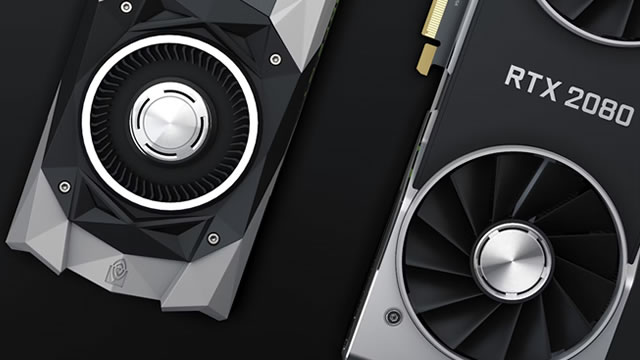
Nvidia CEO Huang Says Blackwell Sales Are 'Off the Charts'
Youtube· 2025-11-20 18:42
Jensen, it's been an astonishingly busy day for you in Washington, D. C. , so I'm grateful for your time.You're sold out of Blackwell. That's what you said. But also that $500 billion forecast, which is Blackwell Rubin has room to grow.How do those fit together. I said sales are off the charts for Blackwell. And Nvidia GPUs in the cloud are sold out.We got plenty of black walls to sell you. We have lots of black walls coming. We're making a lot of black wells. And we have a bunch of Vera Rubin is coming.And ...
Nvidia CEO Huang on Blackwell Sales, Vera Rubin and China
Youtube· 2025-11-20 00:42
Core Insights - The company is experiencing unprecedented demand for its Blackwell GPUs, with sales described as "off the charts" and a forecast of $500 billion for growth potential [1][2][3] - The supply chain is robust, with strong partnerships with major manufacturers like TSMC and memory partners such as SK Hynix, Micron, and Samsung, ensuring a well-planned supply chain for upcoming products [3][4][5] Product Development - The Vera Rubin chip development is progressing well, with around 20,000 engineers working on bringing it from silicon to systems, indicating a strong commitment to innovation and product readiness [5][6] - The company is on track to deliver Vera Rubin by Q3 of next year, maintaining an annual product release cycle, which is expected to be a significant success [6][8] Market Dynamics - The Chinese market is currently forecasted to contribute zero revenue due to regulatory challenges, but the company remains committed to re-engaging with this important market in the future [10][12][13] - The U.S. Commerce Department has allowed the export of Blackwell chips to specific markets, indicating a cautious but strategic approach to international sales [14][15] Energy and Infrastructure - The company is growing at a rate of 60% annually, which presents challenges in energy sourcing and infrastructure development, necessitating collaboration with energy providers to ensure readiness for market deployment [16][17] - The extensive network of partnerships across various cloud service providers positions the company advantageously to meet diverse energy needs globally [18] AI and Market Demand - There is exponential growth in compute demand driven by AI applications, with significant partnerships with companies like Anthropic, indicating a strong market presence and future growth potential [25][22][23] - The company is focused on disciplined investment and build-out strategies to support the rapid scaling of AI technologies, ensuring alignment with market demand and financing capabilities [21][22]
How Nvidia and Taiwan’s Big Six Reshaped Global Computing
Medium· 2025-11-10 02:31
Core Insights - Nvidia's collaboration with Taiwan's Big Six AI server manufacturers is crucial for transforming advanced AI chips into complete server solutions [2][3] - The Big Six, including Foxconn, Quanta, and Wistron, have adapted from traditional manufacturing to meet the complex demands of AI servers, which require significant power and cooling [3][4] - By 2025, Taiwan's Big Six are projected to produce over 90% of the world's AI servers, generating more than $100 billion in annual revenue [6] Group 1: Nvidia's Strategy - Nvidia recognized that advanced silicon alone was insufficient; it needed partnerships to create scalable AI server solutions [2] - The company ensured its GPUs were integrated into systems designed for high-density compute environments through direct partnerships with the Big Six [3] Group 2: Challenges and Innovations - AI servers present unique challenges, including high power consumption (30-50 kilowatts per rack) and the need for rapid product iterations [4] - The Big Six developed innovative solutions such as liquid cooling and ultra-efficient power supplies to address these challenges [4][5] Group 3: Market Dynamics - Foxconn has invested over $1.4 billion in AI server capacity, with its AI server revenue surpassing consumer electronics for the first time [5] - Quanta has tripled its production since 2020 to meet the demands of cloud giants, while Wiwynn and Gigabyte focus on modular systems for global data centers [5][6] Group 4: Future Outlook - Nvidia's Blackwell architecture and GB200 systems set new standards for thermal and electrical engineering, requiring ecosystem-wide innovations [7] - The Big Six's ability to rapidly adapt and scale production positions them as key players in the AI infrastructure market [8]

全球冷却行业:引入 2027 年预期;因人工智能服务器销量增长上调全球服务器冷却总可寻址市场(TAM)-Global Cooling_ 2027E introduced; Global Server cooling TAM raised on higher AI server volumes
2025-10-31 01:53
Summary of Global Server Cooling Market Conference Call Industry Overview - The conference call discusses the **Global Server Cooling** market, particularly focusing on the **AI server** segment and the adoption of **liquid cooling** technologies. Key Points and Arguments 1. **Market Forecasts**: - The **Global Server Cooling Total Addressable Market (TAM)** is projected to grow significantly, with estimates for 2025 and 2026 raised to **US$7.9 billion** and **US$14.0 billion**, respectively, reflecting a **9%** and **16%** increase from previous estimates [1][2][16]. - The TAM for AI training servers is expected to increase from **US$1.5 billion** to **US$12.4 billion** from 2024 to 2027, representing a **101% CAGR** [1]. 2. **Liquid Cooling Penetration**: - Liquid cooling penetration rates for AI training servers are forecasted to reach **15%** in 2024, escalating to **80%** by 2027. For AI inferencing servers, penetration is expected to rise from **1%** to **20%** over the same period [1][2][17]. - The ongoing increase in liquid cooling adoption is attributed to the rising computing power of GPUs and ASICs, denser server designs, and the need for improved power efficiency in data centers [1]. 3. **Growth Drivers**: - The growth in the cooling TAM is driven by the increasing volume of high-power AI servers that require advanced cooling solutions, particularly liquid cooling, which offers higher cooling efficiency compared to air cooling [1][2][16]. - Innovations in cooling technologies, such as double-sided cold plates and microfluidics solutions, are enhancing heat exchange efficiency and thermal performance, further supporting the growth of the liquid cooling market [22]. 4. **Market Dynamics**: - The report indicates a strong year-over-year growth forecast for the server cooling market, with **111%** growth expected in 2025 and **77%** in 2026 [8][23]. - The cooling solutions market is evolving with new designs and technologies to meet the increasing thermal demands of AI servers [22]. 5. **Competitive Landscape**: - Key players in the liquid cooling market include companies like **Wiwynn**, **Lenovo**, **Dell**, and **HP**, with varying ratings and market caps provided [28]. - The report highlights the importance of customization and rapid response capabilities for cooling suppliers to adapt to new technologies and market demands [22]. Additional Important Content - The report includes detailed tables summarizing the projected TAM for various server types, including AI training, general, and HPC servers, along with their respective liquid cooling penetration rates [2][8][23]. - It emphasizes the need for cooling suppliers to enhance their product offerings and capabilities to keep pace with technological advancements in the server industry [22]. This summary encapsulates the critical insights from the conference call regarding the Global Server Cooling market, focusing on growth forecasts, market dynamics, and competitive landscape.