TrendForce

Search documents
芯片ETF(159995.SZ)下跌3.53%,兆易创新跌8%,机构建议逢低布局
Mei Ri Jing Ji Xin Wen· 2026-02-02 03:22
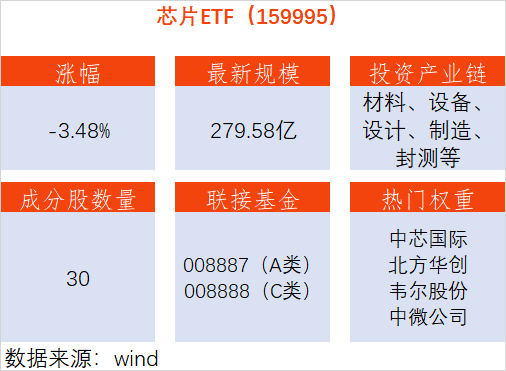
2月2日上午,A股三大指数集体下跌,上证指数盘中下跌1.13%,食品饮料、银行、美容护理等板块涨 幅靠前,有色金属、石油石化跌幅居前。芯片板块低迷,截至11:06,芯片ETF(159995.SZ)下跌 3.53%,成分股闻泰科技下跌10.00%,北京君正下跌9.14%,兆易创新下跌8.25%。部分个股活跃,晶盛 机电上涨5.97%,三安光电上涨0.25%。 资料显示,芯片ETF(159995)跟踪国证芯片指数,30只成分股集合A股芯片产业中材料、设备、设 计、制造、封装和测试等龙头企业,其中包括中芯国际、寒武纪、长电科技、北方华创等。 市场研究机构TrendForce此前公布的数据显示,由于DRAM原厂大规模将先进制程、新产能转移至服务 器、HBM应用,以满足AI服务器的需求,其余市场供给严重紧缩,预计2026年第一季度整体通用型 DRAM合约价将环比增长55%~60%。 东海证券表示,行业需求在缓慢复苏,AI投资持续超预期,存储芯片涨价幅度超预期;海外压力下自 主可控力度依然在不断加大,目前市场资金热度相对较高,建议逢低布局。 (文章来源:每日经济新闻) ...


全球存储,规模直逼8427亿美元
半导体芯闻· 2026-01-22 10:39
Core Viewpoint - The global memory market is projected to peak at approximately 123.835 trillion Korean Won (about 842.7 billion USD) by 2027, driven by strong demand from cloud service providers and the AI sector [1][2]. Group 1: Market Growth and Projections - The global memory market is expected to grow by 53% year-on-year by 2027, reaching 842.7 billion USD [1]. - In 2023, the global memory market is anticipated to be 551.6 billion USD, a 134% increase from the previous year's 235.4 billion USD [1]. - The DRAM market is projected to see a 144% year-on-year increase, reaching 404.3 billion USD [1]. Group 2: Price Trends - DRAM prices are expected to rise by over 60% in the first quarter of this year, with some products potentially doubling in price [1]. - NAND flash market sales are projected to grow by 112% year-on-year, reaching 147.3 billion USD, with prices expected to increase by 55% to 60% in the first quarter [1]. Group 3: Industry Dynamics - The demand for DRAM and NAND flash is driven by the growth in AI servers, high-performance computing, and enterprise storage [2]. - Kioxia's memory business director announced the end of the era of affordable 1TB SSDs, with prices rising significantly due to increased demand, particularly from AI infrastructure [3]. - Kioxia's strategy focuses on long-term partnerships rather than auctioning NAND to the highest bidder, emphasizing trust and collaboration [4]. Group 4: Supply Challenges - Major memory manufacturers like Micron and Samsung are facing supply constraints, with Micron only able to meet 50% to 66% of key customer demand [4]. - A supply shortage of server DRAM is expected to reach 15% by the end of 2026, with overall memory supply-demand balance anticipated around 2027 [4].

NAND,也要迎来HBM时刻?
半导体行业观察· 2025-03-01 00:57
Core Viewpoint - NAND manufacturers are often overlooked in the AI boom, as their growth potential in AI applications is limited compared to DRAM, which is essential for AI computing needs [1][2][3] NAND Market Dynamics - AI computing primarily relies on DRAM due to its high bandwidth (up to 1TB/s) and low latency, while NAND's bandwidth (7-14GB/s) and higher latency make it less suitable for core AI tasks [1][2] - In AI training, NAND is mainly used for data storage rather than computation, leading to reduced demand once data is loaded into GPU DRAM [2] - The overall NAND market faces challenges such as easier capacity expansion and a larger number of competitors compared to DRAM, resulting in a more volatile market [3] Recent Market Trends - The NAND market experienced significant fluctuations in 2023, with a recovery in early 2024 driven by increased smartphone shipments and enterprise SSD demand due to AI server construction [5][6] - Global smartphone shipments rose by 8.2% year-on-year, and enterprise SSD procurement increased by 32% quarter-on-quarter, with North American cloud service providers accounting for 58% of global orders [5] - Strategic production cuts by major manufacturers like Samsung and Micron have led to a 17% increase in NAND Flash contract prices in Q1 2024 [5][6] Future Outlook - AI server SSD demand is expected to grow significantly, with predictions of over 45EB in procurement capacity in 2024 and an average annual growth rate exceeding 60% in the coming years [6][7] - The introduction of high-bandwidth flash (HBF) technology by SanDisk aims to provide a solution for AI inference applications, potentially positioning NAND to compete with HBM in the future [12][14] - The NAND industry is exploring various strategies, including enhancing storage density with QLC technology and dynamic capacity adjustments to address inventory issues [21][22] Competitive Landscape - The NAND market is characterized by a duality where enterprise demand is rising while consumer electronics face a downturn, leading to a stark contrast in performance across segments [8][9] - Companies are increasingly focusing on collaborative ecosystems and technology advancements to maintain competitiveness, with SK Hynix and Samsung leading in enterprise SSD markets [22][23]