
存储器

Search documents
江波龙跌5.69% 年内仅招商证券1篇研报
Zhong Guo Jing Ji Wang· 2026-03-31 09:44
Group 1 - The stock price of Jiangbolong (301308.SZ) closed at 297.08 yuan, down 5.69% on March 31 [1] - Jiangbolong has had only one brokerage report this year, published by China Merchants Securities on March 5, titled "Jiangbolong Deep Report: Domestic Memory Leader's Multi-Dimensional Layout Welcomes Broad Growth Space Along with AI Trend" [1]

存储不再是周期性产业
半导体行业观察· 2026-03-30 01:07
Core Viewpoint - The memory industry is not in a "super cycle" but is undergoing a structural transformation that allows for sustained higher value rather than cyclical fluctuations [3][7]. Group 1: Market Dynamics - The traditional memory industry followed a predictable cyclical pattern where slight oversupply led to price crashes, followed by reduced investment and eventual recovery [5]. - Major players in the memory market have shifted focus from aggressive capacity expansion to profitability, capital efficiency, and customer structure due to past experiences with oversupply and price drops [5][6]. - The demand for High Bandwidth Memory (HBM) is complex and requires strategic supply management, making long-term contracts essential for stability rather than just sales tools [6][7]. Group 2: HBM Market Requirements - To purchase HBM from SK Hynix, companies must meet three criteria: access to TSMC's advanced packaging capacity, the ability to operate large-scale data centers, and sufficient funding [9][11]. - The actual buyer pool for HBM has narrowed to large-scale data centers and companies like NVIDIA, Microsoft, Google, Amazon, and Meta, which can meet the necessary infrastructure and financial requirements [11][12]. Group 3: Structural Changes in the Industry - The memory industry is transitioning from a commodity-focused business to a solution-oriented business, with a greater emphasis on custom design and collaboration with clients [13][15]. - The construction of large data centers requires a comprehensive approach involving not just DRAM but also GPUs, HBM, packaging, networking, SSDs, and power infrastructure, fundamentally changing the supply chain dynamics [16][20]. - The demand for memory driven by AI data centers is no longer cyclical but is tied to long-term infrastructure investments by major companies, altering the nature of price fluctuations in the memory market [19][20].


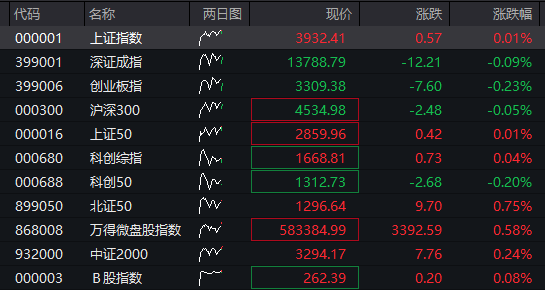
A股三大股指震荡走低,化工反弹,存储器齐跌,恒科指跌近1%,快手重挫超10%,泡泡玛特再跌超7%
Hua Er Jie Jian Wen· 2026-03-26 02:01
Market Overview - The A-share market opened lower on March 26, with all three major indices declining, particularly in the semiconductor and photovoltaic sectors [1] - The Hang Seng Index also opened lower, with the Hang Seng Technology Index dropping nearly 1% [2][3] Semiconductor and Storage Sector - The storage sector experienced a collective adjustment, with companies like Zhaoyi Innovation and Beijing Junzheng seeing significant declines of over 5% [12][13] - U.S. storage stocks fell sharply overnight, with SanDisk and Micron leading the declines [1] Bubble Mart Performance - Bubble Mart's stock fell over 7% for the second consecutive trading day, following target price downgrades from Morgan Stanley and Citigroup due to lower-than-expected earnings guidance and overseas growth slowdown [6][8] - The company's latest financial report indicated a revenue of RMB 37.12 billion for 2025, a year-on-year increase of 184.7%, but highlighted risks due to a high concentration of revenue from a single IP [8][9] - Analysts from various firms have adjusted their earnings forecasts for Bubble Mart downwards, citing concerns over growth sustainability and market performance [9][11] Debt and Commodity Markets - The bond market showed a slight upward trend, with government bond futures rising across various maturities [4] - In the commodity market, most domestic futures saw increases, particularly in chemical products and shipping indices, while energy prices showed mixed results [5][14] Consumer and Technology Stocks - Kuaishou's stock plummeted over 10%, marking its largest intraday drop since April of the previous year, following disappointing earnings guidance [9][19] - The technology sector, particularly AI computing and semiconductor stocks, faced significant declines, while some segments like photovoltaic and satellite navigation showed strength [17]




沪指失守4000点创年内新低,700亿算力巨头盘中闪崩,白银跳水
21世纪经济报道· 2026-03-20 07:25
Core Viewpoint - The A-share market is experiencing significant volatility, with the Shanghai Composite Index falling below the 4000-point mark, marking a new low for the year, driven by external factors and sector-specific declines [1][8]. Market Performance - The Shanghai Composite Index closed down over 1%, while the ChiNext Index rose by 1.43%. Nearly 4600 stocks in the market declined [1]. - Key sectors such as computing power leasing, fintech, cybersecurity, AI applications, and commercial aerospace saw declines, while solar energy and lithium battery sectors performed well [5][7]. Notable Stock Movements - The computing power leasing sector faced significant losses, with major player Chuangxin Data nearing a 20% drop limit, ultimately closing down 14.89% [6]. - Other companies in this sector, such as Supercom and Dongfang Guoxin, also experienced substantial declines, with drops exceeding 12% and 8% respectively [5][6]. Sector Analysis - The chemical sector saw declines, with companies like Jinniu Chemical and Luhua Technology hitting the daily limit down [7]. - Conversely, the lithium mining sector showed signs of recovery, with Ganfeng Lithium approaching a limit up and several other companies experiencing gains of over 8% [7]. External Influences - The market downturn is attributed to external factors, including escalating conflicts in the Middle East affecting global oil prices and a hawkish signal from the Federal Reserve, which has delayed expectations for global liquidity easing [8]. - Concerns about rising oil prices potentially leading to global inflation are impacting risk appetite for equities, particularly in high-valuation growth sectors [8]. Investment Strategy - Institutions suggest maintaining a defensive stance in the current market environment, focusing on dividend-yielding stocks and technology hardware sectors that show significant fundamental improvements, such as storage and optical communication [8].

十大晶圆代工产值去年增超26%,什么情况?
证券时报· 2026-03-13 04:26
Core Viewpoint - The article highlights the significant growth in the global wafer foundry market driven by increased demand for artificial intelligence (AI) and rising prices, with projections indicating record-high revenues for major players in the industry by 2025 [2][15]. Group 1: Market Overview - The global top ten wafer foundries are expected to see a quarterly revenue increase of 2.6% in Q4 2025, reaching approximately $46.3 billion, with an annual growth of 26.3% to around $169.5 billion [2]. - The revenue from memory chips has surpassed that of wafer foundries by more than two times [2]. Group 2: Key Players Performance - TSMC, as the leading foundry, is projected to experience a slight decrease in wafer shipments in Q4 2025, but an increase in average selling prices will lead to a 2% revenue growth to $33.7 billion, maintaining a market share of 70.4% [4]. - Samsung's foundry revenue is expected to grow by 6.7% to nearly $3.4 billion in Q4 2025, aided by new 2nm products and improved capacity utilization, increasing its market share from 6.8% to 7.1% [6]. - SMIC is anticipated to achieve a revenue increase of 4.5% to nearly $2.49 billion in Q4 2025, driven by increased wafer shipments and slightly higher average selling prices [6]. - Hua Hong Semiconductor's revenue is projected to grow by 3.9% to nearly $1.22 billion in Q4 2025, supported by demand for MCU and PMIC [6]. Group 3: Market Challenges - The ninth-ranked company, ChipMOS, is expected to see a revenue decline of 5.3% to $388 million in Q4 2025 due to the postponement of some product shipments to Q1 2026 [7]. - The overall capacity utilization may face pressure due to rising memory prices impacting demand in lower-end markets, while AI and high-end applications are expected to see increased orders [11][12]. Group 4: Future Outlook - The memory industry is projected to reach a record value of $551.6 billion in 2026, while the wafer foundry market is expected to grow to $218.7 billion, with memory production outpacing foundry production [15]. - The current cycle driven by AI demand is characterized by a more comprehensive shortage compared to previous cycles, with significant growth in demand for high-capacity and high-bandwidth DRAM [15][16]. - The smartphone market is forecasted to experience a significant downturn in 2026, with a projected 12.4% decline in shipments, while the high-end smartphone segment may show resilience [13].

未知机构:市场整体呈现麻木状态纳斯达克100指数-20260306
未知机构· 2026-03-06 02:40
Summary of Conference Call Notes Industry Overview - The overall market is exhibiting a state of numbness, with the Nasdaq 100 index outperforming the broader market, indicating a divergence in market trends [1] - The S&P Semiconductor ETF has shown a recovery trend, with 6 out of the last 8 trading days closing in the green [1] - The AI sector is being buoyed by companies like Amazon and Broadcom, with Broadcom being included in Goldman Sachs' recommended list [1] - Ongoing conflicts in the Middle East have not yet shown signs of abating, but market sentiment remains resilient, with oil prices and volatility indices declining [1] Key Points on Market Dynamics - The usage rate of exchange-traded funds (ETFs) is currently at or near historical highs, significantly above long-term averages and year-to-date levels [1] - There has been a notable influx of funds into the energy sector ETFs, as well as significant capital inflows into the S&P Semiconductor ETF [2] - Asian markets are generally up, supported by positive performances in the US and Korean markets [2] Focus on Memory Sector - The memory sector is identified as a core driver of momentum in the Korean market and globally, with strong price increase expectations and profitability supporting the industry fundamentals [2] - However, there are growing concerns regarding the downside risks for memory stocks, including: 1. Potential slowdown in capital expenditures in the AI sector 2. Demand contraction in smartphones and personal computers 3. Significant capital expenditure increases and capacity expansions by memory suppliers 4. Possible declines in spot prices for memory products 5. A projected negative second derivative in memory prices starting in Q2 2026, indicating a slowdown in price growth [2] Retail Investor Behavior - Retail investors have shown resilience, with only one instance of net selling year-to-date, indicating a strong "buy the dip" mentality despite various market challenges [2]
持仓观望?
第一财经· 2026-03-04 12:41
Market Overview - The three major A-share indices collectively declined, with the Shanghai Composite Index falling below the 4100-point mark, indicating a weakening short-term moving average system [5] - A total of 1743 stocks rose, with a significant improvement in the up-down limit ratio to 46:27, although the overall profit-making effect remains poor [5] Sector Performance - The sectors showing the most gains included power grid equipment, agriculture, and military equipment, while gas, port shipping, and precious metals sectors experienced declines [5] Capital Flow - There was a net outflow of main funds amounting to billions, with total market turnover decreasing by 24.40% [5] - Institutional investors are adopting a strategy of "shrinking positions, optimizing structure, and buying on dips," significantly reducing exposure to high-risk sectors like oil and gas, shipping, and precious metals, while increasing allocations to low-risk sectors such as power grid equipment, military, and agriculture [7] Retail Investor Behavior - Retail investors are showing a cautious approach, characterized by "careful bottom-fishing and positioning in oversold stocks," avoiding high-risk sectors and instead focusing on AI, semiconductors, and new energy sectors that have undergone sufficient adjustments [7] - Retail investor sentiment stands at 75.85%, indicating a generally cautious outlook [8] Trading Sentiment - 30.53% of investors are increasing their positions, while 16.03% are reducing their holdings, with a significant portion choosing to remain inactive [11] - The sentiment regarding the next trading day is split, with 54.73% expecting a decline and 45.27% anticipating an increase [14]

DDR5突然提价40%!
国芯网· 2026-03-03 04:53
Core Viewpoint - The semiconductor industry is experiencing a significant price increase in DDR5 memory chips, driven by supply-demand imbalances and strong demand from AI servers, which is expected to continue into 2026 and possibly 2027 [2][4][5]. Group 1: Price Increase and Market Dynamics - SK Hynix has announced a 40% price increase for DDR5 memory chips, leading some memory module manufacturers to pause external quotations [2][4]. - The current market price for a mainstream DDR5 32GB chip is around NT$10,000, and if the 40% cost increase is fully passed on to consumers, prices could surge to NT$20,000, effectively doubling in a short period [4]. - The semiconductor market has shifted to a seller's market, with overall inventory levels down to approximately four weeks, indicating a severe supply-demand imbalance [4]. Group 2: Factors Influencing Demand - The strong demand for DRAM from AI servers is significantly impacting consumer-grade production capacity, coinciding with the traditional PC industry stocking season [4]. - IDC forecasts that memory supply challenges will persist throughout 2026, with prices expected to remain high and not return to 2025 levels in the short term [4]. Group 3: Competitive Landscape - Companies with stronger purchasing power and supplier relationships will be better positioned to secure memory allocations at manageable prices, while smaller and regional suppliers may struggle [5]. - The market share is anticipated to shift significantly towards the largest global OEM manufacturers by 2026 [5].
NVM IP,至关重要
半导体行业观察· 2026-02-28 01:14
Core Insights - The market for non-volatile memory (NVM) is evolving due to advanced SoC design requirements, AI, new sensor technologies, and stringent quality standards, leading to increased exploration of alternative solutions [2] - Over 80% of respondents in a recent survey are using or evaluating embedded NVM technology, indicating a mature and active market with significant room for development among competing technologies [2] Group 1: Awareness and Familiarity - Embedded flash memory remains the dominant choice, with over 80% of respondents familiar with it, reflecting its long-standing position as the default option [4] - Awareness of alternative NVM technologies such as FRAM, MRAM, and ReRAM has increased, with recognition rates exceeding 25%, indicating these technologies are becoming mainstream [4] Group 2: Selection Criteria - Practicality is emphasized in the selection criteria for embedded NVM, with reliability, durability, and data retention being top priorities, all scoring above 3.0 on a 4.0 scale [5] - Process scalability and power efficiency also scored above 3.0, highlighting the challenges of extending traditional embedded NVM to advanced geometries [5] Group 3: Challenges and Pain Points - Key constraints for current NVM deployment include scalability limitations and power performance trade-offs, both scoring above 3.0, indicating they are critical issues, especially at advanced process nodes [6] - Reliability concerns and cost uncertainties follow closely, suggesting that long-term predictability and economic risks remain unresolved for many design solutions [6] Group 4: Market Trends and Future Outlook - The survey indicates that design pressures are increasing, with more teams evaluating alternatives not out of curiosity but due to critical constraints on scalability, power consumption, and long-term predictability [8] - The transition from traditional storage technologies to new NVM is entering a crucial phase, with a significant number of teams expected to make specific IP choices within the next year [9] - External forecasts suggest that the market for emerging embedded NVM could reach $3.3 billion by 2030, driven by the adoption of technologies like MRAM, PCM, and ReRAM in next-generation MCUs and SoCs [10]
股价腰斩、回购股份又计划卖出,开普云“蛇吞象”失败该谁买单
Mei Ri Jing Ji Xin Wen· 2026-02-26 10:21
Core Viewpoint - The planned "elephant swallowing snake" acquisition by Kaipu Cloud has ended in failure, primarily due to disagreements on key terms and the complexity of the transaction structure [1][3][7]. Group 1: Acquisition Attempt - In August 2025, Kaipu Cloud announced a major asset restructuring plan to acquire Nanning Taike, which had a projected revenue approximately 3.8 times that of Kaipu Cloud [1][5]. - The announcement initially led to a significant increase in Kaipu Cloud's stock price, with its market capitalization exceeding 18 billion yuan by late January 2026 [1][5]. - The acquisition was terminated on February 24, 2026, due to failure to reach consensus on core terms, resulting in a single-day stock price drop of 14.78% [1][5]. Group 2: Financial Implications - Following the termination of the acquisition, Kaipu Cloud triggered a buyback obligation due to a cumulative stock price drop of over 20% within 20 trading days, announcing a buyback plan of 50 million to 100 million yuan at a price not exceeding 315 yuan per share [1][6]. - Despite a low debt ratio of 24.8% and net assets of 1.333 billion yuan, the company has a negative operating cash flow of 43.62 million yuan since its IPO, making it challenging to fund the buyback solely through internal cash flow [6][8]. - The current rolling price-to-earnings ratio stands at 267 times, and the price-to-book ratio is 6.62 times, indicating that the buyback at such high valuations may not be an effective use of funds [6][8]. Group 3: Market Context - The A-share merger and acquisition market has seen significant activity, with 279 major restructurings reported in 2025, a nearly 200% increase from 2024, and total disclosed transaction amounts reaching 1.87 trillion yuan, a year-on-year growth of over 1000% [4][8]. - However, there has been a notable increase in failed acquisitions, with 72 major restructurings terminated, accounting for a quarter of all cases, and many of these failures occurring within a short timeframe [4][8]. - Companies must carefully assess their capabilities and risks when planning acquisitions, as the potential for significant stock price fluctuations can lead to substantial losses for investors [4][8].
