通用型DRAM

Search documents
集体大涨!芯片,突传利好!
Xin Lang Cai Jing· 2026-02-19 02:17
Core Viewpoint - The semiconductor stocks have surged, leading to a significant rise in the South Korean stock market, with the KOSPI index reaching a new historical high driven by strong performances from major companies like Samsung Electronics and SK Hynix [1][2][3]. Group 1: Market Performance - The KOSPI index increased by over 3%, reaching a new historical high, with Samsung Electronics rising over 5% and SK Hynix increasing by over 2% [1][2]. - As of the latest report, the KOSPI index was up 2.68% at 5653 points, with storage chip stocks collectively performing well [2][8]. - Other sectors such as heavy industry and construction also saw gains, with Hyundai Heavy Industries rising over 7% and Doosan Group nearly 6% [2]. Group 2: Price Dynamics of HBM4 - Samsung Electronics' new high-bandwidth memory chip HBM4 has seen its price rise to $700, which is 20% to 30% higher than the previous generation HBM3E [1][2][3]. - SK Hynix is expected to set its HBM4 price at a similar level, with the price having increased from approximately $500 when it supplied HBM4 to Nvidia last August [2][8]. Group 3: Profit Forecasts - Analysts predict that both Samsung Electronics and SK Hynix will achieve first-quarter operating profits of around 30 trillion Korean won, marking a new era for Korean companies with quarterly profits exceeding this threshold [3][9]. - Samsung Electronics achieved an operating profit of 20 trillion Korean won in the fourth quarter of last year, while SK Hynix's profit was approximately 19 trillion Korean won [3][9]. - Morgan Stanley forecasts that Samsung Electronics' annual operating profit will reach 245.7 trillion Korean won, while SK Hynix is expected to achieve 179.4 trillion Korean won, representing year-on-year increases of 464% and 280%, respectively [3][9].
芯片ETF(159995.SZ)下跌3.53%,兆易创新跌8%,机构建议逢低布局
Mei Ri Jing Ji Xin Wen· 2026-02-02 03:22
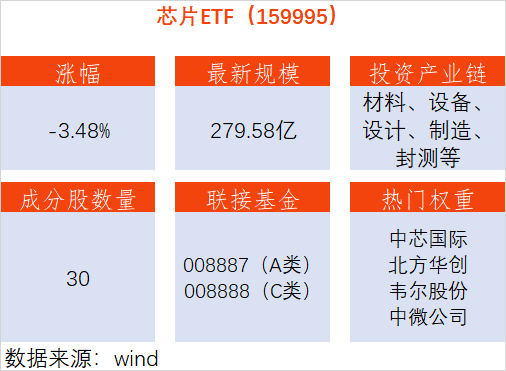
Group 1 - The A-share market experienced a collective decline on February 2, with the Shanghai Composite Index dropping by 1.13%. The food and beverage, banking, and beauty care sectors showed positive performance, while non-ferrous metals and oil and petrochemicals faced significant declines. The chip sector remained sluggish, with the chip ETF (159995.SZ) down by 3.53% and key stocks like Wen Tai Technology down by 10.00%, Beijing Junzheng down by 9.14%, and Zhaoyi Innovation down by 8.25% [1][2] Group 2 - According to market research firm TrendForce, due to major DRAM manufacturers shifting advanced processes and new capacities to meet AI server demands, the overall supply in the market is severely tight. It is expected that the contract price of general-purpose DRAM will increase by 55% to 60% quarter-on-quarter in the first quarter of 2026 [3] - Donghai Securities indicated that industry demand is slowly recovering, with AI investments exceeding expectations and storage chip price increases also surpassing forecasts. The market currently has a relatively high level of funding enthusiasm, suggesting a strategy of buying on dips [3] - The chip ETF (159995) tracks the National Chip Index, which includes 30 constituent stocks representing leading companies in the A-share chip industry across materials, equipment, design, manufacturing, packaging, and testing, including SMIC, Cambricon, Changdian Technology, and Northern Huachuang [3]


投资高达240亿美元!美光科技带头扩产,上游一行业将直接受益
Jin Rong Jie· 2026-01-28 00:35
Group 1 - Micron Technology plans to invest $24 billion in a NAND flash memory factory in Singapore over the next decade, with wafer production expected to start in the second half of 2028, creating 3,000 new jobs [1] - The expansion is driven by a surge in demand for high bandwidth memory (HBM) and enterprise-grade solid-state drives due to the construction of AI computing infrastructure, leading to a severe imbalance in supply and demand for storage chips [1] - Recent reports indicate that Samsung Electronics has raised NAND flash supply prices by over 100% in the first quarter, and major manufacturers have sold out their storage chip capacity for AI servers through 2026, highlighting the seriousness of the supply-demand imbalance [1] Group 2 - The tight supply situation for storage chips is expected to persist until 2027 or even 2028, with market value projected to reach $842.7 billion by 2027 [2] - Micron's expansion will drive demand for upstream semiconductor equipment, with the global semiconductor equipment sales expected to exceed $150 billion by 2027, and China remaining the largest market [2] - Following Micron's announcement, other manufacturers may follow suit, benefiting upstream semiconductor equipment suppliers, particularly domestic leading companies making rapid progress in semiconductor equipment localization [2]

内存领衔、涨价潮压顶 汽车行业供应链迎成本与自主升级大考
Zhong Guo Zheng Quan Bao· 2026-01-22 23:22
Core Insights - The automotive industry is facing significant cost pressures due to a shortage of memory chips and rising prices of raw materials, which are impacting supply chain dynamics and competition rules [1][2][3] Group 1: Cost Pressures - The shortage of memory chips has escalated into a systemic issue affecting the entire automotive supply chain, with prices for automotive-grade DDR4 and DDR5 memory increasing by over 150% and 300% respectively since the second half of 2025 [2] - Global storage prices are expected to rise by an additional 40% to 50% in the first quarter of 2026, with a supply gap for general DRAM projected to remain between 15% and 20% [2] - The automotive sector is at a disadvantage in the competition for memory resources, as leading manufacturers prioritize supply to AI and cloud computing sectors, which offer higher profit margins [3] Group 2: Raw Material Price Increases - Prices for essential metals like copper and silver, which are critical for automotive electrical systems and batteries, have also seen significant increases since the second half of 2025 [3] - The competition for these raw materials between the automotive and AI industries has intensified, although current price increases have not yet fully reached end consumer prices [3] Group 3: Supply Chain Strategies - Automotive companies are implementing various strategies to mitigate cost pressures, including technological innovations and supply chain partnerships [5] - Companies like CATL are leveraging scale and technology to manage battery costs, while others are optimizing memory usage through software upgrades [5] - Long-term supply agreements and price locking strategies are being adopted by companies like Changan and Leap Motor to counteract rising costs of critical components [6] Group 4: Industry Dynamics and Competition - The memory crisis is leading to a differentiation in the automotive industry, with larger companies better able to absorb costs compared to smaller firms [7] - The ability to manage supply chains effectively is becoming a critical factor for competitiveness, with larger firms benefiting from established supply chain systems [7] - The crisis may result in a slowdown in the adoption of advanced driving technologies as companies may cut back on non-core storage configurations [7] Group 5: Future Outlook - The automotive industry is encouraged to shift from reactive measures to building autonomous systems, including securing long-term supply agreements and accelerating the validation of domestic storage chips [8] - The ongoing price increases and the transition to electric and intelligent vehicles are expected to concentrate resources among companies with core capabilities, leading to a shift in competition from hardware to integrated software and hardware solutions [8]





汽车行业供应链迎成本与自主升级大考
Zhong Guo Zheng Quan Bao· 2026-01-22 20:56
Core Viewpoint - The automotive industry is facing significant cost pressures due to a systemic crisis in the supply chain, particularly driven by shortages and price increases in memory chips and raw materials like copper and silver [1][2][3]. Group 1: Cost Pressures and Supply Chain Challenges - The shortage of memory chips has escalated into a critical issue, with prices for automotive-grade DDR4 and DDR5 memory increasing by over 150% and 300% respectively since the second half of 2025 [2]. - Global storage prices are expected to rise by an additional 40% to 50% in the first quarter of 2026, with a supply gap for general DRAM projected to remain between 15% and 20% [2]. - The automotive sector is at a disadvantage in the competition for memory resources, as leading manufacturers prioritize supply to AI and cloud computing sectors, which offer higher profit margins [3]. Group 2: Raw Material Price Increases - Prices for essential raw materials such as copper and silver have also risen significantly since the second half of 2025, impacting the costs of automotive electrical systems and power batteries [3]. - The competition for these materials between the automotive and AI industries has intensified, although current price increases have not yet fully reached end consumers [3]. Group 3: Strategies for Mitigation - Automotive companies are implementing various strategies to combat rising costs, including technological innovations and supply chain partnerships [5]. - Companies like CATL are leveraging scale and technology to manage battery costs, while others are optimizing memory usage through software improvements [5]. - Long-term supply agreements and strategic partnerships are being established to mitigate price volatility in raw materials [6][7]. Group 4: Industry Impact and Future Outlook - The ongoing memory crisis is likely to lead to increased competition and differentiation within the automotive industry, with profit margins under pressure [8]. - Companies with robust supply chain management capabilities are better positioned to withstand these challenges, while smaller firms may struggle [8]. - The crisis may accelerate a shift towards vertical integration and the development of proprietary supply chains, as companies seek to enhance their resilience against future disruptions [9].
内存8年来最贵!3000亿长鑫单挑国际巨头
Xin Lang Ke Ji· 2026-01-14 01:28
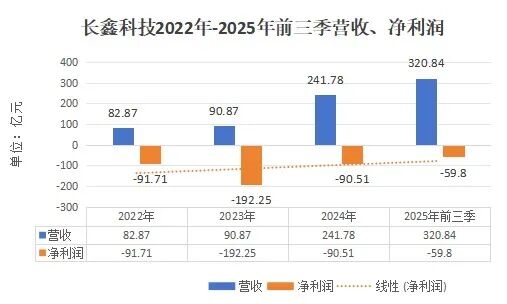
Core Viewpoint - The storage chip industry is experiencing a significant boom, entering a "super bull market" phase, with prices reaching new highs not seen in nearly eight years, driven by ongoing shortages in the global memory market [1][2]. Group 1: Market Dynamics - The first quarter of 2026 is expected to see a 60%-70% increase in server DRAM prices and a 55%-60% increase in general DRAM prices due to persistent shortages [1]. - Major companies like Micron and SanDisk have seen their stock prices surge, reflecting the positive market sentiment [1]. - The global DRAM market is dominated by Samsung, SK Hynix, and Micron, which together hold over 90% market share [2][8]. Group 2: Longsys Technology's Position - Longsys Technology, with total assets exceeding 300 billion, has had significant losses from 2022 to the third quarter of 2025, totaling over 434.25 billion [2][4]. - Despite past losses, Longsys is projected to potentially achieve profitability in 2025, with expected net profits between 2 billion and 3.5 billion [5]. - Longsys has become the largest DRAM manufacturer in China and the fourth globally, with its products integrated into major clients like Alibaba Cloud and Tencent [3][4]. Group 3: Competitive Landscape - Longsys aims to challenge the dominance of established players in the DRAM market, but its market share remains low at 3.97% as of the second quarter of 2025 [4]. - The company has made significant technological advancements, achieving mass production of DRAM chips and narrowing its losses, but still faces challenges in maintaining competitive pricing and profitability [3][4]. - The ongoing price increases in the storage chip market are largely driven by the demand from AI data centers, which require high-performance storage solutions [10][11]. Group 4: Future Outlook - The storage chip market is expected to maintain a price increase trend until at least the end of 2026, driven by supply constraints and rising demand [9]. - Longsys Technology's future success will depend on its ability to overcome technological barriers and increase its market share in the face of strong competition from established firms [11].
DRAM要搞长期合约了
半导体芯闻· 2025-11-24 10:28
Core Viewpoint - The article discusses the increasing demand for DRAM due to the expansion of AI investments, leading to a shift from short-term contracts to long-term supply agreements, with expectations of price increases until 2026 [1][2]. Group 1: Market Dynamics - The shortage of DRAM is exacerbated by the growing need for AI infrastructure, with companies like OpenAI and Meta announcing multi-billion dollar investments [2]. - The demand for general-purpose DRAM has surged, driven by the establishment of data centers for AI development by major companies and governments [2]. - The DRAM market is transitioning to long-term contracts, with companies willing to pay above-market prices to secure supply for six months or longer [2][3]. Group 2: Supply Chain and Inventory - Major suppliers like Samsung Electronics and SK Hynix are negotiating semi-annual contracts for DRAM supply, with inventory levels rapidly decreasing [3]. - As of Q3 2025, Samsung's semiconductor inventory decreased by 14.6% to 3.404 trillion Korean Won, while SK Hynix's inventory fell by 368.9 billion Korean Won [3]. - The supply negotiations have extended to 2027, with SK Hynix completing all 2026 contracts and moving into 2027 discussions [3]. Group 3: Profitability and Market Outlook - The shift to long-term contracts is expected to enhance profitability for manufacturers like Samsung and SK Hynix, as it allows for better production planning and cost management [4]. - The current market environment is likened to a transition from frequent short-term transactions to long-term strategic partnerships, with buyers willing to pay premiums to ensure supply [5]. - The "super cycle" for DRAM manufacturers is anticipated to last at least until 2027, driven by sustained demand and higher contract prices [4].
存储概念股集体大涨 希捷科技(STX.US)涨逾9%
Zhi Tong Cai Jing· 2025-11-05 15:21
Core Viewpoint - The U.S. stock market saw a significant rise in storage-related stocks, driven by SK Hynix's successful negotiations with NVIDIA regarding the pricing of the sixth-generation high bandwidth memory (HBM4), which increased by over 50% to approximately $560 per unit [1] Group 1: Market Reaction - Seagate Technology (STX.US) and SanDisk (SNDK.US) both rose over 9%, while Micron Technology (MU.US) increased nearly 8%, and Western Digital (WDC.US) gained over 5% [1] Group 2: SK Hynix's Position - SK Hynix has strengthened its dominant position in the high-end storage chip market by successfully negotiating a price increase for HBM4 [1] - Analysts predict that SK Hynix's operating profit may exceed 70 trillion Korean won next year, setting a historical record, as the company has already sold out its production capacity for the upcoming year [1] Group 3: Negotiation Dynamics - Initially, NVIDIA resisted the significant price increase, considering that Samsung Electronics and Micron would supply HBM4 in large quantities, leading to a stalemate [1] - Ultimately, the supply price was settled at approximately $560 per unit, as proposed by SK Hynix, with a company executive citing advancements in technology and input costs as factors justifying the price hike [1]
美股异动 | 存储概念股集体大涨 希捷科技(STX.US)涨逾9%
智通财经网· 2025-11-05 15:05
Core Viewpoint - The U.S. storage sector stocks experienced a significant surge, driven by SK Hynix's successful negotiations with NVIDIA regarding the pricing of the sixth-generation high bandwidth memory (HBM4), which increased by over 50% to approximately $560 per unit [1] Group 1: Stock Performance - Major storage stocks such as Seagate Technology (STX.US) and SanDisk (SNDK.US) rose by over 9%, while Micron Technology (MU.US) increased by nearly 8%, and Western Digital (WDC.US) saw a rise of over 5% [1] Group 2: SK Hynix's Market Position - SK Hynix has strengthened its dominant position in the high-end storage chip market by successfully negotiating a price increase for HBM4, which is expected to lead to a record operating profit of over 70 trillion Korean Won next year [1] Group 3: Pricing Dynamics - Initially, NVIDIA resisted the significant price hike due to potential competition from Samsung and Micron, but ultimately agreed to the price set by SK Hynix at approximately $560 per unit [1] - A SK Hynix executive indicated that advancements in technology and increased input costs justified the substantial price increase for HBM4 [1]


重磅!SK海力士在与英伟达谈判中占上风,HBM4涨价逾50%,提前锁定明年创纪录业绩!
美股IPO· 2025-11-05 13:15
Core Viewpoint - SK Hynix is expected to achieve record operating profit exceeding 70 trillion KRW next year, driven by high profitability from HBM4 and soaring prices of general DRAM [1][9]. Group 1: HBM4 Performance - SK Hynix successfully negotiated a price increase of over 50% for HBM4, setting the price at approximately $560 per unit, which strengthens its market position in high-end memory chips [3][4]. - The overall performance of HBM business is projected to grow by 40% to 50% next year, with sales expected to reach around 40 trillion to 42 trillion KRW [7][9]. - The profit margin for HBM4 is estimated to be around 60%, contributing approximately 25 trillion KRW in operating profit if the same margin is maintained as this year [7]. Group 2: General DRAM Market - The prices of general DRAM, including GDDR and low-power DDR, are also rising due to increased demand from AI infrastructure investments, with DDR4 prices surpassing $7, the highest in nearly seven years [9]. - SK Hynix's operating profit margin for general DRAM is expected to approach 50% to 60% next year, further enhancing its profitability [9]. Group 3: Future Outlook - The company has locked in prices and supply volumes for products meeting NVIDIA's specifications, indicating sustained high operating profit margins into next year [5][8]. - Despite potential competition from Samsung and Micron entering the HBM4 market, SK Hynix's performance is not expected to be adversely affected [6].