人工心脏

Search documents
上市涨超100%,医械板块要复苏了吗
Sou Hu Cai Jing· 2026-02-25 10:42
Core Insights - The Chinese innovative medical device sector is experiencing a resurgence, highlighted by the recent IPO of Beixin Life on the STAR Market, which saw its stock price surge by 183% on the first day of trading, reaching over 40 yuan compared to the issue price of 17.52 yuan [2] - The medical device industry in China is showing signs of recovery, with the financing amounts in the primary market for medical devices surpassing those of 2023 and 2024, returning to 2022 levels [2] - The strategic investor system on the STAR Market allows institutions to participate more actively, which may lead to a new trend in medical device investments [3] Market Dynamics - Innovative medical devices are attracting interest due to their potential for quicker cash flow compared to innovative drugs, which often face higher risks and longer paths to profitability [4] - New and recently listed companies in the medical device sector are experiencing higher premiums due to their rapid growth phases, while established companies are facing valuation corrections [5] - The optimization of the centralized procurement mechanism is benefiting innovative medical device companies by stabilizing prices and enhancing payment capabilities for differentiated products [6] Investment Trends - The secondary market is expected to resonate with the primary market, with the latter often leading the former by a few years [8] - Current investment interest in the secondary market is likely reflecting the focus of the primary market from three to four years ago, particularly in areas like artificial intelligence and cardiovascular interventions [9] - The overall investment environment for medical devices in China is stabilizing, although it may not return to the peak levels seen in 2021 [10] Future Outlook - The next hotspot in the medical device industry is expected to be international expansion, particularly for high-value complex products that can provide cost-effective solutions in foreign markets [14] - Sustainable internationalization of medical devices requires unique products and active participation in commercialization rather than relying on distributors [17] - China is becoming a significant player in the global innovative medical device landscape, with increasing interest from overseas investors and industry players [18]


人工心脏龙头IPO,累亏超5亿
IPO日报· 2026-02-12 04:11
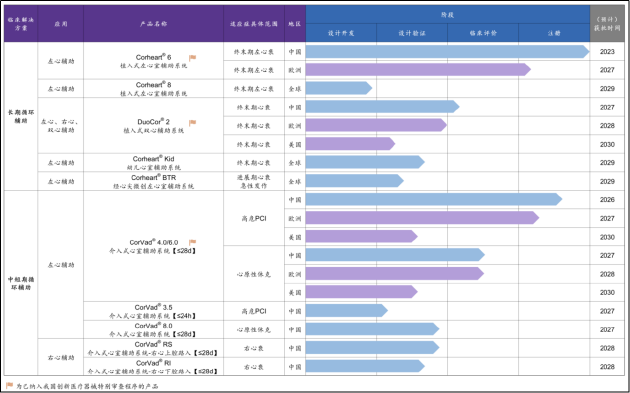
Core Viewpoint - Shenzhen Core Medical Technology Co., Ltd. is the first innovative medical device company to be accepted for IPO under the fifth set of listing standards of the Sci-Tech Innovation Board, aiming to raise 1.217 billion yuan for various projects, including R&D and marketing network development [1][6] Group 1: Company Overview - Core Medical is a leader in China's artificial heart industry, holding multiple "first" titles [4] - The company has several products included in China's special review process for innovative medical devices, leading the field in terms of the number of products [5] - The Corheart 6, the world's smallest and lightest commercialized magnetic levitation implantable artificial heart, was approved for market in June 2023, with a projected market share of over 45% in 2024 [5] Group 2: Financial Performance - The company reported revenues of 16.55 million yuan, 93.69 million yuan, and 70.48 million yuan for the years 2023, 2024, and the first half of 2025, respectively, with net losses of 170 million yuan, 132 million yuan, and 72.75 million yuan during the same periods [8] - Cumulative losses since 2022 have exceeded 500 million yuan [8] - Gross margins for the reporting periods were 66.25%, 69.66%, and 72.09%, consistent with industry averages [9] Group 3: Investment and Financing - Prior to the IPO, Core Medical attracted investments from several prominent institutions, including Hillhouse Capital and Zhengxin Valley Investment [2][14] - The company completed a D-round financing of over 100 million USD in April 2025, marking the largest market-based financing in China's innovative medical device sector for that year [16]

国产人工心脏龙头,三年半烧掉10.6亿
Sou Hu Cai Jing· 2026-02-11 11:00
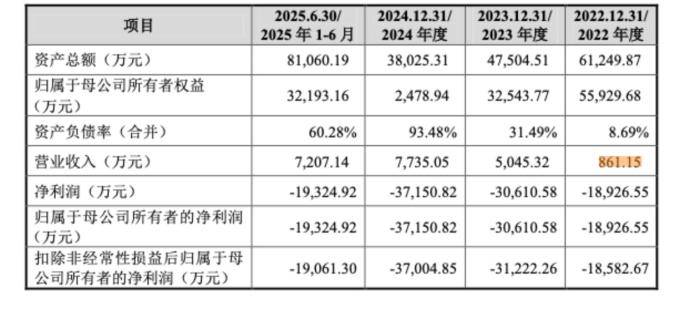
Core Viewpoint - The artificial heart, known as the "crown jewel" of medical devices, is entering a period of accelerated capitalization, with Suzhou Tongxin Medical Technology Co., Ltd. aiming to become the first domestic company to go public in this sector [1]. Company Overview - Tongxin Medical's core product, CH-VAD, is the first fully magnetic levitation implantable artificial heart approved for sale in China. However, the company has struggled with profitability since its commercialization began four years ago, facing intense competition from other companies [2][3]. Financial Performance - The company is experiencing a typical "high R&D, high growth, high loss" dilemma, with revenues from 2022 to mid-2025 projected at approximately 8.61 million, 50.45 million, 77.35 million, and 72.07 million yuan, respectively. Net losses during the same period are expected to exceed 1.06 billion yuan [4][10]. - R&D expenses are significant, with projections of 93.82 million, 108 million, 148 million, and 93.15 million yuan from 2022 to mid-2025, contributing to ongoing financial losses [6][10]. Market Position and Competition - The company relies heavily on the CH-VAD product, which accounted for 96.9% of its revenue in the first half of 2025. The product's market share has declined to 26.9% by the end of 2024 due to increased competition and price reductions [11][13]. - The company has reduced the price of CH-VAD from 459,600 yuan in 2022 to 362,300 yuan in the first half of 2025, a decrease of 26.8%, in an attempt to maintain market share [13]. Sales and Customer Concentration - The company has a high customer concentration, with the top five customers accounting for 86.73% of sales in 2024. The largest customer, Quankeda, represented over 50% of sales in 2023 [16][18]. International Expansion - The company is focusing on international markets, with its BrioVAD product being the first Chinese active implantable medical device to enter clinical trials in the U.S. This product is expected to generate significant revenue, contributing 29.61 million yuan in the first half of 2025 [18][19]. - The company plans to raise 1.064 billion yuan through its IPO, with a significant portion allocated to global clinical trials and registration for BrioVAD, indicating a strong commitment to international expansion [19].
科创板IPO进入冲刺阶段,核心医疗构筑从技术到商业的完整价值闭环
Mei Ri Jing Ji Xin Wen· 2026-02-06 14:20
Core Insights - Shenzhen Core Medical Technology Co., Ltd. is pioneering the "next-generation artificial heart" in China's medical device innovation landscape, transitioning from "follow-up innovation" to "original innovation" [1] - The company is the only global entity with products approved for both implantable and interventional artificial hearts, marking a significant shift in the global artificial heart sector towards "Made in China" [1] Product Innovation - The first commercial product, Corheart 6, is the world's smallest and lightest full magnetic suspension implantable artificial heart, utilizing innovative technologies to enhance clinical value [2] - Corheart 6 employs "time-sharing dynamic axial full magnetic suspension control technology," significantly simplifying the structure of the magnetic suspension motor and overcoming traditional limitations in size and power consumption [2] Clinical Data and Validation - Long-term follow-up studies involving 50 patients across 12 clinical centers show a 2-year survival rate of 86% for Corheart 6, outperforming the HeartMate 3's 76.9% [3] - Corheart 6 is one of the few implantable artificial hearts in China to disclose long-term follow-up data based on registered clinical trials, reinforcing its safety and effectiveness [3] Market Position and Growth - Corheart 6 has quickly become the most implanted artificial heart in China, with over a thousand clinical applications, despite not being the first approved domestic product [4] - The global market for short-term artificial hearts is projected to grow from $2.07 billion in 2024 to $9.82 billion by 2033, with a compound annual growth rate (CAGR) of 18.9% [6] Strategic Expansion - Core Medical is expanding its product line to include interventional artificial hearts, with CorVad being the first domestically approved product in this category, targeting a previously untapped market [6] - The company is positioned to leverage its innovative technologies to create a comprehensive product portfolio that meets the full cycle of heart failure treatment needs [7] Global Outreach - Core Medical has established a clinical network across Asia, Europe, and America, achieving over 1,200 global implantations, setting a record for Chinese artificial heart companies in overseas approvals [9] - The company aims to enhance its research and development capabilities through its upcoming IPO, which seeks to raise up to 1.217 billion yuan for product development and industrialization projects [8]
红杉投的人工心脏,要IPO了
3 6 Ke· 2025-12-29 09:20
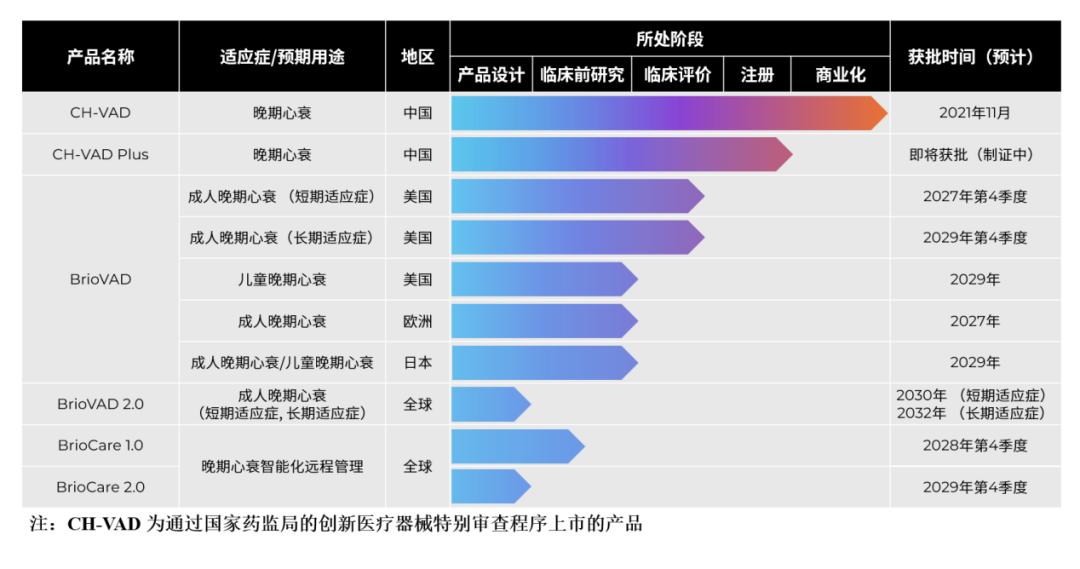
Core Viewpoint - Suzhou Tongxin Medical Technology Co., Ltd. has submitted its IPO application to the Shanghai Stock Exchange, marking a significant step in the artificial heart industry as it aims to capitalize on the growing demand for heart failure treatments [1][7]. Company Overview - Founded by Chen Chen in 2008, Tongxin Medical focuses on the innovation of ventricular assist devices, specifically the implantable left ventricular assist device (LVAD) [1]. - The company has developed a product matrix that includes one product approved for market, one in the registration phase, one in clinical trials, one in preclinical research, and two in design development [1]. Product Details - The first product, the CH-VAD, is China's first approved full magnetic levitation implantable artificial heart, with its iterative version, CH-VAD Plus, expected to be approved by early 2026 [1]. - In the U.S. market, the new generation BrioVAD has received FDA approval to enter clinical trials, making it the first active implantable medical device from China to achieve this milestone [2]. Financial Performance - The average price of CH-VAD has decreased from 459,600 CNY in 2022 to 362,300 CNY in the first half of 2025, reflecting the company's strategy to expand its customer base during a period of rapid industry growth [4]. - Sales revenue for CH-VAD increased from 8.27 million CNY in 2022 to 67.06 million CNY in 2024, with over 670 implants completed across more than 80 hospitals [5]. - Despite revenue growth, the company remains in a loss-making position, with net losses of 189 million CNY, 306 million CNY, and 372 million CNY for the years 2022, 2023, and 2024, respectively [5]. Funding and Ownership - The company has completed multiple rounds of financing, with the latest round in July 2023 involving participation from several investment firms [6]. - Chen Chen, the actual controller, holds 30.95% of the voting rights, while other significant shareholders include Baiyang Group (16.73%) and Sequoia China (8.53%) [7]. Industry Context - The artificial heart sector is experiencing a collective IPO window, with other companies like Shenzhen Core Medical and Hangzhou Hetang Health also preparing for IPOs or securing significant funding [7].
冲刺IPO!国产全磁悬浮人工心脏拟募资超10亿
思宇MedTech· 2025-12-29 09:11
Core Viewpoint - Tongxin Medical Technology Co., Ltd. is preparing for an IPO on the Sci-Tech Innovation Board, aiming to raise 1.064 billion yuan primarily for global clinical trials of its implantable left ventricular assist system (LVAS), next-generation product development, production base construction, and working capital [2]. Company Overview - Established in 2008, Tongxin Medical focuses exclusively on ventricular assist devices (VAD), commonly referred to as "artificial hearts," which are considered "crown-level products" in high-end medical devices due to their complex integration of various engineering disciplines [2][3]. - The company has chosen a long-term investment strategy in a single technology line, resulting in a development pace characterized by long R&D cycles, slow commercialization, and high validation costs [2]. Product Development - The core product is the fully magnetic levitation implantable LVAS, which provides continuous circulatory support for end-stage heart failure patients. Its design minimizes mechanical contact, reducing blood shear damage and thrombus formation risks [5]. - The product received approval from the National Medical Products Administration in November 2021, marking a significant transition from engineering prototypes to clinical products [5]. Fundraising Allocation - The IPO proceeds of 1.064 billion yuan will be allocated primarily to core product initiatives, with 695 million yuan designated for global clinical trials and registration of the BrioVAD project [7][9]. - Additional funds will support next-generation LVAS development (190 million yuan), production base construction (130 million yuan), and working capital (50 million yuan) [9]. Financial Performance - Tongxin Medical is currently in a loss-making phase, with revenues increasing from 8.61 million yuan in 2022 to 77.35 million yuan in 2024, while net losses have also escalated [10][12]. - The company’s financial structure reflects a common pattern in the artificial heart sector, where high upfront costs for R&D and clinical trials precede commercialization [12]. Governance Structure - The company is controlled by its founder, Chen Chen, who holds approximately 30.95% of the voting rights, significantly influencing strategic planning and technological direction [13][15]. - The shareholder structure includes long-term institutional investors, providing a supportive capital foundation for future development [15]. Conclusion - The IPO represents a transition for Tongxin Medical from domestic breakthroughs to global validation, with future success hinging on the completion of high-quality global clinical trials and the demonstration of the safety and stability of its technology [16].

首款国产介入式人工心脏来了
第一财经· 2025-12-25 15:58
Core Viewpoint - The recent approval of China's first interventional artificial heart marks a significant milestone in the domestic medical technology sector, with multiple companies actively engaged in the development of artificial heart products [3][6][15]. Group 1: Product Development and Market Dynamics - Shenzhen Core Medical Technology Co., Ltd. has received approval from the National Medical Products Administration (NMPA) for its interventional artificial heart product, which is part of a growing market with over ten companies involved in similar developments [3][15]. - The interventional artificial heart, also known as the percutaneous ventricular assist device (pVAD), is currently dominated by Abiomed's Impella, which has not yet received approval in China [5][6]. - Core Medical's previous product, the CorHeart6, has a market share exceeding 45% in the domestic market for implantable artificial hearts (LVAD) as of 2024 [6][15]. Group 2: Technical Controversies - The CorHeart6 product has faced technical disputes regarding its classification as a "fully magnetic levitation" device, with experts arguing that it only utilizes "magnetic levitation bearings," which could impact patient outcomes [7][9]. - Concerns have been raised about the safety of similar technologies, with past instances of devices using magnetic levitation bearings being withdrawn from the market due to safety issues [9]. Group 3: Market Potential and Growth - The global market for artificial hearts is projected to grow from $970 million in 2019 to $2.07 billion by 2024, with a compound annual growth rate (CAGR) of 16.4%, and is expected to reach $9.82 billion by 2033 [15][16]. - The interventional artificial heart market is anticipated to expand significantly due to a higher number of potential patients compared to implantable devices, which are limited by surgical complexity and patient eligibility [12][14]. - The number of high-risk percutaneous coronary intervention (PCI) procedures is expected to reach 221.7 million globally by 2024, with a CAGR of 12.1% from 2019 to 2024, indicating a growing demand for interventional artificial hearts [14][15]. Group 4: Industry Challenges and Future Directions - The artificial heart sector is characterized as a "slow track" due to long development cycles, complex clinical validations, and stringent regulatory requirements, making profitability challenging for companies [16]. - Experts emphasize the need for ongoing research into the hemodynamic effects of artificial hearts, as they differ significantly from natural hearts in blood flow dynamics [16]. - Future advancements in artificial heart technology are expected to focus on wireless, miniaturized, and intelligent designs to enhance patient outcomes and expand applications [16].

首款国产介入式人工心脏来了
Di Yi Cai Jing· 2025-12-25 14:47
Core Insights - The latest interventional artificial heart product approved by the National Medical Products Administration (NMPA) comes from Shenzhen Core Medical Technology Co., Ltd. [1] - The approval marks a significant milestone in the development of domestic artificial hearts, with over a dozen companies currently engaged in this field [1][10] - Core Medical's previous artificial heart product, CorHeart6, has recently faced technical disputes regarding its classification as a "fully magnetic levitation" device [2][4] Company Overview - Core Medical's CorHeart6, a left ventricular assist device (LVAD), holds over 45% market share in China as of 2024 [2] - The company’s CorHeart6 was approved for sale in China in 2023, differing from the newly approved interventional artificial heart in terms of indications and surgical approach [5] - Core Medical is positioned in a competitive landscape with several other companies, including Tongling Bionic and Heartking Medical, also developing interventional artificial heart products [10] Industry Landscape - The global market for artificial hearts is projected to grow from $970 million in 2019 to $2.07 billion by 2024, with a compound annual growth rate (CAGR) of 16.4% [10] - The interventional artificial heart market is expected to see significant growth due to the increasing number of high-risk percutaneous coronary interventions (PCI), projected to reach 221.7 million globally by 2024 [10] - The Chinese market for artificial hearts is anticipated to exceed 11 billion RMB by 2033, driven by the approval of new products [10] Technical Disputes - Core Medical's CorHeart6 has been criticized for potentially misleading terminology regarding its technology, which could impact patient outcomes [2][4] - Concerns have been raised about the safety of devices using "magnetic levitation bearing" technology, with precedents of similar products being withdrawn from the market due to safety issues [4] Market Dynamics - The interventional artificial heart is seen as a less invasive option compared to LVADs, which require more complex surgical procedures and long-term patient management [8] - The market for interventional artificial hearts is expected to attract more companies, but the high technical barriers may limit successful commercialization [11] - Experts emphasize the need for ongoing research into the hemodynamic effects of artificial hearts, as they differ significantly from natural hearts [11]
航天技术融入医学体系,国产自主研发“儿童型人工双心”手术成功
Guan Cha Zhe Wang· 2025-12-13 04:13
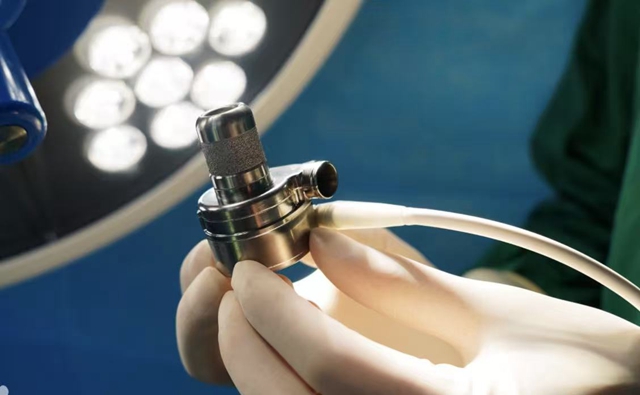
Core Insights - The successful treatment of a child with restrictive cardiomyopathy using a "dual artificial heart implantation + heart transplant" marks a significant breakthrough in China's pediatric end-stage heart failure treatment and domestic artificial heart application [2] - This operation is the lightest successful case globally in similar surgeries, showcasing over a decade of technological accumulation and integration in China's artificial heart industry [2] Market Overview - The global ventricular assist device market is projected to reach approximately $2.2 billion in 2024 and $2.5 billion by 2025 [2] - The Chinese market, although starting later, is experiencing rapid growth, with an expected market size of 33.2 million yuan for implantable ventricular assist devices in 2024 [2] - Multiple domestic companies have received approval for market entry, and Beijing has included artificial hearts in Class A medical insurance reimbursement as of September 2024, with nationwide implementation expected by March 2025 [2] Technological Advancements - The innovative approach taken by Tianjin TEDA International Cardiovascular Hospital and Aerospace TaiXin Technology involves a second-generation magnetic levitation artificial heart, which enhances reliability by eliminating electronic systems that could fail [5][6] - The design modifications for the artificial heart to accommodate the child's small heart chamber included reducing the thickness from 25 mm to 11 mm and the overall weight to below 75 grams, representing a significant engineering breakthrough for pediatric usability [6] Unique Treatment Approach - The surgery also filled a global gap by introducing a dedicated right heart pump, allowing for a dual heart system in pediatric patients, which previously had limited options and often relied on heart transplants [7] - This transition from external dependency to fully implanted systems significantly reduces infection risks and enhances patient mobility, redefining the quality of life for patients [7]

核心医疗IPO:三年半累亏5.53亿元独苗产品销售价格持续走低 递表前夕股权转让价格显著下滑
Xin Lang Cai Jing· 2025-12-05 10:08
Core Viewpoint - Shenzhen Core Medical Technology Co., Ltd. has received acceptance for its IPO application on the Sci-Tech Innovation Board, marking it as the first innovative medical device company to be accepted under the new listing standards [1][10] Group 1: Product and Market Position - The company’s flagship product, the Corheart®6, is the smallest and lightest full magnetic levitation artificial heart globally, filling a gap in pediatric heart failure treatment in China [1][10] - The market share for Corheart®6 is projected to exceed 45.9% in 2024, increasing to 52.86% in the first five months of 2025 [1][10] - Despite the potential market size for heart failure treatment, actual market penetration remains low due to high treatment costs and limited clinical awareness [4][14] Group 2: Financial Performance - The company reported revenues of 16.55 million, 93.68 million, and 70.47 million from 2023 to the first half of 2025, indicating growth but still a small overall scale [6][15] - Cumulative losses over three and a half years reached 553 million, primarily due to high R&D expenditures and significant share-based payment expenses [6][15] - Operating cash flow has been negative, relying on external financing, with net cash flow from operating activities of -108 million, -89 million, and -84 million from 2023 to the first half of 2025 [7][16] Group 3: Product Dependency and Risks - The company’s revenue is heavily reliant on the Corheart®6, with all income derived from this single product, while other products are still in development stages [2][11] - The average selling price of Corheart®6 has decreased from 290,400 yuan per unit in 2023 to 247,200 yuan in 2024, reflecting a decline of approximately 14.86% [4][13] - Customer concentration is increasing, with the top five customers accounting for 80.70% of sales by the first half of 2025, highlighting a significant dependency on major clients [4][13] Group 4: Production Capacity and Expansion Plans - The company has established a production capacity of 1,100 units annually, but actual production in the first half of 2025 was only 367 units, resulting in a capacity utilization rate of about 67% [5][14] - Despite underutilized capacity and low cumulative sales of less than 800 units, the company plans to invest 139 million in expanding its production base for artificial hearts [5][14]