
准备金

Search documents
谁在为美联储买单?空手套白狼造万亿,新兴市场沦为“接盘侠”
Sou Hu Cai Jing· 2025-12-15 10:09
Group 1 - The core concept of the article revolves around the Federal Reserve's ability to "print money" without physical cash, using digital methods to inject liquidity into the economy by purchasing U.S. Treasury bonds and mortgage-backed securities [4][6] - The process involves the Federal Reserve crediting commercial banks' accounts with "reserves," which enhances their lending capacity, leading to increased money supply in the market [6][8] - Historical instances of this practice include the 2008 financial crisis and the 2020 pandemic, where the Federal Reserve implemented quantitative easing (QE) to stabilize the economy by purchasing significant amounts of securities [10][12] Group 2 - The article discusses the consequences of excessive money printing, particularly the rise of inflation, which prompted the Federal Reserve to shift from quantitative easing to a balance sheet reduction strategy starting in 2022 [15][17] - By 2025, the Federal Reserve's balance sheet is projected to decrease from a peak of $9 trillion to $6.59 trillion, indicating a tightening of monetary policy [17] - A recent Federal Open Market Committee (FOMC) meeting revealed internal divisions within the Federal Reserve regarding interest rate adjustments, highlighting the challenges faced in managing monetary policy [19][22] Group 3 - The short-term effects of the Federal Reserve's actions included lower corporate financing costs and rising stock market indices, but long-term inflationary pressures began to emerge, with the Consumer Price Index (CPI) increasing significantly from 2020 to 2023 [26][28] - The article notes that while wealthy individuals benefited from rising asset prices, ordinary Americans faced higher living costs, exacerbating wealth inequality [31] - Other countries, particularly emerging markets, experienced negative impacts from the Federal Reserve's policies, leading to increased commodity prices and forcing them to raise interest rates to stabilize their currencies [33][36] Group 4 - The article contrasts the Federal Reserve's approach with that of the People's Bank of China, which uses bond purchases as a tool for precise monetary policy rather than indiscriminate liquidity injection [41] - The potential for a shift away from the dollar as the world's primary reserve currency raises questions about the sustainability of the Federal Reserve's money printing practices [46]

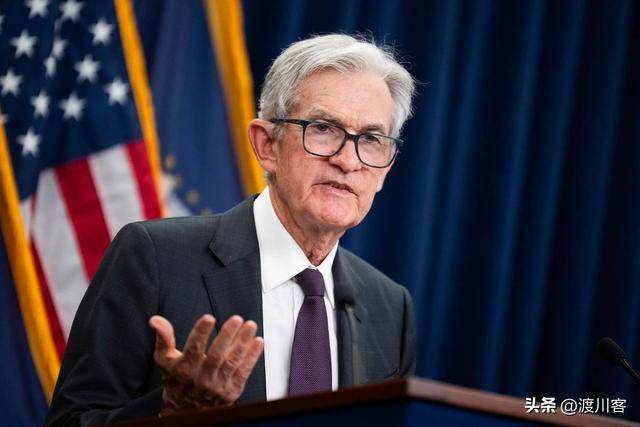
美联储威廉姆斯:当准备金达到充足水平时,渐进式债券购买将再次启动。
Sou Hu Cai Jing· 2025-11-12 14:23
Core Viewpoint - The Federal Reserve's Williams indicated that gradual bond purchases will resume once reserves reach adequate levels [1] Group 1 - Williams emphasized the importance of sufficient reserves for the initiation of gradual bond buying [1]
等不到12月?货币市场压力持续发酵,美联储或提前出手救流动性
美股研究社· 2025-11-05 11:56
Core Viewpoint - The tightening of the money market is expected to persist until November, with increasing pressure on the Federal Reserve to support liquidity before halting balance sheet reduction next month [2][3]. Group 1: Market Conditions - The Secured Overnight Financing Rate (SOFR) surged by 18 basis points last Friday, marking the largest single-day increase since the Fed's rate hike cycle began in March 2020 [2]. - Despite a slight retreat on Monday, SOFR remains above key policy benchmarks like the federal funds rate, indicating ongoing liquidity issues in the market [2]. - Other short-term rates in the overnight repurchase market continue to trade above the Fed's managed rates, reflecting persistent funding pressures [2]. Group 2: Federal Reserve Actions - The Federal Reserve announced it will stop reducing its holdings of Treasury securities in December, ending a three-year quantitative tightening effort due to increasing liquidity constraints [3]. - There are internal disagreements within the Fed regarding the timing of asset purchases, with some officials advocating for a minimal balance sheet while others suggest increasing reserves to keep pace with the banking system and economic growth [3][4]. - Recent data shows bank reserves have fallen to $2.8 trillion, the lowest level since September 2020, raising concerns about market distortions [3]. Group 3: Interest Rate Dynamics - Dallas Fed President Logan indicated that if repo rates remain high, the Fed will need to purchase assets, expressing disappointment over the three-party repo rates exceeding the Fed's standing repo facility rate [4]. - The SOFR was 32 basis points higher than the reserve balance rate last Friday, the largest spread since 2020, although it fell to 4.13% on Monday, still above the current reserve balance rate of 3.9% [4]. - The pressure in the tri-party market may be more severe than indicated by published rates, prompting calls for the Fed to take more aggressive actions, including purchasing Treasury securities [4][5]. Group 4: Historical Context and Future Implications - The current situation may reflect greater fragility in overnight financing rates compared to 2019, with large hedge funds holding approximately $1 trillion more in Treasury long positions than six years ago [5]. - The use of repo financing has nearly doubled since then, suggesting that similar actions to those taken in 2019, where the Fed injected $500 billion into the market, may be necessary to alleviate pressure during Treasury settlement periods or critical payment dates [5].

美联储施密德:美联储资产负债表的关键问题是准备金的适当水平 储备金可能降至约2.6万亿美元
Mei Ri Jing Ji Xin Wen· 2025-09-25 15:02
Core Viewpoint - The Federal Reserve's key issue regarding its balance sheet is the appropriate level of reserves, which may decrease to approximately $2.6 trillion [1] Group 1 - The Federal Reserve's balance sheet is under scrutiny concerning the adequacy of reserve levels [1] - Reserves are projected to potentially decline to around $2.6 trillion [1]
美联储施密德表示,美联储资产负债表的关键问题是准备金的适当水平,储备金可能降至约2.6万亿美元
Sou Hu Cai Jing· 2025-09-25 13:50
Core Viewpoint - The Federal Reserve's key issue regarding its balance sheet is the appropriate level of reserves, which may decrease to approximately $2.6 trillion [1] Group 1 - The Federal Reserve's balance sheet is under scrutiny concerning the adequacy of reserve levels [1] - Reserves are projected to potentially decline to around $2.6 trillion [1]