
普惠包容

Search documents
记者探访进博会“特殊展区”,看机遇之桥如何联通中国大市场
Xin Hua Wang· 2025-11-09 05:42
Core Points - The most prominent highlight of this year's China International Import Expo (CIIE) is the commitment to inclusivity and accessibility [1] - A dedicated "Least Developed Countries Product Zone" has been established to implement China's zero-tariff measures for least developed countries and African nations [1] - The expo aims to showcase how China is helping products from these countries to better share in the opportunities of the Chinese market, reflecting China's inclusive approach and its role in providing opportunities for small and medium-sized enterprises and least developed countries [1]
进博会观察:在开放联通中相互成就
Bei Jing Ri Bao Ke Hu Duan· 2025-11-04 23:58
Group 1 - The China International Import Expo (CIIE) is a significant initiative for China to expand high-level openness and is set to take place from November 5 to 10, with a record scale [2][3] - President Xi Jinping emphasized that China has become the world's second-largest consumer and import market, showcasing its commitment to high-level openness and mutual achievements through collaboration [2][3] - The CIIE serves as a platform for innovation and collaboration, with many multinational companies leveraging the event to foster growth and innovation in the Chinese market [3][4] Group 2 - The CIIE is a practical platform for providing new opportunities for global development, with companies like New Zealand's Pacific Alpaca Group experiencing significant growth through participation [5][7] - The event facilitates a favorable business environment through mechanisms like the "green channel" for product inspection and registration, significantly reducing market entry costs [6][7] - China has maintained its position as the world's second-largest import market for 16 consecutive years, with imports of goods and services expected to exceed $15 trillion during the 14th Five-Year Plan period [8][9] Group 3 - The CIIE is not only a trade platform but also a public good for global sharing, providing access for businesses from the least developed countries [10][12] - The event has seen participation from numerous exhibitors from developing nations, with significant growth in representation from African countries [12] - China aims to continue promoting high-level openness to drive deep reforms and high-quality development, contributing to global economic stability and opportunities [12]
在开放联通中相互成就(进博会观察)
Ren Min Ri Bao· 2025-11-04 22:12
Core Points - The 8th China International Import Expo (CIIE) will be held in Shanghai from November 5 to 10, showcasing China's commitment to high-level opening-up and international cooperation [1][2] - China has become the world's second-largest consumer and import market, emphasizing its role in global economic growth and trade [1][7] - The CIIE serves as a platform for innovation and collaboration, enabling multinational companies to engage with the Chinese market and localize their operations [2][3] Group 1: Economic Impact - The CIIE is seen as a "booster" for multinational companies, facilitating their collaboration and innovation within the Chinese market [2] - The event has led to significant growth for participating companies, such as the New Zealand Pacific Alpaca Group, which saw a nearly 300% increase in sales in the Chinese market [5][11] - The cumulative intended transaction amount from the first seven CIIEs exceeded $500 billion, highlighting the event's economic significance [6] Group 2: Innovation and Localization - Companies like Medtronic have successfully localized their products in China, with plans for full product line localization by 2025 [2] - Schneider Electric reported an increasing proportion of products developed and manufactured in China, showcasing the country's role as a global innovation hub [3] - The CIIE has attracted over 600 new exhibitors this year, with 461 new products and technologies set to be showcased [3] Group 3: Global Cooperation - The CIIE provides opportunities for businesses from developing countries, with 163 exhibitors from the least developed countries participating this year, a 23.5% increase [11] - The event promotes a favorable business environment through streamlined customs processes and improved intellectual property protections, enhancing market access for international brands [5][6] - The upcoming Hongqiao Forum will focus on enhancing economic resilience and sustainable agricultural development in the Global South, reflecting China's commitment to global cooperation [12]
外媒热议APEC:中国提倡普惠包容,助力打造亚太可持续的未来
Zhong Guo Xin Wen Wang· 2025-11-01 01:22
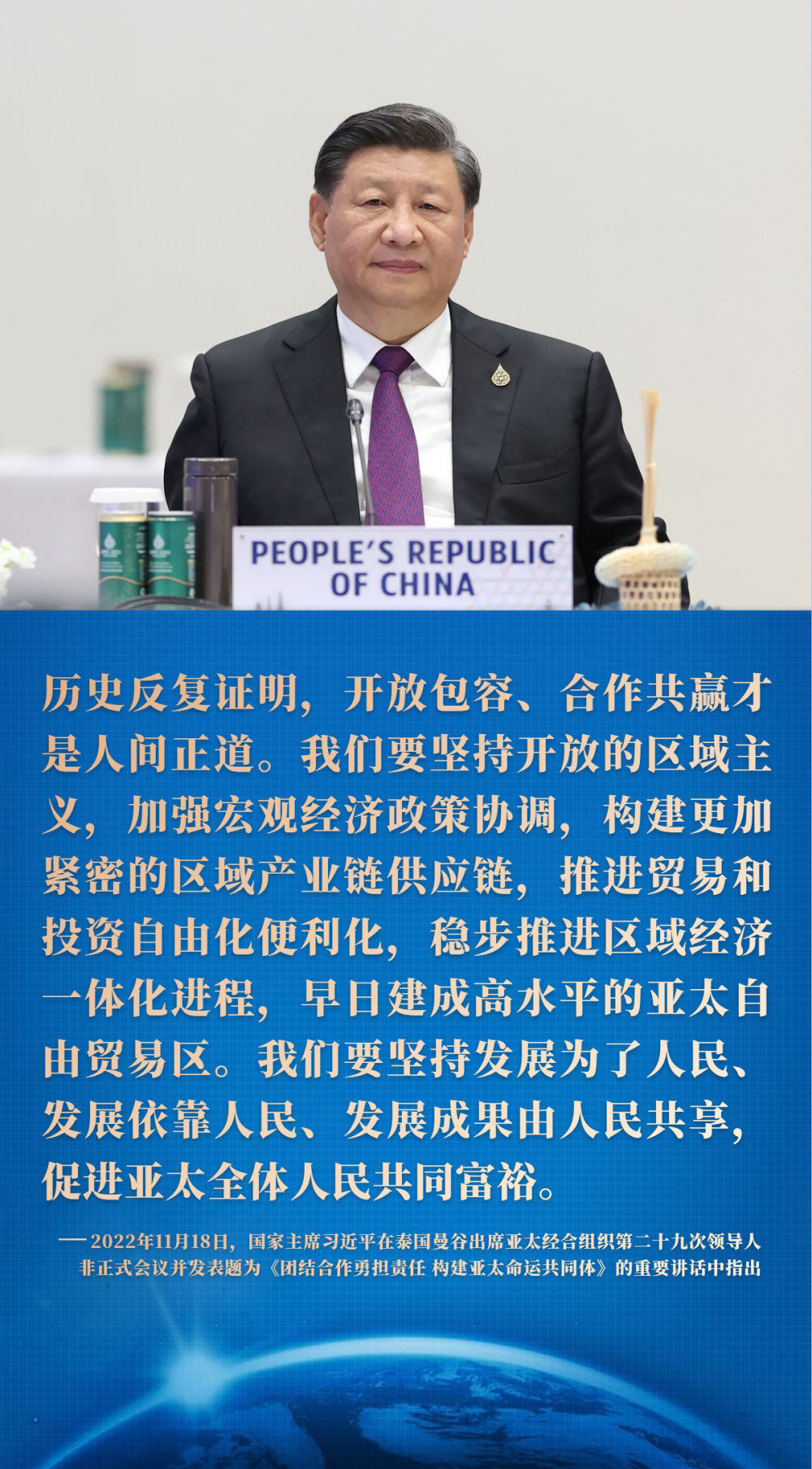
Group 1 - APEC leaders discussed enhancing economic cooperation and addressing common challenges during the informal meeting held in South Korea [1][2] - Chinese President Xi Jinping emphasized five key proposals for building an inclusive and open Asia-Pacific economy, including maintaining a multilateral trade system and promoting digital and green trade [1][2] - The economic output of APEC member economies is projected to exceed 60% of global GDP by the end of 2025, reinforcing their critical role in promoting free trade [2] Group 2 - The construction of the Asia-Pacific Free Trade Area has been a goal sought by APEC members since 2006, as highlighted by Xi Jinping [2] - China called for strengthening the authority and efficiency of the World Trade Organization, advocating for core principles such as most-favored-nation treatment and non-discrimination to protect the interests of developing economies [2] - APEC is seen as a platform for adaptive regional cooperation, providing open dialogue and shared solutions to promote trade and investment stability [3]
习近平向亚太经合组织工商领导人峰会发表书面演讲
证监会发布· 2025-10-31 09:31
Core Views - The article emphasizes the importance of multilateralism and cooperation in addressing global challenges, highlighting China's role as a proponent of these principles [2][3][5] Group 1: APEC's Role and Objectives - APEC was established in response to economic globalization, aiming to promote trade and investment liberalization and support economic growth [3] - The article calls for a return to APEC's foundational goals to enhance cooperation and contribute significantly to global prosperity [3] Group 2: Key Principles for Cooperation - The article outlines four key principles for APEC cooperation: 1. **Maintaining Peace and Stability**: Emphasizing equal participation in international affairs and resolving disputes through dialogue [3] 2. **Promoting Open Connectivity**: Advocating for a multilateral trade system centered around the WTO and ensuring the stability of global supply chains [3] 3. **Fostering Win-Win Cooperation**: Encouraging diverse economic strengths among APEC economies to enhance collaboration and mutual development [3] 4. **Advancing Inclusive Growth**: Focusing on human-centered development and supporting developing economies to bridge the development gap [4] Group 3: China's Economic Contributions - China has been a major contributor to global economic growth, achieving an average growth rate of approximately 5.5% during the 14th Five-Year Plan, contributing around 30% to global economic growth [5] - The country is recognized for its commitment to opening markets, with a significant reduction in the negative list for foreign investment, and aims to provide a favorable business environment [5] - China is actively developing future industries and enhancing traditional sectors, focusing on green, digital, and intelligent advancements [5] Group 4: Entrepreneurial Spirit in APEC - The article encourages the APEC business community to embody the spirit of innovation and resilience to drive growth and prosperity in the region [6]


镜观·回响丨走开放包容之路,共享亚太合作成果
Xin Hua She· 2025-10-31 02:27
Core Points - The Asia-Pacific region is a significant engine for global economic growth, with APEC being the highest-level and most influential economic cooperation mechanism in the region [1] - President Xi Jinping emphasizes the importance of openness and cooperation in the Asia-Pacific, stating that "openness is the lifeline of Asia-Pacific cooperation" [4] - China is committed to high-level openness and multilateralism, aiming to inject strong momentum into the construction of an open world economy [4] Group 1 - The 2025 China International Service Trade Fair will feature Australia as the guest country, showcasing the largest exhibition group with nearly 60 enterprises [6] - The "Qingdao-Jeju" container shipping route has been launched, significantly improving logistics efficiency and reducing costs between China and South Korea [7] - The Chancay Port in Peru, a key project under the Belt and Road Initiative, is set to become a major shipping hub connecting Asia and Latin America [9] Group 2 - The "Two Countries, Twin Parks" cooperation model between China and Malaysia has achieved fruitful results in project construction and innovation over the past decade [12] - A cross-border truck service from Chongqing to Vietnam has commenced, enhancing logistics capabilities [14] - The China-Europe Railway Express has significantly improved the transportation time for goods from Chongqing to Moscow [16] Group 3 - The Morar Port in Brunei, managed by a Chinese joint venture, is the only international deep-water port in the country [18] - China has supported Papua New Guinea in agricultural technology training, benefiting thousands of local residents [21] - Chinese enterprises have contributed to the upgrade of the Mexico City Metro, improving commuter experiences [23] Group 4 - China has been the largest export market for Chilean cherries for seven consecutive years, with over 90% of cherries exported to China [24] - The Amorepacific booth at the China International Import Expo highlights the ongoing participation of Korean cosmetic companies in the Chinese market [26] - The Jakarta-Bandung High-Speed Railway, a collaboration between China and Indonesia, significantly reduces travel time and promotes local economic development [28] Group 5 - Chinese agricultural drones are empowering Thai farmers, enhancing agricultural production efficiency and safety [30] - The introduction of Chinese hybrid rice technology in the Philippines has steadily increased rice yields, contributing to food security [32]

走开放包容之路,共享亚太合作成果
Xin Hua She· 2025-10-30 02:08
Core Points - The Asia-Pacific region is a significant engine for global economic growth, with APEC being the highest-level and most influential economic cooperation mechanism in the region [1] - President Xi Jinping emphasizes the importance of openness and cooperation in the Asia-Pacific, advocating for mutual development and addressing changes collectively [4][17] Economic Cooperation and Development - Openness is highlighted as the lifeline of Asia-Pacific cooperation, with the experience indicating that openness leads to prosperity while closure leads to decline [4] - China is committed to high-level openness and multilateralism, supporting the WTO-centered multilateral trade system to foster an open world economy [4] - The "Qingdao-Jeju" container shipping route has been launched, significantly improving logistics efficiency and reducing costs between China and South Korea [6] Regional Integration and Connectivity - The China-Peru Chancay Port project, a key initiative under the Belt and Road Initiative, officially opened in November 2024, becoming a crucial shipping hub connecting Asia and Latin America [7] - The "Two Countries, Twin Parks" cooperation model between China and Malaysia has yielded fruitful results in project construction and innovation over the past decade [10] - The Western Land-Sea New Corridor has facilitated cross-border logistics, enhancing trade efficiency with Vietnam [12] Agricultural and Technological Collaboration - China has been a major exporter of cherries from Chile for seven consecutive years, with over 90% of Chilean cherries being sold to China, enriching Chinese consumers' diets [22] - The introduction of Chinese hybrid rice technology in the Philippines has steadily increased rice yields, contributing to food security and improving farmers' livelihoods [30] - The use of Chinese-made agricultural drones in Thailand has empowered local farmers, promoting more efficient and safer agricultural production [28] Infrastructure Development - The Jakarta-Bandung High-Speed Railway, a collaboration between China and Indonesia, reduces travel time between Jakarta and Bandung from over three hours to 46 minutes, enhancing local economic development [26] - Chinese enterprises have contributed to the upgrade of Mexico City's metro system, improving the commuting experience for citizens [21]
特稿丨在宽广的亚太铺设发展通途——推动区域共同繁荣的中国实践
Xin Hua She· 2025-10-27 00:30
Group 1 - The Asia-Pacific region is a significant engine for global economic growth, and APEC serves as the most important economic cooperation mechanism in the region [1][3] - China's trade with other APEC economies increased by 2% year-on-year in the first three quarters of this year, reaching 19.41 trillion yuan, accounting for 57.8% of China's total trade [3][5] - The opening of the smart green port in Peru exemplifies the successful trade and cooperation between China and Latin America, enhancing trade routes and economic ties [2][5] Group 2 - The report emphasizes the need for open markets and opposition to protectionism, highlighting the importance of a rules-based multilateral trading system for the prosperity of the Asia-Pacific region [3][4] - China's innovation capabilities have rapidly improved, with its global innovation index ranking rising from 34th in 2012 to 10th in 2025, attracting multinational companies to establish R&D centers in China [5][6] - The focus on technological innovation and green transformation is crucial for enhancing the autonomous development capabilities of developing economies in the Asia-Pacific region [4][6] Group 3 - China's commitment to inclusive development is evident through initiatives aimed at poverty reduction and enhancing the capabilities of developing countries [6][7] - The emphasis on multilateralism and global governance reform reflects China's role as a responsible major power in maintaining the vitality and openness of the global trade system [8][9] - The four global initiatives proposed by China aim to promote prosperity, stability, mutual trust, and fairness in global governance, contributing to the overall development of the Asia-Pacific region [8][9]
汇聚亚太合力 继续勇立潮头(寰宇平)
Ren Min Wang· 2025-10-26 22:21
Core Viewpoint - The article emphasizes that open cooperation is essential for the future development of the Asia-Pacific region, especially in the context of rising unilateralism and protectionism [1][2][3]. Group 1: Importance of Open Cooperation - Over 80% of respondents in a recent survey believe their countries benefit from the APEC framework, and 75% support deeper participation in APEC cooperation [1]. - The Asia-Pacific region has become a major growth engine for the global economy, with average tariff levels dropping from 17% to 5% over the past 30 years, contributing 70% to global economic growth [2]. - The region has seen a fourfold increase in per capita income, with 1 billion people lifted out of poverty, showcasing the benefits of economic globalization and regional integration [2]. Group 2: Challenges and Responses - Protectionism poses a significant challenge to regional development, and leaders are urged to adhere to free trade and mutual benefits [3]. - The successful arrival of South American products in China highlights the commitment to open trade and the opportunities it presents [3]. - The implementation of the RCEP and the upcoming signing of the China-ASEAN Free Trade Area 3.0 agreement demonstrate a collective determination to enhance cooperation and address risks [3]. Group 3: Innovation and Green Cooperation - Innovation and green initiatives are seen as keys to breaking growth bottlenecks, with various projects underway in countries like Malaysia and Indonesia to foster new industries [4]. - New technologies and business models, such as cross-border e-commerce and digital trade, are driving deeper cooperation in the Asia-Pacific region [4]. Group 4: Inclusive Development - The article stresses the importance of inclusive development, ensuring that no country is left behind, and highlights China's assistance projects in Papua New Guinea as an example of effective cooperation [5]. - Strengthening economic and technical cooperation is essential for bridging gaps and ensuring all members benefit from regional development [5]. Group 5: Governance and Multilateralism - The maintenance of a multilateral trade system is crucial for the development of the Asia-Pacific region, with calls to resist protectionism and uphold global trade rules [6]. - The upcoming APEC meeting aims to reinforce the commitment to an open world economy and address the challenges posed by current global uncertainties [6].
上合组织天津峰会深具全球意义——访阿塞拜疆政治学家韦利扎德
Xin Hua She· 2025-09-03 08:35
Group 1 - The core viewpoint of the article emphasizes the global significance of the Shanghai Cooperation Organization (SCO) Tianjin Summit, which aims to enhance cooperation among nations to maintain world peace, stability, and prosperity [1] - The summit highlights the importance of building a just world order, with China advocating for adherence to international law and fundamental principles of international relations, such as non-interference in internal affairs and respect for sovereignty and territorial integrity [1] - The term "inclusive development" is noted as a key theme of the summit, which supports the socio-economic development of developing countries, crucial for promoting inclusive growth [1] Group 2 - The "Shanghai Spirit," characterized by mutual trust, mutual benefit, equality, consultation, respect for diverse civilizations, and pursuit of common development, plays a significant role in contemporary international political practice [1] - The article points out that the current international situation is increasingly turbulent, with rising geopolitical conflicts, making the practice of the "Shanghai Spirit" essential for maintaining international and regional peace [1] - The development progress of one country is closely linked to the advancement of humanity as a whole, with China focusing on people-centered approaches and encouraging collective efforts to address global challenges [1]