
海南自贸港零关税政策

Search documents
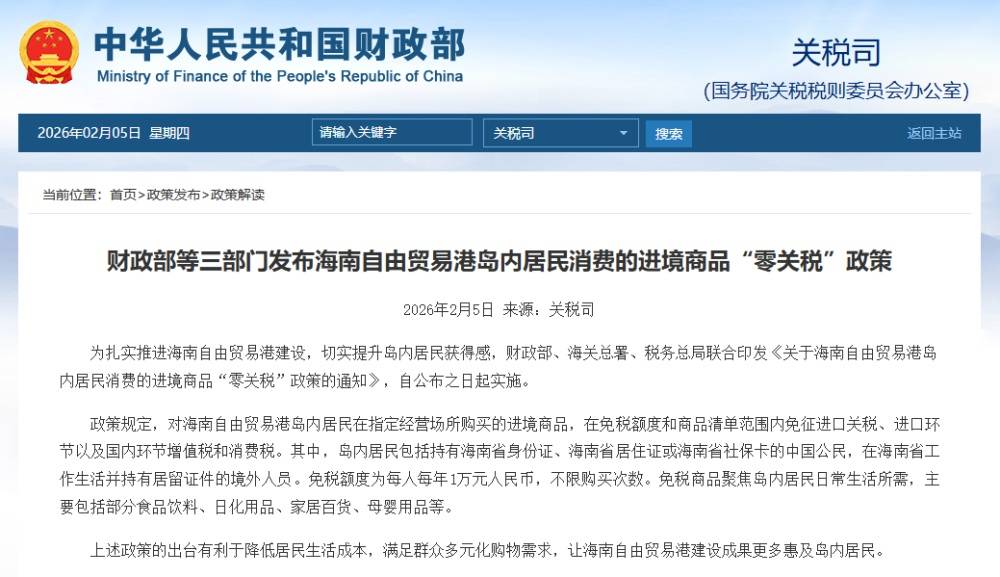
谁能买、在哪买、怎么买?海南自贸港日用消费品“零关税”政策解答来了→
Sou Hu Cai Jing· 2026-02-06 23:50
Core Viewpoint - The implementation of a "zero tariff" policy for daily consumer goods in Hainan Free Trade Port allows residents to purchase high-frequency imported products at more affordable prices without leaving the island, marking a significant step in enhancing consumer welfare and expanding the tax exemption framework [1][4][8]. Group 1: Policy Overview - The "zero tariff" policy exempts imported goods from import duties, value-added tax, and consumption tax for residents purchasing in designated locations, effectively eliminating about 20% of tax costs associated with imported goods [4][5]. - A total of 202 items have been included in the "zero tariff" list, focusing on high-frequency consumer goods essential for daily life, such as food, beverages, personal care products, and baby supplies [4][5]. Group 2: Beneficiaries and Limits - The policy benefits not only local residents but also new talents and long-term expatriates living in Hainan, as it includes all Chinese citizens holding Hainan ID cards, residence permits, or social security cards, as well as foreign residents with valid permits [5][6]. - Each individual is allowed to purchase up to 10,000 RMB (approximately 1,500 USD) worth of tax-exempt goods annually, which can cover the high-frequency consumption needs of a typical family [6][5]. Group 3: Systemic Impact - This policy is a significant addition to the existing tax system in Hainan, which previously included 17 tax policies, primarily benefiting enterprises, and now expands to include individual consumer needs [7][9]. - The introduction of the "zero tariff" policy represents a historical breakthrough in allowing residents to purchase imported daily consumer goods tax-free, enhancing the overall consumer experience and reflecting a shift towards a more inclusive economic model [8][9]. Group 4: Future Adjustments - The list of zero-tariff goods will be dynamically adjusted based on policy execution and consumer demand, ensuring it meets the evolving needs of residents [5][9]. - The policy aims to create a comprehensive support system for the smooth implementation of tax exemptions, focusing on regulatory optimization and service enhancement to maximize the benefits while maintaining control over potential risks [9].

海南封关看变化:日用消费品“零关税”政策三个“拓展”特点凸显
Zhong Guo Xin Wen Wang· 2026-02-06 08:04
Core Viewpoint - The Hainan Free Trade Port's "zero tariff" policy for imported consumer goods aims to enhance the living standards of local residents by expanding the scope of tax exemptions and making essential daily goods more accessible [1] Group 1: Expansion of Zero Tariff Policy - The zero tariff policy has broadened the range of goods eligible for tax exemption, shifting focus from production materials to daily consumer goods, thereby creating a policy loop between production and daily life [1] - The beneficiaries of the zero tariff policy have expanded from primarily enterprises to a wider group of local residents, transforming the policy from industrial empowerment to a more inclusive approach that directly benefits the public [1] - The policy has also expanded the scenarios for tax-free consumption, moving beyond specific situations like duty-free shopping for travelers to include everyday shopping for local residents, highlighting the policy's focus on improving the quality of life [1]
海南自贸港岛内居民消费进境商品"零关税"政策发布
Xin Hua Wang· 2026-02-06 00:37
Core Points - The Hainan Provincial Government announced the implementation of the "Zero Tariff" management measures for imported consumer goods and duty-free shops, effective from February 5 [1] - The measures aim to regulate the operation of "Zero Tariff" consumer goods and ensure the smooth implementation of related policies [1] Group 1: Management of Duty-Free Shops - The measures specify that duty-free shops must establish purchase, sales, and inventory records, and must push sales data to a regulatory platform in real-time [2] - Duty-free shops are required to affix traceability codes on product packaging and verify buyer identity through facial recognition and identity document comparison [2] - Shops must implement significant anti-smuggling warnings and develop internal control management systems to prevent illegal sales [2] Group 2: Supervision and Legal Responsibilities - Relevant departments are mandated to enhance monitoring of market circulation and internet platforms, and to legally address illegal activities such as purchasing and reselling [2] - No entity or individual is allowed to organize or utilize others' quotas for profit by purchasing "Zero Tariff" consumer goods for resale [2] - The measures outline legal responsibilities for violations of the established regulations [3]
海南岛内居民在哪买“零关税”日用消费品?店铺设立标准和管理办法来了
Yang Shi Xin Wen· 2026-02-05 13:42
Core Points - The Hainan Provincial Government has issued the "Management Measures for Zero Tariff Imported Goods for Residents in Hainan Free Trade Port" which will take effect immediately upon publication [1] - The measures consist of 7 chapters and 38 articles detailing qualifications for zero-tariff consumer goods operators, management of duty-free shops, operational norms, supervision, and legal responsibilities [1] Group 1: Regulations on Duty-Free Shops - Duty-free shops must be named according to the format: City/County/Autonomous County Name + Brand Name + Duty-Free Shop for Consumer Goods [1] - Duty-free shops are prohibited from establishing branches or counters [1] - Identity verification for purchasers must be conducted using facial recognition and identity document comparison to ensure the buyer matches their identification [1] Group 2: Compliance and Enforcement - The specific applicable objects, types of goods, tax exemptions, and pickup methods for duty-free consumer goods must strictly adhere to the relevant regulations of the zero-tariff policy for imported goods in Hainan Free Trade Port [1] - Customs will supervise the management of duty-free goods and shops, enforcing regulations and addressing violations and smuggling activities [1]
锐财经丨中国财政运行平稳有序
Ren Min Ri Bao Hai Wai Ban· 2026-02-01 02:17
Core Viewpoint - The Ministry of Finance announced a stable fiscal operation for 2025, with a focus on a more proactive fiscal policy to support economic growth and ensure budget execution remains satisfactory [1]. Fiscal Revenue - In 2025, the national general public budget revenue is projected to be 21.6 trillion yuan, a decrease of 1.7% from 2024 [2]. - Central government revenue is expected to be 939.63 billion yuan, down 6.5%, while local government revenue is projected to grow by 2.4% to 1.22082 trillion yuan [2]. - Nearly 90% of regions are expected to see revenue growth, with 27 out of 31 provinces, autonomous regions, and municipalities reporting increases compared to 2024 [2]. - Tax revenue is anticipated to grow by 0.8%, while non-tax revenue is expected to decline by 11.3% due to a high base from 2024 [2]. - Specific tax categories show growth: domestic VAT up 3.4%, domestic consumption tax up 2%, and corporate income tax up 1% [2][3]. Fiscal Expenditure - Total general public budget expenditure is projected at 28.74 trillion yuan, a year-on-year increase of 1% [4]. - Key areas of expenditure include social security and employment (up 6.7%), education (up 3.2%), and health (up 5.7%) [4]. - A new childcare subsidy policy will allocate approximately 100 billion yuan, with 90.4 billion yuan from the central government [4]. - Significant funding for agriculture includes 176.6 billion yuan for high-standard farmland construction, a 53% increase, and 20.8 billion yuan for enhancing agricultural machinery [4]. Government Fund Budget - Government fund budget revenue is expected to be 5.77 trillion yuan, with expenditures rising to 11.29 trillion yuan, an increase of 11.3% from 2024 [5]. - The spending on special bonds and other financial instruments is projected to reach 6.19 trillion yuan, a 37.6% increase [5]. Support for Consumption - The Ministry of Finance is implementing policies to boost consumption, including 300 billion yuan in special bonds for consumer goods replacement programs [6][7]. - Estimated sales from these programs are projected to exceed 2.6 trillion yuan, benefiting over 360 million people [7]. - In Hainan Free Trade Port, "zero tariff" policies have led to a significant increase in imported goods, with a value of 857 million yuan, a 243% increase year-on-year [7].
8.57亿元、1.29亿元、5700余家,大有潜力!海南自贸港“零关税”政策利好频现
Yang Shi Wang· 2026-01-31 02:11
Core Viewpoint - The Hainan Free Trade Port has officially launched its full island closure on December 18, 2025, and has seen positive outcomes from the "zero tariff" policy in promoting exports, industrial development, and enhancing consumer activity [1]. Group 1: Policy Impact - The "zero tariff" policy allows for the exemption of import duties, value-added tax, and consumption tax on imported goods, significantly reducing import costs for enterprises [5]. - Since the full closure, as of January 27, 2026, the value of imported "zero tariff" goods reached 857 million yuan, representing a year-on-year increase of 243% [5]. - The tax reductions amounted to approximately 129 million yuan, which is a twofold increase compared to the previous period [6]. Group 2: Business Participation - Over 10,000 enterprises have applied to benefit from the "zero tariff" policy, with more than 5,700 new foreign trade enterprises registered [6]. - There is significant potential for further expansion of "zero tariff" imports in the future [6].
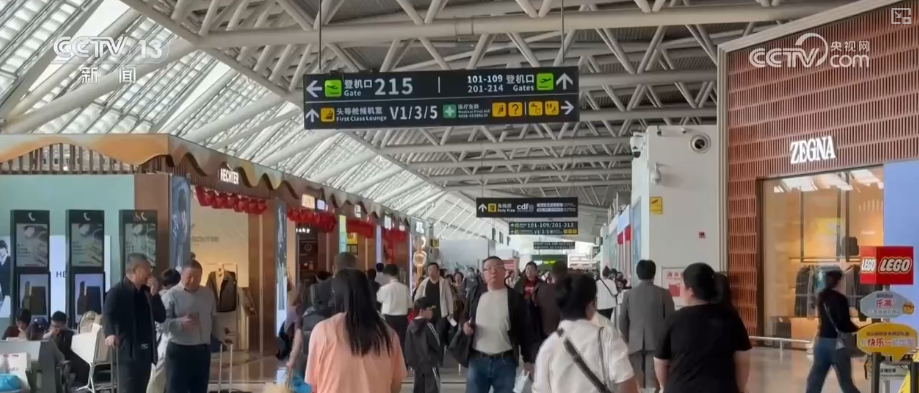
财政部:海南自贸港“零关税”等政策取得积极成效
Sou Hu Cai Jing· 2026-01-30 11:14
Core Insights - The Hainan Free Trade Port has officially launched its full island closure on December 18 last year, with significant positive outcomes from the "zero tariff" policy in promoting goods exports, industrial development, and enhancing consumer activity [1] Group 1: Impact on Trade - The "zero tariff" policy allows for the exemption of import duties, value-added tax, and consumption tax on imported goods, significantly reducing import costs for enterprises and facilitating trade liberalization [1] - As of January 27, 2026, the value of imported "zero tariff" goods reached 857 million yuan, representing a year-on-year increase of 243%, covering various industries such as chemicals, mineral products manufacturing, and healthcare [1] - Tax reductions amounted to approximately 129 million yuan, a year-on-year increase of 200%, with over 10,000 enterprises applying for the benefits of the "zero tariff" policy [1] Group 2: Industrial Development - The "zero tariff" goods and their processed products can circulate among beneficiaries without import taxes, combined with the processing value-added tax exemption policy, which encourages enterprises to retain production in Hainan, extending the industrial chain and enhancing value [2] - As of January 27, 2026, the value of processed goods exported from Hainan to the mainland under the tax exemption reached 101 million yuan, with tax reductions of 3.867 million yuan [2] - The province saw the establishment of 409 new foreign-funded enterprises, a year-on-year increase of 23.56%, with foreign direct investment totals and growth rates ranking among the top in the country [2] Group 3: Consumer Activity - The operational closure has facilitated the aggregation of people and logistics in Hainan, further amplifying the effects of the offshore duty-free policy, becoming a strong growth driver for tourism consumption [2] - As of January 27, 2026, the sales amount for offshore duty-free shopping reached 6.28 billion yuan, with 981,000 shoppers and 4.6 million items purchased, representing year-on-year increases of 35.9%, 21%, and 8.2% respectively [2] - During the New Year holiday period, offshore duty-free sales amounted to 712 million yuan, showing a substantial year-on-year growth of 128.9% [2]
海南自贸港药品、医疗器械“零关税”政策落地一周年
Hai Nan Ri Bao· 2026-01-05 01:39
Core Insights - The "zero tariff" policy for drugs and medical devices in Hainan Free Trade Port has been in effect for one year, resulting in significant tax reductions and benefits for registered medical institutions [2] Group 1: Policy Implementation - The "zero tariff" policy has led to a cumulative import value of approximately 460 million yuan (about 66 million USD) for drugs and medical devices, with tax reductions amounting to around 62 million yuan (approximately 9 million USD) [2] - The policy allows registered medical institutions, higher medical education institutions, and medical research institutes in the Boao Lecheng International Medical Tourism Pilot Zone to import specified drugs and medical devices without paying import tariffs, VAT, or consumption tax [2] Group 2: Impact on Stakeholders - The policy is seen as a significant benefit for medical institutions in the Lecheng area, reducing costs for patients and improving cash flow for enterprises [2] - Hainan's Haikou Customs is actively optimizing customs clearance processes and addressing challenges faced by different types of enterprises to ensure the effective implementation of the policy [2] Group 3: Future Directions - Haikou Customs plans to continue enhancing regulatory services and guiding enterprises to fully utilize the policy, aiming to further promote the release of benefits from the "zero tariff" policy and support the development of a global hub for high-quality medical resources in the pilot zone [2]
海南自贸港药品、医疗器械“零关税”政策落地一周年 减免税款约6200万元
Sou Hu Cai Jing· 2026-01-04 03:10
Core Insights - The "zero tariff" policy for pharmaceuticals and medical devices in Hainan Free Trade Port has been operational for one year, with significant benefits being realized [1] - As of December 31, 2025, the total value of imported "zero tariff" medical products reached approximately 460 million yuan, resulting in tax reductions of about 62 million yuan [1] Group 1: Policy Implementation - The "zero tariff" policy allows registered medical institutions, higher medical education institutions, and medical research institutes in the Boao Lecheng International Medical Tourism Pilot Zone to import specified pharmaceuticals and medical devices without import duties, VAT, and consumption tax [1] - This policy aims to lower operational costs for medical institutions and significantly reduce the financial burden on patients [1] Group 2: Industry Impact - The policy has been described as a "bonus" for registered medical institutions, facilitating easier cash flow for companies and reducing costs for patients [1] - The Haikou Customs has actively optimized customs clearance processes and conducted in-depth research to address the challenges faced by different types of enterprises in accessing the benefits of the policy [1]
海南“零关税”豪车探秘:免税进口车仅限企业营运
Mei Ri Jing Ji Xin Wen· 2025-12-24 14:02
Core Viewpoint - The article discusses the implications of Hainan's "zero tariff" policy for imported luxury cars, highlighting the restrictions and market dynamics that affect consumer access to these vehicles. Group 1: Market Dynamics - The current market for luxury cars in Hainan shows limited availability of "zero tariff" models like the BMW X5 and Porsche Cayenne, with most sales focusing on models like the Toyota Alphard [1][2] - The price of imported vehicles can significantly drop when taxes are waived, with the Toyota Alphard's tax-exempt price being approximately 699,000 yuan, compared to its market price exceeding 1 million yuan [2] Group 2: Policy Restrictions - The "zero tariff" policy applies only to vehicles used for transportation and tourism by companies, requiring them to meet specific operational criteria, including having a fleet of at least 15 vehicles [3] - Vehicles purchased under this policy have a limited usage period of 15 years, with options for resale or export after 6 years [3] Group 3: Industry Opportunities - The tax incentives in Hainan are designed to lower operational costs for businesses, potentially attracting foreign and domestic car manufacturers to establish operations in the region [5][6] - The "processing value-added" policy allows companies to import vehicles or parts, modify them, and then sell them in the domestic market without incurring tariffs, creating a cost-effective entry point for international car manufacturers [6] Group 4: Consumer Impact - Although individual consumers cannot directly benefit from the "zero tariff" policy, rental companies may pass on cost savings to consumers through lower rental rates [4][7] - As the industry adapts to these policies, the eventual reduction in costs is expected to reach consumers, enhancing market accessibility [7]