深地工程

Search documents
向新而行丨能源:进军深地
国家能源局· 2026-03-02 03:31
Core Viewpoint - The article emphasizes the importance of energy transformation as a strategic precursor to productivity advancement, highlighting the need for technological innovation in the energy sector to drive industrial upgrades and new quality productivity development [2]. Group 1: Deep Earth Exploration - The second episode of the series "Towards New" focuses on the strategic technological challenge of advancing into the Earth's deep layers, showcasing China's first oil and gas project named after deep earth engineering [3][4]. - The Shunbei oil and gas field in the Tarim Basin is identified as China's first deep earth engineering project, featuring 205 drilling rigs working continuously to explore deep resources [4][5]. Group 2: Technological Innovations - The "underground diamond drill" has successfully penetrated ultra-hard strata beyond 8000 meters, marking a significant achievement in deep earth drilling technology [6][7]. - A decade ago, China relied on imported drill bits for deep earth drilling, which were expensive and limited to less than 1000 meters in depth. Now, domestically developed PDC drill bits have revolutionized this capability [7]. Group 3: Advancements in Drilling Techniques - Increasingly, autonomous innovative technologies are enabling China to take control of deep earth exploration, with the Beidou navigation system enhancing drilling precision and performance under extreme conditions [9]. - The "Deep Earth No. 1" project has successfully completed 183 ultra-deep wells, demonstrating China's robust technological capabilities and commitment to energy security and the construction of a strong energy nation [10].


大力提升油气勘探开发力度“七年行动计划”圆满收官 2025年油气储量产量均创历史新高
Ren Min Ri Bao Hai Wai Ban· 2026-02-15 01:40
Core Insights - The National Energy Administration of China announced significant achievements in oil and gas exploration and development, marking the successful completion of the "Seven-Year Action Plan" with record high reserves and production levels [1][2] Group 1: Production Achievements - By 2025, domestic crude oil production is projected to reach 216 million tons, a historical high, while natural gas production is expected to exceed 260 billion cubic meters, with equivalent production surpassing 200 million tons for the first time [1] - The Daqing and Shengli oil fields have focused on meticulous management and enhanced recovery rates, leading to sustained high production levels, with shale oil output exceeding 8.5 million tons [1] - The Bohai Sea oil field remains the largest crude oil production base in China, contributing over 60% of the national marine crude oil production increase [1] Group 2: Regional Contributions - The Ordos Basin's oil and gas equivalent production has surpassed 100 million tons, with crude oil production stabilizing at 38 million tons for two consecutive years and natural gas production nearing 80 billion cubic meters [2] - The Sichuan Basin's natural gas output has exceeded 80 billion cubic meters, accounting for over 40% of the national increase, with shale gas production around 27 billion cubic meters [2] - Marine crude oil production has surpassed 66 million tons, with natural gas production around 30 billion cubic meters, highlighting the growing significance of offshore energy resources [2] Group 3: Deep Earth Exploration - The oil and gas industry has made significant progress in deep earth exploration, with the implementation of the "Deep Earth Science Exploration" initiative [2] - Notable achievements include the successful drilling of the Tazhong 1 well in the Tarim Basin, reaching a depth of 10,910 meters, marking the first discovery of oil and gas at depths exceeding 10,000 meters [2] - The Sichuan Basin's deep exploration efforts have also set a global record for the largest diameter wellbore at depths over 10,000 meters [2]

2025年油气储量产量均创历史新高
Ren Min Ri Bao· 2026-02-14 21:15
Core Insights - The National Energy Administration of China announced significant achievements in oil and gas exploration and development for 2025, marking the successful completion of the "Seven-Year Action Plan" aimed at enhancing oil and gas exploration efforts [2][3] Group 1: Oil Production - Domestic crude oil production is projected to reach 216 million tons in 2025, setting a historical record [2] - The Bohai Sea oilfield continues to be the largest crude oil production base in the country, contributing over 60% of the national offshore crude oil production increase [2] - The Daqing and Shengli oilfields are focusing on meticulous management of oil reservoirs and improving recovery rates, achieving long-term stable production [2] Group 2: Natural Gas Production - Natural gas production is expected to exceed 260 billion cubic meters, with equivalent production surpassing 200 million tons for the first time [2] - The Ordos Basin, Sichuan Basin, and offshore areas are experiencing rapid growth in natural gas production, with unconventional gas accounting for 42% of total production [2] - The Sichuan Basin's natural gas production has surpassed 80 billion cubic meters, contributing over 40% of the national increase, with shale gas production around 27 billion cubic meters [3] Group 3: Exploration Achievements - From 2019 to 2025, over 10 billion tons of proven oil and gas geological reserves have been added, reinforcing the foundation for sustained production [2] - The oil and gas industry is advancing the "Deep Earth Exploration" national strategy, achieving significant progress with record-breaking deep wells [3] - Notable achievements include the successful drilling of the Tazhong 1 well in the Tarim Basin, reaching a depth of 10,910 meters, and the deployment of the deep well in the Sichuan Basin, which has set a record for the largest diameter deep well globally [3]
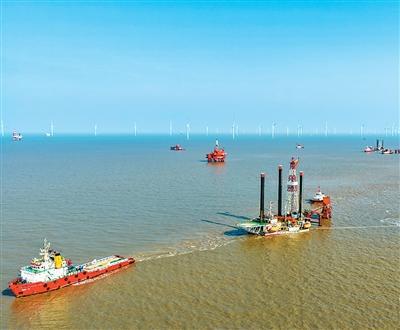
2025年我国油气勘探开发硕果累累
Yang Shi Xin Wen· 2026-02-11 12:18
Core Insights - The National Energy Administration announced ten landmark achievements in oil and gas exploration and development for 2025, highlighting significant advancements in domestic production capabilities and resource management. Group 1: Oil and Gas Production Achievements - By 2025, domestic crude oil production is expected to reach 216 million tons, a historical high, while natural gas production will exceed 260 billion cubic meters, marking the first time production exceeds 200 million tons of equivalent [1] - The "Seven-Year Action Plan" has successfully concluded, with cumulative newly proven geological reserves of oil and gas exceeding 10 billion tons and 10 trillion cubic meters from 2019 to 2025, reinforcing the foundation for sustained production [1] Group 2: Regional Production Highlights - The Ordos Basin has established the country's first 100 million-ton oil and gas production base, with oil production stabilizing at 38 million tons and natural gas production nearing 80 billion cubic meters [2] - The Sichuan Basin's natural gas production is projected to surpass 80 billion cubic meters, contributing over 40% to national production, with shale gas accounting for approximately 27 billion cubic meters [3] Group 3: Marine Oil and Gas Developments - Marine oil production is expected to exceed 66 million tons, with natural gas production around 30 billion cubic meters, leading to a total marine oil and gas equivalent of 90 million tons [4] - Significant discoveries in the Bohai Sea include three large to medium-sized oil fields, with the Qinhuangdao 29-6 oil field achieving proven reserves of over 100 million tons [4] Group 4: Shale Oil and Technology Advancements - The establishment of national-level shale oil demonstration zones in Xinjiang, Daqing, and Shengli is expected to enhance production capacity, with core technologies leading to rapid output increases [5] - The deep earth exploration initiative has achieved breakthroughs, including the successful drilling of wells exceeding 10,000 meters, with significant gas discoveries in the Tarim Basin [6] Group 5: Technological Innovations in Oil and Gas - The industry is advancing towards high-end technology with the development of new equipment for exploration and extraction, including the first domestically produced 80,000-pound controlled seismic source [7] - China National Offshore Oil Corporation (CNOOC) is leading the digital transformation of offshore oil fields, with the "Deep Sea One" gas field being recognized as a model for intelligent factory practices [8] Group 6: Sustainable Practices and Energy Transition - Sinopec's Victory Oilfield has pioneered a clean thermal energy utilization model, achieving significant energy savings and reducing natural gas consumption [9] - The Jilin Oilfield has implemented the "Honggang Model" for green transformation, significantly increasing oil production while reducing carbon emissions and energy consumption [10]


2025年全国油气勘探开发十大标志性成果
国家能源局· 2026-02-11 11:09
Core Insights - The article highlights the significant achievements in oil and gas exploration and development in China, with record production levels and strategic advancements in various regions by 2025 [3][4][5][6][7][8][9][10][11][12][13][14] Group 1: National Production Achievements - In 2025, domestic crude oil production reached 216 million tons, a historical high, while natural gas production exceeded 260 billion cubic meters, marking a significant milestone with a total equivalent production surpassing 200 million tons [3] - The cumulative newly proven geological reserves of oil and gas from 2019 to 2025 exceeded 10 billion tons and 10 trillion cubic meters, respectively, reinforcing the foundation for sustained production [3] Group 2: Regional Developments - The Ordos Basin achieved an oil and gas equivalent production of over 100 million tons in 2025, with crude oil production stabilizing at 38 million tons and natural gas production nearing 80 billion cubic meters [4] - The Sichuan Basin's natural gas production surpassed 80 billion cubic meters, contributing over 40% to the national total, with shale gas production around 27 billion cubic meters [5] Group 3: Marine Oil and Gas Production - Marine crude oil production exceeded 66 million tons, with natural gas production around 30 billion cubic meters, leading to a total marine oil and gas equivalent production of 90 million tons [6][7] Group 4: Shale Oil Development - By 2025, three national-level shale oil demonstration zones were established, significantly enhancing production capacity and supporting the national crude oil output [8] Group 5: Deep Earth Exploration - Major advancements in deep earth exploration were reported, with significant drilling achievements in the Tarim Basin, including the first discovery of oil and gas at depths exceeding 10,000 meters [9] Group 6: Technological Innovations - The industry is advancing towards high-end technology with the development of core equipment for exploration and production, including the first domestically produced high-precision seismic source and automated drilling rigs [10] Group 7: Intelligent Operations - China National Offshore Oil Corporation's "Deep Sea One" project is leading in digital transformation, becoming a model for intelligent operations in deep-water oil and gas production [11] Group 8: Clean Energy Integration - Sinopec's Victory Oilfield has innovated a clean energy utilization model, achieving significant energy savings and promoting the integration of geothermal energy with oil and gas production [12][13] Group 9: Green Transformation Initiatives - The "Honggang Model" developed by China National Petroleum Corporation in Jilin Oilfield demonstrates a successful path for green transformation, significantly increasing oil production while reducing carbon emissions [14]
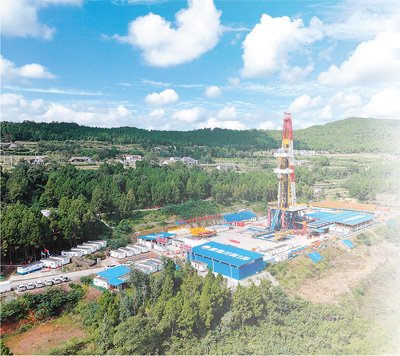
钻机搬迁进行时
Zhong Guo Hua Gong Bao· 2026-01-30 02:53
Core Viewpoint - The company has successfully completed the relocation of drilling equipment at the Shunbei oilfield, setting a record for the shortest relocation time in the region, which enhances its operational efficiency and contributes to national energy security [1][2]. Group 1: Operational Achievements - The 90107 drilling team completed the relocation of equipment for the Shunbei 5-29H well in just four days, breaking the previous record for the shortest relocation time in the Shunbei work area [2]. - The team has previously set multiple deep drilling records in 2025, achieving first place in the work area [1]. Group 2: Safety and Efficiency Measures - The company implemented a well-organized plan for the relocation, ensuring safety and efficiency during high-risk operations such as lifting and rigging [2]. - Equipment was strategically packed and transported using a "ant moving" model, which facilitated a smooth transition between old and new drilling sites [1].
中原塔里木90107井队“深地工程”夺标杆
Zhong Guo Hua Gong Bao· 2026-01-16 02:29
Core Viewpoint - Sinopec Northwest Oilfield's Tarim Branch's 90107 drilling team has been recognized as a benchmark in "deep earth engineering" by achieving the top ranking in the 2025 annual performance assessment for contracted commercial operations [1] Group 1: Performance Achievements - The 90107 drilling team has consistently participated in "deep earth engineering" projects, successfully completing three key wells, including SHZ4-7X, with depths exceeding 8000 meters in 2025 [1] - During the construction of the SHZ4-7X well, the team set a record with a drilling cycle of 59.62 days, marking the shortest construction period for a third-level structure well in the Shunbei area [1] - The SHBL2-1 well drilled by the team achieved a remarkable single-day drilling progress of 2121 meters during the second opening phase, setting the highest single-day advancement record in the Shunbei block [1]
“十四五”时期,中国首口超万米科探井完钻,成为亚洲第一、世界第二垂直深度井——掘进地下万米
Ren Min Ri Bao Hai Wai Ban· 2026-01-14 08:13
Core Viewpoint - The successful completion of China's first 10,000-meter scientific exploration well, the Deep Taka 1 Well, marks a significant milestone in deep earth engineering, enhancing national energy security and showcasing advancements in drilling technology and geological understanding [1][6][12]. Group 1: Drilling Achievements - The Deep Taka 1 Well reached a depth of 10,910 meters, setting five drilling records, including the fastest completion of a 10,000-meter well on land and the deepest tailpipe cementing [2][5]. - The well is located in the Tarim Basin, where depths exceeding 9,000 meters are classified as ultra-deep wells, presenting significant challenges akin to standing atop Mount Everest and looking down at the Yarlung Tsangpo River [3][4]. Group 2: Technical Challenges - The drilling faced extreme environmental conditions, with temperatures ranging from over 50 degrees Celsius in summer to nearly -30 degrees Celsius in winter, complicating operations [3]. - The well encountered complex geological formations, requiring frequent adjustments to drilling techniques and equipment due to rapid changes in rock properties at depth [4][8]. Group 3: Technological Innovations - The project utilized a self-developed 12,000-meter automated drilling rig capable of lifting 900 tons, significantly enhancing operational efficiency and reducing manual labor by over 80% [8][9]. - Advanced drilling technologies, including high-temperature resistant drilling fluids and specialized drill bits, were developed to meet the unique challenges of ultra-deep drilling [8][9]. Group 4: Geological Insights - The successful drilling provided valuable geological data from depths previously unexplored, confirming the potential for oil and gas resources in the Tarim Basin, which is recognized as a major oil and gas reservoir in China [6][10]. - The exploration of deep geological formations will contribute to understanding ancient environmental conditions and the evolution of sedimentary basins, aiding in broader scientific research [11]. Group 5: Strategic Importance - The advancement in deep drilling technology is crucial for China's energy security, as the country relies heavily on oil and gas imports, with significant resources located in deeper geological layers [10]. - The successful completion of the well signifies a shift from occasional breakthroughs in deep drilling to more routine operations, reflecting China's commitment to enhancing its capabilities in this critical area [12][13].
“十四五”时期,中国首口超万米科探井完钻,成为亚洲第一、世界第二垂直深度井—— 掘进地下万米
Ren Min Ri Bao Hai Wai Ban· 2025-10-30 10:09
Core Viewpoint - The successful completion of China's first 10,000-meter scientific exploration well, the Deep Earth Taka 1 Well, marks a significant milestone in deep earth engineering and oil and gas exploration, showcasing advancements in technology and geological understanding [9][13][18]. Group 1: Project Overview - The Deep Earth Taka 1 Well, located in the Tarim Basin, achieved a drilling depth of 10,910 meters, setting five global drilling records [9][12]. - This well is part of China's major deep earth engineering initiatives during the 14th Five-Year Plan period, aimed at enhancing national energy security [8][10][16]. Group 2: Technical Challenges - Drilling at such depths involves extreme conditions, including high temperatures (up to 220 degrees Celsius) and pressures (145 MPa), making it a formidable engineering challenge [12][14]. - The well had to penetrate 12 different geological layers, each with varying rock properties, necessitating frequent adjustments in drilling techniques and equipment [11][12]. Group 3: Technological Innovations - The project utilized a self-developed 12,000-meter automated drilling rig, capable of lifting 900 tons, significantly enhancing operational efficiency [14][15]. - Advanced drilling technologies, including high-temperature drilling fluids and specialized drill bits, were developed to meet the unique challenges of deep drilling [14][15]. Group 4: Geological Insights - The successful drilling provided valuable geological data from depths previously unexplored, confirming the potential for oil and gas resources in the Tarim Basin [13][17]. - The exploration of deep geological formations can reveal insights into ancient environmental conditions and the evolution of sedimentary basins [17][18]. Group 5: Strategic Importance - The advancement in deep drilling capabilities is crucial for China's energy strategy, as the country seeks to reduce its reliance on foreign oil and gas [16][18]. - The exploration of deep and ultra-deep oil and gas resources is identified as a key area for future discoveries, with significant remaining resources in the 8,000-meter and deeper categories [16][18].
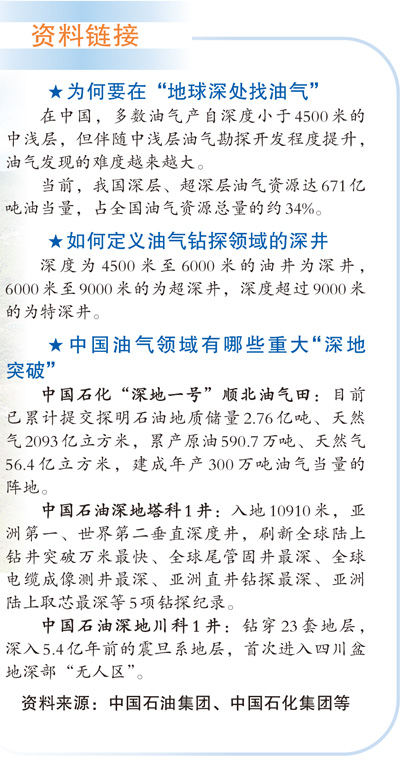
“十四五”,我们见证这些硬核突破丨掘进地下万米
Ren Min Ri Bao Hai Wai Ban· 2025-10-30 07:18
Core Insights - The successful completion of China's first 10,000-meter exploratory well, the Deep Taka 1 Well, marks a significant milestone in deep earth engineering, providing strong support for national energy security [4][8][11] Group 1: Project Overview - The Deep Taka 1 Well, located in the Taklamakan Desert, reached a depth of 10,910 meters, setting five drilling records, including the fastest land drilling to exceed 10,000 meters [4][7] - The well is part of a major deep earth engineering initiative by China National Petroleum Corporation (CNPC) in the Tarim Basin, which is recognized as a "forbidden zone" for exploration due to its complex geological conditions [5][8] Group 2: Technical Challenges - Drilling at such depths involves overcoming extreme environmental conditions, including temperatures reaching over 50 degrees Celsius in summer and nearly -30 degrees Celsius in winter [5][6] - The well had to penetrate 12 different geological layers, with significant variations in rock types, requiring constant adjustments to drilling techniques and equipment [6][9] Group 3: Technological Innovations - The project utilized advanced technologies, including a self-developed 12,000-meter automated drilling rig capable of lifting 900 tons, significantly enhancing operational efficiency [9][10] - A total of 10 proprietary technologies were developed for the project, including high-temperature resistant drilling fluids and high-strength drilling rods, which proved effective under extreme conditions [10][11] Group 4: Strategic Importance - The successful drilling of the Deep Taka 1 Well is crucial for China's energy security, as the country relies heavily on oil and gas imports, with a significant portion of its resources located in deep layers [11][12] - The well's completion is expected to facilitate further exploration in deep layers, which hold approximately 671 billion tons of oil equivalent, representing about 34% of China's total oil and gas resources [11][12] Group 5: Future Prospects - The completion of the Deep Taka 1 Well signifies a shift in China's drilling capabilities from occasional breakthroughs to routine operations, with plans for further deep drilling projects underway [13][14] - The exploration of deep earth is anticipated to yield valuable geological data, contributing to the understanding of ancient environments and the evolution of sedimentary basins [12][14]