
石油出口

Search documents
伊朗:哈尔克岛石油出口正常
中国能源报· 2026-03-28 13:30
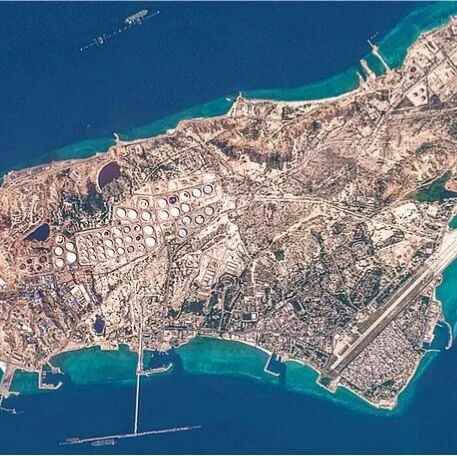
Core Viewpoint - The security situation on Khark Island is stable, and oil exports are proceeding normally despite external threats [1][3]. Group 1: Security and Oil Export - The Iranian Parliament's National Security and Foreign Policy Committee spokesperson stated that the security situation on Khark Island is stable, and oil exports are normal [1][3]. - Khark Island is described as a symbol of Iran's oil industry strength and resistance spirit, with the committee chairman emphasizing that the safety of the Persian Gulf and surrounding countries can only be ensured if foreign forces withdraw [3]. - The Iranian oil industry is reportedly better prepared than ever in terms of storage, loading, and sales, unaffected by threats from Israel and the United States [3]. Group 2: Military Actions and Implications - On March 13, U.S. military forces conducted a large-scale strike on Khark Island, claiming to have successfully targeted over 90 military objectives, including facilities for storing naval mines and missiles, while leaving oil infrastructure intact [3]. - Reports indicate that the Trump administration is considering options to occupy or blockade Khark Island to pressure Iran into reopening the Strait of Hormuz [3].

战争爆发以来,伊朗平均每天卖油能多赚2400万美元
财联社· 2026-03-27 05:36
Core Viewpoint - Iran has significantly increased its oil revenue since the onset of the US-Iran conflict, earning millions daily from oil sales, primarily due to its unique position as the only major oil exporter in the Middle East able to utilize the Strait of Hormuz [1][2]. Group 1: Oil Revenue and Export Dynamics - Iran's oil exports have remained stable at approximately 1.6 million barrels per day, consistent with pre-war levels, despite the ongoing conflict [2][3]. - The revenue from Iranian Light crude oil sales has risen to about $139 million per day in March, up from $115 million in February, indicating an increase of approximately $24 million daily since the conflict began [3]. - The price discount of Iranian Light crude compared to Brent crude has narrowed to $2.10 per barrel, the lowest in nearly a year, compared to over $10 before the conflict [3]. Group 2: Infrastructure and Export Facilities - The key oil export hub of Khark Island has not been targeted by US strikes, allowing Iran to continue loading tankers and exporting oil [4]. - Satellite imagery indicates a consistent presence of Very Large Crude Carriers (VLCCs) at Khark Island, with an increase in loading activities observed in March [4]. - Iran has also begun exporting oil from the Jask terminal, which has seen limited activity since its opening in 2021, with only five vessels loaded prior to recent developments [5]. Group 3: US Policy and Market Impact - Recent US policy changes have allowed for the sale of Iranian oil and products, which may have contributed to rising prices and reduced discounts compared to Brent crude [5]. - The US has extended the deadline for potential strikes on Iranian energy infrastructure, indicating a temporary easing of tensions [5].
俄罗斯输油重港接连遭攻击
财联社· 2026-03-26 05:34
Core Viewpoint - The recent drone attacks by Ukraine on Russian oil export facilities have significantly disrupted Russia's oil export capacity, potentially affecting 40% of its output, which poses new challenges to the already volatile energy market impacted by conflicts in the Middle East [1][5]. Group 1: Attack Details - The drone attacks targeted two major oil loading ports in the Baltic Sea, Primorsk and Ust-Luga, leading to a halt in loading operations and causing significant fires [2][3]. - The attacks are described as the largest scale assault on Russian oil export facilities during the ongoing conflict, increasing uncertainty in the global oil market [2][3]. Group 2: Impact on Oil Export Capacity - Estimates suggest that approximately 40% of Russia's crude oil export capacity, equating to about 2 million barrels per day, is currently stalled due to these attacks [5]. - The Primorsk port is a key terminal for Urals crude and high-quality diesel, with a daily handling capacity exceeding 1 million barrels [4]. Group 3: Broader Economic Implications - The disruption in oil exports is critical as Russian oil exports are a major source of revenue for the national budget and a cornerstone of its $2.6 trillion economy [7]. - Despite rising oil prices due to Middle Eastern conflicts, Russia risks losing out on potential revenue if it cannot resolve the significant limitations on its export capacity [7]. Group 4: Alternative Export Routes - With western export routes blocked, Russia may have to rely more on exports to Asian markets, but these routes are limited by transportation capacity [8].

特朗普下令:对伊朗石油出口枢纽发动“猛烈空袭”
中国能源报· 2026-03-14 01:34
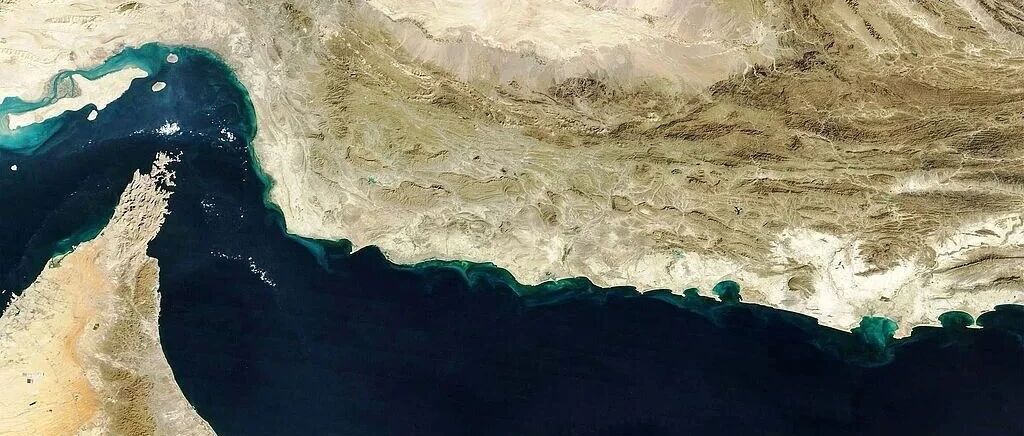
Core Viewpoint - The article discusses the recent military action taken by the U.S. against Iran, specifically the bombing of the oil export hub on Khark Island, which is crucial for Iran's oil exports [1][3]. Group 1: Military Action - On the evening of the 13th, U.S. President Trump announced via social media that the U.S. Central Command had bombed Khark Island, destroying all military targets on the island [1][3]. - Trump indicated that he chose not to destroy the oil infrastructure on the island but warned that he would reconsider this decision if Iran or any other country interfered with the freedom of navigation in the Strait of Hormuz [1][3]. Group 2: Strategic Importance - Khark Island is located in the northwestern part of the Persian Gulf and is Iran's largest crude oil export base, handling 90% of Iran's oil exports [1][3]. - The Iranian parliamentary speaker, Ghalibaf, stated that if the U.S. and Israel attack any Iranian islands in the Persian Gulf, Iran would abandon all restraint [1][3].

委内瑞拉1月份石油出口量反弹至每日80万桶
Xin Lang Cai Jing· 2026-02-02 14:57
Core Insights - Venezuela's oil exports rebounded from 498,000 barrels per day in December to approximately 800,000 barrels per day in January under U.S. control [1][2] - The U.S. imposed an oil embargo on Venezuela in December, leading to over 40 million barrels of crude and fuel being stranded, which forced PDVSA to cut production in early January [1][2] - The U.S. Treasury issued licenses in January to Vitol and Trafigura, allowing them to export the accumulated oil, which accelerated Venezuela's oil production, processing, and transportation [1][2] - January's export volume approached last year's average of 847,000 barrels per day, but PDVSA's partners must expedite exports to clear millions of barrels from storage [2] Group 1 - The U.S. Treasury issued a broad license allowing U.S. companies to engage with PDVSA for exporting, storing, transporting, and refining Venezuelan oil [3] - Chevron, a partner of PDVSA, is still awaiting separate licenses to expand its operations [3] - The U.S. became the main destination for Venezuelan crude oil in January, with exports of approximately 284,000 barrels per day, including Chevron's exports of 220,000 barrels per day, a significant increase from 99,000 barrels per day the previous month [3] Group 2 - Vitol and Trafigura exported about 12 million barrels of Venezuelan crude and fuel oil in January, averaging 392,000 barrels per day, primarily to storage facilities in the Caribbean [2][3]
Venezuela's oil exports bounce to 800,000 bpd in January under US control -shipping data
Reuters· 2026-02-02 13:33
Core Insights - Venezuela's oil exports increased significantly to approximately 800,000 barrels per day (bpd) in January, up from 498,000 bpd in December, following the U.S. control over the situation in the country [1] Industry Summary - The rise in oil exports indicates a recovery in Venezuela's oil production capabilities, which had been severely impacted in previous months [1] - The U.S. influence appears to be a critical factor in the stabilization and increase of Venezuela's oil export levels [1]
2025年阿尔及利亚原油及成品油重返多个阿拉伯国家市场
Shang Wu Bu Wang Zhan· 2026-01-22 14:39
Core Viewpoint - Algeria's oil and petroleum product exports are projected to exceed 762,000 barrels per day in 2025, maintaining a high overall scale despite a slight decrease compared to 2024 [1] Group 1: Export Dynamics - Algeria's oil exports are concentrated in five major markets: South Korea, France, Spain, the United States, and the United Kingdom, with South Korea leading at an average of 130,000 barrels per day [1] - The overall export volume in 2025 is expected to be 17,000 barrels per day lower than in 2024, yet still significantly higher than levels seen in 2022 and 2023, indicating resilience in Algeria's oil export structure [1] Group 2: Market Re-Entry - Three Arab countries are set to re-enter the Algerian "Sahara Blend" crude oil and petroleum product market in 2025, with the UAE importing approximately 13,000 barrels per day for the first time since 2023 [1] - Oman is also expected to receive about 6,000 barrels per day for the first time, while Tunisia is set to restore imports at an average of 25,000 barrels per month [1]
无人机在黑海袭击油轮 消息人士称哈萨克斯坦石油产量大幅下降
Xin Lang Cai Jing· 2026-01-14 01:04
Core Viewpoint - Two oil tankers, including one chartered by Chevron, were attacked by drones in the Black Sea while heading to a key oil loading terminal in Russia, which handles about 80% of Kazakhstan's oil exports to international markets [1] Group 1: Incident Details - The attacked tankers were en route to the Yuzhnaya Ozereyevka terminal, a significant point for Kazakhstan's oil exports [1] - Chevron confirmed that all crew members were safe and the vessel was stable, heading to a secure port while coordinating with operators and authorities [1] - The identity of the perpetrators behind the drone attack remains unclear [1] Group 2: Impact on Oil Production - A source indicated that Kazakhstan's oil and gas condensate production dropped by 35% from the average December output during the period from January 1 to January 12, primarily due to export restrictions through the terminal [1] - The Kazakhstan Energy Ministry stated that CPC continues to export oil through a mooring facility despite the incident [1]
两艘油轮据悉在里海石油管线的黑海装货码头附近遭袭
Xin Lang Cai Jing· 2026-01-13 11:32
Core Viewpoint - Two oil tankers, Delta Harmony and Matilda, were attacked near the Black Sea loading terminal of the Caspian Pipeline Consortium (CPC), potentially disrupting Kazakhstan's main oil export route [1][2]. Group 1: Incident Details - The two tankers were scheduled to load crude oil from Kazakhstan at the CPC offshore mooring point [1][2]. - The attack occurred after the vessels had left the CPC facility and were waiting to load [1][2]. - The extent of damage to the tankers is currently unknown [1][2]. Group 2: Impact on Oil Exports - The incident may further disrupt the loading operations of the CPC, which has already seen a significant decline in oil export volumes due to adverse winter weather and damage from a drone attack in November [1][2]. - These disruptions could lead shipowners to be more cautious about transporting CPC blend oil, resulting in a continuous increase in the premium for this oil due to reduced supply [1][2]. Group 3: Context of Attacks - Over the past six weeks, there has been an escalation in attacks on oil infrastructure and tankers in the Black Sea, with Ukraine targeting vessels associated with Russia to disrupt its oil exports and funding for the war [1][2]. - Ukraine claims that Russia is also attacking commercial vessels [1][2].
十几艘油轮“突破”美禁令,悄悄离开委水域
Xin Lang Cai Jing· 2026-01-05 14:04
Core Viewpoint - A number of oil tankers loaded with Venezuelan crude oil and fuel have recently left the country's waters, seemingly breaking the strict U.S. blockade, which may provide relief to the state-owned oil company, PDVSA [1][3][4] Group 1: Oil Tankers Movement - Approximately a dozen oil tankers have quietly departed from Venezuela, all of which are under U.S. sanctions [1][3] - At least four supertankers were confirmed to have left Venezuelan waters after briefly staying near the country's maritime border [4] - Another group of sanctioned vessels also left the country in an empty state after unloading imported products or completing domestic transport tasks [1][3] Group 2: Impact on Venezuelan Oil Company - The departure of these vessels may alleviate the situation for PDVSA, which had accumulated a significant amount of floating storage oil during the blockade that began last month [1][3] - Oil exports are a primary source of revenue for Venezuela, and the recent blockade had caused a temporary halt in these exports [4] Group 3: Compliance with Sanctions - It remains unclear whether the departure of these vessels violates U.S. sanctions [2][5]