伊朗轻质原油

Search documents
战争爆发以来,伊朗平均每天卖油能多赚2400万美元
财联社· 2026-03-27 05:36
Core Viewpoint - Iran has significantly increased its oil revenue since the onset of the US-Iran conflict, earning millions daily from oil sales, primarily due to its unique position as the only major oil exporter in the Middle East able to utilize the Strait of Hormuz [1][2]. Group 1: Oil Revenue and Export Dynamics - Iran's oil exports have remained stable at approximately 1.6 million barrels per day, consistent with pre-war levels, despite the ongoing conflict [2][3]. - The revenue from Iranian Light crude oil sales has risen to about $139 million per day in March, up from $115 million in February, indicating an increase of approximately $24 million daily since the conflict began [3]. - The price discount of Iranian Light crude compared to Brent crude has narrowed to $2.10 per barrel, the lowest in nearly a year, compared to over $10 before the conflict [3]. Group 2: Infrastructure and Export Facilities - The key oil export hub of Khark Island has not been targeted by US strikes, allowing Iran to continue loading tankers and exporting oil [4]. - Satellite imagery indicates a consistent presence of Very Large Crude Carriers (VLCCs) at Khark Island, with an increase in loading activities observed in March [4]. - Iran has also begun exporting oil from the Jask terminal, which has seen limited activity since its opening in 2021, with only five vessels loaded prior to recent developments [5]. Group 3: US Policy and Market Impact - Recent US policy changes have allowed for the sale of Iranian oil and products, which may have contributed to rising prices and reduced discounts compared to Brent crude [5]. - The US has extended the deadline for potential strikes on Iranian energy infrastructure, indicating a temporary easing of tensions [5].

俄伊石油暗战升级:1美元贴水背后的生死竞逐,中国稳坐能源棋局核心!
Sou Hu Cai Jing· 2026-02-27 15:53
Core Viewpoint - The energy market is witnessing a fierce competition between Russia and Iran as they vie for China's significant oil consumption, leading to a "price tug-of-war" in oil pricing [1] Group 1: Market Dynamics - India's oil imports from Russia have drastically decreased, with February's imports dropping over 40% compared to January, averaging only 600,000 barrels per day, which is a quarter of peak levels and half of last year's end figures [3] - The oil that was previously directed to India is now being redirected to China, where Iranian oil has already established a strong presence [3] - Russia has reduced its Urals crude oil price to a discount of $12 per barrel compared to Brent, down from a $10 discount in January, indicating a strategic price cut to capture market share [3] - Iran's light crude oil discount has increased from $8 to $11 per barrel, reflecting the competitive pressure from Russia [3] Group 2: Economic Implications - Russia is facing a potential stagflation by 2026, struggling with growth and inflation, making oil exports crucial for its fiscal stability [5] - The Kremlin is heavily reliant on oil exports to maintain financial stability amidst rising military expenditures and domestic economic challenges [5] - Iran's economy is under severe strain due to long-term sanctions, leading to a desperate need for oil revenue, with China being its primary customer [5] Group 3: Strategic Positioning - China is leveraging the competitive pricing between Russia and Iran to secure energy supplies at lower costs, which is beneficial for its manufacturing sector [7] - The price differences, while seemingly minor, accumulate significant economic benefits for China, enhancing its energy security and economic development [7] - The ongoing competition between Russia and Iran for China's market is indicative of the strategic importance of energy resources in global geopolitics [7]
印度退场,中国成唯一买家!俄伊石油价格战,谁在偷笑谁在哭?
Sou Hu Cai Jing· 2026-02-26 23:42
Group 1 - The article discusses a fierce price war for oil between Russia and Iran, both targeting China as the largest crude oil importer in the world [2][12] - Russia's Ural crude oil is being sold at a discount of $12 per barrel compared to the Brent benchmark, which has increased from $10 in January 2026 [2][3] - Iran's light crude oil discount has risen from $8-9 per barrel in December 2025 to $11 per barrel in February 2026, indicating pressure from Russian pricing [2][3] Group 2 - The price war is primarily affecting China's independent refineries, known as "teapot refineries," which have limited processing capacity and are subject to strict import quotas [3][11] - In February 2026, Russian oil exports to China reached an average of 2.09 million barrels per day, a 20% increase from January, making China the largest recipient of Russian sea-borne oil [3][5] - In contrast, Iran's oil exports to China have decreased to an average of 1.2 million barrels per day, down 12% from the previous year, with significant inventory buildup at sea [5][8] Group 3 - The economic situations of both Russia and Iran are dire, with Russia facing declining oil and gas revenues due to Western sanctions and military conflicts [5][6] - India's reduced oil purchases from Russia, influenced by U.S. sanctions, have forced Russia to offer deeper discounts to China to maintain cash flow [6][9] - Iran's economy is heavily reliant on oil exports to China, which account for over 90% of its maritime oil exports, making it vulnerable to price competition from Russia [8][11] Group 4 - The ongoing price war is reshaping global oil trade dynamics, with both countries competing primarily on price due to the structural decline in Indian oil purchases [12] - Despite the aggressive pricing strategies, both Russia and Iran face challenges in maintaining fiscal stability as deeper discounts erode their already strained revenues [12] - The competition is exacerbated by the limited absorption capacity of China's independent refineries, leading to significant floating oil inventories in Asian waters [11][12]
日均207万桶!中国顶着美国500%关税狂买俄油,放着伊朗便宜货不要图啥?
Sou Hu Cai Jing· 2026-02-19 17:16
Group 1 - The core observation is that while the U.S. threatens a 500% punitive tariff on countries buying Russian oil, China has increased its imports to an average of 2.07 million barrels per day, reaching a historical high [1] - India's reduction of Russian oil imports to an average of 1.15 million barrels per day, nearly halving its previous volume, is a strategic move to negotiate trade agreements with Washington, using Russian oil as a bargaining chip [1][2] - The discount on Russian oil, which is $9-11 per barrel cheaper than Brent crude, presents a significant opportunity for Chinese refineries, especially for smaller ones that rely on market prices [1][2] Group 2 - China's energy strategy emphasizes diversification, with a focus on securing oil from multiple sources, including Russia, especially when opportunities arise due to geopolitical shifts like India's withdrawal from Russian oil [2] - The U.S. 500% tariff proposal raises questions about its implementation, including its impact on allies and the potential disruption in the international oil market, suggesting that the actual enforcement may be less severe than the announcement [3] - The sustainability of China's increased Russian oil imports depends on three variables: the resolution of the Russia-Ukraine conflict, the stability of the Iranian situation, and the supply status of Venezuela, with Russian oil currently offering the best price-performance ratio [4]

伊朗将7月销往亚洲的伊朗轻质原油价格定为阿曼/迪拜均价升水1.55美元/每桶。
news flash· 2025-07-09 12:21
Core Viewpoint - Iran has set the price for its light crude oil sold to Asia in July at a premium of $1.55 per barrel over the average of Oman/Dubai prices [1] Pricing Information - The pricing strategy indicates a premium pricing approach for Iranian light crude oil in the Asian market [1] - The specific price set reflects market conditions and competitive positioning against other oil suppliers in the region [1]
研客专栏 | 中东潘多拉魔盒打开?
对冲研投· 2025-06-17 13:25
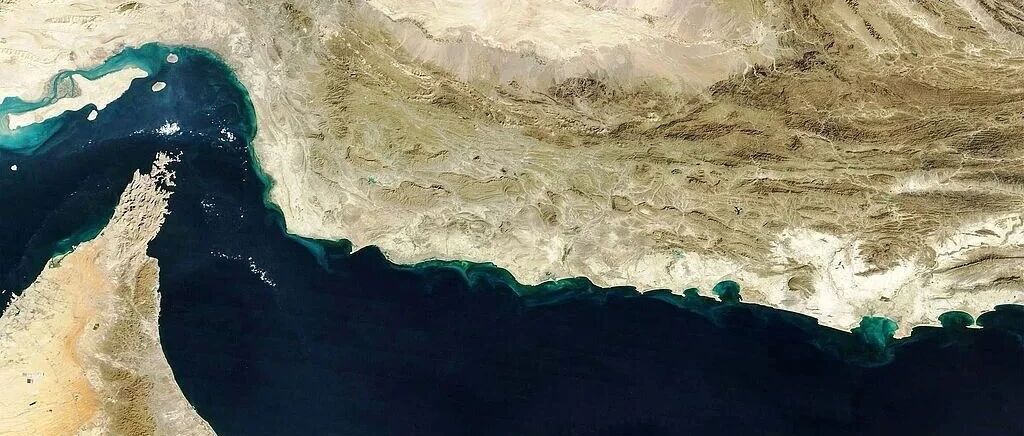
Core Viewpoint - The article discusses the escalating geopolitical risks in the Middle East due to the Israel-Iran conflict, particularly focusing on the potential impacts on oil and gas markets, as well as the infrastructure of Iran's energy sector [1]. Group 1: Israel-Iran Conflict and Energy Impact - Since June 11, the Israel-Iran conflict has intensified, with Israel conducting airstrikes on Iran, targeting not only military and nuclear facilities but also energy infrastructure [1]. - The conflict has not yet significantly impacted Iran's oil and gas exports, but there is a risk of escalation that could affect the global oil market [1]. - The market is currently assessing extreme scenarios regarding oil and gas supply disruptions until clear signs of de-escalation emerge [1]. Group 2: Iran's Oil and Gas Infrastructure - Iran holds the world's third-largest oil reserves and the second-largest natural gas reserves, with an average crude oil production of 3.314 million barrels per day and exports of 1.632 million barrels per day since 2025 [2]. - 86% of Iran's oil reserves are located in the Khuzestan basin, with the majority being light and heavy crude oil types [4]. - The main oil export port, Khark Island, has a loading capacity of 7 million barrels per day, making it critical for Iran's oil exports [5]. Group 3: Refining Capacity and Future Plans - Iran has 16 refineries with a total refining capacity of 2.41 million barrels per day, with plans to increase this capacity to 3.5 million barrels per day by 2026 [6]. - The refining output primarily consists of LPG, fuel oil, and diesel [6]. Group 4: Strategic Importance of the Strait of Hormuz - The Strait of Hormuz is a vital oil shipping route, with an estimated oil transport volume of 20.3 million barrels per day in 2024, accounting for 26.8% of global oil maritime trade [11]. - The potential for disruptions in this strait poses significant risks to global oil supply, as alternatives for oil transport are limited [13]. Group 5: Natural Gas Market Dynamics - Iran's South Pars gas field, one of the largest in the world, has faced attacks that could impact its production capacity, which is crucial for Iran's natural gas output [24]. - Despite being a major natural gas producer, Iran's market is relatively closed, with limited export capabilities primarily through pipelines to neighboring countries [25]. - The geopolitical tensions could lead to reduced domestic production and increased reliance on LNG imports for countries like Turkey, which may affect international markets [30]. Group 6: LPG Export Trends - Iran is a significant source of LPG exports in the Middle East, with projections for 2024 indicating an export volume of approximately 11.5 million tons, representing 25% of the region's total [36]. - The potential disruptions in Iran's gas fields could significantly impact its LPG production and exports, particularly to China, which is a major importer [36].