石油禁运

Search documents
历次中东战争回顾,做好滞涨冲击准备
Zi Jin Tian Feng Qi Huo· 2026-03-17 06:30
Report Industry Investment Rating - Not provided Core Views - The new Iranian Supreme Leader Mujtaba's first statement indicates that blocking the Strait of Hormuz is Iran's strategic means and a major weapon against the US and Israel. Trump's TACO attitude exposes the US's weakness, and Iran will take advantage of it to raise negotiation demands, with conditions almost unacceptable to the US and Israel [5]. - Trump is in an awkward situation where he can't end the war, and ending it would be useless. Even if Trump ends the war unconditionally, Iran won't stop the blockade. The US currently has only two aircraft carrier battle - groups in the Middle East, far less than the six used in the Iraq war. The current military strength is insufficient to suppress Iran or even fulfill escort tasks. The US may have to escalate the war, launch a full - scale attack on Iran, or even carry out another decapitation to have conditions for peace talks [5]. - Looking back at previous Middle East wars, especially the Yom Kippur War, when oil embargo was first used as a weapon, it led to global economic "stagflation". US industrial production decreased by 14%, and Japanese industrial production decreased by over 20%, triggering a serious economic crisis in Western countries. Last year, low - cost energy suppressed the US CPI, and now oil prices above $100 will trigger an inflation chain reaction, possibly pushing the CPI back to a high level [5]. - The final outcomes of previous Middle East wars were products of compromise after extreme games among major powers. In the Yom Kippur War, the US and Israel finally compromised and stopped the war under the threat of the Soviet Union's possible direct participation and nuclear deterrence. In the current Middle East crisis, similar to the Yom Kippur War, Russia has benefited the most so far. It has dragged the US into the Middle East war, raised oil prices, which can reduce Western aid to Ukraine, increase Russia's income, and raise Russia's negotiation chips. Although Russia can't provide a large amount of weapons to Iran, it still plays a role in information warfare and diplomacy. China clearly opposes the war but has no effective means. The oil shock is not beneficial to the Chinese economy, but China is not the most affected. If the US is severely hit, it is beneficial for China to increase its negotiation chips with the US. The game among major powers in the Middle East is far from reaching the limit [7]. - In the market, the US stock market shows an arc - shaped top trend, and the US Treasury yield curve moves towards a bear - flattening. Stock markets in India, South Korea, Japan and other countries with high energy risk exposure are the most affected. Overall, the conditions for all parties to end the war and hold peace talks are not met, and war escalation is a high - probability event. Investment strategies should focus on risk prevention. The A - share market also faces great pressure and may need to fall to create room for opportunities this year [8]. Summary by Related Catalogs Why is the impact so huge? - Strategic counter - measure upgrade: Arab oil - producing countries first used oil as a geopolitical weapon rather than just an economic commodity [12]. - High global dependence: Western countries at that time were highly dependent on Middle East oil, with nearly half of their total oil demand imported from Arab countries [12]. - Supply - demand imbalance: OPEC's significant production cut (25%) and embargo jointly tightened the global oil supply [12]. - Dollar system resonance: Combined with the collapse of the Bretton Woods system in 1971 and the decline of the US dollar's credit, these three factors jointly led to a super oil - price market [12]. How did the war end? - Battlefield turn and cease - fire resolution (October 22 - 26): On October 22, the UN Security Council passed Resolution 338, requiring both sides to "immediately cease fire and implement Resolution 242". The cease - fire took effect at 6:52 pm Israeli time [12]. - Cease - fire breakdown: The Israeli army continued to advance and surrounded Egypt's 3rd Army on the 23rd, controlling the refinery on the outskirts of Suez City and cutting off its supply line [12]. - Second cease - fire: On October 24, under the dual pressure of the US and the Soviet Union, both sides finally complied with the cease - fire agreement, and large - scale fighting basically ended. On October 26, the formal cease - fire took effect, and the war actually ended (lasting only 21 days) [12]. Oil price trends and impacts - The current round of oil prices is likely to peak before the end of the war, mainly due to information expectations in the futures market and the large - scale oil reserves established by the G7, which have a certain buffering effect. This oil crisis may bring a major opportunity for the revitalization of the new - energy industry in a trough, and it is recommended to focus on it [13]. - During the Fourth Middle East War, the end of the military conflict did not mean the end of the energy crisis, and the political impact of the oil weapon had a significant lag. The decline in oil prices was the result of the joint action of political negotiations, market regulation, and policy responses. This crisis promoted the global energy - security strategic transformation, including Western countries establishing oil reserves, promoting energy diversification, accelerating the R & D of new - energy technologies, and the rise of the Japanese automobile industry [15]. - Specific oil - price changes at different war nodes: When the war ended on October 26, 1973, oil prices continued to rise from $10 to $13 due to the ongoing embargo and market panic; on January 18, 1974, when the Egypt - Israel cease - fire agreement was reached, oil prices peaked at $13 as the peace process started and the market expected the embargo to be lifted; on March 18, 1974, when the embargo was lifted, oil prices began to fall as supply recovered and political risk premiums disappeared; in September 1975, when the second - stage Egypt - Israel agreement was reached, oil prices stabilized at $9 - $10 as the Middle East situation eased and the market fully adapted to the new price system [14].
美石油封锁之际 古巴外长抵达莫斯科
Xin Lang Cai Jing· 2026-02-18 10:01
Core Viewpoint - The visit of Cuban Foreign Minister Bruno Rodriguez to Moscow coincides with a new round of U.S. oil sanctions against Cuba, highlighting geopolitical tensions and the potential for Russia to engage in constructive dialogue with the U.S. regarding Cuba's oil embargo [1] Group 1: U.S. Sanctions - The U.S. has implemented a new round of oil sanctions against Cuba, which poses significant challenges for the Cuban economy [1] - President Trump signed an executive order on January 29, threatening to impose tariffs on countries providing oil to Cuba [1] Group 2: Russia's Position - Russian officials, including presidential press secretary Dmitry Peskov, have expressed a desire for constructive dialogue with the U.S. to address the oil embargo on Cuba [1] - The meeting between Rodriguez and Russian Foreign Minister Sergey Lavrov may indicate Russia's willingness to support Cuba amid U.S. sanctions [1]
10年来首次,古巴1月石油进口量降至0,将对燃料实行限购!俄罗斯将援助古巴一批原油和燃料;特朗普威胁将对给古巴提供石油的国家加税
Mei Ri Jing Ji Xin Wen· 2026-02-13 02:12
Group 1 - Russia is set to send humanitarian aid in the form of crude oil and fuel to Cuba amid a severe fuel crisis caused by U.S. sanctions [1] - The U.S. oil embargo has significantly impacted the daily lives of Cuban citizens and the country's economic development, leading to fuel shortages and the closure of some hotels [2] - Cuba's oil imports dropped to zero in January 2023 for the first time since 2015, with the last oil tanker unloading in December 2022 [3] Group 2 - The Cuban government has implemented a series of emergency measures, including fuel rationing, in response to the crisis [2][3] - Russia's presidential spokesperson expressed a desire for constructive dialogue with the U.S. to address the oil embargo on Cuba [4] - The U.S. has reportedly controlled over $1 billion in Venezuelan oil sales, with expectations of generating an additional $5 billion in revenue in the coming months [5][6]


美国扣押俄油轮意欲何为
Qi Lu Wan Bao· 2026-01-09 10:05
Group 1 - The U.S. military announced the seizure of two oil tankers related to Venezuela, one of which was flying the Russian flag, with potential legal actions against the crew [2][6] - The operation to seize the "Bella 1" tanker was executed under a presidential order, with U.S. Navy SEALs involved in the boarding [3][4] - The "Bella 1" tanker, previously named "Waterman," was reportedly empty and intended to load oil in Venezuela but was unable to dock due to U.S. sanctions [3][5] Group 2 - The U.S. has intensified its blockade on Venezuelan oil, with a comprehensive ban on all sanctioned tankers entering or leaving Venezuela [5][6] - Following the seizure, U.S. officials emphasized that only energy trade recognized by the U.S. would be permitted, asserting significant influence over Venezuela's oil revenue [6][7] - Russia condemned the seizure, claiming it violated international law and called for humane treatment of the Russian crew members [7]
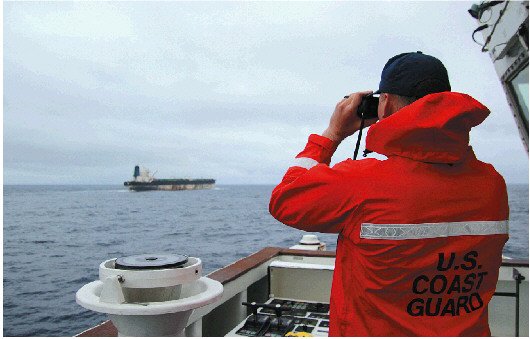
美军连扣两艘油轮 美方:都是委内瑞拉“影子舰队”
Xin Hua She· 2026-01-08 05:05
Core Viewpoint - The U.S. has seized two oil tankers, "Bella 1" (renamed "Mariner") and "Sophia," for violating sanctions related to Venezuela's oil exports, highlighting ongoing tensions and enforcement of U.S. sanctions against Venezuela's government [2][3][4]. Group 1: Seizure of "Bella 1" (Mariner) - The U.S. European Command announced the seizure of the "Bella 1" oil tanker, which was reportedly flying a Russian flag, due to violations of U.S. sanctions [2]. - The operation was executed by the U.S. Coast Guard and military, with the vessel being tracked and seized in the North Atlantic under a federal court arrest warrant [2]. - The White House Press Secretary stated that the tanker is part of Venezuela's "shadow fleet" transporting sanctioned oil and is considered stateless due to flying a false flag [3]. Group 2: Seizure of "Sophia" - The U.S. Southern Command reported the interception of the "Sophia" oil tanker, identified as a stateless vessel from the "shadow fleet," while it was sailing in international waters [4]. - The U.S. Coast Guard is currently controlling the "Sophia" and is set to take it to the U.S. for further action [4]. Group 3: Context of Sanctions - The "Bella 1" was previously pursued by the U.S. Coast Guard in December 2025 and was intended to load oil in Venezuela but remained in a state of emptiness due to U.S. blockades [3]. - The U.S. government continues to enforce bans on all vessels identified as illegally transporting oil, emphasizing the significant influence and control the U.S. has over Venezuela's oil exports [5].
美国为何要扣押俄罗斯油轮
Xin Lang Cai Jing· 2026-01-08 04:34
Core Viewpoint - The U.S. military announced the seizure of two oil tankers linked to Venezuela, one of which was flying the Russian flag, raising questions about the implications for U.S.-Russia relations and the enforcement of sanctions against Venezuela [1]. Group 1: Seizure Details - The U.S. Coast Guard tracked the "Bella 1" tanker for over two weeks before seizing it in the North Atlantic, despite it being thousands of kilometers away from Venezuela [1]. - The second tanker, named "Sophia," was seized in international waters and is described as a "stateless" vessel part of a "shadow fleet" under sanctions [1]. - The U.S. Secretary of State stated that the Venezuelan government cannot transport oil or generate revenue without U.S. permission, highlighting the significant influence the U.S. holds over Venezuelan oil exports [1]. Group 2: U.S.-Russia Relations - Russia condemned the seizure, labeling it as piracy and a violation of international law, asserting that freedom of navigation applies in international waters [1]. - The Russian Foreign Ministry is closely monitoring the situation and has demanded humane treatment for Russian citizens aboard the seized vessels [1]. - The White House Press Secretary indicated that the seized tanker violated U.S. sanctions, and crew members could face prosecution under U.S. law, suggesting potential escalation in tensions between the U.S. and Russia [1].
美国将“无限期”控制委内瑞拉石油销售
Xin Lang Cai Jing· 2026-01-08 03:46
Core Viewpoint - The U.S. government, led by Energy Secretary Chris Wright, has announced an indefinite control over Venezuelan oil sales, aiming to stabilize and increase production while ensuring that the proceeds benefit the Venezuelan people [1]. Group 1: U.S. Control Over Venezuelan Oil - The U.S. will control not only the inventory of Venezuelan oil but also future sales indefinitely, with revenues deposited into U.S. government-controlled accounts [1]. - The U.S. aims to provide heavy crude oil diluents, parts, equipment, and services to stabilize and grow Venezuelan oil production, potentially increasing daily output by hundreds of thousands of barrels in the coming years [1]. - President Trump stated that Venezuela would transfer 30 to 50 million barrels of "sanctioned high-quality oil" to the U.S., with sales proceeds personally overseen by him [1]. Group 2: Military Actions and Sanctions - The U.S. has conducted a large-scale military strike against Venezuela, forcibly controlling President Maduro and his wife, with the motive of seizing Venezuela's oil resources [2]. - The U.S. government will continue to enforce sanctions against all vessels accused of illegally transporting oil, with crew members potentially facing trial in the U.S. [3]. - The U.S. has seized a Russian-flagged oil tanker for violating sanctions, asserting significant influence and control over Venezuelan oil transportation and revenue generation [3]. Group 3: International Reactions - The Russian Ministry of Transport condemned the U.S. for seizing the oil tanker, asserting that no country has the right to use force against vessels under another nation's jurisdiction [4]. - The Russian Foreign Ministry demanded humane treatment for Russian citizens aboard the seized tanker and called for their safe return [4].
美国掠取委内瑞拉5000万桶石油?美媒:委温和的经济复苏可能遭扼杀
Huan Qiu Shi Bao· 2026-01-08 00:15
Core Viewpoint - The announcement by the U.S. President regarding the transfer of 30 to 50 million barrels of Venezuelan oil to the U.S. raises concerns about the viability and risks associated with investing in Venezuela's oil industry, which is currently facing significant challenges [1][5]. Group 1: Oil Transfer Announcement - The Venezuelan interim government plans to transfer 30 to 50 million barrels of oil to the U.S., which is equivalent to approximately 30 to 50 days of Venezuela's oil production [3][5]. - The estimated value of this oil transfer could exceed $2.8 billion based on current WTI crude oil prices [3]. - The oil is expected to be transported by tankers directly to U.S. unloading docks for processing [3]. Group 2: Challenges in Venezuelan Oil Industry - Despite the potential for increased oil production, U.S. oil companies are cautious due to the deteriorating state of Venezuela's oil industry and the risk of significant financial loss [1][5]. - The Venezuelan oil infrastructure is in a state of disrepair, requiring an estimated $53 billion in investment over the next 15 years just to maintain current production levels of approximately 1.1 million barrels per day [5]. - The ongoing U.S. oil embargo has severely restricted Venezuela's oil exports, with predictions that over 70% of the country's oil production could be halted this year [5]. Group 3: Economic Implications - The economic pressure from the U.S. is likely to hinder Venezuela's mild recovery from years of hyperinflation and food shortages, potentially leading to another economic collapse [6]. - Experts warn that the collapse of oil revenues will have severe consequences for the Venezuelan population, possibly resulting in famine or a mass migration crisis [6]. - The forced transfer of oil from third-party investments in Venezuela to the U.S. is viewed as unacceptable and could cause long-term damage to the Venezuelan economy [6].
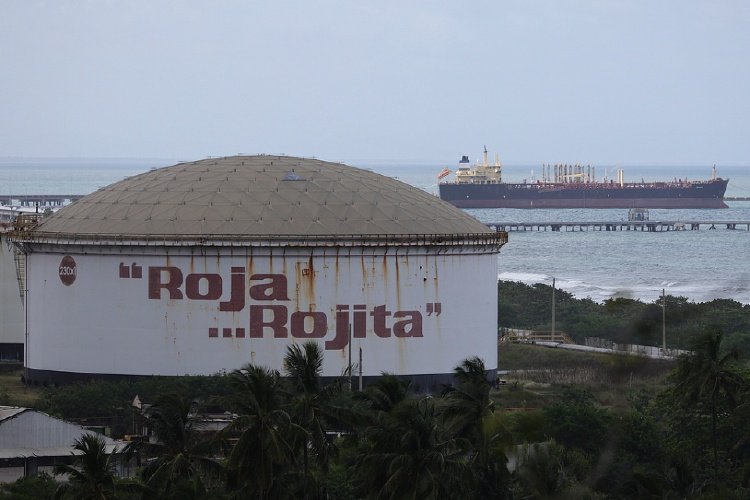
美国连扣两艘,俄方发声
Huan Qiu Wang· 2026-01-07 22:52
Core Viewpoint - The Russian Ministry of Transport condemned the U.S. for seizing oil tankers, asserting that no country has the right to use force against vessels under another nation's jurisdiction [1][2]. Group 1: U.S. Actions - The U.S. European Command announced the seizure of the "Bella 1" oil tanker, which allegedly flies the Russian flag, citing violations of U.S. sanctions [3][5]. - The U.S. Southern Command reported intercepting a stateless oil tanker named "Sophia," which was also under sanctions, in international waters [7]. - U.S. officials indicated that crew members from the seized tankers may be brought to the U.S. for prosecution due to violations of U.S. laws [8]. Group 2: Russian Response - The Russian Ministry of Transport emphasized that the "Mariner" vessel received temporary permission to sail under the Russian flag according to Russian and international law [1]. - The Ministry reiterated that freedom of navigation applies in international waters, and no nation can use force against vessels under another country's jurisdiction [2]. Group 3: Context of Seizures - The "Bella 1" tanker was reportedly empty and had previously attempted to load oil in Venezuela but was unable to do so due to U.S. blockades [5]. - The U.S. Secretary of State highlighted that the Venezuelan government cannot transport oil or generate revenue without U.S. permission, indicating significant U.S. influence and control over the situation [9].

委内瑞拉对亚洲石油出口陷入停滞
中国能源报· 2026-01-07 10:24
Group 1 - Venezuela's oil exports to Asia have been halted for five days due to U.S. sanctions, impacting the country's main oil customers [1] - Chevron, a major partner of Venezuela's state oil company, has resumed oil exports to the U.S. after the suspension of exports to Asia [1] - In December, at least 12 sanctioned tankers loaded approximately 12 million barrels of crude oil and refined products destined for Asia, navigating under "stealth mode" to evade U.S. sanctions [1] Group 2 - The halt in oil exports to Asia, combined with significant inventory buildup of crude and residual oil, may force Venezuela's oil company to further expand its recently initiated production cuts [2]