
经济崩溃

Search documents
美国掠取委内瑞拉5000万桶石油?美媒:委温和的经济复苏可能遭扼杀
Huan Qiu Shi Bao· 2026-01-08 00:15
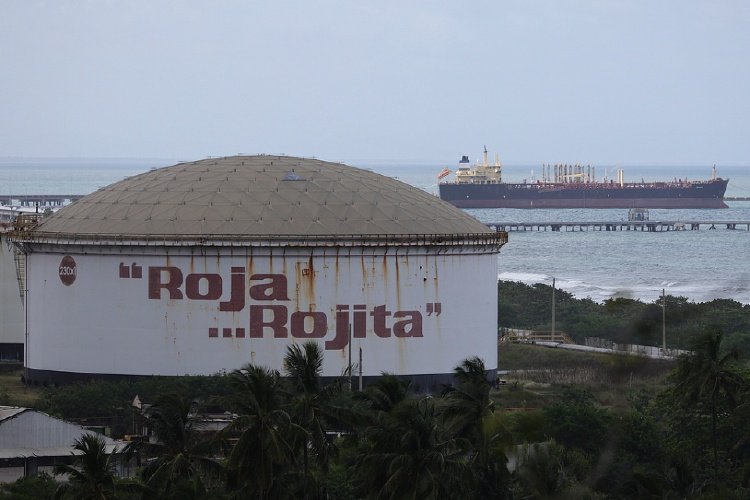
Core Viewpoint - The announcement by the U.S. President regarding the transfer of 30 to 50 million barrels of Venezuelan oil to the U.S. raises concerns about the viability and risks associated with investing in Venezuela's oil industry, which is currently facing significant challenges [1][5]. Group 1: Oil Transfer Announcement - The Venezuelan interim government plans to transfer 30 to 50 million barrels of oil to the U.S., which is equivalent to approximately 30 to 50 days of Venezuela's oil production [3][5]. - The estimated value of this oil transfer could exceed $2.8 billion based on current WTI crude oil prices [3]. - The oil is expected to be transported by tankers directly to U.S. unloading docks for processing [3]. Group 2: Challenges in Venezuelan Oil Industry - Despite the potential for increased oil production, U.S. oil companies are cautious due to the deteriorating state of Venezuela's oil industry and the risk of significant financial loss [1][5]. - The Venezuelan oil infrastructure is in a state of disrepair, requiring an estimated $53 billion in investment over the next 15 years just to maintain current production levels of approximately 1.1 million barrels per day [5]. - The ongoing U.S. oil embargo has severely restricted Venezuela's oil exports, with predictions that over 70% of the country's oil production could be halted this year [5]. Group 3: Economic Implications - The economic pressure from the U.S. is likely to hinder Venezuela's mild recovery from years of hyperinflation and food shortages, potentially leading to another economic collapse [6]. - Experts warn that the collapse of oil revenues will have severe consequences for the Venezuelan population, possibly resulting in famine or a mass migration crisis [6]. - The forced transfer of oil from third-party investments in Venezuela to the U.S. is viewed as unacceptable and could cause long-term damage to the Venezuelan economy [6].

伊朗,突发!崩盘、失控!发生了什么?
券商中国· 2025-12-30 23:56
Core Viewpoint - Iran is facing a severe economic crisis characterized by a historic low of the Iranian rial at 42,125 rials per US dollar and a rapid inflation rate of 42.2% as of December, leading to widespread protests and civil unrest [1][4]. Group 1: Economic Situation - The Iranian rial has depreciated significantly, reaching its lowest value against the US dollar, which has contributed to economic chaos and financial distress for households [1][4]. - Inflation in Iran has accelerated to 42.2%, exacerbating the economic challenges faced by the population [1]. - The Iranian economy is grappling with soaring inflation, a collapsing currency, stagnant GDP growth, and capital flight due to US sanctions [4][6]. Group 2: Protests and Civil Unrest - Protests have erupted in Tehran and other cities, with demonstrators expressing their frustration over rising inflation and the currency crisis [2][3]. - The protests have spread to multiple cities, including Mashhad, Kermanshah, and Hamedan, with participants engaging in confrontations with security forces [3]. - Merchants in Tehran have vowed to extend their strikes, indicating a sustained wave of civil disobedience against the government [3]. Group 3: Government Response - Iranian President Ebrahim Raisi has stated that the government is prioritizing economic reforms and dialogue with protesters, emphasizing the importance of citizens' livelihoods [5]. - The resignation of the Central Bank Governor has been reported, with indications that the government is seeking to respond to public discontent and stabilize the situation [6]. - Raisi's administration is under pressure to demonstrate responsiveness to societal demands amid ongoing economic difficulties and protests that have persisted since 2017 [6].
中国要小心了!日元大跌,经济陷入崩溃,警惕日本动武转移矛盾
Sou Hu Cai Jing· 2025-12-27 11:12
Economic Overview - Japan's economy has been struggling, with a projected GDP growth of only around 1% for 2025, significantly below global averages [1] - The yen has depreciated sharply against the dollar, falling from over 140 to around 156, with a low of 157.76 reached in December [1] - Japan's debt has exceeded 230% of GDP, with interest payments consuming a large portion of the budget, leading to a cycle of increased borrowing for economic stimulus [1] Trade and Export Challenges - While some Japanese exports have benefited, the rising import costs have created difficulties for ordinary citizens [1] - The trade surplus is shrinking, and Japan's foreign reserves are under pressure, necessitating the purchase of U.S. Treasury bonds, which could lead to greater losses as the yen depreciates [1] Political and Military Developments - The rise of right-wing political forces is evident, with the potential election of a hardline leader in 2025, who may push for increased nationalism and military spending [3] - Japan's defense budget is set to exceed 9 trillion yen for the fiscal year 2026, marking a significant increase and indicating a shift towards military expansion [5][7] - Discussions around nuclear capabilities have intensified, with Japan possessing over 44 tons of plutonium, raising concerns about potential military ambitions [3][5] International Relations and Security Concerns - The U.S. has taken a somewhat ambiguous stance on Japan's nuclear discussions, emphasizing Japan's role in nuclear non-proliferation while also offering security assurances [5] - Neighboring countries, including China and North Korea, have expressed concerns over Japan's military expansion and nuclear ambitions, highlighting regional tensions [5][10] - Japan's military cooperation with the Philippines and discussions on missile exports signal a shift in defense strategy, potentially escalating regional conflicts [7][10]
联合国报告警告巴勒斯坦陷入经济崩溃
Xin Hua She· 2025-11-26 02:41
Core Insights - The United Nations Conference on Trade and Development (UNCTAD) reported that the prolonged military actions and long-term restrictions have led to the most severe economic contraction in the occupied Palestinian territories on record, pushing the economy from a long-term recession towards near-total collapse [1] Economic Impact - The report highlights that the ongoing escalation of the situation has significantly deteriorated the economic conditions in the region, marking a critical point in the economic decline [1]
联合国报告:巴勒斯坦被占领土陷入经济崩溃
Yang Shi Xin Wen· 2025-11-25 09:48
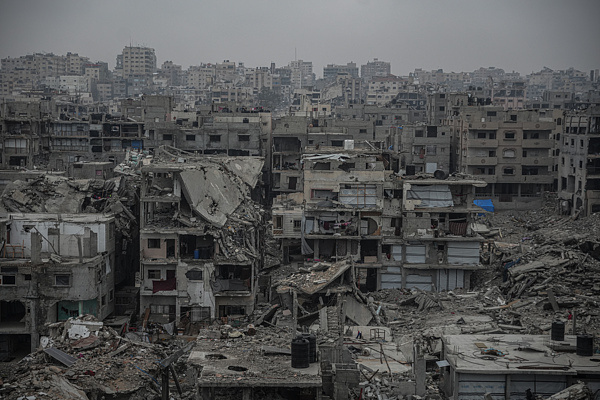
Core Insights - The United Nations Conference on Trade and Development (UNCTAD) reported that the prolonged military actions and long-term restrictions have led to the most severe economic contraction in the occupied Palestinian territories on record, erasing decades of development gains and deepening fiscal and social vulnerabilities [1][2] Economic Impact - The economic crisis in the occupied Palestinian territories ranks among the top ten most severe economic crises globally since 1960, with Gaza experiencing the worst economic crisis on record [1][2] - The Palestinian economy has transitioned from a long-term recession to near-total collapse, affecting all sectors including economic, social, humanitarian, and environmental [5] - Gaza's GDP is projected to shrink by 87% from 2023 to 2024, falling to $362 million, with per capita GDP dropping to $161, making it one of the lowest globally [7] Fiscal Challenges - A sharp decline in fiscal revenues, compounded by the Israeli government's withholding of tax revenues, severely limits the Palestinian government's ability to maintain basic public services and invest in recovery efforts [5] - The estimated cost for rebuilding and restoring Gaza exceeds $70 billion, highlighting the scale of investment needed for infrastructure and livelihood recovery [7] Call for Action - UNCTAD urges the international community to take immediate substantive measures to halt the economic decline, address the humanitarian crisis, and lay the groundwork for lasting peace and development [7] - The report calls for a comprehensive recovery plan for the occupied Palestinian territories, coordination of international aid, restoration of withheld tax revenues, and measures to ease restrictions on trade, movement, and investment [7]
俄军持续轰炸,乌多地能源设施被毁,这个冬天泽连斯基不会好过了
Sou Hu Cai Jing· 2025-10-13 03:19
Core Insights - The recent large-scale airstrikes by Russian forces targeted Ukraine's energy infrastructure, marking a significant escalation in the conflict [1][3][4] Group 1: Attack Details - Ukrainian President Zelensky reported that 465 drones and 32 missiles were used in the attacks, affecting multiple energy points across the country [3] - The strikes have led to power outages in nine regions due to energy shortages [3][4] - The attacks are described as a coordinated effort to disrupt essential services before winter, with a focus on power generation and distribution facilities [4] Group 2: Impact on Energy Supply - Approximately 60% of Ukraine's natural gas facilities have been destroyed, exacerbating the energy crisis as the country relies on imports for heating [4] - The government estimates a need for 5.8 billion cubic meters of natural gas for winter heating, with a current shortfall that necessitates raising about $2.2 billion to address the heating gap [4] Group 3: Economic Consequences - The energy crisis is pushing Ukraine's economy to the brink of collapse, with many factories halting production due to power outages [8] - The Zaporizhzhia nuclear power plant is facing operational challenges, with only 7 out of 18 diesel generators functioning, leading to a critical power supply situation [6][8] Group 4: Strategic Dilemmas - The Ukrainian government faces a difficult choice between allocating funds for civilian needs and continuing military efforts, which could impact public support [6] - The reliance on external aid for energy restoration is uncertain, with potential delays in assistance from European countries [8]

货币持续贬值也门民众陷“工资买不起大米”困境
Sou Hu Cai Jing· 2025-07-25 04:14
Group 1 - The Yemeni currency has depreciated significantly, with the exchange rate falling below 2900 riyals per 1 USD, marking a historical low and highlighting the ongoing economic deterioration in Yemen [1][3] - The sharp decline in the exchange rate has led to soaring prices, severely diminishing the purchasing power of the Yemeni people, making daily life increasingly difficult [1][3] - Oil exports, a critical component of Yemen's economy, have been completely halted due to attacks on oil facilities, resulting in a drastic reduction in foreign exchange income and a significant rise in prices of essential goods [3][6] Group 2 - The lack of effective government intervention to stabilize the currency is exacerbating the situation, with warnings that continued depreciation will further increase food prices and negatively impact the lives of citizens [4][6] - The economic crisis has pushed the population to the brink of collapse, threatening their basic survival as national income plummets and resources become scarce [6][7] - The disparity between wages and the cost of living is stark, with a typical government employee earning around 50,000 riyals while basic necessities like rice cost 60,000 riyals, leaving citizens with limited options [7]

知名经济学家狂买黄金,押注债务危机“不可避免”!
Jin Shi Shu Ju· 2025-05-26 05:29
Group 1 - Marc Faber, a long-time investor, emphasizes the importance of gold as a hedge against economic crises, holding 25% of his portfolio in gold [1] - There is a growing trend among ordinary investors to purchase gold, driven by fears of a debt crisis, asset price collapse, and rising inflation [1] - Global demand for gold bars surged to 257 tons in Q1 2025, a 13% increase year-on-year, according to the World Gold Council [1] Group 2 - Interest in gold has spiked following market turmoil, such as tariffs imposed by the U.S. and a downgrade of U.S. debt by Moody's, leading to increased search interest for "gold bars" on Google [2] - Genesis Gold Group reports a significant rise in demand for their "survival gold bars," with a 20% increase in Q1 2025 following the U.S. presidential election [2] - The percentage of company clients wanting to hold physical gold has increased from 20% to 70%, reflecting a broader concern about economic stability [2] Group 3 - Analysts believe that as long as economic uncertainty persists, demand for gold will remain strong, with a favorable outlook for gold prices in 2025 [3] - The sentiment among investors is that the more challenging the economic environment becomes, the stronger gold's position will be [3] - The World Gold Council's Cavatoni states that both the support level and upward trajectory for gold prices in 2025 are in a very favorable position [3]