银行合规管理

Search documents
行长兼任首席合规官成趋势,渤海银行完成关键任命
2 1 Shi Ji Jing Ji Bao Dao· 2026-03-06 03:13
Group 1 - The core viewpoint of the article highlights the critical window for compliance system construction in the banking industry as the transition period for the "Compliance Management Measures for Financial Institutions" approaches [4][6] - The appointment of Qu Hongzhi as both the President and Chief Compliance Officer of Bohai Bank reflects the bank's proactive response to regulatory policies and its commitment to strengthening its compliance governance system [4][5] - The new compliance management measures require financial institutions to establish a Chief Compliance Officer at the headquarters level, effective from March 1, 2025, with a one-year transition period [4][5] Group 2 - The banking sector has seen a surge in the appointment of Chief Compliance Officers, with several banks, including China Construction Bank and Bank of Communications, announcing such appointments in February [5][6] - The trend of having the President or other senior executives serve as Chief Compliance Officers indicates a high level of importance placed on compliance and internal control within banking institutions [5][6] - The establishment of Chief Compliance Officers is viewed as a significant restructuring of internal governance and risk prevention systems, enhancing the authority and independence of compliance functions [5][6] Group 3 - The ongoing upgrade of compliance management across various types of banks in China signifies a shift from "formal compliance" to "substantive compliance," integrating compliance into core business processes and decision-making [6] - For Bohai Bank, the continuous improvement of its compliance governance system will provide a solid institutional guarantee for its future development [7] - As of September 2025, Bohai Bank's total assets reached 1.9 trillion RMB, with total liabilities of 1.79 trillion RMB and a net profit of 4.988 billion RMB for the first nine months of 2025 [7]

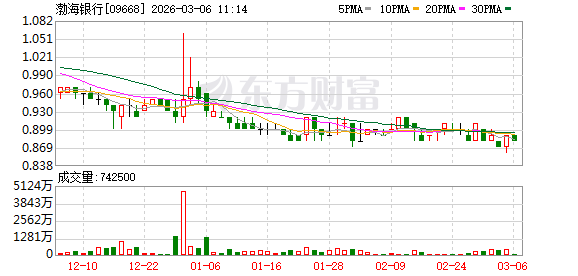
渤海银行官宣!行长屈宏志兼任首席合规官
Zhong Guo Ji Jin Bao· 2026-03-04 17:03
Group 1 - The core announcement is that the Bank of Bohai has appointed its president, Qu Hongzhi, to also serve as the Chief Compliance Officer, effective immediately until the end of his term as president [2] - Qu Hongzhi has been the president of the Bank of Bohai since 2021 and was recruited through an open selection process [2] - The trend of appointing Chief Compliance Officers is increasing in the banking sector, with over 70% of joint-stock banks and some city commercial banks establishing this position, often filled by the bank president [3] Group 2 - The appointment of Chief Compliance Officers is seen as a response to regulatory requirements and a restructuring of internal governance and risk management systems within banks [3] - The regulatory framework mandates that by March 1, 2026, financial institutions must establish a Chief Compliance Officer at their headquarters, who should be a senior management member, allowing for the possibility of the president or other senior executives to take on this role [3] - As of June 30, 2025, the Bank of Bohai reported total assets of 1.82 trillion yuan, with operating income of 14.215 billion yuan, reflecting an 8.14% year-on-year increase, and a net profit of 3.83 billion yuan, up 3.61% year-on-year [4]

建设银行因违反账户管理规定等被罚4350余万元,21名责任人共计被罚120.5万元
Xin Lang Cai Jing· 2026-02-14 13:28
Core Viewpoint - The People's Bank of China has disclosed administrative penalties against China Construction Bank for various violations, resulting in a total fine and confiscation amounting to approximately 43.51 million yuan [1]. Summary by Category Violations and Penalties - China Construction Bank was penalized for multiple violations, including account management, merchant management, and anti-counterfeiting regulations, leading to a total penalty of 43.51 million yuan, which includes confiscation of illegal gains of 0.55 million yuan and a fine of 42.96 million yuan [1][12]. - A total of 21 individuals were held responsible for various violations, collectively fined 1.205 million yuan [4][13]. Specific Violations - The violations include: 1. Breaching account management regulations 2. Violating special merchant management regulations 3. Breaching currency circulation management regulations 4. Violating anti-counterfeiting business management regulations 5. Misappropriating fiscal deposits or funds 6. Violating credit information collection, provision, inquiry, and related management regulations 7. Failing to fulfill customer identity verification obligations 8. Failing to retain customer identity data and transaction records 9. Not reporting large transactions or suspicious transaction reports as required 10. Engaging in transactions with unidentified customers [6][12]. Responsible Individuals - Specific individuals from various departments within China Construction Bank were identified for their roles in the violations, including: - Li from the Personal Finance Department for account management violations - Han from the Credit Card Center and Wang from the Online Finance Department for special merchant management violations - Liao from the Beijing Branch for anti-counterfeiting violations - Others from different departments for failing to meet customer identity verification and reporting obligations [2][11].

2026 银行人事第一波!4 位高管兼任首席合规官,履历太耀眼!
Xin Lang Cai Jing· 2026-02-05 12:18
Group 1: Qilu Bank - Qilu Bank announced a board resolution on February 4, approving the appointment of current president Zhang Hua as Chief Compliance Officer, with a term ending on August 10, 2026 [1][6] - Zhang Hua, born in June 1966, holds a bachelor's and master's degree, and has extensive practical experience in banking, having risen through the ranks at Qilu Bank [1][6] - His career includes key positions such as branch manager and head of credit management, as well as experience in local government financial oversight, enhancing his compliance management expertise [1][6] Group 2: Chongqing Rural Commercial Bank - On January 29, Chongqing Rural Commercial Bank's board approved the appointment of president Sui Jun as Chief Compliance Officer, with unanimous support from the board [2][7] - Sui Jun, born in December 1968, is a member of the Communist Party and holds a doctoral degree in economics, with a rich background in banking [2][7] - His previous roles include various leadership positions in both Chongqing Rural Commercial Bank and China Construction Bank, showcasing his extensive experience in the financial sector [2][7] Group 3: Xiamen Bank - Xiamen Bank announced on January 28 that its board approved the appointment of assistant president and Chief Risk Officer Chen Song as Chief Compliance Officer, pending regulatory approval [3][8] - Chen Song, born in May 1974, has a strong background in risk management and compliance, having held various positions in banking [3][8] - His experience includes roles at Industrial Bank and Ping An Bank, contributing to his qualifications in risk control and compliance management [3][8] Group 4: Pudong Development Bank - On January 24, Pudong Development Bank's board approved the appointment of Cui Bingwen as Chief Risk Officer, Chief Compliance Officer, and General Counsel, with a term aligned with the current board [4][8] - Cui Bingwen, born in 1969, holds a doctoral degree and has extensive banking experience, having served in various leadership roles [4][8] - His career includes significant positions at Industrial and Commercial Bank of China and Pudong Development Bank, enhancing his expertise in legal and compliance matters [4][8]




规模“高歌猛进”、营利“步履蹒跚”?厦门银行发布业绩快报
Nan Fang Du Shi Bao· 2026-01-30 11:30
Core Viewpoint - Xiamen Bank reported its 2025 annual performance, showing growth in total assets and stable asset quality, but modest increases in revenue and net profit [2][10]. Financial Performance - As of the end of 2025, Xiamen Bank achieved total assets of 453.099 billion yuan, an increase of 11.11% from the previous year [5][6]. - The bank's total revenue for 2025 was 5.856 billion yuan, reflecting a year-on-year growth of 1.69% [10]. - Net profit reached 2.750 billion yuan, up 1.64% compared to the previous year [10]. - Basic earnings per share were 0.90 yuan, marking a 1.12% increase [10]. Asset Quality - The non-performing loan (NPL) ratio stood at 0.77%, a slight increase of 0.03 percentage points from the previous year [11][12]. - The provision coverage ratio was 312.63%, down 79.32 percentage points year-on-year, indicating a trend of decreasing provisions [11][12]. Business Expansion - The total loan and advance amount reached 243.247 billion yuan, a significant increase of 18.39% year-on-year [8][6]. - Total deposits amounted to 243.613 billion yuan, growing by 13.75% from the previous year [7][8]. - The bank's focus on green and technology loans saw respective growth rates of 68.55% and 44.55% [8]. Competitive Position - Compared to peers, Xiamen Bank's growth in net profit and revenue was lower than that of other regional banks, indicating room for improvement [11][12]. - The bank's asset quality remains relatively strong, with its NPL ratio being among the lowest in the industry [12]. Management Changes - Concurrently with the performance report, Xiamen Bank announced the appointment of Chen Song as the Chief Compliance Officer, who has a strong background in risk management and compliance [13][14].

盘点2025年银行首席合规官:多家股份行、城农商行等敲定人选
Xin Lang Cai Jing· 2026-01-12 03:25
Core Insights - The financial industry is facing numerous compliance issues, as evidenced by the fines imposed by regulatory bodies, highlighting the shortcomings in compliance management [1][13] - In response to regulatory requirements and internal needs, financial institutions are accelerating the appointment of Chief Compliance Officers (CCOs) to address compliance challenges [1][13] - In 2025, multiple banks had their CCOs approved by regulators, with a total of 12 banks reported to have appointed CCOs, including national joint-stock banks, city commercial banks, foreign banks, rural commercial banks, and village banks [2][14] Group 1: Regulatory Approvals - A total of 12 banks received regulatory approval for their CCOs in 2025, which includes a diverse range of banking institutions [2][14] - The approval dates for CCOs span from February to November 2025, with notable appointments including Yang Hong at Huaxia Bank and Zhai Zhuang at Jilin Bank [3][15] - Some banks had their CCOs approved simultaneously with other executive appointments during their establishment, indicating a strategic approach to compliance management [4][16] Group 2: Appointment Trends - The trend of appointing CCOs is not limited to the 12 banks; many other banks have also recently hired or are in the process of hiring CCOs [6][18] - For instance, Zhejiang Shaoxing Ruifeng Rural Commercial Bank appointed Chen Gangliang as CCO, reflecting a broader commitment to compliance management [19] - In December 2025, several banks, including Jiangyin Rural Commercial Bank and Ping An Bank, announced board approvals for CCO appointments, indicating ongoing efforts to enhance compliance oversight [20] Group 3: CCO Qualifications and Roles - CCOs typically require substantial work experience to effectively fulfill their roles, which is crucial for managing compliance risks [6][18] - The CCO position can be either a dedicated role or held concurrently with other executive positions, such as bank president or vice president [21][22] - The "Compliance Management Measures" implemented on March 1, 2025, stipulate that financial institutions must establish a CCO at their headquarters, who reports directly to the board [11][22]
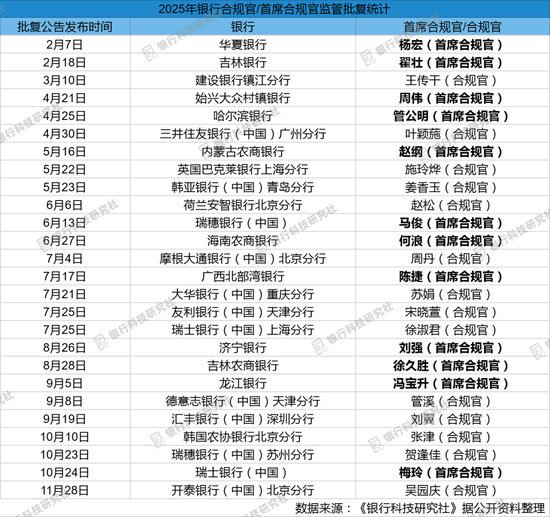
已有十余家银行聘任首席合规官
Jin Rong Shi Bao· 2026-01-07 02:52
Core Viewpoint - The appointment of Chief Compliance Officers (CCOs) in banks is a response to increasing regulatory demands, aiming to enhance compliance management and integrate it into business processes [1][2]. Group 1: Appointment of Chief Compliance Officers - Zhangjiagang Rural Commercial Bank appointed Wu Kai as its Chief Compliance Officer, marking a trend where over ten banks have made similar appointments [1]. - In December 2025 alone, several banks, including Ping An Bank and Industrial Bank, approved the hiring of CCOs [1]. - The rapid appointment of CCOs aligns with the implementation of the "Financial Institutions Compliance Management Measures," which mandates the establishment of CCO positions at the headquarters of financial institutions [2]. Group 2: Responsibilities and Challenges - CCOs are expected to take on more responsibilities, including the formulation and supervision of compliance policies, ensuring that all business activities adhere to regulatory frameworks [5]. - There is a concern that an increase in executive positions may burden banks, particularly smaller financial institutions [2]. - Many currently appointed CCOs are existing senior executives, which helps mitigate potential operational burdens [3]. Group 3: Recruitment Trends - Some banks, such as Jiangxi Bank and Shangrao Bank, have publicly announced recruitment for CCO positions, indicating a proactive approach to compliance management [4].






过渡期临近,银行业首席合规官纷纷“就位”
2 1 Shi Ji Jing Ji Bao Dao· 2026-01-06 10:22
Core Viewpoint - The appointment of Chief Compliance Officers (CCOs) in Chinese banks is a response to regulatory requirements aimed at enhancing compliance systems and governance structures within the banking industry [1][3][10]. Group 1: Regulatory Framework - The Financial Regulatory Bureau issued the "Compliance Management Measures for Financial Institutions," mandating the establishment of CCOs at the headquarters of financial institutions, effective from March 1, 2025, with a one-year transition period [3][9]. - The implementation of CCOs is seen as a shift from "formal compliance" to "substantive compliance" across various types of banks, including state-owned banks, city commercial banks, and rural banks [3][7]. Group 2: Appointment Trends - A wave of appointments for CCOs has been observed, with banks like Zhangjiagang Rural Commercial Bank and others appointing existing senior management to these roles, reflecting a trend towards integrating compliance into the upper management structure [1][6][8]. - Different banks are adopting varied models for appointing CCOs, with many choosing to have existing senior executives, such as vice presidents or assistants to the president, take on these responsibilities [8][9]. Group 3: Compliance Needs and Challenges - Compliance pressures differ among banks of varying sizes, with larger banks facing more significant challenges due to their complex structures and global operations, while smaller banks focus on high-risk areas like credit and anti-money laundering [7][8]. - The need for a systematic and intelligent compliance framework is emphasized for larger banks, while smaller banks prioritize practical compliance integration into business processes [8][9]. Group 4: Qualifications and Responsibilities - CCOs must meet specific qualifications, including a minimum of eight years in financial work and three years in legal compliance, or equivalent experience, to ensure they can effectively manage compliance risks [9][10]. - The role of CCOs is crucial for establishing a robust compliance governance system, transitioning banks from reactive to proactive risk management [10][11]. Group 5: Future Trends - The future development of the CCO role is expected to trend towards systematization and technological integration, with compliance becoming a core part of risk management and corporate governance [10][11]. - There is potential for collaboration between CCOs and other roles such as Chief Risk Officers and Chief Technology Officers, expanding the scope of compliance from local to global standards [11].

这边整改那边违规,广发银行今年被罚没上亿元
Sou Hu Cai Jing· 2025-12-12 07:24
Core Viewpoint - Guangfa Bank has faced significant regulatory penalties in 2023, totaling over 1 billion yuan, due to multiple violations in foreign exchange and credit management, indicating serious compliance issues within the bank's operations [4][14]. Regulatory Penalties - Guangfa Bank was fined a total of 15.3783 million yuan by the Guangdong branch of the State Administration of Foreign Exchange for violations including capital project fund payments and unauthorized guarantees [5][7]. - The bank has received multiple fines throughout the year, including a notable penalty of 66.7 million yuan from the National Financial Supervision Administration for improper management of loans and data reporting [11][13]. - The cumulative fines for Guangfa Bank in 2023 have exceeded 1 billion yuan, making it one of four banks to reach this threshold [4][14]. Compliance Issues - The penalties highlight serious compliance gaps in Guangfa Bank's foreign exchange operations, including issues with authenticity checks on transaction documents and unauthorized foreign exchange transactions [5][7]. - Specific branches, such as the Nanchang and Shenyang branches, have also faced fines for failing to conduct proper reviews of transaction documents and personal foreign exchange operations [7][10]. - The bank's internal management has been criticized for significant negligence in key credit processes, leading to widespread violations across multiple branches [10][14]. Management Response - Guangfa Bank acknowledged the penalties as a consequence of past errors and stated that it has completed necessary rectifications and is committed to improving its risk management and compliance mechanisms [13]. - Following the penalties, the bank's management faced increased pressure, leading to the resignation of its president, Wang Kai, amid ongoing compliance challenges [13][14]. Financial Performance - As of June 2025, Guangfa Bank reported total assets of 3.69 trillion yuan, but its financial performance has declined, with a 0.63% drop in revenue and a 4.58% decrease in net profit year-on-year [13].

拆隐形关卡降融资负担 虚增中收行为将减少
Zhong Guo Zheng Quan Bao· 2025-12-01 20:25
Core Viewpoint - The revised guidelines from the State Administration for Market Regulation aim to address the issues of "difficult and expensive financing" for enterprises, particularly small and micro businesses, by prohibiting various unreasonable fees charged by commercial banks [1][3]. Summary by Sections Prohibition of Unreasonable Fees - The guidelines explicitly prohibit the fictitious charging of syndicate loan fees and other unreasonable charges, such as charging commitment fees after interest has been collected [1][2]. - A specific example highlighted is a bank that charged a commitment fee of 36 million yuan for a 400 million yuan loan, which is now deemed unreasonable under the new guidelines [2]. Systematic Regulation of Charging Practices - The guidelines address issues like "no-demand charges" and "bundled charges," stating that banks cannot charge fees for services that have no actual demand, such as issuing unnecessary guarantees or loan commitment letters [3]. - The guidelines also prohibit mandatory service fees, such as forcing clients to open online banking services or promoting unnecessary AI advisory services [3]. Strengthening Bank Accountability - The guidelines enhance the accountability of banks by requiring them to prove compliance with regulations, shifting the responsibility from merely avoiding violations to demonstrating compliance [3]. - The guidelines also mandate banks to verify the classification of small and micro enterprises to ensure the implementation of fee reduction policies [3]. Improvement of Financial Services - The guidelines establish a dual regulatory system of "law enforcement penalties + positive guidance," differentiating between light and heavy penalties based on banks' actions regarding the return of unreasonable fees [4]. - The principle of "separation of interest and fees" is emphasized, prohibiting banks from inflating intermediary business income through disguised fees [4]. - Industry experts believe that while the guidelines may lead to a short-term reduction in bank fees, they will ultimately encourage banks to enhance the quality and efficiency of financial services to attract clients and generate revenue [4].