A2A

Search documents
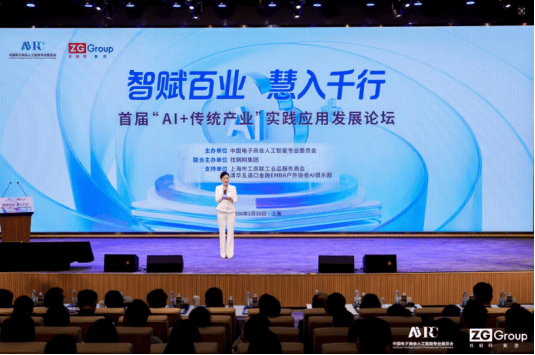
“AI+传统产业”实践应用发展论坛上,找钢网探索AI与传统产业融合新路径
Sou Hu Cai Jing· 2026-02-12 07:01
找钢网管理合伙人兼副总裁张晓坤在论坛上表示,找钢网及其合作伙伴有望成为第一批迈入"A2A"时代 的企业。"A2A"涵盖"Agent to Agent""Application to Application""Area to Area"三个层次,意味着找钢网在 自身拥抱AI的同时,会向产业链上下游辐射AI能力,打通产业链各环节"产品到人"的"最后一公里",把握新 型产业业态新需求。 例如,找钢网自研的SaleMatch交易引擎,早期技术不成熟时准确率不足,如今每天能处理1000万多条消息 量,解析准确率达到95%以上,并完成数亿级的智能交易匹配。2018年9月底,找钢网与腾讯共同投资成立 腾采科技公司,腾采通逐步将业务范围从钢铁拓展到其他价格波动快的工业原材料,就是找钢网AI能力跨 行业应用的生动体现。 另一方面,在通用大模型方向,找钢网与头部企业密切合作。不仅及时引入DeepSeep、千问等产品,还会将 使用体验及遇到的问题及时反馈给产品开发方,助力改进用户体验和技术缺点。此次论坛上,腾讯、阿 里、百度、京东均有代表出席,上一次BATJ齐聚还是在乌镇互联网大会,足见此次论坛的影响力。 2026年1月16日,由 ...

AI手机的终局,“读屏”还是“对话”?
创业邦· 2026-01-24 10:43
Core Viewpoint - The article discusses two distinct technological approaches to AI integration in mobile devices: the GUI (Graphical User Interface) route, which prioritizes speed and ease of use, and the A2A (Agent-to-Agent) route, which emphasizes security and collaboration through standardized APIs [7][17][29]. Group 1: AI Integration Approaches - The GUI approach allows AI to simulate user actions on apps by utilizing system permissions, enabling rapid deployment but raising concerns about user experience and security [10][14]. - The A2A approach establishes a standardized communication protocol between AI and applications, requiring dual authorization from users and app developers, which enhances security and accountability [14][15]. - The choice between these approaches reflects companies' strategic interests and their positions within the tech ecosystem, with GUI being faster but riskier, while A2A is slower but more stable and secure [17][29]. Group 2: Industry Responses - Major tech companies like Apple and Google favor the A2A approach, focusing on API integration to maintain control over their ecosystems and ensure compliance with privacy regulations [18][21]. - Microsoft has developed frameworks like "AutoGen" to facilitate multi-agent collaboration, while OpenAI and Anthropic are pushing for API standards that align with the A2A model [19][21]. - In contrast, domestic companies like ByteDance are exploring high-permission GUI routes to disrupt existing ecosystems and capture new market opportunities [23][24]. Group 3: Future Implications - The A2A model is seen as a long-term solution that could lead to new business opportunities, including the development of specialized agents for various industries and the establishment of a new ecosystem of protocols and middleware [33][35]. - The article suggests that the evolution of AI integration will ultimately shape the relationship between humans and machines, emphasizing the need for AI to serve as an intelligent assistant rather than a replacement for human decision-making [37][38].





Agent 正在终结云计算“流水线”,Infra 必须学会“思考” | 专访无问芯穹夏立雪
AI前线· 2025-12-02 04:28
Core Viewpoint - The article discusses the transition from traditional AI infrastructure to a new paradigm called "Agentic Infra," which is essential for the scalable deployment of intelligent agents in various industries [2][3]. Infrastructure Evolution - The evolution of infrastructure is moving from AI Infra to Agent Infra and then to Agentic Infra, which is crucial for the large-scale implementation of intelligent agents [2]. - The infrastructure must evolve from a "production line factory" to a "solution company" to support the quality of tasks executed by agents [3][4]. Key Upgrades Required - Multiple dimensions need to be upgraded, including flexible execution environments, comprehensive tools for agents, precise contextual information, and robust security and monitoring mechanisms [4]. - The infrastructure must coordinate continuous and interrelated tasks, emphasizing the importance of sandboxing and flexible scheduling capabilities [4]. Shift in Focus - The focus has shifted from "calculating faster" to "thinking longer," requiring different types of resources for thinking and calculation [5]. - The current bottleneck lies not in the models themselves but in the supporting infrastructure's responsiveness [6]. Challenges in Agent Deployment - The decline in user numbers for platforms like Lovable indicates that while initial interest may be high, sustained engagement is challenging due to unmet user expectations [5]. - The core issue is that while agent models are capable, the supporting infrastructure and tools are still immature [6]. Future of Agentic Infra - The goal is to create an advanced Agentic Infra that allows for better resource integration and innovative functionalities, leading to a virtuous cycle of technology and application development [7][10]. - The infrastructure should enable agents to autonomously design workflows, moving from being viewed as tools to collaborators [12][13]. Technical Innovations - The introduction of micro-virtualization and sandbox management mechanisms aims to optimize resource allocation and utilization, addressing inefficiencies in traditional AI infrastructure [16]. - Unified scheduling of heterogeneous computing resources is a key innovation, allowing for better performance and efficiency [17][18]. Industry Integration - The transition from technical breakthroughs to industry integration is crucial, focusing on usability and performance rather than underlying hardware differences [18]. - The company aims to provide a robust AI-native infrastructure that supports clients in focusing on product iteration while managing complex backend operations [19][20]. Vision for the Future - The vision includes a future where intelligent agents collaborate to complete complex tasks, significantly enhancing productivity and creativity [14][22]. - The company aspires to be a foundational engine for AGI development, facilitating the transition to a more intelligent and autonomous infrastructure [22].

X @Avi Chawla
Avi Chawla· 2025-11-01 06:49
Next, repeat these steps for the 2nd server to host the Smolagents Agent and its LLM.- Line 1-10 → Imports + define the Server & the LLM.- Line 12 → Decorate the method.- Line 21-28 → Define the Agent with a web search tool.- Line 31 → Serve the Agent.Finally, we use an ACP client to connect both agents in a workflow.- Line 6-7 → Connect the client to both servers.- Line 11-14 → Invoke the first agent to receive an output.- Line 18-21 → Pass the output to the next agent for enhancement.Next, run the two ser ...
X @s4mmy
s4mmy· 2025-09-17 12:01
Industry Collaboration & Standardization - Google's "Agent Payments Protocol" (AP2) is an open standard facilitating AI agent payments across platforms and crypto rails [1] - AP2 builds upon A2A & MCP, enabling seamless communication between agents and real-world data [2][3] Key Players & Integrations - MetaMask is potentially integrating agents to enhance user experience [1] - Ethereum is highlighting its intent to embrace AI [1] - Coinbase's x402 (Base's baby) supports payments via cards, bank transfers, local methods, and crypto [2] - EigenLayer provides validation/verification support [2] - Crossmint offers flexibility for agents to use fiat or crypto [3] - Mysten Labs' Sui infra could see deeper Sui AI agent rollout [3] Infrastructure & Connectivity - Mesh provides infrastructure connecting wallets, exchanges, and tokens [2] Future Outlook - The industry anticipates a surge in attention around AI within the next 12 months [3] - The future is Agentic and will happen permissionlessly on crypto rails [2]
人工智能行业专题(12):AIAgent开发平台、模型、应用现状与发展趋势
Guoxin Securities· 2025-09-10 15:25
Investment Rating - The report maintains an "Outperform" rating for the AI industry [1] Core Insights - AI Agents represent a significant evolution in AI technology, moving beyond simple command execution to autonomous decision-making and task execution, achieving performance levels equivalent to 90% of skilled adults [3][10] - The AI infrastructure is undergoing a transformation, with major cloud providers like Microsoft, Google, and Amazon enhancing their AI/Agent platforms to capture new market opportunities [3][51] - The global AI IT spending is projected to grow at a CAGR of 22.3% from 2023 to 2028, with Generative AI (GenAI) expected to account for 73.5% of this growth [3] Summary by Sections 01 Agent Definition, Technology, and Development - AI Agents are defined as intelligent entities with autonomy, planning, and execution capabilities, surpassing traditional automation [10] - Key features include autonomous decision-making, dynamic learning, and cross-system collaboration [10] 02 Agent Development Platform Layout - Major players in the AI Agent development space include Microsoft, Google, Amazon, Alibaba, and Tencent, each with distinct strategies and market focuses [3][51] 03 Model Layer and Tokens Usage Analysis - The report highlights the rapid increase in token usage, with Google's Gemini model projected to reach 980 trillion tokens by July 2025, a 100-fold increase from the previous year [3] - Domestic models like Byte's Doubao are also seeing significant growth, with daily token usage expected to reach 16.4 trillion by May 2025, a 137-fold increase [3] 04 C-end and B-end Agent Progress - C-end applications are heavily reliant on model capabilities, with significant growth in image and programming-related products [3] - B-end applications, such as Microsoft's Copilot, have over 100 million monthly active users, but face challenges related to data security and cost [3] Agent Market Size and Development Expectations - The AI Agent market is expected to reach $103.6 billion by 2032, growing at a CAGR of 44.9% [3] - The report anticipates that by 2035, AI Agents will become mainstream as cognitive companions for humans [3]

X @Avi Chawla
Avi Chawla· 2025-07-23 19:16
AG-UI Protocol Overview - AG-UI protocol has become the standard for building front-end Agentic apps where Agents are part of the interface [1] - AG-UI defines a common interface between Agents and the UI layer, remaining Agent framework agnostic [2] Key Features of AG-UI - AG-UI enables streaming token-level updates, showing tool progress in real time, sharing mutable state, and pausing for human input [2] - Developers can spin up a full-stack AG-UI app directly from CLI and visualize A2A interactions [2] - Pydantic AI is now AG-UI compatible [2] Development Efficiency - Building AG-UI frontends is now 10x faster with a plug-and-play interface [1][2] - A fully revamped contributor flow is available for developers [2] Agent Connectivity - MCP connects agents to tools, A2A connects agents to other agents, and AG-UI connects agents to users [2]
X @Avi Chawla
Avi Chawla· 2025-07-02 19:45
RT Avi Chawla (@_avichawla)After MCP, A2A, & AG-UI, there's another Agent protocol (open-source).ACP (Agent Communication Protocol) is a standardized, RESTful interface for Agents to discover and coordinate with other Agents, regardless of their framework (CrewAI, LangChain, etc.).Here's how it works:- Build your Agents and host them on ACP servers.- The ACP server will receive requests from the ACP Client and forward them to the Agent.- ACP Client itself can be an Agent to intelligently route requests to t ...
X @Avi Chawla
Avi Chawla· 2025-06-29 06:33
Agentic Applications - Agentic applications require both Agent-to-Agent communication (A2A) and Machine Control Protocol (MCP) [1] Agent Collaboration - MCP equips agents with tool access [2] - A2A enables agents to connect and collaborate in teams [2]
AI智能体,是不是可以慢一点? | ToB产业观察
Tai Mei Ti A P P· 2025-05-06 05:42
Group 1 - The core viewpoint of the articles revolves around the rapid development and commercialization of AI agents, particularly following the success of Manus, which has sparked significant interest and investment in this sector [2][3][4]. - Major tech companies are intensifying their efforts in the AI agent space, with ByteDance reportedly forming at least five teams to develop various AI agent products, and Baidu launching the "Xinxiang" app, which aims to compete with Manus [4][5]. - The investment landscape is also shifting, as evidenced by the $75 million funding round for Manus's parent company, Butterfly Effect, which has raised its valuation to nearly $500 million [2]. Group 2 - The emergence of AI agents is seen as a solution to the unmet business needs and technological gaps left by previous enterprise digital transformation efforts [3]. - Companies are adopting the MCP (Multi-Cloud Platform) mechanism to enhance the ecosystem of AI agents, with major players like Alibaba, Tencent, and Baidu integrating MCP protocols into their AI products [6]. - There is a growing concern regarding the safety and risk management of AI agents, as many companies lack a comprehensive understanding of the associated risks, with a significant portion of clients unaware of what AI agents entail [7][8]. Group 3 - The concept of AI agents is evolving, with new terminologies such as Agentic AI and Agentic Workflow gaining traction, indicating a shift towards more specialized and collaborative AI systems [10][11]. - The industry is focused on making AI agents adaptable to complex application scenarios, requiring advancements in perception, understanding, planning, and execution [11][12]. - There is a call for a more cautious approach to the deployment of AI agents, emphasizing the need for improved governance and risk assessment capabilities before widespread implementation [12].