
AI视觉技术

Search documents
全球民用安防智能化升级,AI视觉技术驱动“小巨人”觅睿科技登陆A股
梧桐树下V· 2026-03-11 12:06
Core Viewpoint - The article emphasizes the growing importance of smart network cameras in various sectors, driven by technological advancements and increasing market demand, highlighting the potential for further market expansion and innovation [1]. Group 1: Company Overview - MiRui Technology, established in 2017, focuses on the research, design, production, and sales of smart network cameras and IoT video products, with all related embedded software and AI algorithms developed in-house [2]. - The company has a strong emphasis on R&D, with 208 R&D personnel accounting for 39.25% of its workforce, and cumulative R&D investment reaching 230 million yuan, with R&D expenses consistently exceeding 9% of revenue [2][3]. - MiRui Technology has received multiple accolades, including being recognized as a national "specialized, refined, and innovative" small giant enterprise and ranking 27th in the "2025 Global Security 50" list [3]. Group 2: Market Strategy - The company has expanded its global presence by targeting the overseas civil security market through both ODM partnerships and its own brand, successfully entering major markets in North America, Europe, Asia, and Oceania [4]. - MiRui Technology has established a robust sales model that combines online and offline strategies, with significant sales through platforms like Amazon and Walmart, and has seen its foreign sales revenue grow from 355.30 million yuan in 2022 to 185.71 million yuan in the first half of 2025 [5]. Group 3: Product Development and Financial Performance - The company has seen a steady increase in revenue, with main business income rising from 548.55 million yuan in 2022 to 801.68 million yuan in 2025, driven by a higher proportion of high-end products and value-added services [6]. - MiRui Technology's gross margin improved from 26.42% in 2022 to 35.38% in the first half of 2025, reflecting enhanced profitability as the company scales its operations [6]. - The company plans to raise 320.16 million yuan through its IPO, with funds allocated for headquarters and brand development, as well as R&D center construction to strengthen its technological capabilities [10][12]. Group 4: Industry Trends - The global civil security market is projected to grow significantly, with an estimated market size of approximately 23.68 billion USD in 2024, expected to reach 35.95 billion USD by 2028, reflecting a compound annual growth rate of 15.16% [8]. - The number of global smart civil security household users is anticipated to increase from 228 million in 2024 to 631 million by 2028, indicating a robust growth trend in the sector [10]. - Advancements in hardware technologies and AI capabilities are expected to drive the development of civil video surveillance products towards higher resolution, intelligence, and cloud integration [10].


中航西飞:突破AI视觉技术应用,实现飞机制造多环节智能化检测
2 1 Shi Ji Jing Ji Bao Dao· 2026-01-21 10:34
Core Viewpoint - The company, AVIC Xi'an Aircraft Industry Group, has successfully developed six types of AI vision systems aimed at enhancing the manufacturing and assembly processes of large and medium-sized military and civilian aircraft, addressing various quality and safety detection challenges [1] Group 1: AI Vision System Development - The company has overcome challenges related to multi-scale recognition and lightweight technology in AI vision models [1] - The developed AI vision systems are applied in multiple processes including manufacturing, assembly, measurement, non-destructive testing, on-machine operations, and safety production [1] Group 2: Quality and Safety Detection Solutions - The AI vision systems effectively address issues such as defect detection in manufacturing processes, detection of missing fasteners, intelligent reading of measurement dials, non-destructive testing using fluorescence and magnetic powder, intelligent management of on-machine tools, and identification of safety violations [1]

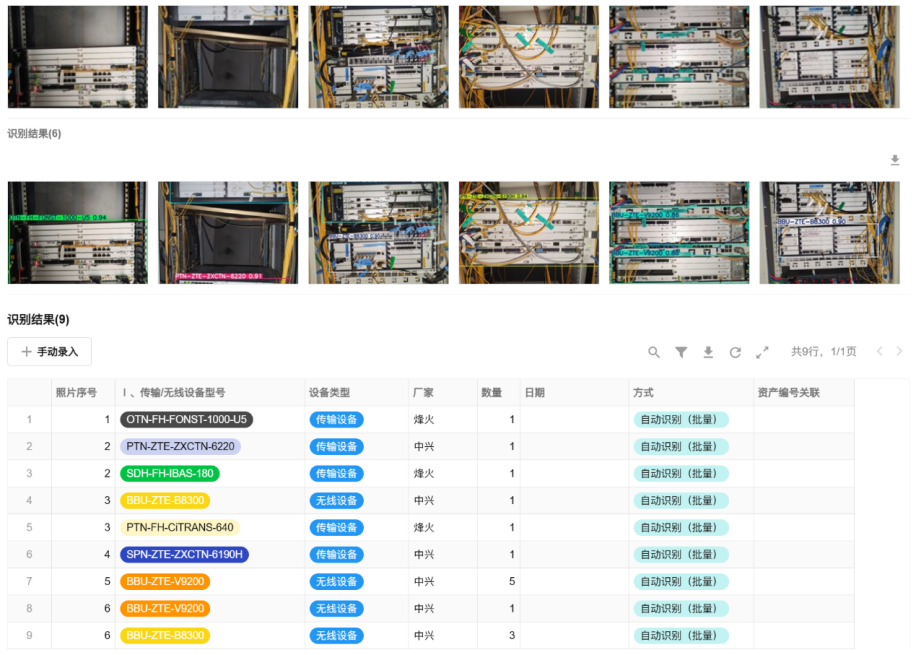
AI“慧眼”破解机房运维痛点,树立资产识别新标杆
Qi Lu Wan Bao· 2025-12-22 11:24
Core Insights - The article highlights the successful implementation of an intelligent asset identification system by Jining Mobile, leveraging multi-modal AI technology to address operational challenges in communication infrastructure management [1][8]. Group 1: Technological Advancements - The system utilizes YOLOv8 as its core architecture, incorporating attention mechanisms and cross-scale feature fusion strategies to enhance the precision and effectiveness of equipment detection, achieving an accuracy rate exceeding 97% for over 40 types of mainstream equipment [2]. - The innovative system combines YOLO target detection with a multi-modal visual model, enabling the accurate extraction of nameplate information from auxiliary equipment, achieving an overall recognition accuracy of over 98% [4]. Group 2: Operational Efficiency - The implementation of the intelligent identification system has significantly reduced the average inventory time in a single communication room from several hours to under 15 minutes, resulting in a more than tenfold increase in efficiency [8]. - The automation of asset identification has not only released human resources but also directly lowered operational costs, contributing to a greener and more efficient operational model [8]. Group 3: Future Directions - Jining Mobile aims to further integrate digital technologies with operational scenarios, expanding the system's applications in energy management, fault prediction, and digital twin technologies, thereby transitioning from reactive to proactive operational strategies [8].
朗坤科技(301305) - 301305朗坤科技投资者关系管理信息20251104
2025-11-04 07:18
Group 1: Company Overview and Financial Performance - The company achieved a revenue of 1.386 billion yuan in the first three quarters of 2025, a year-on-year increase of 0.17% [3] - Net profit attributable to shareholders reached 249 million yuan, reflecting a significant year-on-year growth of 28.89% [3] - In Q3 2025, revenue was 532 million yuan, showing a year-on-year growth of 8.31%, while net profit was 102 million yuan, up 39.55% year-on-year [3] Group 2: Business Strategies and Technological Advantages - The increase in performance is attributed to improved gross margins due to effective cost control measures and rising UCO prices [3] - The company utilizes core biological enzyme technology for large-scale production of bioenergy, achieving higher conversion rates without harmful chemicals [4] - The anaerobic microorganism technology enhances waste degradation efficiency and gas production, contributing to increased operational profits [4] - AI technology is applied in waste collection to improve operational efficiency and data tracking [4] Group 3: Market Position and Product Development - The company has adjusted its sales strategy for bioenergy products in response to rising SAF and UCO prices, focusing on direct sales of UCO [5] - The company is actively developing synthetic biology manufacturing, achieving commercialization of specific human milk oligosaccharides (HMOs) [7] - The company has a competitive edge in the HMO market due to advanced approval processes, high product purity, and optimized production techniques [7] - Recent approvals from the National Health Commission for two types of HMOs expand their application in infant formula and other products [7]
AI视觉芯片双线布局见效 国科微第三季度营收同比增逾两成
Zhong Zheng Wang· 2025-10-28 03:04
Financial Performance - In the first three quarters of 2025, the company achieved revenue of 1.172 billion yuan, a year-on-year decrease of 2.5% [1] - The net profit attributable to shareholders was 7.4054 million yuan, while the adjusted net profit, excluding share-based payment expenses, was 25.8953 million yuan [1] - In Q3, the company reported revenue of 431 million yuan, a year-on-year increase of 22.6%, indicating a significant improvement trend [1] - The net profit attributable to shareholders in Q3 was -12.7173 million yuan, with the loss margin significantly narrowed [1] R&D Investment - The company maintained high investment in R&D, with R&D expenditure reaching 518 million yuan, a year-on-year increase of 0.09%, accounting for 44.24% of revenue [1] Product Strategy - The company has established a dual strategy in the AI vision field, focusing on both "high-end" and "affordable" products [2] - The affordable black light AOV vision processing chip GK7206V1 series has achieved mass production and entered the supply chain of leading companies in traditional security and consumer electronics [2] - The high-end GK7606V1 series chip supports 4K ultra-high-definition encoding and decoding, featuring a dual-core A55 architecture and a maximum of 2.5T computing power NPU [2] Ecosystem Development - The company has launched a new generation of lightweight multi-purpose IPC chip GK7203V1 series, suitable for various consumer applications, aiming to become a core engine for cost reduction and efficiency in the consumer IPC market [3] - The company has produced eight open-source HarmonyOS chip platforms for various fields, with several chips receiving "first" certification from HarmonyOS [4] - The company aims to enhance the open-source HarmonyOS ecosystem in collaboration with industry partners [5]

AI视觉芯片双线布局见效 国科微三季度营收同比增逾两成
Zheng Quan Shi Bao Wang· 2025-10-27 14:28
Core Insights - The company reported a revenue of 1.172 billion yuan for the first three quarters of 2025, a year-on-year decrease of 2.50%, with a net profit attributable to shareholders of 7.4054 million yuan, which, when excluding share-based payment expenses, amounts to 25.8953 million yuan [1] - In Q3, the company achieved a revenue of 431 million yuan, reflecting a significant year-on-year growth of 22.60, although it recorded a net loss of 12.7173 million yuan, indicating a substantial narrowing of losses [1] - The company maintained high investment in R&D, with R&D expenses reaching 518 million yuan, a year-on-year increase of 0.09%, accounting for 44.24% of total revenue [1] Product Strategy - The company has established a dual strategy in the AI vision sector, focusing on both "high-end" and "affordable" products [2] - The affordable black light AOV visual processing chip GK7206V1 series has been mass-produced and integrated into the supply chains of leading companies in traditional security and consumer electronics [2] - The GK7206V1 chip features low power consumption, a round owl AI ISP engine, and supports AOV and quick start functions, achieving impressive AI noise reduction performance [2] Product Development - The company has developed a differentiated matrix of 4K AI vision chips, including the GK7206V1 and GK7606V1, to provide comprehensive AI vision solutions [3] - The newly launched GK7203V1 series IPC chip features a dual-core architecture and is designed for various applications, including consumer cameras and drones, aiming to enhance cost-effectiveness in the consumer IPC market [3] - The company plans to deepen its "chip + algorithm + ecosystem" model to promote the widespread adoption of AI vision technology across various applications [3] Ecosystem Integration - The company has successfully mass-produced eight open-source HarmonyOS chip platforms, covering multiple fields such as smart home and commercial display [4] - Several chips have received "first" certification from HarmonyOS, with the GK7206V1 achieving a record of 70 days from chip return to OpenHarmony 5.1 certification [4] - The company aims to strengthen its role in the open-source HarmonyOS ecosystem and collaborate with industry partners to promote its development [4]
AI视觉芯片双线布局见效,国科微三季度营收同比增逾两成
Quan Jing Wang· 2025-10-27 13:14
Core Insights - Guokemicro (300672.SZ) reported a revenue of 1.172 billion yuan for the first nine months of 2025, a year-on-year decrease of 2.50%, with a net profit attributable to shareholders of 7.4054 million yuan, which, when excluding share-based payment expenses, amounts to 25.8953 million yuan [1] - In Q3 2025, the company achieved a revenue of 431 million yuan, reflecting a significant year-on-year growth of 22.60, while the net profit attributable to shareholders was -12.7173 million yuan, indicating a substantial narrowing of losses [1] - The company maintained high investment in R&D, with R&D expenses reaching 518 million yuan, a year-on-year increase of 0.09%, accounting for 44.24% of total revenue [1] Product Strategy - Guokemicro established a dual strategy in the AI vision sector, focusing on both "high-end" and "affordable" products [2] - The affordable black light AOV vision processing chip GK7206V1 series was mass-produced and launched in September 2025, successfully entering the supply chains of leading companies in traditional security and consumer electronics [2] - The GK7206V1 chip features low power consumption, integrates a 1.0T@INT8 NPU, and requires only 0.5T computing power to achieve 4M@15fps AI noise reduction, showcasing superior performance in AI noise reduction [2] Product Development - Guokemicro has developed a differentiated matrix of 4K AI vision chips, including the GK7206V1 and GK7606V1, providing comprehensive AI vision solutions for various industry applications [3] - The newly launched GK7203V1 series IPC chip features a dual-core architecture and is designed for multiple applications, including consumer cameras and drones, aiming to enhance cost-effectiveness in the consumer IPC market [3] - The company plans to deepen its "chip + algorithm + ecosystem" model to promote the widespread adoption of AI vision technology across various applications [3] Ecosystem Integration - Guokemicro has successfully mass-produced eight open-source HarmonyOS chip platforms, covering smart home, smart vision, and commercial display sectors [4] - Several chips have received "first" certification from HarmonyOS, with the GK7206V1 achieving a record of 70 days from chip return to OpenHarmony 5.1 certification [4] - The company emphasizes the importance of chip adaptation capabilities for the development of the open-source Harmony ecosystem [4] Future Outlook - Guokemicro aims to continue enhancing the open-source Harmony ecosystem in collaboration with industry partners to promote its prosperous development [5]
远望谷:公司已向市场推出的“RFID视觉盘点机器人”
Zheng Quan Ri Bao Wang· 2025-08-25 11:48
Core Viewpoint - The company has launched the "RFID Visual Inventory Robot" in the smart library sector, integrating RFID technology with AI visual technology for intelligent book management solutions [1] Group 1 - The product focuses on "precise identification, comprehensive perception, and intelligent collaboration" [1] - The RFID Visual Inventory Robot and its supporting service solutions have been implemented with some clients, although this business segment currently contributes a low percentage to the company's revenue [1] - The company has not engaged in humanoid robot-related business as of now [1]

格灵深瞳(688207.SH):智慧体育产品适用的场景从国家学生体质健康测试的立定跳远、跑步等
Ge Long Hui· 2025-08-19 08:56
Core Viewpoint - The company has upgraded its "Jueying" and "Chitu" series hardware and "Xiaoteng" smart sports solutions, leveraging AI visual technology to redefine physical education, training, and assessment in schools, with a focus on large-scale promotion [1] Group 1: Product Development - The upgraded "Jueying" and "Chitu" series hardware are standardized products designed for smart sports applications [1] - The smart sports products cover various scenarios, including national student physical fitness tests, specialized training in sports like running and ball games, as well as skill assessments in martial arts and gymnastics [1] Group 2: Market Expansion - The company plans to further expand the application scenarios of its smart sports products and collaborate with channel partners to promote these products in the education sector through diversified sales strategies [1] - Currently, the smart sports solutions support certain regions for football projects in physical education examinations [1]

虹软PSAI发布“AI服务助手” 商拍交付周期从15天压缩至2天
Zheng Quan Shi Bao Wang· 2025-08-01 10:17
Core Viewpoint - The launch of the "AI Service Assistant" by Rainbow Soft Technology's PSAI platform marks a significant advancement in e-commerce visual production, reducing the traditional 15-day production cycle to just 48 hours and cutting costs by over 80% [1][2][3] Group 1: Industry Challenges - The e-commerce industry faces efficiency bottlenecks in visual production, with traditional processes involving multiple steps that can take up to 15 days and high costs ranging from thousands to tens of thousands of yuan per set of images [2] - The increasing demand for diverse model representations complicates coordination within the traditional production framework, further hindering efficiency [2] Group 2: Technological Innovations - PSAI's capabilities are driven by its self-developed ArcMuse model, which employs a dual-layer architecture of "visual large model + vertical small model," achieving breakthroughs in three key areas: facial and body consistency control, dynamic physical simulation of clothing, and light-shadow integration technology [2] - The technology allows for the generation of high-fidelity images from a single model photo, ensuring natural clothing effects and consistency with real-world lighting [2] Group 3: Operational Efficiency and Impact - The "AI Service Assistant" offers zero learning costs, full-process management, and rapid delivery, addressing practical challenges faced by merchants [3] - Early customer trials have shown significant improvements, such as a 200% monthly increase in GMV for a clothing merchant after switching to local models, and a 20% increase in repurchase rates for another merchant utilizing the "color change" feature [3] Group 4: Future Outlook - PSAI has integrated with major e-commerce platforms like Taobao, Douyin, and TikTok, aiming to redefine the relationship between merchants and visual production by focusing on business growth rather than technical adjustments [4] - The company plans to continue iterating on vertical scene technologies, pushing the e-commerce visual production industry towards a "demand to finished product" model [4]
