
开源鸿蒙生态

Search documents
武汉发力开源鸿蒙生态建设 到2027年落地100个示范场景
Chang Jiang Ri Bao· 2026-01-26 00:43
Core Viewpoint - Wuhan is accelerating the development of the open-source Harmony ecosystem, aiming to establish a comprehensive development system by 2027, which includes 100 demonstration scenarios, 200 application software developments, and a talent pool of over 100,000 developers, positioning itself as a key innovation base for the open-source Harmony technology and industry [1][2]. Group 1: Development Goals - By 2027, Wuhan plans to implement 100 open-source Harmony demonstration scenarios and develop 200 open-source Harmony application software [1]. - The city aims to create 4 industry-level open-source Harmony operating systems and adapt 50 terminal devices to the open-source Harmony platform [1]. - The initiative targets to cultivate over 100,000 open-source Harmony developers, establishing a foundation for a trillion-yuan-level IoT industry in Wuhan [1]. Group 2: Scenario Matrix - The development plan includes a matrix of three major scenarios: government, industry, and consumer [1]. - 30 government scenarios will focus on urban governance, including the deployment of monitoring products at 200 flood monitoring points and installation of rural water supply monitoring devices in over 800 locations by June 2026 [1]. - 30 industry scenarios will cover sectors such as manufacturing, healthcare, and education, with plans to launch over 3 new products including Harmony PCs and printers [1]. - 30 consumer scenarios will enhance business districts and cultural tourism, introducing smart navigation and immersive cultural experiences in key areas like Jianghan Road and East Lake Scenic Area [1]. Group 3: Product Ecosystem - Wuhan will develop an open-source Harmony product system comprising hardware devices, the "X Harmony" OS, and application software [2]. - The city aims to attract 3-5 leading open-source Harmony enterprises to establish headquarters and support the development of over 4 nationally influential "X Harmony" products [2]. - There is a focus on creating 50 open-source Harmony native applications and promoting the Harmony adaptation of 150 mature software products [2]. Group 4: Talent Development - The plan includes promoting the establishment of open-source Harmony-related majors and courses in universities, along with the construction of 4 open-source innovation centers in Wuhan [2]. - Collaboration with enterprises to build training bases will be emphasized, utilizing a dual-track model of "academic education + vocational training" to cultivate practical talents [2]. - The software industry in Wuhan is projected to exceed 400 billion yuan by 2025, with the establishment of the largest and most advanced Harmony ecosystem innovation center in the country [2].
武汉发力开源鸿蒙生态建设,到2027年落地100个开源鸿蒙示范场景
Chang Jiang Ri Bao· 2026-01-17 00:59
Core Insights - The Wuhan Municipal Government has officially issued the "Implementation Plan for Accelerating the Cultivation and Development of the Open Source Harmony Ecosystem," aiming to leverage the open-source Harmony operating system as a technological foundation to build a four-dimensional development system of "scenarios + applications + talent + ecosystem" by 2027 [1][8] Group 1: Development Goals - By 2027, Wuhan aims to establish 100 open-source Harmony demonstration scenarios, develop 4 industry-level open-source Harmony operating systems, complete the research and development of 200 open-source Harmony application software, adapt 50 terminal devices to open-source Harmony, and cultivate over 100,000 open-source Harmony developers, positioning itself as a significant base for open-source Harmony technology and industrial innovation in China [1][8] Group 2: Scenario Matrix - The plan outlines a scenario matrix consisting of three main areas: "Government + Industry + Consumer," with 30 government scenarios focusing on mega-city governance, including the deployment of open-source Harmony monitoring products at 200 flood monitoring points and the installation of rural water supply monitoring devices in over 800 locations [4][9] - The industry scenarios will cover sectors such as manufacturing, healthcare, and education, promoting the development of smart wards, intelligent campuses, and industrial terminals, with plans to launch over 3 new products like Harmony PCs and printers [4][9] - Consumer scenarios will focus on commercial districts and cultural tourism, with iconic areas like Jianghan Road Pedestrian Street and East Lake Scenic Area introducing smart navigation, seamless passage, and immersive cultural experiences [4][9] Group 3: Application Innovation - Wuhan will cultivate an open-source Harmony application product system, which includes lower-layer hardware devices, a mid-layer operating system "X Harmony" OS, and upper-layer application software, aiming to attract 3-5 leading open-source Harmony enterprises to establish headquarters in the city [5] - The plan emphasizes the development of 50 open-source Harmony native applications and the adaptation of 150 mature software applications to Harmony, alongside the launch of 50 terminal products and devices equipped with the open-source Harmony operating system across various sectors [5] Group 4: Talent and Ecosystem Development - The plan includes initiatives to promote the establishment of open-source Harmony-related majors and courses in universities, the creation of 4 open-source innovation centers, and the joint development of training bases with enterprises, focusing on practical talent cultivation through a dual-track model of "academic education + vocational training" [7] - By 2025, Wuhan's software industry is expected to exceed 400 billion yuan, with the establishment of the largest and most advanced Harmony ecosystem innovation center in the country, which has already incubated two industry distribution versions of the Harmony operating system [7]

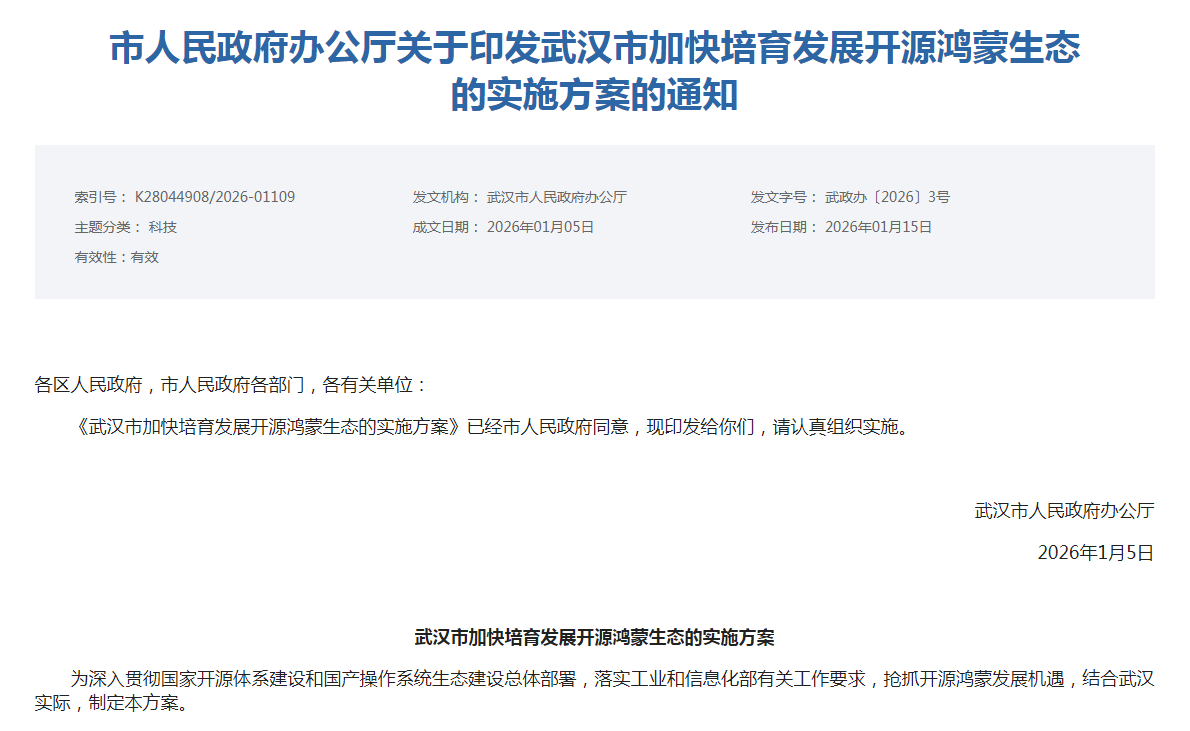
武汉发文:加快培育发展开源鸿蒙生态,到2027年打造4款行业级操作系统
Guan Cha Zhe Wang· 2026-01-17 00:18
Core Viewpoint - Wuhan Municipal Government has issued a plan to accelerate the development of the open-source Harmony ecosystem, aiming to establish itself as a significant innovation and industrial base for open-source Harmony technology by 2027 [1][2][3]. Group 1: Overall Requirements - The plan emphasizes the integration of the open-source Harmony operating system to promote digital technology and industry upgrades, aiming to create 100 demonstration scenarios, develop 200 applications, and gather over 100,000 developers by 2027 [3][4]. Group 2: Key Tasks - Application-driven development will focus on creating over 30 typical scenarios in public services and various industries, integrating open-source Harmony into urban governance and industry digital transformation [4]. - The initiative aims to attract 3-5 leading open-source Harmony enterprises to establish their headquarters in Wuhan, fostering the development of industry-specific Harmony products [4][5]. - Support for software development will include encouraging local universities and research institutions to innovate in key technologies related to open-source Harmony, aiming to create 50 native applications and adapt 150 existing apps [5]. - Collaboration between hardware and software will be promoted, with a goal of launching 50 terminal products equipped with the open-source Harmony operating system [5]. - The plan encourages community contributions to the open-source Harmony ecosystem, aiming to enhance developer engagement and promote the development of commercial versions of the operating system [5]. - A talent cultivation system will be established to train over 100,000 developers, including educational reforms and partnerships with leading enterprises [6]. Group 3: Support Measures - The plan outlines measures for effective implementation, including organizing industry exchanges, product launches, and supporting the use of financial resources for developing open-source Harmony-based systems [6].

从内卷到破局:上海海思谛听穿戴方案重构智能手表产业逻辑
Xin Lang Cai Jing· 2025-12-23 23:14
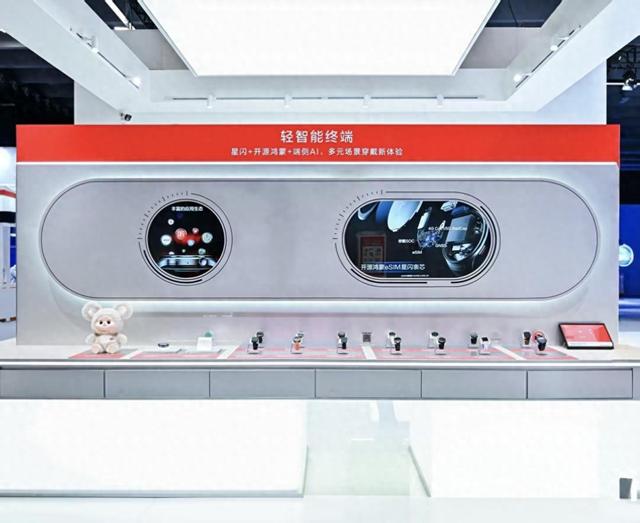
Core Insights - The smartwatch market is currently facing a bottleneck, with consumer expectations for independent functionality clashing with manufacturers' struggles against product homogenization [1][3] - Shanghai HiSilicon's newly launched "Diting Wearable Solution" aims to address this gap by integrating open-source HarmonyOS, Starlink connectivity technology, and end-to-end AI collaboration into a ready-to-use package [1][3] Market Dynamics - The smartwatch industry is characterized by a lack of differentiation, with similar hardware components leading to intense price competition [1] - Shanghai HiSilicon's solution offers a way for manufacturers to escape this cycle by transforming smartwatches from mere hardware devices into long-term operational smart entry points [3] Ecosystem Development - The HarmonyOS ecosystem is pivotal, featuring over 50 applications that can be monetized, with expectations to exceed 100 by 2025, showcasing a growing scale effect [3][4] - The unified architecture of HarmonyOS allows for cross-brand application deployment, significantly reducing adaptation costs for developers [4] Technological Advancements - The W600 series GPU from Shanghai HiSilicon supports high-definition displays and video decoding, enabling features like "video watch faces" without the need for additional chips [6] - Power consumption has been optimized, with the 4G Cat1 module achieving standby power below 180μA, allowing for a week-long battery life with 4G connectivity [7] Connectivity Enhancements - The Starlink 2.0 protocol enhances transmission rates to 16Mbps, significantly improving audio quality and reducing interference in challenging environments [7] - GNSS positioning sensitivity has been optimized, ensuring accurate tracking even in complex scenarios [7] Practical Applications - The Diting Wearable Solution has been validated through a collaboration with China Telecom, resulting in a health monitoring smartwatch that utilizes AI for real-time alerts and services [8][11] - This collaboration has undergone extensive testing to ensure reliability and stability in real-world conditions, reducing trial and error costs for manufacturers [11] AI Integration - The solution incorporates end-side AI capabilities for noise reduction and health monitoring, enhancing user experience during outdoor activities [14] - The architecture allows for efficient collaboration between edge AI and cloud capabilities, ensuring user data privacy while providing advanced services [15] Modular Delivery - Shanghai HiSilicon's modular approach allows manufacturers to utilize a complete package of components, reducing development time and costs [16] - This model enables companies to focus on design and application differentiation rather than technical integration, which is crucial for smaller manufacturers [16] Strategic Implications - Manufacturers can quickly leverage existing successful models to launch differentiated products, supported by a growing application ecosystem [17] - The long-term vision includes a shift towards operational ecosystems, moving away from hardware sales to sustainable service models, potentially alleviating market saturation issues [17]
市政府召开第174次常务会议:传达学习贯彻中央经济工作会议精神,研究部署加快培育发展开源鸿蒙生态、建设全球性国际邮政快递枢纽、食品药品安全等工作
Chang Jiang Ri Bao· 2025-12-14 06:34
Core Insights - The meeting emphasized the importance of implementing the spirit of the Central Economic Work Conference and related meetings, focusing on economic and social development for the upcoming year [2] Group 1: Economic Development Strategies - The government aims to stimulate domestic demand, promote consumption and investment, and ensure a positive interaction between supply and demand [2] - There is a commitment to integrate and serve the national unified market, fostering innovation and deepening the integration of technology and industry [2] - The plan includes the development of a modern industrial cluster known as "965" and the promotion of new productive forces tailored to local conditions [2] Group 2: Infrastructure and Logistics - The meeting highlighted the need to leverage Wuhan's advantages as a comprehensive transportation hub to develop a global international postal and express delivery hub [3] - The strategy includes the coordinated development of Tianhe Airport and Huahu Airport as dual hubs for international air cargo and passenger transport [3] Group 3: Food and Drug Safety - There is a strong emphasis on implementing stringent safety regulations across the food and drug supply chain, enhancing collaborative efforts, and improving smart regulatory efficiency [3] - The initiative aims to establish a comprehensive traceability system for food and drugs to ensure public safety [3] Group 4: Environmental Management - The meeting called for the establishment of a non-site regulatory enforcement system focused on automatic monitoring of pollution sources to enhance ecological governance [3]
2025年GDP20强城市大预测:深圳约4万亿,武汉远超南京,青岛增速7%!
Sou Hu Cai Jing· 2025-12-08 06:15
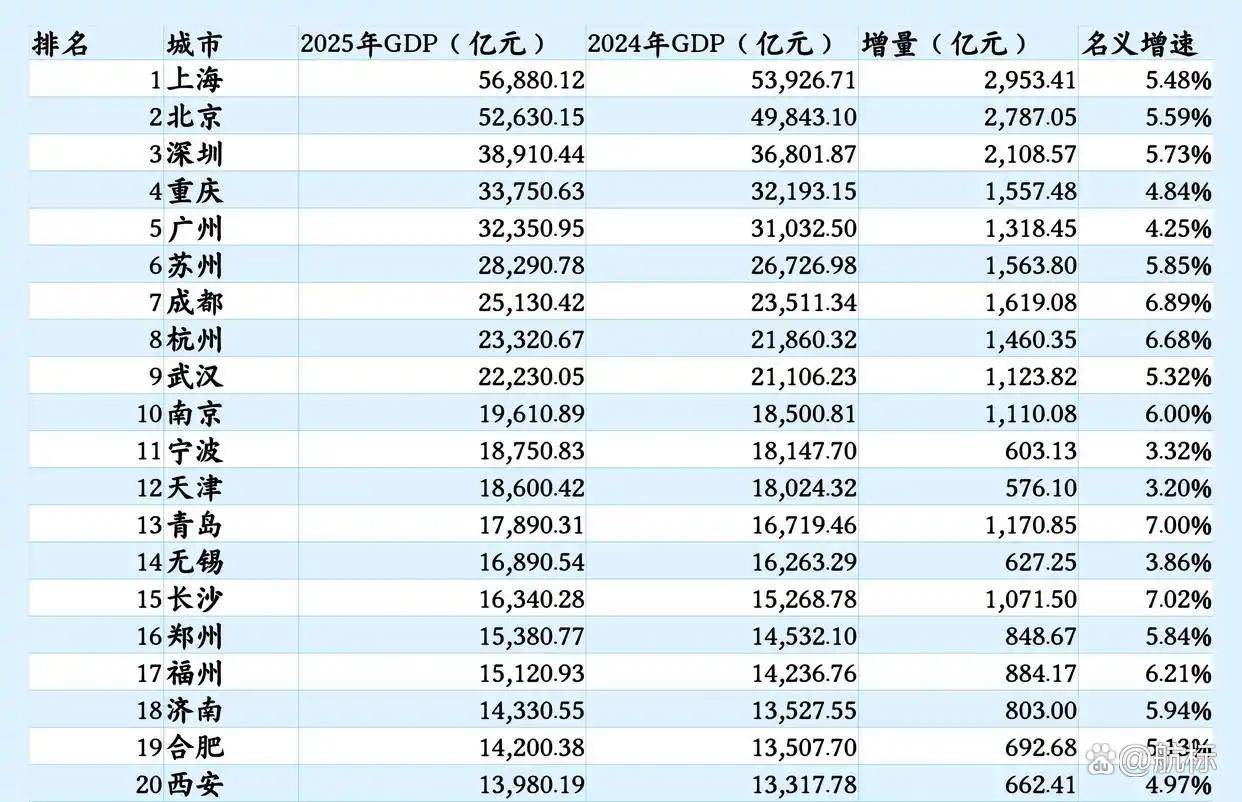
Core Insights - The competition among China's leading cities has entered a new phase characterized by refined and differentiated comparisons, with Shanghai and Beijing leading with GDPs exceeding 5.5 trillion yuan, while cities like Shenzhen, Wuhan, and Qingdao show significant growth potential [1][2] Group 1: Economic Growth and Projections - Shanghai's projected GDP for 2025 is 56,880.12 billion yuan, with an increase of 2,953.41 billion yuan from 2024 [2] - Beijing's projected GDP for 2025 is 52,630.15 billion yuan, reflecting an increase of 2,787.05 billion yuan from 2024 [2] - Shenzhen is approaching the 4 trillion yuan mark with a projected GDP of 38,910.44 billion yuan, marking a nominal growth rate of 5.73% [2][3] - Wuhan's GDP is projected to reach 22,230.05 billion yuan, expanding its lead over Nanjing to approximately 2,620 billion yuan [5] - Qingdao is expected to have a GDP growth rate of 7.00%, making it one of the fastest-growing economies among the top 20 cities [7] Group 2: Strategic Development and Innovation - Shenzhen's growth is driven by a robust innovation ecosystem, with strategic emerging industries accounting for over 40% of its GDP [2][3] - Major companies like Huawei, BYD, and Tencent are not only revenue contributors but also serve as innovation hubs within the industrial chain [3] - Wuhan is leveraging its geographical advantages to become a center for market and supply chain nodes, supported by significant projects in new energy and intelligent vehicles [5] - Qingdao is focusing on marine economy and innovation, with initiatives like the "Blue Granary" strategy targeting advanced fields such as marine pharmaceuticals [7] Group 3: Competitive Landscape and Future Outlook - The competition among cities is intensifying, with cities like Changsha and Chengdu showing remarkable growth rates of 7.02% and 6.89%, respectively [9] - The shift from mere scale expansion to developing core competencies in unique sectors is becoming crucial for future success [9] - The next five years will reveal which cities can leverage their unique industrial characteristics to achieve significant advancements in their economic standings [9]
国科微:深化鸿蒙生态合作,8款开源鸿蒙芯片已量产商用
2 1 Shi Ji Jing Ji Bao Dao· 2025-12-02 10:56
Core Insights - The company has successfully mass-produced 8 open-source HarmonyOS chip platforms, which are now commercially available across various sectors including smart home, smart vision, smart display, and commercial display [1] Group 1 - The hardware platform based on GK6323V100C has been implemented in multiple benchmark projects, supporting over 50 native HarmonyOS applications [1] - The company plans to continue enhancing the open-source HarmonyOS ecosystem and collaborate with partners to further expand application scenarios in smart home, commercial display, and industrial IoT sectors [1]

国科微(300672) - 300672国科微投资者关系管理信息20251119
2025-11-19 11:30
Group 1: Company Overview and Business Layout - Hunan Guoke Microelectronics Co., Ltd. focuses on domestic technology systems and has developed a complete domestic storage technology system [4] - The company has established a dual business model in solid-state storage, combining "solid-state drive control chips + industry solid-state drive products" [4] - The company aims to deepen its domestic technology system and expand the domestic replacement market [4] Group 2: Collaboration with Harmony Ecosystem - The company has launched 8 open-source Harmony chip platforms for mass production in smart home, smart vision, and commercial display sectors [2][3] - In the smart home sector, the GK6323V100C chip supports over 50 native Harmony applications and has been implemented in multiple benchmark projects [2] - The company is collaborating with China Mobile to develop solar cameras and pet companion robots based on the open-source Harmony smart vision chip platform [3] Group 3: AI Chip Development - The company is focused on AI edge computing SoC development, with products ranging from 8TOPS to 128TOPS [5][6] - The AI SoC product lineup includes the GK7606V1 series for high-end markets and the GK7206V1 series for affordable applications, both achieving significant market penetration [6][7] - The company has innovated a multi-modal large model MLPU chip architecture to support both large and small model processing needs [7] Group 4: Automotive Electronics - The company is developing AI chips for automotive applications, including smart cameras and driver monitoring systems, with plans to launch a new generation of automotive chips in 2025 [8][9] - The company aims to create a full range of automotive AI chips with varying computing power over the next three years [9] Group 5: IoT and Wi-Fi Business - The IoT chip segment generated sales revenue of 12,814.71 million yuan in the first half of 2025, a year-on-year increase of 251.37%, accounting for 17.28% of total revenue [9] - The overall gross margin for IoT chip products improved by 26.93 percentage points to 41.07% [9] - The company is actively developing Wi-Fi6 and Wi-Fi7 chips, with several products already in trial production [9]
超万家企业集聚 深圳抢占全球消费电子话语权
2 1 Shi Ji Jing Ji Bao Dao· 2025-11-07 07:52
Core Insights - Shenzhen is positioning itself as a global hub for consumer electronics, with over 10,000 related companies and notable brands like Huawei and DJI emerging from the region [1] - The first Global Consumer Electronics Innovation Conference showcased various innovative products, attracting over 18,000 attendees and featuring over 2,000 tech innovations [1][2] - The integration of AI and open-source operating systems like HarmonyOS is driving a new phase in smart device development, enhancing user experience through personalized services [3][5] Industry Overview - Shenzhen's smart terminal industry cluster is projected to exceed 200 billion yuan in added value by 2024, with smartphone production accounting for over 20% of national output [8] - The city is expected to export 2 trillion yuan in electromechanical products in 2024, representing a 12.1% growth, with traditional electronics like smartphones and computers contributing significantly [8] - Shenzhen has established a complete supply chain from chip design to global sales, enhancing innovation efficiency and creating a robust ecosystem in areas like Huaqiangbei [9] Technological Advancements - The HarmonyOS ecosystem is expanding, with Huawei announcing over 10 million devices running HarmonyOS 5, indicating a shift towards a more interconnected digital environment [1][2] - Companies like Honor are leveraging AI to enhance device capabilities, with the latest Magic8 smartphone series supporting over 3,000 automated scenarios, a 15-fold increase from previous models [5] - Shenzhen's innovation landscape is reflected in its annual generation of over 50,000 consumer electronics patents, with a significant portion being invention patents [9] Policy Support - Shenzhen has implemented targeted policies to accelerate the development of the AI terminal industry, including a 5 billion yuan investment fund focused on key product categories [10] - The city's comprehensive innovation ecosystem, including capital and global market connections, is fostering growth in the smart terminal sector [10]
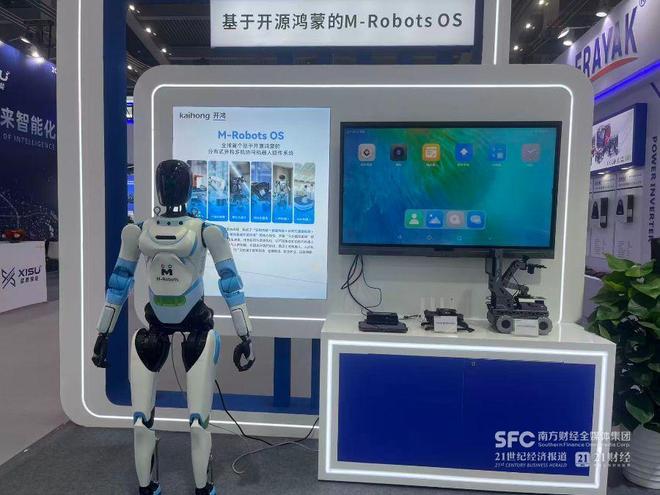
国内首款鸿蒙人形机器人亮相 业内加速构建全自主可控机器人生态
Zheng Quan Ri Bao Wang· 2025-10-30 12:47
Core Insights - The launch of the "Kua Fu" robot, which is the first domestic robot equipped with the open-source HarmonyOS, marks a significant step in breaking foreign technology monopolies and accelerating the establishment of a fully autonomous and controllable robot ecosystem [1][2] Group 1: Technological Breakthroughs - The "Kua Fu" robot is developed by Leju Robotics in collaboration with Huawei, utilizing the open-source HarmonyOS and Huawei's Pangu intelligent model 5.0, achieving full-chain technological autonomy from the operating system to application frameworks [2] - The establishment of the Wuhan Innovation Center aims to provide comprehensive support for innovative products like "Kua Fu," including technical validation and market promotion [2] Group 2: Industry Trends - The competition in the robot ecosystem is fundamentally about standards and collaborative capabilities, with "Kua Fu" demonstrating the feasibility of HarmonyOS as a foundational technology for robots [4] - Major players in the robotics industry are increasingly focusing on building autonomous and controllable technology ecosystems, with companies like Nanjing Estun Automation and Ningbo Joyson Electronics exploring deep integration of domestic control systems and platforms [3] Group 3: Market Potential - The Harmony ecosystem, which has gathered over 9,200 community contributors and produced more than 1.3 billion lines of code, is expected to unlock a market space worth trillions, extending its reach across various industries [3] - Huawei's "Tian Gong Plan," announced at the HUAWEI CONNECT 2025 event, will invest 1 billion yuan to support the innovation of the Harmony AI ecosystem, providing strong momentum for the competition in this field [3]
