
VIE架构

Search documents
蔚来李斌卷入小米500万侵权案?知情人士回应
Feng Huang Wang· 2026-02-25 14:21
公开履历显示,李斌是易车网的创办者,于2000年创立该汽车资讯平台。此后在2018年,他正式卸任易 车CEO一职,将个人的业务重心全面转向蔚来汽车。 随着高额索赔判决结果的公布,网络上开始流传该涉诉账号的实际控制人为蔚来创始人李斌的传言。对 此,有知情人透露,涉案账号背后由北京易车信息科技有限公司全资控股,而李斌早在2020年就已将所 持相关股份全部转让。该人士解释称,外界目前看到的股权关联信息,主要是由于VIE(可变利益实 体)架构下的工商变更信息未能及时同步更新所致,目前易车的实际控制人早已不是李斌。 凤凰网科技讯 2月25日,针对自媒体"AutoReport 汽车产经"侵权案的一审结果,业内一度传出该账号实 际控制人为蔚来创始人李斌的说法。对此,有知情人士向媒体澄清,李斌已于2020年转让了相关股份, 与涉事主体并无关联。 昨日下午,小米公司方面披露了针对"AutoReport 汽车产经"侵权案的一审胜诉结果。根据法院判决,被 告方须履行删除侵权内容并公开致歉的义务,同时需向小米公司支付高达500万元的赔偿金。公开检索 信息显示,该败诉账号的认证主体为北京易车互动广告有限公司。 ...


创业18 年首现身,SHEIN 创始人许仰天百亿投资扎根广东
3 6 Ke· 2026-02-25 09:42
2026年2月24日,农历正月初八,在广东省高质量发展大会上,SHEIN 创始人许仰天迎来了他在商业世界中第一次公开亮相。 从SHEIN 创立至今已经有18年之久,耐人寻味的是,许仰天始终保持着彻底的低调。他从未在公开场合露面,基层员工、媒体均不知道这位隐形富豪的 尊容。 而在春节后首个工作日,他主动结束了长达十余年的"隐身" 状态,现身这场色彩鲜明的政企会议。 但对这家长期刻意弱化出身、淡化本土标签的企业来说,意味着什么不言而喻。 许仰天的转变,正是全球地缘与监管格局剧变之下,中国出海企业最现实的生存选择写照。 失灵的人设和被迫的亮相 许仰天先是做出一系列表态。首先,他强调的是:"广东是希音的根。"他同时宣布,未来三年将在广东投入超百亿元,建设智慧供应链。 他的发言全是干货,比如年出口超1000亿、近万家广东供应商、带动60万个就业岗位等。 许的发言不长,但把企业与地方产业的共生关系说得很明白。一丝丝山东淄博口音,显得"感恩" 之心更加真切。无疑,在这场政商云集的会议中,许仰 天的发言已经被接受。 这标志着许仰天和SHEIN明确身份的开始。 从某种意思上来看,许似乎也已经没有太多选择。SHEIN 此前那条模 ...



月薪7万,茶颜悦色在上海、深圳疯狂摇人
3 6 Ke· 2026-01-14 03:33
Core Viewpoint - Chayan Yuese is expanding its recruitment efforts in Shanghai and Shenzhen, indicating a strategic move towards market expansion and brand development in these regions [1][2]. Group 1: Recruitment and Expansion Plans - Chayan Yuese is hiring for various positions in Shanghai, offering monthly salaries ranging from 45,000 to 75,000 yuan for marketing roles, and 20,000 to 30,000 yuan for warehouse management positions in Shenzhen [1]. - The company plans to establish a creative studio in Shanghai to attract professional talent and gather creative inspiration, although there are currently no plans to open a store in the city [2]. - The recruitment of warehouse positions suggests preparations for supply chain infrastructure, indicating potential future store openings in the South China market [2]. Group 2: Market Strategy and Brand Development - Chayan Yuese has been focusing on the South China market, with cities like Shenzhen being evaluated as potential growth areas [2]. - The company has historically operated a direct sales model, primarily in Hunan and surrounding areas, and has recently developed four sub-brands to diversify its offerings [4]. - As of December 9, 2026, Chayan Yuese has opened 914 stores, with a significant concentration in Hunan province, highlighting the need for national expansion due to market saturation in existing regions [6][8]. Group 3: Competitive Landscape and Industry Trends - The tea beverage industry is experiencing intensified national competition, necessitating Chayan Yuese's entry into high-potential markets like Shanghai and Shenzhen to maintain brand influence [8]. - The company is facing a competitive environment where over 18,700 tea beverage stores are present in the South China market, with major competitors already established in these regions [12]. - Chayan Yuese's cautious approach to expansion reflects a balance between scaling operations and maintaining product quality, as indicated by its emphasis on supply chain and organizational capabilities [12][13].
VIE架构深度解析:赴美上市的“万能钥匙”还是“阿喀琉斯之踵”?
Sou Hu Cai Jing· 2025-12-31 03:51
Group 1 - The VIE (Variable Interest Entity) structure has been a key mechanism for Chinese companies to access international capital markets, particularly in sectors with foreign investment restrictions such as internet, education, and media [1][2] - The VIE structure allows companies to bypass foreign ownership limitations and achieve overseas financing and listing, attracting significant international capital to support China's new economic development [1][2] - The structure provides flexibility and control, enabling founders and management to maintain control through offshore entities without facing direct equity transfer approval challenges [1] Group 2 - Despite its advantages, the VIE structure presents significant risks, including legal enforceability issues, as its effectiveness relies on the recognition of control agreements by the judiciary [4] - Cross-border regulatory policies are subject to change, with increasing scrutiny from both Chinese and U.S. regulators, which may impact the sustainability of the VIE structure [5] - Financial compliance and related party transaction disclosure risks are heightened due to the nature of VIE arrangements, necessitating strict adherence to transparency and fair pricing to avoid investigations and reputational damage [6] Group 3 - Effective management of the VIE structure requires a professional approach to risk control, with a focus on balancing compliance and efficiency [8] - A three-tier verification system is recommended for companies, including pre-evaluation of industry policies, mid-term enhancement of agreement design, and ongoing monitoring of regulatory changes [8][9][10] Group 4 - The future of the VIE structure is uncertain, with some companies exploring alternative structures like direct ownership and red-chip arrangements as China's capital market opens [11] - However, until fundamental changes in foreign investment restrictions occur, the VIE structure is expected to persist, evolving from "regulatory arbitrage" to "compliance symbiosis" [11]

VIE与SPAC上市前景对决:2026年企业上市该如何选?
Sou Hu Cai Jing· 2025-12-16 10:24
Core Viewpoint - The VIE structure and SPAC listings are two key pathways for Chinese companies to raise funds overseas, with a fundamental competition between compliance stability and financing efficiency [1][2]. Group 1: Differences Between VIE and SPAC - The VIE structure relies on "contractual control" to bypass foreign investment restrictions, making it the only method for sensitive industries like internet and education to raise funds abroad [3]. - SPAC listings are an advanced version of "backdoor listings," allowing companies to go public quickly through mergers with shell companies, with a process that can take 3 to 6 months compared to the traditional 12 to 18 months [4]. Group 2: Future Outlook and Analysis - The VIE structure is expected to strengthen by the end of 2025, as regulatory frameworks like the Data Security Law evolve, leading to a more compliant and structured approach for companies [6]. - SPACs are entering a phase of "tightened regulation and value return" after a decline in popularity in 2022, with increased disclosure requirements from the SEC and less favorable conditions for SPAC trials in Hong Kong and Singapore [10]. Group 3: Decision-Making Guidelines for 2025 - Companies in foreign-restricted sectors (e.g., internet, AI) should prioritize the VIE structure and focus on compliance and optimization of their frameworks [13]. - For high-growth industries not subject to restrictions (e.g., renewable energy, biomedicine) with urgent financing needs, SPACs can be considered, but market conditions must be carefully evaluated [13]. - Long-term strategic alignment is crucial; VIE structures are suitable for companies aiming for global branding and sustained financing, while SPACs are better for those with short-term financing needs or plans for business restructuring [15].
【锋行链盟】港交所IPO流程及问题解答
Sou Hu Cai Jing· 2025-12-10 16:35
Pre-IPO Preparation Stage - Companies choose to IPO on the Hong Kong Stock Exchange (HKEX) due to its advantages such as access to international capital, flexible listing rules, and high liquidity with an average daily trading volume of approximately HKD 130 billion in 2023 [3][4] - Basic conditions for IPO on HKEX include a net profit of at least HKD 50 million over the last three years, a market capitalization of at least HKD 500 million, and a public float of at least 25% [3][4] - Special conditions for biotech companies (Chapter 18A) allow them to list without profitability, focusing instead on their potential for international financing and flexible voting structures [3][4] - Special conditions for specialized technology companies (Chapter 18C) were introduced in 2023, targeting sectors like advanced hardware and renewable energy [4] Selection of Intermediaries and Due Diligence - Key intermediaries in the IPO process include sponsors, lawyers, accountants, underwriters, and industry consultants, each with specific responsibilities [5][6][7][8] - Sponsors are responsible for the overall compliance of the IPO process and must hold a HKEX sponsorship license [5] - Lawyers assist in structuring equity and compliance documentation, while accountants audit financial statements and ensure compliance with HKFRS or IFRS [6] Restructuring and Guidance - Common structures for mainland companies going public in Hong Kong include red-chip structures, H-share structures, and VIE structures, each with specific regulatory considerations [9][10] - The 2023 regulations require submission of a filing report to the China Securities Regulatory Commission (CSRC) for companies using VIE structures [10][11] HKEX Application and Review Process - The HKEX IPO review process has been streamlined with the introduction of the FINI platform, significantly reducing the time required for approval [11][12] - The process includes pre-communication with the exchange, submission of formal applications, and multiple rounds of inquiries from the exchange [11] Pricing and Allocation - The pricing mechanism for HKEX IPOs utilizes a bookbuilding approach, with cornerstone investors playing a crucial role in stabilizing market confidence [13][14] - The initial allocation typically consists of 10% for public offerings and 90% for international placements, with a mechanism for reallocation based on demand [14] Post-Listing Maintenance - Companies listed on HKEX must adhere to continuous disclosure obligations as outlined in Chapter 13 of the Listing Rules, including timely reporting of significant events [15] - The introduction of enhanced ESG disclosure requirements starting in 2024 mandates all listed companies to report on climate-related information [15] Recent Regulatory Developments - Recent changes include the launch of the FINI platform, the introduction of Chapter 18C for specialized technology companies, and stricter VIE structure regulations requiring legal analysis of control agreements [15]

【锋行链盟】港交所IPO中税收问题梳理
Sou Hu Cai Jing· 2025-12-09 16:23
Group 1 - The tax issues in Hong Kong IPOs are critical considerations throughout the listing process, including pre-listing restructuring, compliance during the listing, and post-listing operations, requiring an understanding of tax laws in both Hong Kong and mainland China [1] - Pre-listing restructuring often involves architectural changes to meet Hong Kong Stock Exchange requirements, which directly impact tax costs and compliance [3] - The core tax implications of architectural choices and the need for tax optimization and compliance during restructuring are essential for the feasibility of the listing [3] Group 2 - Historical tax compliance is crucial, with H-share structures subject to a corporate income tax rate of 25% (or 15% for high-tech companies), and potential withholding tax of 10% on dividends to foreign investors [4] - Red-chip structures may trigger corporate income tax liabilities if the acquisition of domestic equity by an offshore holding company leads to asset valuation increases [4] - VIE structures face additional scrutiny from tax authorities, which may question the legitimacy of the arrangement and require compliance with transfer pricing rules [4] Group 3 - The Hong Kong Stamp Duty Ordinance mandates a stamp duty of 0.13% on stock issuance or transfer, typically borne by the issuer during an IPO [5] - Post-listing, companies must maintain tax compliance, particularly regarding cross-border transactions, profit distribution, and capital operations [6] - The tax treatment of profit distribution and capital gains tax implications are significant considerations for listed companies [7] Group 4 - Common risks include historical tax discrepancies that could hinder the listing process, unstable structures due to regulatory changes, and potential double taxation if tax treaties are not effectively utilized [8] - Employee stock incentive plans may lead to tax disputes if the timing and basis for taxation are unclear, impacting employee morale [8]
国锐生活拟2.69亿元收购春雨医生78.3%股权
Mei Ri Jing Ji Xin Wen· 2025-12-09 14:45
Core Viewpoint - The company Guorui Life is acquiring a 78.3% stake in Beijing Chunyu Tianxia Software Co., which operates the Chunyu Doctor platform, for approximately 269 million yuan, aiming to create a "property + healthcare" dual-driven development model [1][4]. Group 1: Acquisition Details - The acquisition will be financed through a payment structure of 20% in cash and 80% in shares, with the total consideration amounting to about 269 million yuan [2]. - The payment will be executed in two phases: an initial payment of approximately 53.8 million yuan in cash, followed by the issuance of 136 million A-class shares and a cash payment of 17.1 million yuan to B-class investors [2]. - The share issuance price is set at 1.6 HKD per share, representing a discount of 59.8% compared to the closing price on the agreement signing date [2]. Group 2: Regulatory and Structural Challenges - The acquisition faces regulatory challenges due to foreign investment restrictions in the digital healthcare sector, necessitating the use of a Variable Interest Entity (VIE) structure to gain control over Chunyu Doctor [3]. - The VIE structure involves establishing a wholly foreign-owned enterprise (WFOE) that will enter into agreements to manage Chunyu Doctor, transferring economic benefits and risks to the WFOE [3]. - There are three main regulatory risks associated with the VIE structure: increased scrutiny on foreign investments, tightening of foreign debt and currency regulations, and potential changes in policy that could affect foreign ownership limits [3]. Group 3: Strategic Rationale - Guorui Life's core business has been under pressure due to cyclical fluctuations in the real estate market, prompting the need for new growth avenues [4][5]. - The acquisition of Chunyu Doctor, which has a strong user base and established industry presence, is seen as a way to diversify into a non-cyclical, asset-light growth sector [5][6]. - Chunyu Doctor has a significant user base of approximately 180 million registered users and 690,000 contracted physicians, which aligns with Guorui Life's strategy to leverage existing resources for business expansion [5][6]. Group 4: Integration and Future Outlook - The company plans to retain Chunyu Doctor's existing management team and hire industry experts to facilitate the integration of healthcare services with its property management operations [7]. - There is a focus on creating synergies between property services and digital healthcare, addressing potential challenges in service integration and data compliance [7]. - Guorui Life aims to innovate service offerings by combining property management with healthcare services, such as community chronic disease management and family doctor contracts, to enhance revenue streams [7].
2025赴港上市2.0:科技赋能与制度创新下的香港资本市场业务新范式
Sou Hu Cai Jing· 2025-11-26 08:38
Core Insights - The report discusses the new paradigm of Hong Kong's capital markets driven by technological empowerment and institutional innovation, focusing on the trends and regulations for mainland companies planning to list in Hong Kong by 2025 [1][24]. Listing Pathways - The report highlights the suitability of H-share direct listings and red-chip indirect listings, with a trend towards A-share to H-share conversions. It emphasizes the importance of compliance issues related to VIE structure dismantling, H-share "full circulation," and offshore trust applications [2][18]. - The new regulatory framework established in 2023 has simplified the H-share listing process and optimized the "full circulation" mechanism, providing a more efficient cross-border financing path for large state-owned and mature private enterprises [18][24]. Practical Issues - The report identifies key legal issues for companies planning to list in Hong Kong, including the design of equity incentives, tax planning, and information disclosure, which are critical for executives to manage effectively [2][20]. - The Hong Kong Stock Exchange has introduced initiatives like the "Tech Company Fast Track" to enhance the attractiveness of the market for technology firms, aiming to facilitate their listing processes [2][10]. Hot Industries - The report categorizes key industries such as hard technology, biomedicine, and new consumption, each facing unique compliance challenges. Hard tech companies must navigate intellectual property and export control issues, while biomedicine firms focus on data security and human genetic resource protection [2][22]. - New consumption enterprises face multiple compliance tests, including third-party payment regulations and store licensing management, while domestic chain enterprises must pay attention to franchise compliance and fund management [2][22]. Market Dynamics - By 2025, Hong Kong's capital market is projected to regain its position as the world's top fundraising destination, with over 90% of the companies being from mainland China, driven by institutional innovations that facilitate access to global capital [1][24]. - The report emphasizes that the new regulatory environment and the establishment of a comprehensive filing system mark a significant shift in the cross-border listing landscape, enhancing the market's appeal for innovative enterprises [24].
VIE架构:中国企业海外上市的“加速器”与“风险雷区”
Sou Hu Cai Jing· 2025-11-07 04:43
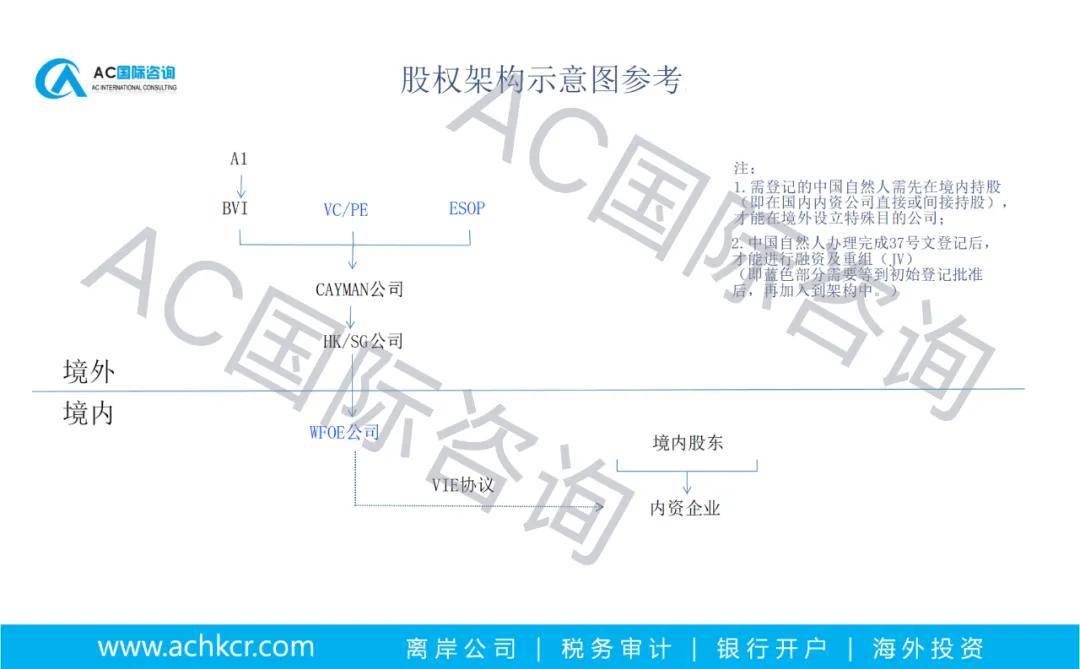
Core Concept - The VIE (Variable Interest Entity) structure is a mechanism that allows companies to control and consolidate financials of operating entities without direct equity ownership, playing a crucial role in enabling Chinese companies to list and raise funds overseas [1][5]. Group 1: VIE Structure Overview - The VIE structure involves establishing a Special Purpose Vehicle (SPV) outside China, which then sets up a Wholly Foreign Owned Enterprise (WFOE) in China to control domestic companies through various agreements [1]. - This structure helps companies avoid legal risks associated with domestic regulations and simplifies the process of overseas listings [1][2]. Group 2: Tax and Financing Benefits - Companies can design financing methods through multi-layered structures while retaining control and benefiting from favorable tax rates on dividends and asset transfers [2]. - The VIE structure lowers the conditions for companies to go public, allowing them to bypass policy restrictions for overseas listings [2]. Group 3: Case Studies - Case Study 1: A used car trading company utilizes a VIE structure with multiple overseas entities, including a holding company in Singapore and several WFOEs in China, to effectively control diverse business operations in the used car market [3]. - Case Study 2: A well-known online video platform has its listing entity in the U.S. and controls two WFOEs in China through various agreements, ensuring comprehensive control over its domestic operations and facilitating financing [4]. Group 4: Risks and Challenges - The VIE structure faces legal ambiguity as Chinese law has not clearly defined its status, leading to uncertainties in legal disputes [5]. - Companies must navigate tax compliance challenges due to numerous related-party transactions, which could result in penalties if not adhered to [5]. - There is a risk of weakened control since agreement-based control is less robust than equity control, potentially allowing founders to terminate agreements or transfer key assets [5]. - The potential for improper profit transfer between the listed entity and the operating entity poses a risk to investors and public shareholders [5].