ESG披露

Search documents
时报观察丨ESG披露不该报喜不报忧
证券时报· 2026-03-31 00:04
Core Viewpoint - The article discusses the upcoming mandatory ESG (Environmental, Social, and Governance) disclosure requirements for A-share companies in 2026, highlighting the need for improved transparency and accountability in ESG reporting [1][2]. Group 1: ESG Disclosure Requirements - In 2026, A-share companies will be required to disclose their first ESG reports by April 30, following regulatory policies starting in 2024 [1]. - The ESG disclosure rate among A-share companies has been increasing, reaching 46.83% in 2024, with the disclosure rates for the CSI 300 and CSI 800 indices at 97% and 90%, respectively [1]. Group 2: Issues with Current ESG Reporting - Many companies engage in selective disclosure, focusing on positive aspects while omitting negative information, which undermines the true purpose of ESG reporting and misleads investors [2]. - Examples include a leading power company's subsidiary that faced penalties for environmental violations but did not mention this in its ESG report, and another company that received a warning for undisclosed related-party transactions but failed to disclose this in its ESG report [1][2]. Group 3: Recommendations for Improvement - To enhance the effectiveness of ESG disclosures, it is essential to refine reporting guidelines, increase the objectivity and completeness of reports, and raise the costs of non-compliance with disclosure regulations [2].


金融街丨强制披露“首考”在即 绿色金融落地提速
Sou Hu Cai Jing· 2026-02-09 04:00
Core Viewpoint - China's green finance policy system has been continuously improved, leading to rapid market growth, with green loan balances expected to exceed 44 trillion yuan by the end of 2025, marking a 20.2% year-on-year increase [2][4][9]. Policy Development - The development of China's green finance has progressed from initial guidelines in 2012 to comprehensive implementation plans by 2025, including the establishment of a unified standard for green financial products [4][10]. - The introduction of mandatory disclosure guidelines for corporate sustainability reports is set to enhance transparency and accountability in environmental information [5][10]. Market Growth - As of the end of 2025, the balance of green loans in both domestic and foreign currencies is projected to reach 44.77 trillion yuan, with a significant portion allocated to infrastructure upgrades and low-carbon energy transitions [2][4]. - The carbon market is also expanding, with cumulative transaction volumes expected to exceed 57.6 billion yuan by 2025, reflecting a growing emphasis on carbon pricing mechanisms [8][15]. Challenges in Implementation - Despite rapid growth, challenges remain, including insufficient policy coordination, inadequate information disclosure, and a need for improved product precision [2][6][9]. - The quality of corporate environmental information disclosure is still lacking, with many companies focusing on positive achievements while neglecting negative indicators [6][8]. Future Directions - Future policies will focus on precise implementation, systematic coordination, and enhancing quality and efficiency in green finance, transitioning from mere scale expansion to dual improvements in quality and effectiveness [9][10]. - There is a call for the establishment of a national-level carbon accounting and data platform to improve data governance and enhance the credibility of environmental disclosures [10][11].


深主板股票上市规则及规范运作指引修订要点解读
Sou Hu Cai Jing· 2026-01-14 08:45
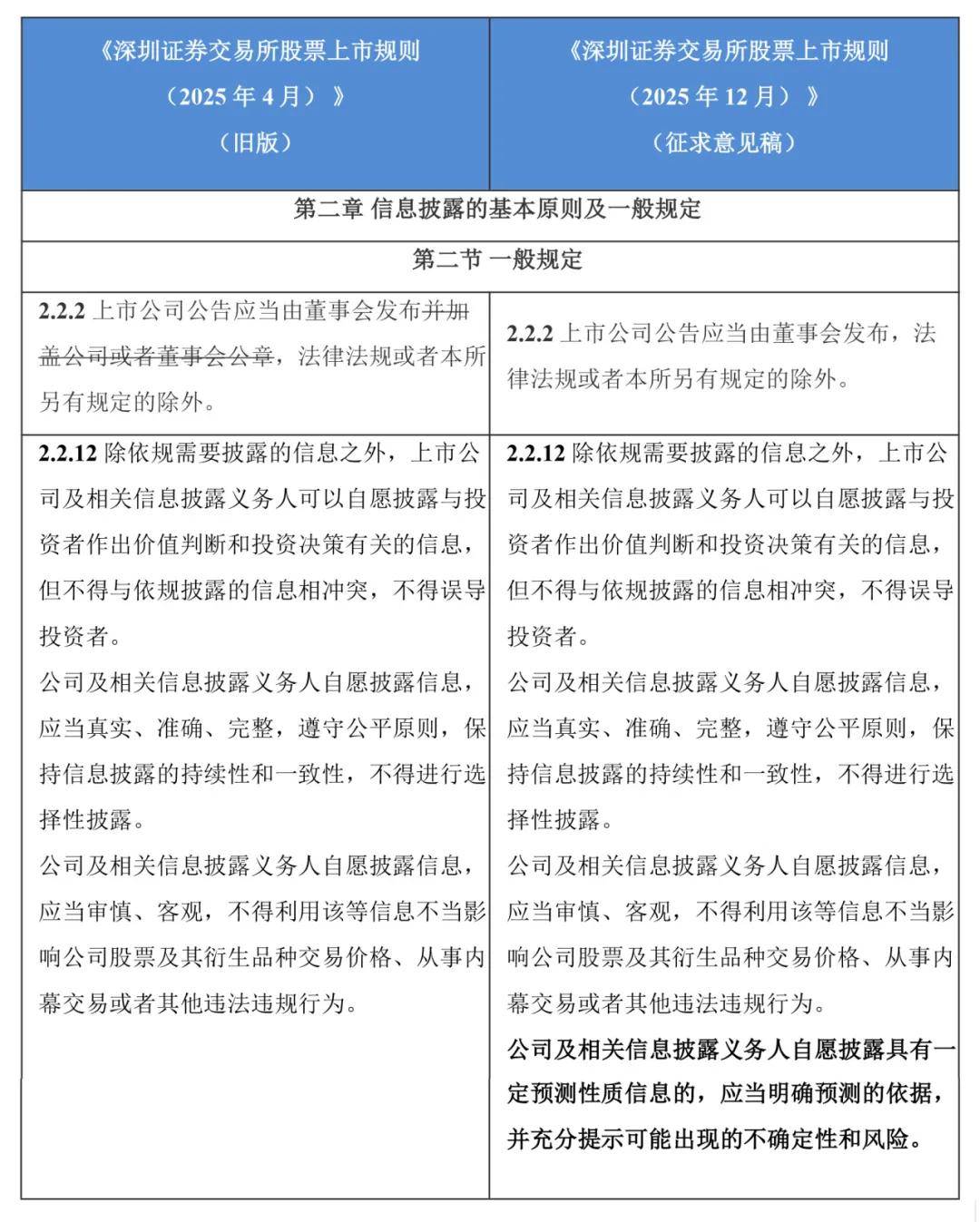
Core Viewpoint - The Shenzhen Stock Exchange is revising its self-regulatory guidelines and stock listing rules to align with the latest regulatory requirements from the China Securities Regulatory Commission, focusing on enhancing governance, information disclosure, and the responsibilities of key personnel [1][2]. Summary by Sections 1. Revision of Stock Listing Rules - The revision emphasizes the need for standardized voluntary disclosures and improved announcement requirements [2]. - Simplification of announcement publication requirements by removing the mandatory stamp of the company or board, aligning with electronic disclosure practices while maintaining board oversight [4]. - New mandatory requirements for predictive voluntary disclosures, including basis explanations and risk warnings, to prevent misleading investors [5]. 2. Governance of Directors and Senior Management - The rules detail constraints on the appointment of directors and senior management, reinforcing their fiduciary duties [6]. - Immediate cessation of duties and termination of employment for directors and senior management upon encountering negative circumstances, without specific timeframes [11]. - Enhanced disclosure obligations regarding conflicts of interest for directors engaging in similar business activities or seizing business opportunities belonging to the company [11]. 3. Responsibilities of the Board Secretary - The role of the board secretary is expanded to include responsibilities for organizing and coordinating investor relations, managing information disclosure, and ensuring compliance with regulations [13][15]. - New hard requirements for the qualifications of board secretaries, including five years of relevant work experience or professional certifications [21]. - Strengthened dismissal mechanisms for board secretaries, reducing the threshold for termination from three months to one month of inability to perform duties [21]. 4. Bankruptcy and Delisting Procedures - The revisions specify requirements for disclosing information during the pre-restructuring phase to prevent misinformation and protect investors [24]. - The process for voluntarily delisting is streamlined, allowing decisions to be made without the need for a review by the listing committee, thus enhancing efficiency [24].
【锋行链盟】港股IPO审计师服务职责及核心要点
Sou Hu Cai Jing· 2025-12-29 11:59
Core Viewpoint - The role of auditors in Hong Kong IPOs is crucial for ensuring the authenticity, accuracy, and completeness of financial information, complying with regulatory requirements from HKEX and SFC, and providing reliable financial data to investors [1]. Group 1: Core Responsibilities of Auditors in Hong Kong IPOs - Auditors are involved throughout the entire IPO process, with key responsibilities including statutory financial statement audits, internal control verification, assistance with information disclosure and regulatory communication, and other specialized services as needed [3]. Group 2: Key Points of Hong Kong IPO Audits - Auditors must focus on historical financial data audits, specifically the "three years and one period" financial statements required for the prospectus, and issue an unqualified audit report or other appropriate opinions [3]. - Compliance with accounting standards is essential, ensuring financial statements adhere to HKFRS, IFRS, or CAS, and that all significant accounting policies and estimates are disclosed [3]. - Key areas of verification include revenue recognition, cost allocation, asset impairment, financial instrument measurement, related party transactions, and tax compliance [3]. - Auditors must verify the effectiveness of internal controls over financial reporting (ICFR) and issue an internal control verification report based on relevant guidelines [3]. - Legal and regulatory compliance checks are necessary, including industry-specific regulations, tax compliance, and foreign exchange management for cross-border operations [3]. - Asset ownership verification is critical, confirming the ownership or usage rights of major assets and identifying any encumbrances [3]. - Auditors should identify contingent liabilities and commitments that could significantly impact financial statements, such as pending litigation and major contract breaches [3]. - Participation in the preparation of the financial section of the prospectus is required to ensure consistency between financial data and audit reports [3]. - Auditors must provide professional opinions during inquiries from HKEX and SFC regarding financial issues and assist in revising financial statements if necessary [3]. - The reasonableness of assumptions in profit forecasts or valuation models should be reviewed, although this is not guaranteed [3]. - Assistance with financial integration during mergers and acquisitions, including reverse takeovers and spin-offs, is part of the auditor's role [3]. - Evaluation of the financial impact of VIE structures, including compliance with accounting treatment and fund flow, is necessary [3]. Group 3: Additional Considerations - Auditors must ensure consistency in accounting policies throughout the reporting period, with any changes fully disclosed along with their impact on financials [5]. - Comprehensive identification of related parties and transactions is essential to verify fair pricing and prevent profit manipulation through related party transactions [5]. - Continuous assessment of the company's ability to operate is necessary, analyzing cash flow, debt repayment capacity, and profitability trends [5]. - For overseas subsidiaries, auditors must consider local accounting standards and ensure compliance with HKFRS [5]. - Verification of the legal validity of control agreements in VIE structures is crucial, along with assessing the realizability of economic benefits [5]. - Timely communication of significant issues discovered during audits, such as internal control deficiencies and financial anomalies, is required [5].

9部门发布ESG披露气候准则,从自愿向强制披露扩展
2 1 Shi Ji Jing Ji Bao Dao· 2025-12-26 13:25
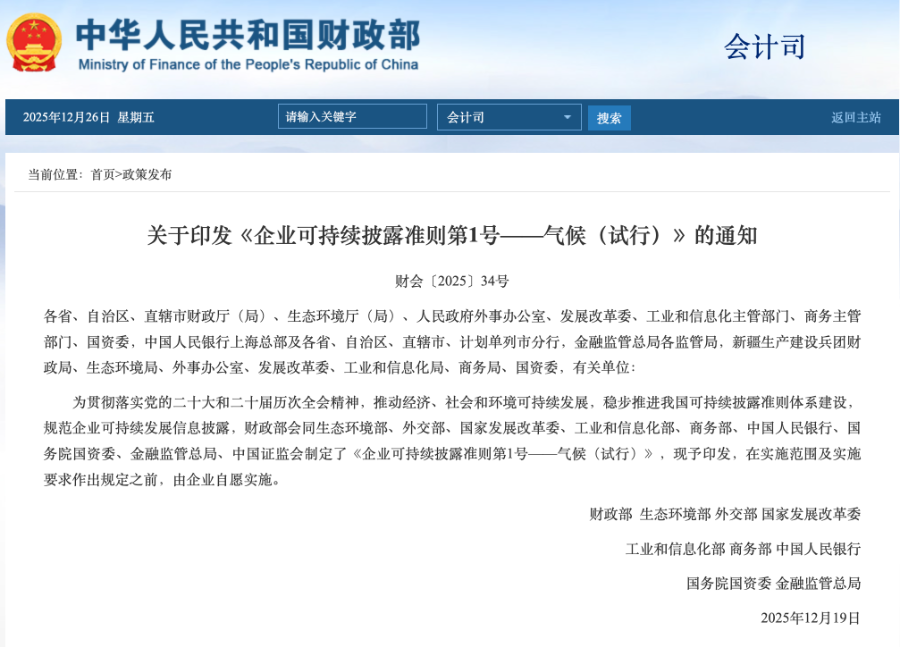
Group 1 - The core viewpoint of the news is the introduction of the "Climate Guidelines," which marks a significant step towards a unified sustainable disclosure framework in China, aimed at enhancing corporate transparency regarding climate-related actions and risks [1][3][11] - The "Climate Guidelines" are positioned as a trial document, allowing voluntary implementation by companies, with plans for gradual expansion from listed to non-listed companies and from large to small enterprises [1][3][9] - The guidelines consist of four main parts: governance, strategy, risk and opportunity management, and metrics and targets, aligning with international standards such as IFRS and TCFD [5][6][7] Group 2 - The implementation of the "Climate Guidelines" is expected to reduce compliance and communication costs for companies, providing a transparent framework for disclosing climate actions and risks [8][9] - A+H share listed companies are identified as the core group affected by the guidelines, as they will no longer need to comply with two different sets of standards, thus lowering compliance pressure [9][10] - The guidelines will encourage companies to focus on climate issues, enhancing their governance mechanisms and risk management processes, which is seen as a breakthrough in corporate climate awareness [13]
【锋行链盟】港交所IPO流程及问题解答
Sou Hu Cai Jing· 2025-12-10 16:35
Pre-IPO Preparation Stage - Companies choose to IPO on the Hong Kong Stock Exchange (HKEX) due to its advantages such as access to international capital, flexible listing rules, and high liquidity with an average daily trading volume of approximately HKD 130 billion in 2023 [3][4] - Basic conditions for IPO on HKEX include a net profit of at least HKD 50 million over the last three years, a market capitalization of at least HKD 500 million, and a public float of at least 25% [3][4] - Special conditions for biotech companies (Chapter 18A) allow them to list without profitability, focusing instead on their potential for international financing and flexible voting structures [3][4] - Special conditions for specialized technology companies (Chapter 18C) were introduced in 2023, targeting sectors like advanced hardware and renewable energy [4] Selection of Intermediaries and Due Diligence - Key intermediaries in the IPO process include sponsors, lawyers, accountants, underwriters, and industry consultants, each with specific responsibilities [5][6][7][8] - Sponsors are responsible for the overall compliance of the IPO process and must hold a HKEX sponsorship license [5] - Lawyers assist in structuring equity and compliance documentation, while accountants audit financial statements and ensure compliance with HKFRS or IFRS [6] Restructuring and Guidance - Common structures for mainland companies going public in Hong Kong include red-chip structures, H-share structures, and VIE structures, each with specific regulatory considerations [9][10] - The 2023 regulations require submission of a filing report to the China Securities Regulatory Commission (CSRC) for companies using VIE structures [10][11] HKEX Application and Review Process - The HKEX IPO review process has been streamlined with the introduction of the FINI platform, significantly reducing the time required for approval [11][12] - The process includes pre-communication with the exchange, submission of formal applications, and multiple rounds of inquiries from the exchange [11] Pricing and Allocation - The pricing mechanism for HKEX IPOs utilizes a bookbuilding approach, with cornerstone investors playing a crucial role in stabilizing market confidence [13][14] - The initial allocation typically consists of 10% for public offerings and 90% for international placements, with a mechanism for reallocation based on demand [14] Post-Listing Maintenance - Companies listed on HKEX must adhere to continuous disclosure obligations as outlined in Chapter 13 of the Listing Rules, including timely reporting of significant events [15] - The introduction of enhanced ESG disclosure requirements starting in 2024 mandates all listed companies to report on climate-related information [15] Recent Regulatory Developments - Recent changes include the launch of the FINI platform, the introduction of Chapter 18C for specialized technology companies, and stricter VIE structure regulations requiring legal analysis of control agreements [15]

Should the SEC Ease the Communications Rule?
Yahoo Finance· 2025-10-21 10:10
Core Viewpoint - The Securities Industry and Financial Markets Association (SIFMA) is urging the SEC to modernize its Communications Rules, which they deem burdensome and outdated, especially in light of evolving technology and communication methods [2][3]. Group 1: SEC's Current Approach - Under the previous chair, Gary Gensler, the SEC focused on eliminating off-channel communications and improper record storage, resulting in nearly 100 settlements totaling over $2.2 billion in penalties during the Biden administration [2]. - The current SEC is adopting a more business-friendly approach compared to the previous administration, which may lead to more leniency for advisors in client communications [4]. Group 2: SIFMA's Proposals - SIFMA argues that the broad interpretation of current rules has created excessive compliance burdens without enhancing investor protection [4]. - Proposed reforms include excluding trivial exchanges like emojis and non-sensitive messages from being penalized, standardizing a three-year retention period for all client communications, and omitting AI-generated meeting transcripts from the definition of true communications [5][6].
上交所苑多然:将加大ESG披露的监管规范力度
Di Yi Cai Jing· 2025-10-16 08:58
Core Points - The Shanghai Stock Exchange (SSE) aims to enhance sustainable information disclosure by listed companies [1] - SSE will continuously improve the guidelines for compiling sustainable development reports [1] - The exchange plans to strengthen regulatory norms for ESG (Environmental, Social, and Governance) disclosures [1] - SSE is advancing the implementation of industry standards for the electronic format of sustainable development reports [1]
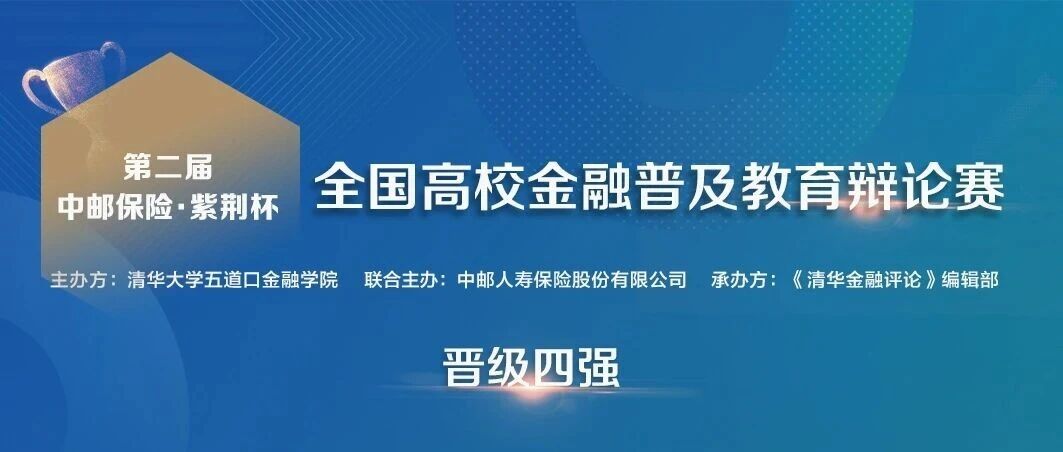
四强晋级|第二届中邮保险•紫荆杯全国高校金融普及教育辩论赛小组赛圆满结束
清华金融评论· 2025-09-05 10:35
Group 1 - The article discusses the second National College Financial Popularization Education Debate Competition, highlighting the importance of financial education in universities [2][4]. - The debate topics include sustainable development of financial culture in China, the role of young people in upgrading the silver industry, and the focus of inclusive finance on equal opportunities versus sustainability [6][7][9]. - The competition features various universities, showcasing their arguments on pressing financial issues, indicating a growing interest in financial literacy among students [5][8][10]. Group 2 - The article emphasizes the need for financial institutions to balance economic compensation and risk prevention in insurance [11]. - It also addresses the effectiveness of fiscal interest subsidies compared to market-based loan rates in solving rural financing difficulties [10]. - The future of health insurance in China is debated, focusing on whether it should prioritize inclusivity or innovation [13].
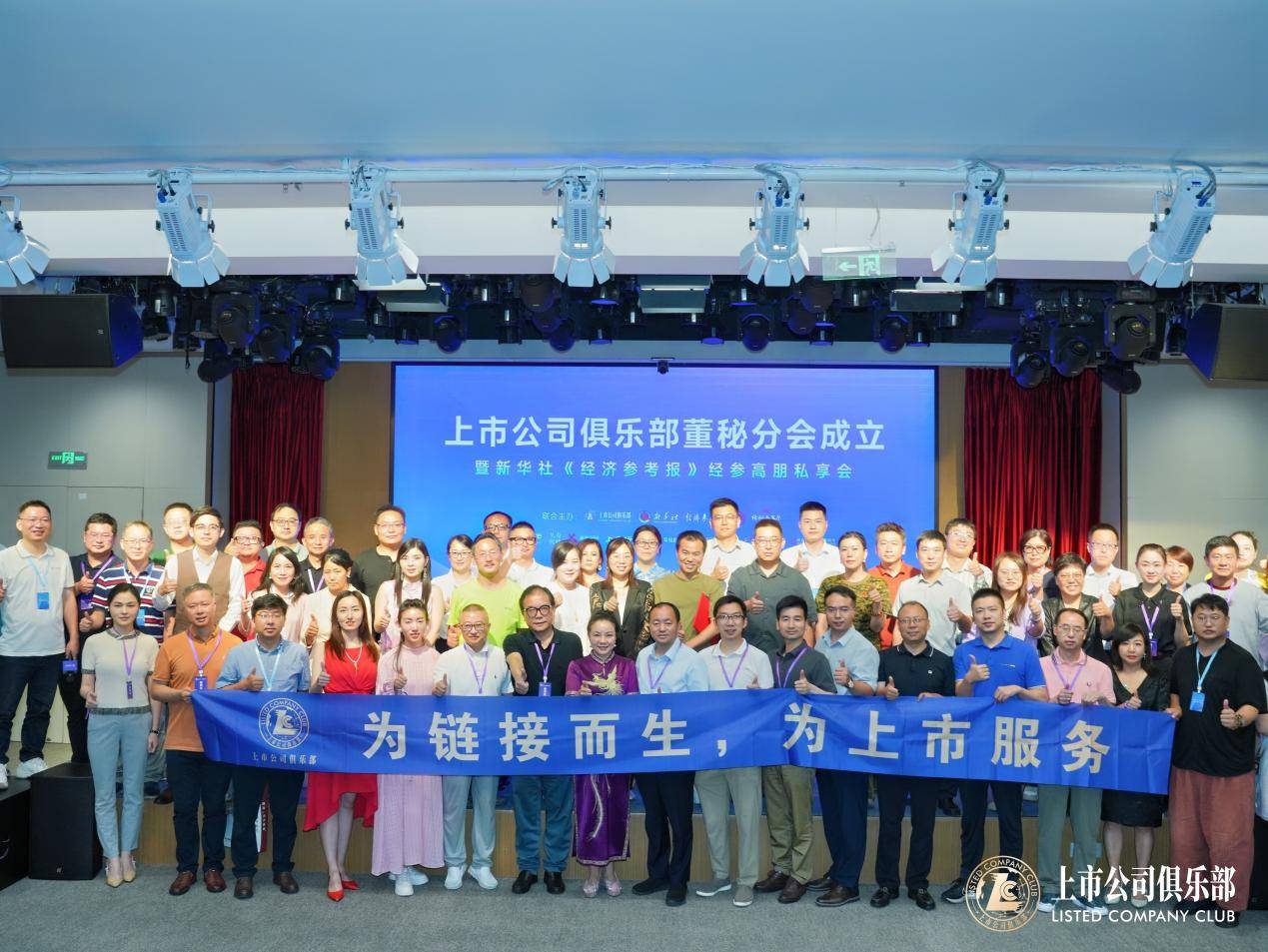
上市公司俱乐部董秘分会正式成立,打造资本合规与资源对接新高地!
Sou Hu Cai Jing· 2025-08-28 08:50
Group 1 - The establishment of the Secretary General Association aims to empower the secretary community and build a more comprehensive professional ecosystem for secretaries [4][6] - The event attracted over 150 listed companies' secretaries and industry elites to discuss hot topics such as capital compliance, cross-industry cooperation, and market value management [3][6] - The association will focus on three main directions: professional empowerment, resource connection, and organizational support, transitioning secretaries from operational roles to strategic roles [6][12] Group 2 - A roundtable forum discussed compliance and controversy issues related to information disclosure, emphasizing the importance of accuracy, timeliness, and completeness in disclosures [10][12] - Experts highlighted that high-quality development of listed companies relies on seven core elements, including strategy, industry foundation, and AI integration [7] - ESG disclosure has become a global requirement, with companies encouraged to view public welfare as a strategic asset rather than a cost [9]