人工智能技术

Search documents
从这场蓝天盛会中,看见人民空军的力量!
Huan Qiu Wang· 2025-09-23 09:22
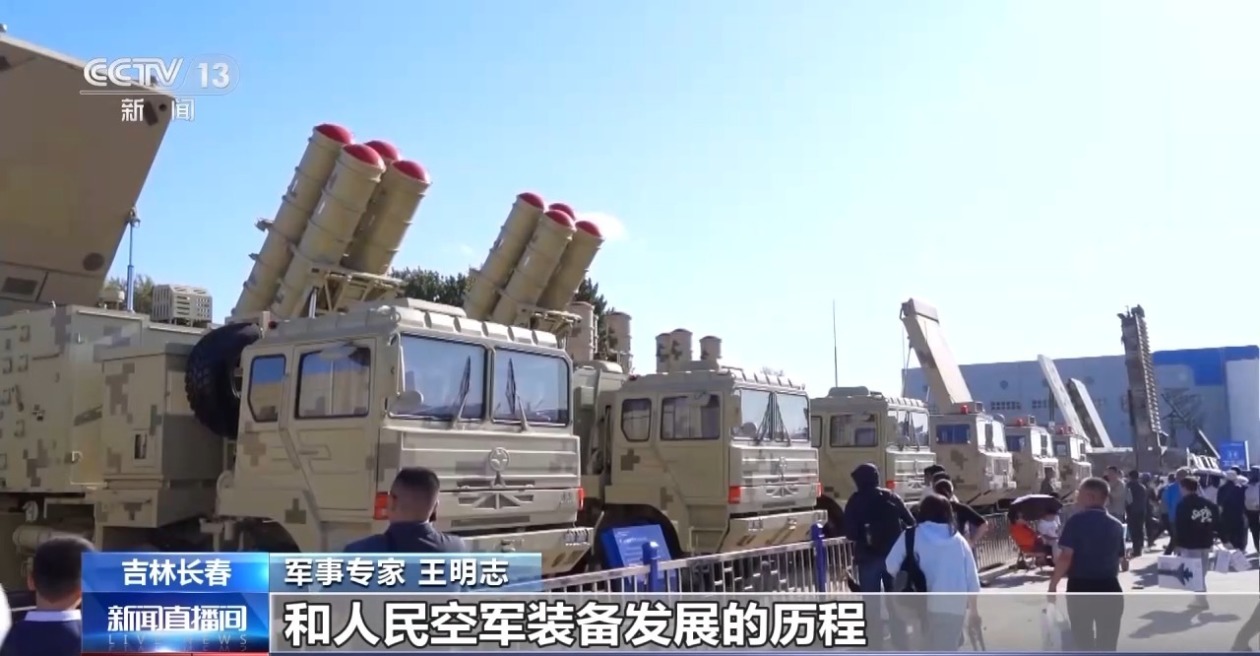
Core Viewpoint - The 2025 Air Force Aviation Open Day and Changchun Airshow showcased the development and capabilities of the People's Air Force, highlighting its equipment system and growth trajectory [1][14]. Group 1: Air Force Equipment and Development - The event featured over a hundred types of active aircraft, ground equipment, and retired classic equipment, demonstrating the comprehensive strength of the People's Air Force [1]. - Military expert Wang Mingzhi emphasized the systematic display of the People's Air Force's equipment development and combat capability generation process, showcasing how the Air Force has grown and strengthened over time [3]. - The China Aviation Engine Group made its debut at the exhibition, presenting various star products, including large transport aircraft engines, reflecting the strength of China's aviation industry [5]. Group 2: Technological Advancements - The exhibition highlighted advancements in unmanned and intelligent aviation products, showcasing the development of autonomous technology and artificial intelligence, which will further promote the widespread use of drones [7]. - The event included a variety of unmanned aerial vehicles (UAVs), such as reconnaissance drones and advanced electronic reconnaissance UAVs, enhancing the Air Force's comprehensive operational capabilities [9]. Group 3: Flight Demonstrations - The five-day flight demonstrations featured impressive performances, showcasing the spirit and training level of the Air Force personnel, as well as the maturity of its equipment system [10]. - Various aircraft, including the Y-20A, J-16, J-20, and KJ-500, participated in coordinated flight displays, illustrating the Air Force's systematic capabilities and tactical training [12][14]. - The flight demonstrations incorporated tactical elements, presenting modular combat formations and emphasizing the Air Force's operational readiness for future battlefields [12][14]. Group 4: Aerospace Industry Growth - The event attracted over 70 domestic aerospace companies, showcasing new technologies and products, and highlighting the vitality of the aerospace industry in Changchun [15]. - The "Jilin-1" satellite, which has established the world's largest sub-meter level commercial remote sensing satellite constellation with 117 satellites in orbit, was a focal point, driving the development of related industries [15]. - A unique dual-wing vertical takeoff and landing fixed-wing drone was introduced, capable of operating in extreme conditions, and has been widely used in various sectors such as emergency firefighting and ecological protection [17].

引力波探测器迎来技术升级战
Ke Ji Ri Bao· 2025-09-18 23:55
Core Insights - The detection of gravitational waves by LIGO has opened a new era in gravitational wave astronomy, confirming over a hundred events and validating Stephen Hawking's black hole theory [1][2] - Next-generation detectors like CE, ET, and LISA are in development, promising unprecedented scientific breakthroughs [2][3] Next-Generation Detectors - CE, with a 40 km arm length, aims to detect 100,000 black hole merger events annually, covering the entire history of gravitational wave sources [2] - ET, a European initiative, will extend its frequency range to 1 Hz, allowing earlier detection of black hole collisions and larger mass mergers [2] - LISA, a space-based project, will consist of three satellites forming a triangle of 2.5 million km, targeting low-frequency gravitational waves [2] Technological Innovations - Next-generation detectors incorporate advanced technologies to enhance detection capabilities, such as longer arm lengths for improved sensitivity [3] - Techniques like advanced mirror coatings and low-temperature cooling significantly reduce thermal noise, enhancing detection in the mid-frequency range [3] - Quantum squeezing technology and AI systems are being utilized to suppress noise and improve measurement precision [3] Scientific Potential and Challenges - These detectors hold the potential to explore early universe phenomena, test fundamental physics theories, and advance multi-messenger astronomy [4][5] - They will provide insights into black hole formation, neutron star mergers, and cosmic expansion measurements [4] - However, challenges include noise suppression, precision engineering, and significant funding requirements for projects like ET and LISA [6]
AI“魔改”视频争议:创意还是恶搞?边界到底在哪儿?
Qi Lu Wan Bao Wang· 2025-09-18 02:53
Core Viewpoint - The rise of AI "magic modifications" in short videos has sparked controversy regarding creativity versus parody, raising questions about the boundaries of such practices and the need for better regulation to ensure AI technology empowers rather than misleads [2][3][9] Group 1: AI "Magic Modifications" Phenomenon - AI "magic modifications" refer to the use of artificial intelligence to create transformative adaptations of original works, commonly seen in short videos and visual creations [1][2] - These modified videos have gained significant popularity on short video platforms, with some achieving tens of thousands of likes and rapid follower growth for creators [2][8] - The low technical barrier and economic cost of using AI for content creation contribute to the proliferation of these modifications, making it accessible for many creators [4][5] Group 2: Public Perception and Cultural Impact - Public opinion is divided, with some viewing these modifications as creative expressions while others argue they undermine the integrity and cultural significance of original works [3][8] - Concerns have been raised about the potential negative impact on younger audiences' values and the distortion of cultural memories due to unauthorized modifications [3][8] - Legal cases, such as the "Ultraman AI-generated infringement case," highlight the risks of AI modifications distorting historical memory and cultural heritage [3][9] Group 3: Economic Incentives for Creators - Creators of AI-modified content can achieve significant exposure, follower growth, and advertising revenue, often surpassing traditional original content in terms of engagement [8][9] - Many creators promote low-cost, high-return opportunities in AI-generated content, attracting individuals seeking to monetize their efforts through minimal investment [8][9] Group 4: Regulatory Responses and Recommendations - Regulatory bodies, such as the National Radio and Television Administration, are urging short video platforms to monitor and manage AI-modified content to protect original works and cultural integrity [9][10] - Experts suggest that platforms should take responsibility for filtering out infringing or inappropriate content while fostering innovation and protecting copyright holders [10] - A collaborative approach involving technology companies, legal regulators, and ethical committees is recommended to establish comprehensive governance guidelines for AI applications [10]
中方回应内塔尼亚胡涉华言论:感到震惊,坚决反对!
第一财经· 2025-09-18 00:42
Group 1 - The article discusses the reaction of the Chinese Embassy in Israel to comments made by Israeli Prime Minister Netanyahu regarding China's involvement in artificial intelligence and social media influence [2] - The Chinese spokesperson expressed shock at Netanyahu's statements, labeling them as unfounded and damaging to China-Israel relations, and emphasized China's strong opposition to such remarks [2] - The article highlights that Israel's criticism is misdirected, attributing the blame to social media platforms rather than addressing the actual issues at hand [2]

马斯克称美政府无可救药,债务重压下改革碰壁,特朗普也无力回天
Sou Hu Cai Jing· 2025-09-13 03:01
Core Viewpoint - Elon Musk expressed deep concerns about the U.S. federal government's inefficiency and the overwhelming national debt, warning that without addressing these issues, the U.S. economy could face a collapse [1][4][10] Group 1: National Debt - The current U.S. national debt has reached an astonishing $36.6 trillion, exceeding 150% of the country's GDP [4] - Annual interest payments on the national debt amount to $800 billion, surpassing the entire budget of the U.S. Department of Defense [4] - The burden of this debt is stifling essential infrastructure projects, leading to slow progress in areas such as road repairs, school construction, and healthcare reform [4][5] Group 2: Government Inefficiency - Musk's previous role as a special advisor for government efficiency reform highlighted the challenges of implementing digital transformation and streamlining federal operations [6] - His reform proposals faced significant resistance, resulting in the layoff of over 5,000 federal employees and the cancellation of wasteful government projects, which sparked protests from unions and political disputes [6] - The experience left Musk exhausted and negatively impacted his business reputation [6] Group 3: Political System Flaws - Musk criticized the U.S. political system for its inability to address fiscal crises effectively, often resorting to raising the debt ceiling without substantial solutions [8] - Following Trump's return to the White House, efforts were made to address the debt issue, including the establishment of the Department of Government Efficiency Optimization (DOGE) and various austerity measures [8] - However, these measures yielded disappointing results, with voluntary layoffs of about 15,000 federal employees proving insufficient against the vast government structure [10] Group 4: Economic Consequences - The imposition of tariffs on imports led to a 10-15% increase in domestic prices and retaliatory tariffs from major trading partners, resulting in over $30 billion in losses for U.S. exporters [10] - Moody's has downgraded the outlook for U.S. government debt to negative, indicating a potential for further downgrades if the fiscal situation does not improve [10] - Musk's assertion that the government is beyond repair is supported by the ongoing deterioration of the fiscal landscape, necessitating comprehensive reforms in tax policy, social welfare, and administrative efficiency to avert a deeper crisis [10]

虹桥国际中央商务区为企业海外经营保驾护航 为全球人才提供贴心服务 企业出海人才落地都有“智能导航”
Jie Fang Ri Bao· 2025-09-11 01:48
Core Viewpoint - The Hongqiao International Central Business District is rapidly developing into a globally influential open hub and international business center, providing robust support for companies to "go global" and attract international talent [1] Group 1: Efficient Global Resource Matching - The "Aura Investment Where to Go" platform developed by Tian Ce Rong Ke enables companies to quickly find suitable investment parks in countries like Vietnam, significantly reducing the time and effort required for overseas site selection [2] - The platform has already included over 100 overseas cooperation zones supported by various countries, allowing for automatic filtering of optimal site selection solutions based on user input [2] - Since its launch on August 4, the platform has helped numerous companies streamline their overseas site selection process, acting as an "intelligent navigation" tool for businesses [2] Group 2: Comprehensive Support Services - The Hongqiao Overseas Development Service Center has partnered with over 500 professional service institutions to create a comprehensive service network covering legal, financial, and tax-related areas [3] - Since 2025, the center has assisted 87 companies in overcoming challenges related to international expansion, including recovering 5 million yuan in overdue payments for a Zhejiang company [3] Group 3: Global Talent Services - The Hongqiao International Talent Service Center offers expedited services for foreign talent, including permanent residency and driver's license applications, reducing processing time from 12 days to just 3 working days [4] - The center has implemented a 24-hour self-service system for visa applications, significantly improving efficiency for business travelers [4] - Since its operation began in March 2025, the center has served over 15,000 foreign talents, providing comprehensive support including housing, education, and healthcare [4] Group 4: Synergistic Development Model - The Hongqiao Overseas Development Service Center and the Hongqiao International Talent Service Center work in tandem, forming a "dual engine" that supports companies in global expansion and talent acquisition [5] - This collaborative model creates a positive cycle where businesses receive support for international ventures while talent is assured of a secure landing, enhancing the attractiveness of the Hongqiao International Central Business District for global development [5] - The district aims to address challenges in international business and talent integration, contributing to the establishment of a higher-level open economic system in Shanghai [5]
智能客服在电商领域的应用:助力减轻客服人员压力
Sou Hu Cai Jing· 2025-09-05 03:40
Group 1 - The core viewpoint of the articles emphasizes the growing importance of intelligent customer service in the e-commerce industry due to increasing customer service pressures faced by merchants [1] Group 2 - Intelligent customer service is defined as an automated customer service system developed based on artificial intelligence technologies, utilizing natural language processing, machine learning, and big data analysis to understand user inquiries and provide appropriate responses [3] Group 3 - In the e-commerce sector, intelligent customer service applications include rapid response to user inquiries, allowing for real-time assistance on product details, pricing, and delivery information, significantly improving service efficiency compared to human customer service [4] - Intelligent customer service can accurately answer common questions by learning from a large volume of user inquiries, thus saving users' time and reducing the workload of human customer service [5] - It provides personalized recommendations based on users' browsing history and purchasing behavior, enhancing user experience and helping merchants increase sales [6] - Intelligent customer service also plays a crucial role in handling after-sales issues, such as processing return requests and refund procedures, thereby improving efficiency and reducing the workload of human customer service [7] Group 4 - Intelligent customer service alleviates repetitive tasks for customer service personnel, allowing them to focus on more complex issues and provide higher quality service [8] - It enhances service quality by offering support to human customer service representatives, enabling them to understand complex issues more quickly and provide precise solutions [10] Group 5 - Despite its significant role in the e-commerce sector, intelligent customer service has limitations, particularly in handling complex emotional issues or situations requiring high flexibility, but advancements in artificial intelligence are expected to improve its performance [11] - The application of intelligent customer service in e-commerce brings numerous benefits to merchants and customer service personnel, improving service efficiency and user shopping experience, with the potential for greater impact as technology continues to advance [11]

马斯克亲口证实xAI代码库被盗,涉案前员工被起诉,已跳槽OpenAI
3 6 Ke· 2025-09-01 08:05
Core Viewpoint - xAI has filed a lawsuit against a former employee, Xuechen Li, for allegedly stealing the entire codebase of xAI, which includes advanced AI technologies that could save competitors like OpenAI billions in R&D costs [1][12]. Group 1: Allegations and Legal Actions - xAI accuses Xuechen Li of four charges: violating a confidentiality agreement, misappropriating trade secrets, breaching California computer data laws, and fraud [4]. - The lawsuit seeks damages and an injunction to prevent Li from joining OpenAI or other competitors, as well as the return of all involved devices and accounts [4]. - Li reportedly transferred xAI data to his personal systems three days before resigning on July 28, 2025, and cashed out nearly $700,000 in stock before leaving [6][12]. Group 2: Employee Background and Actions - Xuechen Li, a former Stanford graduate and one of the early engineers at xAI, was responsible for developing and training the Grok AI model [13]. - After resigning, Li signed a document claiming he had returned company property and deleted all copies, but he took measures to conceal his actions, such as deleting browser history and renaming files [7][8]. - Following the acknowledgment of his misconduct on August 14, xAI discovered additional stolen materials and found that Li had not provided access to all relevant accounts [10][12]. Group 3: Industry Context and Reactions - The incident raises questions about the competitive landscape in the AI industry, particularly regarding OpenAI's involvement, as Li had received an invitation to join OpenAI shortly after leaving xAI [12][19]. - The case highlights ongoing tensions in the AI talent market, with notable incidents of intellectual property theft occurring among major players like Meta and OpenAI [2][3].

“十年九旱”的西北,如今为何暴雨频发?
Hu Xiu· 2025-08-31 14:28
Core Viewpoint - The northwest region of China, previously characterized by drought, is now facing frequent heavy rainfall events, indicating a shift in climate patterns that necessitates urgent updates to flood prevention standards and infrastructure modifications [1] Group 1: Current Climate Changes - The northwest region is experiencing increased precipitation and runoff since the 1980s, with a notable rise in extreme rainfall events, particularly in cities like Lanzhou [2][3] - Global warming is linked to these changes, enhancing atmospheric moisture capacity and altering moisture transport pathways, leading to more intense rainfall in the region [2][4] Group 2: Disaster Chain Events - The occurrence of "short-term heavy rainfall—mountain floods—urban waterlogging" is becoming a frequent pattern in the northwest, driven by global warming, regional topography, and urbanization [3][5][6] Group 3: Urban Vulnerability - Urban areas in the northwest, such as Lanzhou, exhibit significant climate vulnerability due to natural conditions, weak socio-economic resilience, and inadequate infrastructure to handle extreme weather events [7] Group 4: Forecasting and Monitoring - Advances in numerical forecasting and data integration have improved the prediction accuracy of heavy rainfall events, yet challenges remain due to the region's complex terrain and sparse observation points [8] Group 5: Recommendations for Disaster Preparedness - A systematic approach is needed to convert climate prediction data into actionable disaster prevention strategies, including risk assessment, adaptive measures, and dynamic updates to strategies based on evolving climate data [9][10][11] Group 6: Collaboration and Data Sharing - Effective collaboration between climate scientists and urban planning departments is essential for enhancing urban climate resilience, though challenges such as data barriers and policy implementation difficulties persist [12] Group 7: Future Projections and Standards - Simulations indicate that Lanzhou may face more intense rainfall in the future, necessitating a revision of flood prevention standards based on non-stationary climate conditions [13][14][15] - Traditional engineering designs based on historical climate data may underestimate future risks, highlighting the need for updated design values and climate change adjustment factors [15] Group 8: Risk Assessment and Resource Allocation - Identifying high-risk areas through scientific models is crucial for prioritizing climate adaptation investments and optimizing resource allocation [17][18] - Current assessments have identified specific high-risk zones in Lanzhou, which can inform urban planning and disaster management strategies [19][20]
俄乌,突发!10万大军集结!
券商中国· 2025-08-30 10:41
Core Viewpoint - The article discusses the escalating tensions in the Russia-Ukraine conflict, highlighting military movements, arms sales, and investigations related to the Nord Stream pipeline explosion. Group 1: Military Developments - Ukrainian President Zelensky stated that the situation in the Pokrovsk direction is severe, with Russian forces gathering up to 100,000 troops for an offensive [1][2] - Russian Defense Minister Shoigu reported that from August 23 to 29, Russian forces captured six settlements in the Donetsk region and Dnipropetrovsk Oblast, utilizing precision weapons and drones for multiple strikes [2] - The Russian military has accelerated its operations, claiming to have conducted 35 large-scale attacks on 146 key Ukrainian targets, occupying 600 to 700 square kilometers monthly [3] Group 2: Arms Sales and Support - The U.S. Department of Defense announced the approval of arms sales to Ukraine, including Starlink satellite services and Patriot missile system maintenance, valued at $1.5 billion and $1.79 billion respectively [5][6] - The U.S. also approved the sale of Patriot missile systems to Denmark for $8.5 billion, indicating a broader strategy to enhance regional security [5][8] - Ukraine is expected to utilize funds from Denmark, the Netherlands, and Norway, along with U.S. loan guarantees, to procure additional military equipment [6] Group 3: Nord Stream Pipeline Investigation - German media reported that investigations into the Nord Stream pipeline explosion have identified six Ukrainian suspects, with arrest warrants issued [9][10] - The suspects allegedly had connections to Ukrainian military or intelligence, raising questions about potential state involvement in the sabotage [9][10] - The investigation is ongoing, and it remains to be confirmed whether the Ukrainian government orchestrated the attack [10]